

Reflection on the 27th Sunday in Ordinary Time – Feast of the Holy Rosary [October 7, 2018] Mark 10:2-16
 If there is one prayer that can change the course of world history, it is the earnest recitation of the holy rosary. In 1571, through the unceasing prayer of the rosary, a league of Christian nations called by Pope Pius V was able to stop the military advancement of the mighty Ottoman empire to western Europe in the Gulf of Patras, near Lepanto, Greece. In 1917, Our Lady appeared to three little children in Fatima, and one of her messages was to pray the rosary for the peace of the world. Through nation-wide recitation of the rosary, Austria was freed from the communist regime in 1955. In 1960, led by Catholic women marching the streets while praying the rosary, Brazil was also spared from communism.
For the Catholics in the Philippines, the recitation of the rosary has conquered the impossible. In 1646, the Dutch armada attempted to take over the Philippines from the weakened Spanish authority. With only three modified galleons, the combined Spanish and Filipino forces defended the country from Dutch warships in a series of sea battles. The eyewitness narrated how the soldiers prayed the rosary while the battle was being waged. The miracle took place. The three galleons were practically unharmed, while the enemy’s ships either were sunk or sustained heavy damages. The miracle was attributed to the intercession of Our Lady of the Rosary, La Naval de Manila. The rosary is believed to have made the People Power revolution in 1986 a peaceful event.
These are several among many historical events in which the recitation of the rosary has played a significant role in the lives of nations. However, the praying of the rosary does not only affect the nations but more meaningfully the lives of ordinary people and families.
Today’s Gospel speaks about the sanctity of marriage and family. In marriage, husband and wife promise each other something that they cannot fulfill, namely perfect happiness. We are imperfect creatures and wounded by sin, and it is just beyond our natural ability to achieve our genuine happiness. Left to our own strength, we are bound to fail or face meaninglessness. We are emotionally unstable, we want things for ourselves, and we just hurting each other. No wonder Bishop Fulton Sheen once said, “Marriage is not difficult. It is just humanly impossible.”
Jesus reminds us that man and woman are created for each other to be “one flesh,” and immediately Jesus teaches, “what God has joined together, no human being must separate.” We often forget that the one who unites man and woman is God Himself. Marriage and family are primarily the work of God, not just human beings. God wants a true joy for us, and this can be achieved by the paradox of love. It is not by accumulating things for ourselves but giving up ourselves totally to others. Marriage becomes one way that God designs to achieve this self-giving. Husband gives himself totally to his wife, and the wife gives herself wholly to her husband. As they are losing themselves, they gain everything they cannot humanly gain, namely genuine self-growth, meaningful life, and true happiness. Thus, prayer together turns out to be an unassuming yet powerful way to remind the couples of this God’s work in their midst.
Fr. Patrick Payton once said, “A family that prays together stays together.” As the founder of Family Rosary Crusade, the prayer he means in this classic line is no other than the recitation of the rosary. At first, it sounds cliché, but on a personal note, I can say it is indeed a powerful prayer for the family. I still could remember how my parents taught me the rosary, and it was within the context of family and community prayer. I do believe that my family has survived a lot of storms because we do not forget to pray together. I also believe countless families, and communities have conquered the difficulties and challenges because they have prayed the rosary faithfully.
Br. Valentinus Bayuhadi Ruseno, OP
 Jika ada satu doa yang mampu mengubah jalannya sejarah dunia, itu adalah pendarasan rosario. Pada 1571, melalui doa rosario tanpa henti, liga negara-negara Katolik yang dipanggil oleh Paus Pius V mampu menghentikan kemajuan militer dari kerajaan Ottoman ke Eropa Barat di perang Lepanto, dekat Yunani. Pada tahun 1917, Bunda Maria menampakkan diri kepada tiga anak kecil di Fatima, dan salah satu pesannya adalah berdoa rosario untuk kedamaian dunia. Melalui pendarasaan rosario secara nasional, Austria terbebas dari rezim komunis pada tahun 1955. Pada tahun 1960, dipimpin oleh wanita-wanita Katolik yang turun ke jalan sambil berdoa rosario, Brasil juga terhindar dari komunisme.
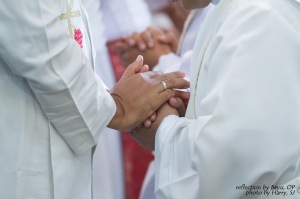 While I was reflecting on this Sunday’s Gospel, I was able to discover some news about our Church. Good News! The Catholic Church in the Philippines is preparing herself for the 500 years of the arrival of Christianity in this archipelago. The first baptism and Eucharist were taking place in 1521 as the Spanish missionaries began their evangelization mission. As part of this grand preparation, the Bishops of the Philippines have decided to celebrate this year as the year of the clergy and the consecrated persons. The major theme of this year is the renewed servant-leaders for the new evangelization. In view of this, many programs and activities are organized to help both the ordained ministers and the religious brothers and sisters to deepen their commitment to God and their service to the people.
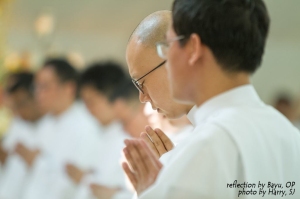 Ketika saya merenungkan Injil hari Minggu ini, saya membaca beberapa berita tentang Gereja. Ada Kabar baik. Gereja Katolik di Filipina mempersiapkan diri untuk perayaan 500 tahun kedatangan iman Kristiani di negara ini. Baptisan dan Ekaristi pertama terjadi pada tahun 1521 sewaktu para misionaris Spanyol memulai misi evangelisasi mereka. Sebagai bagian dari persiapan besar ini, para Uskup Filipina memutuskan untuk merayakan tahun ini sebagai tahun para klerus [daikon, imam, dan uskup] dan rohaniwan. Dengan demikian, banyak program dan kegiatan diselenggarakan di berbagai keuskupan di Filipina untuk membantu para klerus dan biarawan untuk memperdalam komitmen mereka pada Allah dan pelayanan mereka kepada umat dan bangsa.
 Balthazar, Melchior, and Gaspar, as the tradition called them, were neither Jews nor baptized Christians. In Greek ancient manuscripts of the Gospel, the word used to describe them is ‘magos’, meaning ‘someone with magical power’ or ‘magicians’, and practicing magic is detestable in the eyes of the Jews (2 Chro 33:6). Even the Catholic Church herself prohibits our engagement with any kind of magic (CCC 2116). Yet, we cannot be sure what kind of magic they craft, but one thing is certain that these Magi read the sign of times and follow the star. Because of this, they are called as one of those ancient astrologers, star-readers who predict the human behaviors and the future.
 Menurut tradisi, nama tiga orang Majus adalah Balthazar, Melchior, dan Gaspar. Dalam bahasa Yunani, kata yang digunakan untuk Majus adalah ‘magos’, yang berarti ‘seseorang dengan kekuatan magis atau sihir’, dan mempraktekkan ilmu magis adalah sebuah kesalahan besar di mata orang-orang Yahudi (2 Taw 33: 6). Bahkan Gereja Katolik sendiri melarang kita memiliki kontak dengan praktek magis atau sihir apa pun (Katekismus 2116). Namun, kita tidak bisa memastikan bentuk magis apa yang digunakan oleh orang Majus ini, tapi satu hal yang pasti bahwa mereka membaca tanda zaman dan mengikuti bintang. Karena itu, mereka bias disebut sebagai astrolog kuno, pembaca bintang yang memprediksi perilaku manusia dan masa depan.
 Jesus is not the gatekeeper, but Jesus is the gate Himself. A gate or a door gives a passage or access to a sheepfold, a house, a building or a room. It both separates and connects the insiders and the outsiders. In fact, the gate is as essential as the house itself. What is the building without a door or an entry point? It is either a construction error or it is not a sheepfold or a house at all. The gate is not only an accessory to the house, but it also defines the house itself. Is it an accessible house, locked house or not a house at all?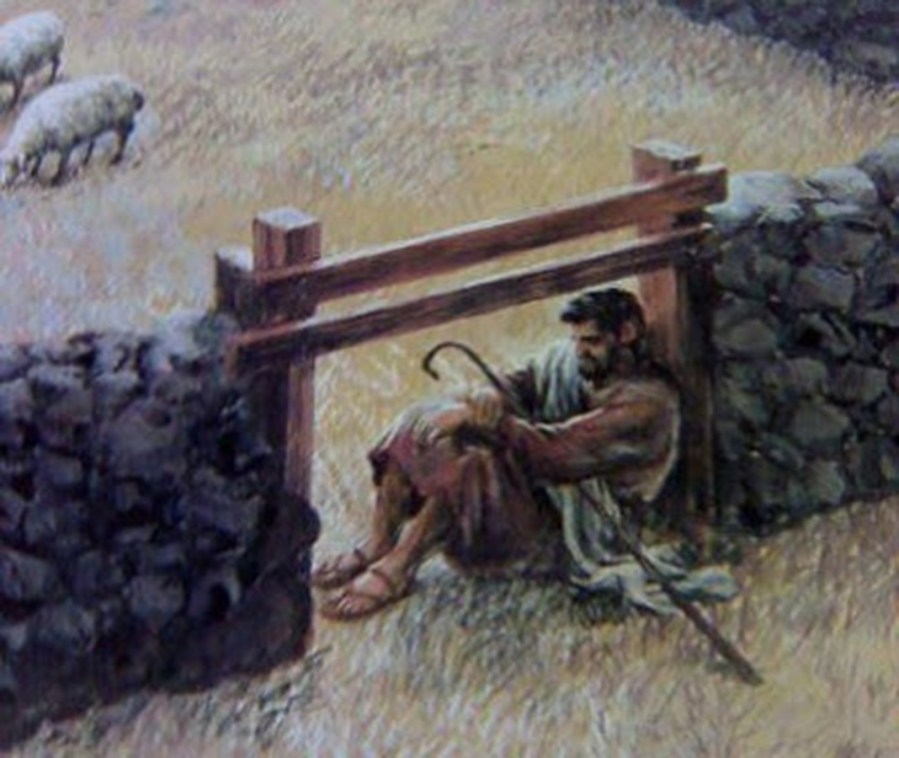
 Yesus bukanlah sekedar penjaga pintu gerbang, tetapi Yesus adalah sang pintu gerbang. Pintu gerbang atau pintu memberi jalan atau akses ke kandang domba, rumah, bangunan atau ruangan. Pintu memisahkan sekaligus menghubungkan orang dalam dan orang luar. Pintu sama pentingnya dengan rumah itu sendiri. Apa jadinya jika bangunan tanpa pintu masuk? Ini adalah kesalahan konstruksi atau bukan sebuah gedung sama sekali. Pintu bukan hanya aksesori dari sebuah rumah, tapi adalah definisi sebuah rumah. Melalui pintunya, kita bisa menilai apakah rumah ini yang mudah diakses, rumah terkunci atau bukan rumah sama sekali?
 In Medio Ecclesiae