
Becoming Whole

25th Sunday in Ordinary Time. September 18, 2016 [Luke 16:1-13]

“Make friends for yourselves with dishonest wealth, so that when it fails, you will be welcomed into eternal dwellings (Luk 16:9).”
unjust-steward1We were created in the image of God. Thus, our true happiness is only in God. As St. Augustine would say, “You have created us for Yourself, O God, and our hearts are restless until they rest in You.” St. Teresa of the Avilla would echo the same truth when she simply said, “God alone suffices.” But, we were also born into the real human body within a complex and concrete world. As we journey toward God, we cannot totally separate our soul from the various mundane concerns. Even the monks and nuns living in monasteries will still work hard to fulfill their daily and basic needs.

Our humanity and temporal aspects of our life are integral part of who we are. They are blessing and gift of God. We must not be enslaved by money, wealth and other material possessions. Certainly, easier said than done. Who among us are concerned with the latest version of our cellular phone? Who among us spending hours just to choose most fashionable dress? In a bigger scale, corruption, injustice and exploitation are the offshoots of this attachment to this temporal aspect of our lives. Thus, the proper and prudent thing to do is to place the gift of our body and temporal dimension of our life in the service of God and others. I do believe that in order to preach well, it is imperative for the preachers to take care of their health. As an ancient Latin proverbs goes, ‘Mens sana in corpore sano’ (healthy mind in healthy body).

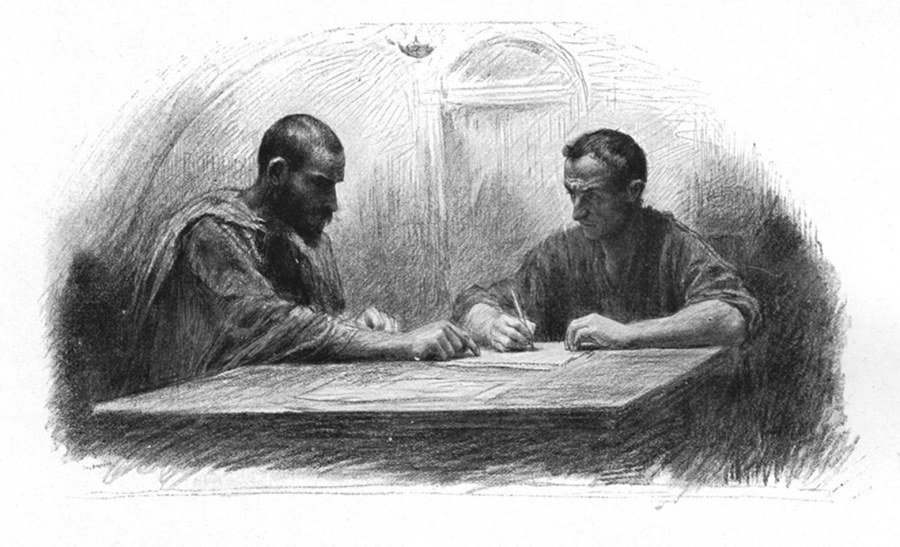
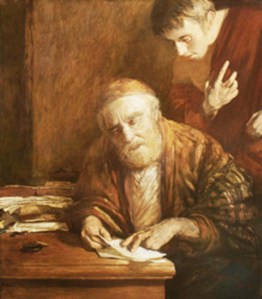
Learning from the parable of the dishonest steward, Jesus taught us to be like the steward in dealing with worldly things. In ancient Israel, for a master entrusting the business to his steward was a common practice. Some stewards would manipulate their position and raise wealth by practice of usury. They charged the borrowers of his masters’ property with high interest. Unfortunately, the steward was caught with this usurious practice as well as squandering his master’s wealth. To save his life, he chose to be smart. He met the debtors and to ask them to rewrite the debt’s notes. He decided to erase the interest that would go to him and let them pay the original amount. The borrowers would be indebted to him, and he might save himself. Like the steward, we need to know what truly matters for our happiness and salvation, as well as well aware of the place of worldly goods in the totality of our lives.

Jesus becomes a splendid example for all us. He is divine and spiritual being. He controlled the forces of nature, He overpowered the evil spirits, and He forgave sins. Though, He was divine, He did not disregard his humanity as useless. He, in fact, was humanly practical and respectful of His own Jewish culture. He observed Jewish traditions and customs, He worshipped God in the synagogues and He taught using the language that His original listeners would understand. Thus, He is truly God and truly man.  Indeed, our salvation rest in this balance and unity of this spiritual and bodily aspects of our humanity.

Br. Valentinus Bayuhadi Ruseno, OP

Menjadi Manusia yang Utuh

Minggu Biasa dalam Pekan ke-25 [18 September 2016] Lukas 16: 1-13

 Ikatlah persahabatan dengan mempergunakan Mamon yang tidak jujur, supaya jika Mamon itu tidak dapat menolong lagi, kamu diterima di dalam kemah abadi (Luk 16:9).

dishonest-stewardKita diciptakan menurut citra Allah, dan dengan demikian, kebahagiaan sejati kita hanya pada Allah. Seperti yang St. Agustinus katakan, Engkau menciptakan kami untuk untuk diri-Mu, ya Allah, dan hati kami gelisah sampai mereka menemukan-Mu.” St. Teresa dari Avilla mengemakan kebenaran yang sama ketika ia mengatakan, Allah mencukupi.” Tapi, kita juga lahir sebagai manusia yang memiliki tubuh dan ke dalam dunia yang kompleks. Saat kita berziarah menuju Allah, kita tidak bisa benar-benar memisahkan jiwa kita dari berbagai urusan duniawi. Bahkan para Rahim yang tinggal di pertapaan tetap bekerja keras untuk memenuhi kebutuhan sehari-hari dan dasar mereka.

Kemanusiaan dan aspek temporal kehidupan kita adalah bagian integral dari siapa kita. Ini semua adalah berkat dan karunia Allah juga. Hal yang tepat dan bijaksana adalah untuk mengunakan tubuh dan dimensi temporal kehidupan kita dalam pelayanan kepada Tuhan dan sesama. Saya percaya bahwa untuk bisa mewartakan dengan efektif dan efisien, sangat penting bagi para pewarta untuk menjaga kesehatan mereka. Sebagai peribahasa Latin kuno berkata, ‘Mens sana in corpore sano’ (pikiran yang sehat dalam tubuh yang sehat).

Kita tidak boleh diperbudak oleh uang, kekayaan dan harta benda lainnya. Tentu saja, lebih mudah diucapkan daripada dilakukan. Siapa di antara kita yang mengejar-ngejar HP versi terbaru? Siapa di antara kita menghabiskan berjam-jam hanya untuk memilih pakaian yang paling modis? Dalam skala yang lebih besar, korupsi, ketidakadilan dan eksploitasi adalah bentuk-bentuk dari ektreme keterikatan kita pada hal-hal duniawi.

Dari perumpamaan tentang bendahara yang tidak jujur, Yesus mengajarkan kita untuk menjadi cerdas dalam menangani hal-hal duniawi. Di Israel, bagi tuan rumah untuk mempercayakan bisnis kepada bendaranya adalah praktek yang umum. Beberapa bendahara memang memanipulasi posisi mereka dan mencari keuntungan sendiri dengan praktek riba. Mereka memberi bunga yang besar kepada para peminjam dari tuan mereka. Sayangnya, ada satu bendahara yang tertangkap tangan dengan praktik riba ini, dan juga menghambur-hamburkan kekayaan tuannya. Lalu, untuk menyelamatkan dirinya, sang bendahara melalukan hal yang cerdik. Ia bertemu dengan debitur dan meminta mereka untuk menulis ulang catatan utang mereka. Dia memutuskan untuk menghapus bunga yang akan menjadi keuntungan pribadinya, dan membiarkan mereka membayar sesuai jumlah aslinya. Peminjam akan berhutang budi kepadanya, dan ia menyelamatkan dirinya sendiri. Seperti bendahara dalam perumpamaan hari ini, kita perlu tahu apa yang benar-benar penting untuk kebahagiaan dan keselamatan kita, serta menyadari letak kemanusian dan berbagai aspek temporal dalam totalitas kehidupan kita.

Yesus menjadi contoh yang tepat bagi kita. Dia adalah ilahi dan spiritual. Dia mengendalikan kekuatan alam, dia menaklukkan roh-roh jahat, dan Dia juga memiliki kuasa untuk mengampuni dosa. Meskipun, Dia adalah ilahi, Dia tidak mengabaikan kemanusiaan. Dia, pada kenyataannya, sangatlah manusiawi, praktis dan menghormati budaya Yahudi-Nya sendiri. Dia menghidupi tradisi dan adat istiadat Yahudi, ia menyembah Allah dalam rumah-rumah ibadat Yahudi, dan ia mengajar menggunakan bahasa Aram yang mudah dimengerti oleh orang-orang Yahudi pada zaman-Nya. Tidak salah jika Dia adalah benar-benar Allah dan benar-benar manusia. Sungguh, keselamatan dan kebahagian kita berada pada keseimbangan dan kesatuan berbagai aspek spiritual dan duniawi yang kita miliki.

Frater Valentinus Bayuhadi Ruseno, OP

Shocking Appearance of the Lord

The Epiphany of the Lord. January 3, 2016 [Mathew 2:1-12]

“They were overjoyed at seeing the star, 11 and on entering the house they saw the child with Mary his mother (Mat 2:10-11).”

Today we are celebrating the Epiphany of the Lord. The word Epiphany comes from the Greek word ‘epiphananie’, meaning ‘appearance’. Therefore, today is also known as the feast of the manifestation of the Lord. This celebration is considered to one of the oldest and most important because the Baby God invited not only the Jews, but also the Gentiles, represented by the three Magi, to visit and finally worship Him. In His earliest appearance, Jesus brought light to all the nations.

One little question may linger: why did the three Magi from the East follow the star? Their journey was based on an ancient belief that the birth of a great king was signified by the appearance of new star in the sky. Yet, we are never sure what ‘star’ the Magi actually saw. Was it a comet, a supernova, unusual constellation, a planet, or supernatural light? One thing we are sure of. This star possessed a greatest importance, that Gaspar, Balthazar and Melchior abandoned the comfort of their homeland, traveled thousand miles westward and faced all the dangers and uncertainties.

Yet, just like many Israelites who expected a Messiah-King, the first thing the Easterners did was to visit a palace. And just like the entire Jewish nation, they were mistaken. They discovered Herod who did not wish to have another ruler except himself and the Jewish religious leaders who did not see the star coming. There was no infant-King in that strong and richly decorated castle.

The experience of epiphany shocked everyone. The Magi, however, reacted differently from king Herod and the high priests. While Jewish leaders ignored the divine guide, and selfish Herod secretly conspired the murder of the baby, the three good men chose to learn from their mistake and move on in their journey. In fact, going away from the center of power and pride was a liberating and joyful experience for the three. Re-directing their expectation and re-aligning with the star, they finally found the baby Jesus. Yet again, the noblemen from the East were puzzled to see the great King at the most unworthy place. The Prince of Heaven was the son of a poor carpenter and a simple woman from an unassuming village, Nazareth. The Creator was born among lowly men, animals and plants at the unhygienic manger. Despite all these unexpected events, the old good men found overjoyed because they saw God. Indeed, our God is the God of surprises.

Epiphany or the appearance of the Lord in our lives will certainly jolts us, shatters our expectations and blow away our plans. Are we going to be like the Jewish leaders who dismiss the presence of God in the unlucky events? Are we going to be like Herod who was totally upset and force things according to his will? Or, like the Magi, we allow ourselves to be surprised and to embrace it as the moment of grace?

When I asked a friend on what his plans and expectations on 2016, he replied, “I don’t plan, but God plans for me!” Perhaps, in the same spirit, the best answer when some people asking me, “When will my ordination be?” my surest answer was ‘In God’s time!’ What are your plans and resolutions in 2016? Are you ready to be surprised? Are we prepared to see God and be blessed this year?

Br. Valentinus Bayuhadi Ruseno, OP