

13th Sunday in Ordinary Time [B]
June 30, 2024
Mark 5:21-43
Faith is fundamental to our salvation but is also one of the most misunderstood concepts. The stories of the healing of Jairus’ daughter and the woman with haemorrhage help us better understand the meaning of faith and how we need to live our faith.

The most basic understanding of faith is a belief in God, or for us Christians, a belief in Jesus Christ. This primary sense of faith relies heavily on our intellectual acceptance of the presence of God and Jesus as His only begotten Son, our Savior. However, how about those people with no opportunity to intellectually recognize Jesus? Like for example, Jairus’ daughter was gravely ill and eventually died. She was not able to have faith in her mind that Jesus would go to save her. Yet, she was saved from death, not because of her faith, but the faith of her father. St. James reminds us also that even the demons believed and knew well that God exists, but the intellectual faith does not save them.
The second type of faith is faith of conviction. This kind of faith involves not only intellectual recognition of God but also vigorous conviction and deep trust. This kind of faith is usually expressed in solid emotions and visible bodily actions like shouting the name of Jesus or bowing down in prayers. Yet again, St. Paul reminds us that this kind of faith does not bring salvation. He writes, “If I have all faith, so as to remove mountains, but have not love, I am nothing (1 Cor 13:2).”
Finally, the third class of faith is faith working through love. This faith not only accepts God intellectually and is profoundly hopeful but also manifests itself in works of charity. Compared to the previous two, this faith is more demanding yet also saving. We can see this from Jairus’s faith. His profound love for his daughter propels him to believe in Jesus, and in turn, his faith in Jesus empowers him to seek and beg for Jesus’ miraculous healing.
The story of the woman with a haemorrhage is more interesting. She seems to have a second type of faith or the faith with conviction. She sincerely believed that she would be healed if she touched Jesus, but if we go deeper, we find her faith goes beyond convictions. When she decides to approach Jesus, she does not immediately grab Jesus’ body or feet. Instead, she carefully selects to touch the tassel of Jesus’ clock. Why? The woman is aware that she has the flow of blood, and this makes her ritually impure, and anyone she touches may be contaminated by this impurity (see Lev 15:25-30). Therefore, by not making immediate contact with Jesus, the woman shows excellent care to preserve the purity of Jesus. This simple detail can show us her love for Jesus despite her limitations. Then, Jesus recognizes the true faith of the woman, and she is made well.
Do we have the saving faith? What kind of faith do we have, and how do we grow? Do we manifest our faith in God in love for Jesus and our neighbours?
Valentinus Bayuhadi Ruseno, OP
 Leprosy in the time of Jesus is not only physically and mentally deadly, but also spiritually incapacitating. Leprosy or currently known as the Hansen’s disease is horrifying sickness because it does not kill the person slowly, but it gradually deforms and incapacitates the person. The bacteria cause terrible damage in peripheral nervous to the point that the person is no longer feeling the sensation, especially pain. Without this sensation, the person fails to recognize and avoid bodily injuries. Losing limbs is shared among the victims with advanced stages of leprosy.
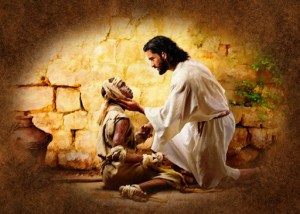 Penyakit kusta pada zaman Yesus tidak hanya mematikan secara fisik dan mental, tetapi juga melumpuhkan secara rohani. Kusta atau yang sekarang dikenal dengan penyakit Hansen adalah penyakit yang mengerikan karena tidak hanya membunuh orangnya secara perlahan, tetapi lambat laun akan merusak wujud dan melumpuhkan orang tersebut. Bakteri kusta menyebabkan kerusakan yang parah pada jaringan saraf sehingga orang tersebut tidak lagi dapat merasakan sensasi, terutama rasa sakit. Tanpa sensasi ini, orang tersebut gagal mengenali dan menghindari cedera pada tubuh. Kehilangan anggota tubuh seperti jari adalah hal yang biasa terjadi pada penderita kusta stadium lanjut.
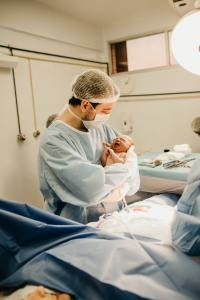 Jesus cannot be separated from His healing ministries. Some of the healings are remarkable, like the healing of a woman with the hemorrhage and Jarius’ daughter [Mark 5:321-43]. They are astonishing because these are practically impossible cases. The woman has suffered for twelve years without sign of hope, and Jarius’ daughter is as good as dead. Yet, Jesus does heal not only those with grave illness but also those with curable sickness.
 Yesus tidak dapat dipisahkan dari pelayanan penyembuhan-Nya. Beberapa kisah kesembuhan merupakan kejadian yang luar biasa seperti kesembuhan seorang wanita dengan pendarahan dan juga anak perempuan Jarius [Markus 5: 321-43]. Penyembuhan ini adalah mujizat karena kasus-kasus yang dihadapi Yesus adalah hal-hal mustahil disembuhkan pada zaman-Nya. Sang wanita telah menderita pendarahan selama dua belas tahun tanpa harapan, dan putri Jarius sebenarnya sudah meninggal. Di sisi lain, Yesus tidak hanya menyembuhkan orang yang sakit parah, tapi juga mereka yang sakitnya tergolong tidak membahayakan.
 Dalam menyembuhkan orang buta, Yesus melakukan sesuatu yang agak tidak biasa: Ia meludah ke tanah, membuat tanah liat dengan air liurnya, dan mengolesi tanah liat itu di mata orang buta tersebut. Saat ini kita sedang melawan Covid-19, jenis virus korona yang menyebar dengan cepat, kita dididik bahwa salah satu media kontaminasi adalah tetesan manusia seperti air yang keluar dari mulut kita. Ketika air yang sudah terkontaminasi dengan virus bersentuhan dengan mulut, hidung dan mata, itu menjadi titik awal berjangkitnya si virus di tubuh kita.
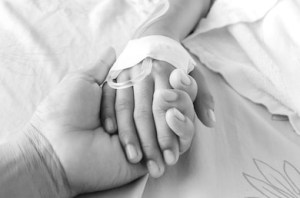 I am currently having my clinical pastoral education at one of the hospitals in Metro Manila. It has been one month since I started my pastoral visits. Since then, I have encountered people in different stages of illness. Many of them are fast recovering, some are taking more time to get cured, but some others have to face serious conditions. It is my ministry as a chaplain to accompany them in their journey of healing. I feel immense joy when I can witness their healing process, from one who is weak on the bed, to one who is standing and ready to leave the hospital.
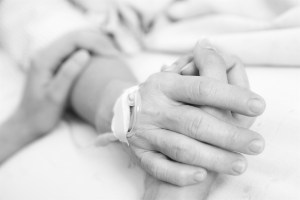 Saat ini saya menjalani pastoral di salah satu rumah sakit di Metro Manila. Sudah satu bulan sejak saya melakukan kunjungan pastoral pertama saya. Saya telah bertemu banyak pasien yang bergulat dengan berbagai jenis penyakit. Tugas pelayanan saya sebagai pekerja pastoral adalah untuk menemani mereka dalam perjalanan penyembuhan mereka. Saya merasakan sukacita yang luar biasa ketika saya dapat menjadi saksi dalam proses penyembuhan mereka, dari seseorang yang terbaring lemah di tempat tidur, sampai menjadi seseorang yang berdiri tegak dan siap untuk meninggalkan rumah sakit.
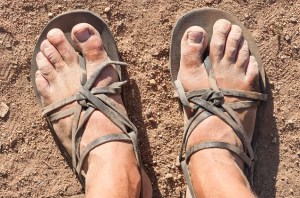 Our Gospel today speaks of the mission of the Twelve. They are sent to perform the threefold task: to exorcise the evil spirits, to heal the sick and to preach repentance. This threefold missionary duty reflects Jesus’ mission also in the Gospel according to Mark. To facilitate their preaching ministry, they need to travel light. No extra baggage, no extra burden. They need to travel two by two as a sign of communal and ecclesial dimension of the mission. They shall depend also their sustenance on the generosity of the people. And, when they face rejection, they shall shake the dust off their feet as a symbolic judgment against those who reject them. In ancient time, the Jews shake the dust off their feet when they reenter the Israel soil from the Gentile territories, as a sign of disowning and disapproval of the Gentiles nations.
 In Medio Ecclesiae