
Trinity in the Bible and in Our Life

The Solemnity of the Most Holy Trinity [C]

June 15, 2025

John 16:12-15

The mystery of the Holy Trinity stands at the center and foundation of our faith because it reveals the very nature of God. Our logical minds can deduce that there is one God, a perfect Being who created and sustains all things. Yet, we depend on divine revelation to grasp this profound truth. The word “Trinity” does not appear in Scripture, but the Bible, both in the Old and New Testaments, unveils this reality. Scripture affirms there is only one God, yet simultaneously reveals a plurality within His oneness.

One intriguing passage that hints at the Trinity is the very verse that declares God’s oneness—the Shema Israel (Deuteronomy 6:4). The Hebrew text reads: “שְׁמַע יִשְׂרָאֵל יְהוָה אֱלֹהֵינוּ יְהוָה אֶחָד” (Shema Yisrael Adonai Eloheinu Adonai Echad). Most English translations render this as, “Hear, O Israel: The Lord our God, the Lord is one.” However, a more literal translation would be: “Hear, O Israel: The Lord, our God, the Lord, one.” It is striking how the verse mentions the Lord three times before concluding with “one.”

Other Old Testament passages also suggest plurality within God’s unity. For example: Gen 1:1-2 and 1:26 speak of God creating with His Spirit and using the plural “Let Us make man in Our image.” The Angel of the Lord appears as a divine yet distinct figure (Gen 16:7-13; 22:11-18; Exo 3:2-6; Judg 13:18-22). The Spirit of God is active in the Psalms and prophets (Ps 51:11; Isa 63:10-11; 48:16; Eze 36:26-27). Prophet Zechariah (2:10-11) even speaks of “two Yahwehs.” Yet, the fullness of this mystery is only fully revealed in the New Testament.

One of the most definitive Trinitarian passages is Matthew 28:19: “Baptize them in the name of the Father and of the Son and of the Holy Spirit.” Here, Jesus speaks of one name, yet within that one name are three distinct Persons: Father, Son, and Holy Spirit.

However, the Trinity is more than a biblical truth, but it is the most precious gift to us. As St. Paul writes, “No one can say, ‘Jesus is Lord,’ except by the Holy Spirit” (1 Cor 12:3). The Spirit infuses faith in our hearts, enabling us to confess Christ, the Son of the Father. The same Spirit pours hope into us amid trials, especially for confessing the true God (Rom 5:3-5). And when we love, even those hardest to love, we participate in the life of the Triune God, whose very essence is love (1 Jn 4:8).

The Trinity is not merely a doctrine to profess but a mystery we live daily. We enter Christian life through Trinitarian baptism. As Catholics and Orthodox, we begin prayers with the Sign of the Cross, invoking the Father, Son, and Spirit. In the Eucharist, the Holy Spirit transforms the bread and wine into Christ’s Body and Blood, offered to the Father as the perfect sacrifice.

As we celebrate this greatest mystery of our faith, let us give thanks that God invites us into His very life—Father, Son, and Holy Spirit—now and forever.

Rome

Valentinus Bayuhadi Ruseno, OP

Guide Question:

How do we relate with the Holy Trinity? When the first time, we recognize the truth about the Trinity? How do we relate to the Father? How do we relate to Jesus? How do we relate to the Holy Spirit?

The Holy Spirit and His Gifts

Pentecost [C]

June 8, 2025

1 Cor 12:3-13

Today, the Church celebrates Pentecost, the day when the Holy Spirit descended upon Jesus’ apostles and the first disciples, marking the beginning of the Church. From that moment onward, the Holy Spirit, the third person of the Holy Trinity, has played a central role in guiding and sustaining the life of the Church, working through His grace and gifts. It is no surprise that we call Pentecost the feast of the Holy Spirit. Yet, as we reflect on these spiritual gifts, we must do so with wisdom and discernment.

We live in a time when many Christians—both Catholic and non-Catholic—are experiencing the gifts of the Holy Spirit in remarkable ways. This renewed outpouring has awakened us to the Spirit’s active presence in our lives. Some have received the gift of prophecy, speaking words that call others to repentance. Others have been given the gift of healing, becoming instruments through which the Spirit restores health to the sick. Still others pray in tongues, their praises flowing in languages they do not understand (for the list of gifts of the Holy Spirit, see 1 Cor 12:8-10). These are extraordinary encounters, even life-changing for many.

Yet while these gifts should fill us with gratitude and deepen our awareness of the Holy Spirit’s work, there is a danger in focusing too much on the experiences themselves. Some begin to fixate on the sensations rather than the Giver, treating spiritual gifts as a measure of their faith. Some of us may believe that speaking in tongues is proof of holiness, or that lacking miraculous healings means we are distant from God. Those who receive such gifts may grow prideful, while those who do not may feel like failures in their Christian life.

This mindset is not only misguided but spiritually harmful. And while it may seem like a modern problem, the same struggles existed in the early Church. Nearly two thousand years ago, the Church in Corinth were richly blessed with spiritual gifts, yet their community was plagued by division, disorder in worship, and pride. They compared gifts, competed over who had the “better” manifestations, and even used them as a measure of spiritual superiority.

Paul confronted this distortion head-on, reminding them that spiritual gifts are not for personal glory but for the building up of the Church (1 Cor 12). He taught them that the most important gift is not the gift of tongue, of healing or miracles, but the gift of love. He even wrote especially against those who seek the gift of tongue, “If I speak in the tongues of mortals and of angels, but do not have love, I am a noisy gong or a clanging cymbal (1 Cor 13:1).” He warned that pursuing spectacular gifts without love was meaningless.

Jesus Himself taught that the greatest gift the Father gives us is the Holy Spirit (Luk 11:13), and the greatest gift the Spirit gives is love.

Rome

Valentinus Bayuhadi Ruseno, OP

Guide Questions:

Do we ask the Father for the Holy Spirit? Do we pray to the Holy Spirit? What do we ask from the Holy Spirit? Do we ask the gifts of the Holy Spirit and what gifts?

Roh Kudus dan Karunia-karunia-Nya

Pentekosta [C]

8 Juni 2025

1 Kor 12:3-13

Hari ini, Gereja merayakan Pentekosta, hari Roh Kudus turun di atas para rasul dan murid-murid Yesus yang pertama, yang menandai dimulainya Gereja. Sejak saat itu, Roh Kudus, pribadi ketiga dari Tritunggal Mahakudus, telah memainkan peran sentral dalam membimbing dan menopang kehidupan Gereja. Roh Kudus bekerja melalui rahmat dan karunia-karunia-Nya. Tidaklah mengherankan jika kita menyebut Pentekosta sebagai hari raya Roh Kudus. Namun, ketika kita merenungkan karunia-karunia rohani ini, kita harus bijak karena ada bahaya yang mungkin kita hadapi. Bahaya apakah itu?

Kita hidup di masa ketika banyak umat Kristiani – baik Katolik maupun non-Katolik – mengalami karunia-karunia Roh Kudus dengan cara yang luar biasa. Pencurahan yang berlimpah ini telah menyadarkan kita akan kehadiran Roh Kudus yang aktif dalam hidup kita. Beberapa orang telah menerima karunia bernubuat, mengucapkan kata-kata yang memanggil orang lain untuk bertobat. Yang lainnya telah diberi karunia penyembuhan, menjadi alat Roh Kudus memulihkan kesehatan orang-orang sakit. Yang lainnya lagi berdoa dalam bahasa roh, pujian-pujian mereka mengalir dalam bahasa yang tidak mereka pahami (untuk daftar karunia-karunia Roh Kudus, lihat 1 Kor. 12:8-10). Ini adalah pengalaman-pengalaman yang luar biasa, bahkan mengubah hidup banyak orang.

Namun, meskipun karunia-karunia ini seharusnya memenuhi kita dengan rasa syukur dan memperdalam kesadaran kita akan karya Roh Kudus, ada bahaya jika kita terlalu berfokus pada karunia-karunia itu sendiri. Beberapa dari kita mulai terpaku pada sensasi yang kita rasakan daripada Sang Pemberi, bahkan memperlakukan karunia-karunia rohani sebagai ukuran iman. Beberapa dari kita mungkin percaya bahwa berbahasa roh adalah bukti kekudusan, atau bahwa tidak adanya mukjizat kesembuhan berarti kita jauh dari Allah. Kita yang menerima karunia-karunia dapat menjadi sombong, sementara kita yang tidak menerimanya mungkin merasa gagal dalam kehidupan Kristiani kita.

Pola pikir seperti ini tidak hanya tidak benar tetapi juga berbahaya. Dan meskipun ini mungkin tampak seperti masalah modern, pergumulan yang sama juga terjadi pada Gereja mula-mula. Hampir dua ribu tahun yang lalu, Gereja di Korintus diberkati dengan berbagai karunia rohani, namun komunitas mereka terganggu oleh perpecahan, kekacauan dalam ibadah, dan kesombongan. Mereka membandingkan karunia-karunia, bersaing untuk menentukan siapa yang memiliki karunia yang “lebih baik”, dan bahkan menggunakannya sebagai ukuran keunggulan rohani.

Paulus mengkritisi pola pikir yang salah ini, mengingatkan mereka bahwa karunia-karunia rohani bukanlah untuk kemuliaan pribadi, tetapi untuk membangun Gereja (1 Kor 12:7). Ia mengajarkan kepada mereka bahwa karunia yang paling penting bukanlah karunia bahasa roh, kesembuhan atau mukjizat, tetapi karunia kasih. Ia bahkan menulis secara khusus kepada mereka yang mencari karunia bahasa roh, “Jika aku berkata-kata dengan bahasa manusia dan bahasa malaikat, tetapi tidak mempunyai kasih, maka aku adalah gong yang nyaring dan simbal yang bergemerincing (1 Kor 13:1).” Dia memperingatkan bahwa mengejar karunia-karunia yang spektakuler tanpa cinta kasih tidak ada artinya.

Yesus sendiri mengajarkan bahwa karunia terbesar yang diberikan Bapa kepada kita adalah Roh Kudus (Luk. 11:13), dan karunia terbesar yang diberikan Roh Kudus adalah kasih. Karena dengan mengasihi, kita menemukan kepenuhan hidup.

Roma

Valentinus Bayuhadi Ruseno, OP

Pertanyaan Panduan:

Apakah kita meminta Roh Kudus kepada Bapa? Apakah kita berdoa kepada Roh Kudus? Apa yang kita minta dari Roh Kudus? Apakah kita meminta karunia-karunia Roh Kudus dan untuk tujuan apa? Apakah kita memohon karunia untuk mengasihi?

Holy Trinity and Baptism

The Solemnity of the Holy Trinity

May 26, 2024

Matthew 28:16-20

As we celebrate the mystery of the Holy Trinity, the Church invites us to meditate on our Baptism. We are baptized in the formula given by Jesus Himself. Jesus instructed His disciples, “Go therefore and make disciples of all nations, baptizing them in the name of the Father and of the Son and of the Holy Spirit (Mat 28:19).” Yet, what does it mean to be baptized with this Trinitarian formula?

Baptism claims us for God. We are baptized ‘in’ the name of the Father, and of the Son, and of the Holy Spirit. In New Testament Greek, the preposition ‘in’ is ‘εἰς’ (read: eis), and this points to a movement from one place to another or from an old condition to a new one. Thus, Baptism allows us to enter a new place, state, and status.

In Baptism, we are no longer outside of God, but now we are inside of God. We no longer belong to the world but now to God. We are no longer under the influence of Satan, but now we are animated by God’s grace. The grace of Baptism recreates us from the fallen children of Adam into God’s holy children. The same grace transforms us into redeemed members of Jesus’ body. And finally, this grace also sanctifies us and makes us become the temple of the Holy Spirit.

Since Baptism leads us to communion with the Holy Trinity and heaven is nothing but permanent union with God, Baptism is necessary for our salvation. No wonder St. Peter teaches with authority that Baptism saves us (1 Pet 3:21). However, we must remember that the grace we receive in Baptism must be properly received and manifested in our lives.

This union with God is not only something spiritual and invisible but concrete and visible. In this world, we believe that the family of God, the Body of Christ, and the Temple of the Holy Spirit have a visible manifestation: the Church. Baptism is also a gateway to our membership in the Church. Therefore, we demonstrate our belonging to the holy Trinity when we manifest our belonging to our local Church, parishes, and the universal Church. We express our spiritual union with the Holy Trinity when we celebrate the liturgy of the Eucharist worthily.

Thus, we cannot say we are in unity with the Holy Trinity, but we never attend mass because of laziness or receive the holy Communion unworthily.

We reveal our love for the holy Trinity when we love our fellow Christians and even those who do not believe yet in the Trinity. That is why St. John says, “If anyone says, ‘I love God,’ and hates his brother, he is a liar; for he who does not love his brother whom he has seen, cannot love God whom he has not seen (1 Jn 4:20).” We display our communion with the Holy Trinity when we separate ourselves with the devil and his works. We cannot say that we are children of God, but we live in sins, we steal from others, we are involved in esoteric practices, and we believe in superstitions.

The sacrament of Baptism does not stop with the pouring of water but manifests in our daily lives. Our belief in the Trinity does not simply mean intellectual acceptance of God’s presence but also transforms our lives and the way we live in the world.

Rome

Valentinus Bayuhadi Ruseno, OP

When is the Birthday of the Church?

Pentecost [B]

May 19, 2024

John 20:19-23

The solemnity of the Pentecost is usually called the birthday of the Church. But is this really true, or is it just a popular myth?

If we try to go into the official teaching of the Church, we will discover a passage from the Catechism of the Catholic Church, especially paragraph 766. Here, I quote, “The Church is born primarily of Christ’s total self-giving for our salvation, anticipated in the institution of the Eucharist and fulfilled on the cross. “The origin and growth of the Church are symbolized by the blood and water which flowed from the open side of the crucified Jesus.” “For it was from the side of Christ as he slept the sleep of death upon the cross that there came forth the ‘wondrous sacrament of the whole Church.’ ” As Eve was formed from the sleeping Adam’s side, so the Church was born from the pierced heart of Christ hanging dead on the cross.”

In short, the Church’s birthday is on Good Friday. The Church recognizes herself as the new Eve, born from the heart of Christ to be His bride. Consequently, calling the feast of Pentecost the birthday of the Church seems to be false. Yet, the truth is more profound than it seems.

Suppose we carefully observe the liturgy of the Pentecost, especially in the preface of Pentecost (a prayer said by the priest just before the Eucharist prayer). We will discover an interesting piece of information. I quote, “[We] give you thanks, Lord, holy Father… you bestowed the Holy Spirit today on those you made your adopted children uniting them to Your Only Begotten Son. This same Spirit, as the Church came to birth, opened to all people the knowledge of God…” In short, the liturgy of Pentecost is also celebrating the Church’s birthday.

So, how do we make sense of these seemingly conflicting pieces of information? Why does the official teaching of the Church seem to contradict the liturgy? To understand this, we need to see the birth of the Church not as one single instantaneous happening but rather as a process of giving birth. As the baby’s head is the first to come out, and then the rest of the body, we can see the ‘head of the Church’ came to being first under the cross of Christ and then the rest of ‘the body’ in the Pentecost. John, the beloved apostle, and Mary, the mother of Jesus, represented the head. While in the Pentecost, under the influence of the Holy Spirit, Peter, and other disciples began to proclaim God’s great things to all nations.

Another way to see this truth is that the Church was indeed born twice, first from Christ and second from the Holy Spirit. Following St. Paul, the Church is the body of the Church (Eph 1:22; CCC 792), and the Church also is the temple of the Holy Spirit (1 Cor 6:16, CCC 797). As the body of Christ, we are an organic unity between us and Christ, the source of our salvation. As the temple of the Holy Spirit, we are united to the Holy Spirit, the source of our holiness and our reason to sanctify others.

Happy birthday to the Catholic Church!

Rome

Valentinus Bayuhadi Ruseno, OP

Kapan Hari Ulang Tahun Gereja?

Pentekosta [B]

19 Mei 2024

Yohanes 20:19-23

Hari raya Pentekosta biasanya disebut sebagai hari ulang tahun Gereja. Namun, apakah hal ini benar adanya, atau hanya mitos yang cukup populer?

Jika kita mencoba masuk ke dalam ajaran resmi Gereja, kita akan menemukan ajaran penting di Katekismus Gereja Katolik, khususnya paragraf 766. Di sini, saya mengutip, “Tetapi Gereja lahir terutama karena penyerahan diri Kristus secara menyeluruh untuk keselamatan kita, yang didahului dalam penciptaan Ekaristi dan direalisasikan pada kayu salib. “Permulaan dan pertumbuhan itulah yang ditandakan dengan darah dan air, yang mengalir dari lambung Yesus yang terluka di kayu salib” (LG 3). “Sebab dari lambung Kristus yang berada di salib, muncullah Sakramen seluruh Gereja yang mengagumkan” (SC 5). Seperti Hawa dibentuk dari rusuk Adam yang sedang tidur, demikian Gereja dilahirkan dari hati tertembus Kristus yang mati di salib (Bdk. St. Ambrosius).

Singkatnya, hari ulang tahun Gereja adalah pada hari Jumat Agung. Gereja mengakui dirinya sebagai Hawa yang baru, yang lahir dari hati Kristus untuk menjadi mempelai-Nya. Oleh karena itu, menyebut hari raya Pentekosta sebagai hari ulang tahun Gereja tampaknya salah. Namun, kebenarannya lebih dalam daripada yang terlihat.

Jika kita mengamati dengan saksama liturgi Pentekosta, terutama dalam prefasi Pentekosta (doa yang diucapkan oleh imam sebelum Doa Syukur Agung), kita akan menemukan sebuah informasi yang menarik. Saya mengutip, “…kami selalu dan di mana pun bersyukur kepada-Mu, Tuhan, Bapa Yang Kudus… Engkau menganugerahkan Roh Kudus kepada mereka yang Engkau jadikan anak-anak angkat-Mu melalui persekutuan dengan Putra Tunggal-Mu. Roh yang sama, pada awal kelahiran Gereja, telah menganugerahkan pengetahuan akan Allah kepada semua bangsa…”  Singkatnya, liturgi Pentekosta juga merupakan perayaan ulang tahun Gereja.

Jadi, bagaimana kita memahami informasi yang tampaknya saling bertentangan ini? Mengapa ajaran resmi Gereja tampaknya bertentangan dengan liturgi Gereja? Untuk memahami hal ini, kita perlu melihat kelahiran Gereja bukan sebagai satu kejadian yang terjadi seketika, melainkan sebagai sebuah proses melahirkan. Sebagaimana kepala bayi adalah yang pertama kali keluar, dan kemudian seluruh tubuhnya, kita dapat melihat ‘kepala Gereja’ muncul pertama kali di bawah salib Kristus dan kemudian seluruh ‘tubuh’ pada hari Pentekosta. Yohanes, rasul yang dikasihi, dan Maria, ibu Yesus, mewakili kepala. Pada hari Pentekosta, di bawah kuasa Roh Kudus, Petrus dan murid-murid lainnya mulai memberitakan perkara-perkara besar Allah kepada segala bangsa, dan membaptis mereka menjadi anggota Gereja.

Cara lain untuk melihat kebenaran ini adalah bahwa Gereja memang dilahirkan dua kali, pertama dari Kristus dan kedua dari Roh Kudus. Mengikuti Santo Paulus, Gereja adalah tubuh dari Kristus (Ef. 1:22; KGK 792), dan Gereja juga adalah bait Roh Kudus (1 Kor. 6:16, KGK 797). Sebagai tubuh Kristus, kita adalah satu kesatuan organik antara kita dan Kristus, sumber keselamatan kita. Sebagai bait Roh Kudus, kita dipersatukan dengan Roh Kudus, sumber kekudusan kita dan alasan kita untuk menguduskan sesama.

Selamat ulang tahun untuk Gereja Katolik!

Roma

Valentinus Bayuhadi Ruseno, OP

Forty Days in the Wilderness

First Sunday of Lent [B]

February 21, 2021

Mark 1:12-15

Why did Jesus have to stay in the wilderness for 40 days? The answer is not difficult. He was reperforming what the Israelites did when they were liberated from Egypt. The Israelites stayed for 40 years in the wilderness before they entered the promised land. Yet, there is one more thing! Mark gives us a small, however important detail: in the wilderness, Jesus was staying with the beasts. Why so? If there is one man closely connected to the beasts in the scriptures, he is no other than Adam. Jesus is the new Israel who endured the harsh conditions of the desert and the new Adam who faced the onslaught of the devil.

Jesus entered the wilderness for forty days, and He was tested there by the harsh conditions of the Judean desert. Not only facing the barrenness of the desert, but Jesus was also confronting the devil himself. From here alone, we can draw a strong connection between the Israelites in the wilderness and Jesus, as well as Adam and Jesus. Like the old Israel who struggled with their own ego, Jesus was also enduring human weakness. Like Adam was facing the tempter, the devil tempted Jesus. However, there are significant differences.

While the Israelites murmured and complained, Jesus faithfully fasted and prayed. While the Israelites were grumbling for the food and Adam ate the forbidden fruit, Jesus rejected Satan’s temptation to change stone to bread. While the Israelites were losing faith and worshipping the demon in the form of the golden calf, and Adam wanted to be like God, Jesus refused to bow down to the devil despite all the worldly glory it offered. While the Israelites losing hope in the promised land and Adam blamed the woman, Jesus remained steadfast and refused to test God. Jesus is the new Israel and the new Adam. While the old Israel faltered and Adam succumbed to the trials and temptations, Jesus emerged victorious. Jesus corrected and perfected ancient Israel and old Adam.

We are the body of Christ, and we are part of the new Israel. As Jesus enters the wilderness, so we are going to our spiritual battle. However, we can only become triumphant when we are holding on to God and participating in Christ. The devil is much stronger than us, and without God, we march for sure defeat.

How are we going to win against this spiritual battle? Jesus gives us the answer: fasting-abstinence, almsgiving, and prayer. Fasting makes us hungry, yet it makes us realize that not all our bodily desires need to be fulfilled immediately. Almsgiving may hurt our pockets, but it opens us to the truth that we live meaningfully by giving, not hoarding things. Prayer may be a waste of time, but it offers us the most fundamental reality that we are nothing without God. We are part of the new Adam and the new Israel, and only in Him, we achieve our real victory.


Valentinus Bayuhadi Ruseno, OP

photo credit: nathan-mcbride

The Birthday of the Church

Pentecost Sunday [A]

May 31, 2020

John 20:19-23

pentecost coptic“Happy Birthday!” today is the feast of Pentecost, and today is the birth of the Church. We should rejoice because our Church is getting older by age, but getting ever stronger by vitality and creativity in preaching the Good News. Yet, the question is why we celebrate the birthday of the Church on the Pentecost Sunday?

To answer this, we need to understand the biblical meaning of the celebration of Pentecost and what took place to the disciples on the day the Holy Spirit descended upon them. The word Pentecost means the fiftieth, and the feast of Pentecost takes place on the fiftieth day after Sunday Easter. However, the Christian feast itself is originally a Jewish religious festival: the feast of Shavuot or the Feast of Weeks. The feast took place seven weeks after the grand celebration of the Passover. Together with Passover and the Feast of Tabernacle (Booths), Pentecost are the major pilgrimage festivals that require any male Jews to make their way to Jerusalem. Initially, the feast is agricultural in nature. The people of Israel gave thanks for the successful harvests and offered the fruits of their harvest to the Lord. Yet, it also gained a religious meaning. In the feast of Shavuot, the Israelites commemorate the giving of the Law and the making of the covenant with the Lord God in Mount Sinai.

This explains why many people from different nations gathered in around the place of the disciples: they were pilgrims of Pentecost. This answers a more fundamental question about the identity of the Holy Spirit: Why did the Holy Spirit have to present Himself as fire, and no other image like a dove? If we go back to the Sinaitic event itself, we are going to find something remarkable. When God made His covenant and handed down His Law, He appeared Himself to entire Israel as fire [see Exo 19:18]. The Holy Spirit appeared in fire simply because He was the same God who manifested Himself in Sinai. The Pentecost Sunday reveals the fundamental truth about the Holy Spirit that the promised Paraclete is divine.

In Sinai, the Israelites received the Law and entered into a covenant with the Lord. God embraced them and made them “a priestly kingdom and a holy nation [see Exo 19:6]. Israelites became a nation that belongs to God. In the new Pentecost, the Holy Spirit came upon the disciples and instilled in them the New Law of Love. He fashioned them to be new People of God [see Pet 2:9]. The new community of God’s family has been born!

Yet, these new people are even greater. The Holy Spirit empowered the disciples to preach the Good News to people from different nations and languages. The Pentecost reversed the negative effect of the tower of Babel [see Gen 11:1-9]. When people were so proud of themselves and tried to become like God with their power, different languages turned out to be a curse that divides them. Yet, with the Holy Spirit that transformed the hearts and instilled humility, languages become a blessing that unites the different people.

We thank the Holy Spirit that gave birth to the Church. We give thanks to the Holy Spirit that has called us to part of the new people of God.

Valentinus Bayuhadi Ruseno, OP

Selamat Ulang Tahun, Gereja!

Minggu Pantekosta [A]

31 Mei 2020

Yohanes 20: 19-23

pentecost 3“Selamat ulang tahun!” Hari ini adalah hari raya Pentekosta, dan hari ini adalah kelahiran Gereja. Kita harus bersukacita karena Gereja kita bertambah dalam usia, tetapi semakin kuat, bijaksana dan kreatif dalam memberitakan Kabar Baik. Namun, pertanyaannya adalah mengapa kita merayakan ulang tahun Gereja pada hari Minggu Pentekosta?
Untuk menjawab ini, kita perlu memahami makna alkitabiah dari perayaan Pentekosta dan apa yang terjadi pada para murid pada saat Roh Kudus turun ke atas mereka. Kata Pentekosta berarti “yang kelima puluh”, dan hari raya Pentekosta terjadi pada hari kelima puluh setelah Minggu Paskah. Namun, pesta Gereja itu sendiri pada awalnya adalah sebuah festival keagamaan Yahudi: Hari Raya Shavuot atau Hari Raya Tujuh Minggu. Perayaan itu berlangsung tujuh minggu setelah perayaan akbar Paskah. Bersama-sama dengan Paskah dan Hari Raya Pondok Daun, Pentekosta adalah perayaan perziarahan utama yang mengharuskan setiap pria Yahudi untuk melakukan perjalanan ke Yerusalem. Awalnya, ini adalah perayaan agrikultural. Orang-orang Israel bersyukur atas panen yang berhasil dan mempersembahkan hasil panen mereka kepada Tuhan. Namun, itu juga memiliki makna religius. Dalam perayaan Shavuot, orang Israel memperingati pemberian Hukum dan pembuatan perjanjian dengan Tuhan Allah di Gunung Sinai.

Ini menjelaskan mengapa banyak orang dari berbagai bangsa berkumpul di sekitar tempat para murid: mereka adalah peziarah Pentekosta. Perayaan ini juga menjawab pertanyaan yang lebih mendasar tentang identitas Roh Kudus: Mengapa Roh Kudus harus menampakkan diri-Nya sebagai api, dan tidak dengan citra yang lain seperti merpati? Jika kita kembali ke peristiwa di gunung Sinai itu sendiri, kita akan menemukan sesuatu yang luar biasa. Ketika Allah membuat perjanjian-Nya dan menyerahkan Hukum-Nya, Dia menampakkan diri-Nya kepada seluruh Israel sebagai api [lihat Kel 19:18]. Roh Kudus hadir dalam api hanya karena Dia adalah Allah yang sama yang memanifestasikan diri-Nya di Sinai. Hari Minggu Pentekosta mengungkapkan kebenaran mendasar tentang Roh Kudus bahwa Parakletos yang dijanjikan itu adalah Tuhan.

Di Sinai, orang Israel menerima Hukum dan masuk ke dalam perjanjian dengan Tuhan. Allah menjadikan mereka “kerajaan imamat dan bangsa yang kudus [lihat Kel 19: 6]. Bangsa Israel menjadi bangsa yang kepemilikan Tuhan. Dalam Pentekosta yang baru, Roh Kudus turun ke atas para murid dan menanamkan dalam diri mereka Hukum Cinta Kasih yang Baru. Dia membentuk mereka untuk menjadi Umat Allah yang baru [lihat Pet 2: 9]. Komunitas baru keluarga Allah telah lahir hari ini!

Namun, umat Allah baru ini bahkan lebih besar. Roh Kudus memberi kuasa kepada para murid untuk memberitakan Kabar Baik kepada orang-orang dari berbagai bangsa dan bahasa. Pentekosta membalikkan efek negatif dari menara Babel [lihat Kejadian 11: 1-9]. Ketika orang-orang begitu bangga pada diri mereka sendiri dan berusaha menjadi seperti Tuhan dengan kekuatan mereka, berbagai bahasa berubah menjadi kutukan yang memecah belah mereka. Namun, dengan Roh Kudus yang mengubah hati dan menanamkan kerendahan hati, bahasa menjadi berkat yang menyatukan orang-orang yang berbeda.

Kita bersyukur kepada Roh Kudus yang telah melahirkan Gereja. Kita bersyukur kepada Roh Kudus yang telah memanggil kita untuk menjadi bagian dari umat Allah yang baru.

Valentinus Bayuhadi Ruseno, OP

The Paraclete

6th Sunday of Easter

May 17, 2020

John 14:15-21

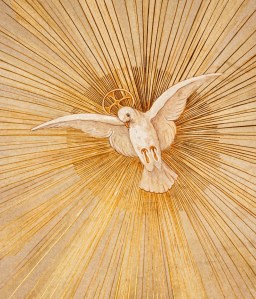
holy spirit dove 4In the last supper, Jesus promised the disciples that He would send another advocate to be with them forever. Who is this other advocate?

We all know that He is the Holy Spirit, the third person of the Most Holy Trinity. Yet, how did Jesus describe Him in the Gospel of John, and why did He call the Spirit as such? Jesus named Him as the Paraclete, or in Greek, “Parakletos.” This exceptional word comes from two more basic Greek words, “para” means “at the side,” and “kaleo” means “to call.” Thus, “parakletos” can be understood as someone who is called to be at our side, especially in times of need. It is crucial to see the original setting where this word came: it was the courtroom. No wonder that the word “parakletos” may be translated into English as an advocate like a lawyer who assists us, defend us and speak on our behalf in the legal trial. Yet, as we know, a good lawyer does not only assist within the courtroom, he is there before and after the trial. He gives his advice and prepares us for the proceedings. In the end, he consoles us if we face severe judgment as well as rejoices if we emerge victoriously. No wonder in English, the word “paraclete” can be translated as an advocate, comforter, counselor, and even helper. But why did Jesus choose this image in the first place?

The reason is that Jesus knew that as the disciples preached His Gospel, they would face many trials. Peter and John faced trial before the Sanhedrin [Acts 4:5 ff]. Stephen was accused of blasphemy and stoned to death [acts 7]. And Paul was put under many judgments before he gave up his life for Jesus. In this kind of reality, Jesus did the right thing: to send the Paraclete. The Holy Spirit would be at the side of the disciples facing trials and hardship as they were preaching Jesus. Indeed, it is inconceivable for these disciples to endure and even give up their lives without the Holy Spirit that were at their side.

In our time, as disciples of Christ, we are facing a global trial caused by the virus covid19. Some of us are luckier because we just need to stay at home. Some of us are fortunate because we can enjoy the livestreaming mass, even twice a day! But for many, the pandemic means losing their livelihood and even their lives. For many, they cannot go to the church even when there was no pandemic.

We indeed need the Paraclete, but one of the gifts of the Holy Spirit is that we are also empowered to be a little paraclete to our brothers and sisters. The moment we, the Dominican community in Surabaya, was required to close the church temporarily for the public service, we immediately were eager to provide an online service to our parishioners. We are thankful that many people donate relief goods to our parish, and our parish priests assisted by lay partners work hard to channel this help to those who are in need.

Instead of complaining that we cannot go to the Church or blaming others for the situations, we should ask the Holy Spirit to empower us to become little paracletes and find ways to be advocates, comforters and at the side of our brothers and sisters in need.

Valentinus Bayuhadi Ruseno, OP