

Sixth Sunday in Ordinary Time [B]
February 14, 2021
Mark 1:40-45
 Leprosy in the time of Jesus is not only physically and mentally deadly, but also spiritually incapacitating. Leprosy or currently known as the Hansen’s disease is horrifying sickness because it does not kill the person slowly, but it gradually deforms and incapacitates the person. The bacteria cause terrible damage in peripheral nervous to the point that the person is no longer feeling the sensation, especially pain. Without this sensation, the person fails to recognize and avoid bodily injuries. Losing limbs is shared among the victims with advanced stages of leprosy.
Since the sickness was incurable and highly contagious in ancient time, it was a natural reaction for the people to exclude the infected persons from the community. We can imagine the effects of exclusion suffered by the victims. They were cut from the bare necessities, separated from their family and friends, and aware that they will die a horrible death. People could quickly become insane. This awareness that they would not survive outside society pushes the people with leprosy to gather and form their community. Thus, lepers’ colonies were deemed a practical solution to support one another in the face of the bleak reality of life.
In the Jewish context, skin diseases, especially leprosy, are about biological and mental problems, but it is a religious issue. The Book of Leviticus states that people with certain skin diseases, including leprosy, have to present themselves to the priest and have their bodies examined. The priest may declare that persons as unclean. After the verdict, the persons have to go out from the community, wear rent cloth, and let their hair dishevel. These become visible signs that they are with contagious diseases and unclean. Yet, if a person remains going closer to them, they shall shout, “Unclean! Unclean!” This is to make sure healthy and clean persons will not come nearer. Being declared unclean means the person is not fit for the religious service and cannot enter the holy ground like the temple. Thus, for a Jew who contracted leprosy, he was excluded physically and mentally and religiously. The sickness also cut them from God they serve and worship.
In the Gospel, we see the leper who took the initiative to approach Jesus, thus breaking the most fundamental prohibition to stay away from people and God. The leper’s request was not to be healed, but rather to be ‘clean.’ The deepest desire of this leper is not physical healing, but to worship his God. The real healing comes only when we can approach and worship the true God. Looking at his courage and deepest longing, Jesus was moved by pity and made him clean.
The leper in the Gospel teaches us a lot about the genuine desire for healing. Perhaps, many of us look for God because we wish to be cured of diseases, seek financial success, or free from other problems. Yet, we seldom desire to see God because we want to be healed spiritually, liberated from sins, and be one with Him. The Gospel teaches us that true healing is more than physical health and economic stability, but the union with God.
Valentinus Bayuhadi Ruseno, OP
Photocredit: Claudio Schwartz
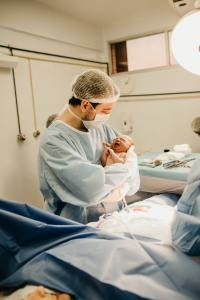 Jesus cannot be separated from His healing ministries. Some of the healings are remarkable, like the healing of a woman with the hemorrhage and Jarius’ daughter [Mark 5:321-43]. They are astonishing because these are practically impossible cases. The woman has suffered for twelve years without sign of hope, and Jarius’ daughter is as good as dead. Yet, Jesus does heal not only those with grave illness but also those with curable sickness.
 Yesus tidak dapat dipisahkan dari pelayanan penyembuhan-Nya. Beberapa kisah kesembuhan merupakan kejadian yang luar biasa seperti kesembuhan seorang wanita dengan pendarahan dan juga anak perempuan Jarius [Markus 5: 321-43]. Penyembuhan ini adalah mujizat karena kasus-kasus yang dihadapi Yesus adalah hal-hal mustahil disembuhkan pada zaman-Nya. Sang wanita telah menderita pendarahan selama dua belas tahun tanpa harapan, dan putri Jarius sebenarnya sudah meninggal. Di sisi lain, Yesus tidak hanya menyembuhkan orang yang sakit parah, tapi juga mereka yang sakitnya tergolong tidak membahayakan.
 Kita merayakan pesta Keluarga Kudus, namun kita tidak hanya merayakan keluarga Yesus, Maria dan Yusuf, tetapi setiap keluarga di dunia. Melalui perayaan liturgi hari ini, Gereja mengundang kita untuk menyadari pentingnya dan berharganya keluarga kita. Tidak hanya menghargai nilai dasar keluarga, kita diundang untuk merangkul dan merayakan kehidupan keluarga.
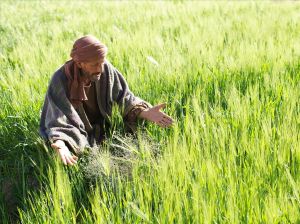 The parable of the wheat and weed is one of a kind. If we survey the details, we are supposed to raise our eyebrows. Firstly, if you become a person who will destroy your opponent’s field of wheat, you know that there are several other effective ways to accomplish that. We can simply set a small fire on the wheat, and the entire field will eventually turn to be an inferno. But, the enemy chose unorthodox tactic: to sow seeds of weed during the planting period. While the weed may disturb the growth of the wheat, they will not sufficiently damage and stop the harvest. So, what is the purpose? What is surprising is that the decision of the field’s owner. When he was notified about the presence of the weed, he immediately knew the culprit, and instead to act promptly and protect their wheat, he decided to allow the weeds to thrive among his wheat.
 Perumpamaan tentang gandum dan ilalang adalah sangat unik. Jika kita meneliti detailnya, kita seharusnya terkejut. Pertama, jika kita menjadi orang yang akan menghancurkan ladang gandum lawan kita, kita tahu bahwa ada beberapa cara lain yang lebih efektif untuk mencapainya. Kita cukup membakar beberapa gandum, dan seluruh ladang pada akhirnya akan berubah menjadi api raksasa. Tetapi, musuh ini memilih taktik yang tidak lazim: menabur benih ilalang selama masa tanam. Sementara ilalang dapat mengganggu pertumbuhan gandum, mereka tidak akan cukup merusak dan menggagalkan panen. Jadi, apa tujuannya? Yang mengejutkan adalah keputusan pemilik ladang. Ketika dia diberitahu tentang keberadaan ilalang, dia segera tahu pelakunya, dan bukannya bertindak cepat untuk melindungi gandumnya, dia memutuskan untuk membiarkan ilalang tumbuh subur di antara gandumnya.
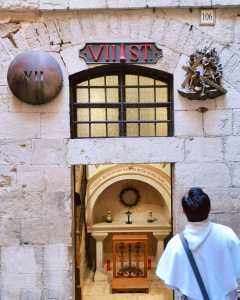 From the previous two Sundays, we learn that Jesus lays down the cost of following Him, how to become His disciples. And they are extremely tough. One has to follow Jesus wherever He goes. One must love Jesus above anyone else. One must be ready to suffer persecutions and hardships, carry his cross, and give up his life for Jesus. It is Jesus or nothing at all. However, following Jesus is not all about hardship and sacrifice. Today we hear that to walking with Him, we receive certain “perks” that others cannot even dare to offer.
 Dari dua hari Minggu sebelumnya, Yesus menunjukkan apa yang harus kita serahkan untuk menjadi murid-Nya. Dan hal-hal yang harus kita lepaskan demi Yesus sanggatlah sulit. Kita harus mengikuti Yesus ke mana pun Dia pergi. Kita harus mengasihi Yesus lebih dari yang lain bahkan orang tua kita. Kita harus siap untuk menderita, menanggung kesulitan, memikul salib, dan menyerahkan hidup bagi Yesus. Pilihannya adalah Yesus atau tidak sama sekali. Namun, mengikuti Yesus tidak semua tentang kesulitan dan pengorbanan. Hari ini kita mendengarkan bahwa menjadi murid-Nya, kita menerima “hal-hal baik” yang hanya Yesus bisa berikan.
 Dalam banyak budaya seperti di Indonesia, Filipina dan Cina, menghormati orang tua kita adalah hal yang sangat penting. Di Indonesia, untuk mendidik nilai ini, cerita rakyat “Malin Kudang” diajarkan bahkan di sekolah dasar. Intinya, Malin tidak hanya gagal menghormati orang tuanya, tetapi juga sengaja mengabaikan ibunya yang sudah tua. Karena itu, dia dikutuk menjadi batu. Adalah sesuatu yang tidak termaafkan untuk tidak menghormati seseorang yang telah memberikan hidup kita dan mendidik kita untuk hidup.
 In Medio Ecclesiae