

12th Sunday in Ordinary Time [A]
June 21, 2020
Matthew 10:26-33
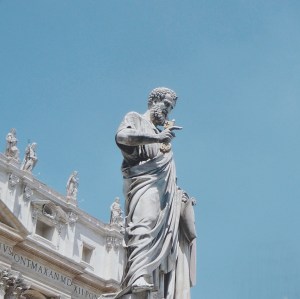 Jesus never promises that the disciple will have easy and prosperous lives. Jesus demands the opposite. After being chosen, the twelve disciples are sent to preach that the Kingdom is at hand, and yet they will not go like any royal emissaries with their military escort. No! They will travel as simple men going on foot and carrying minimal provision. They will rely on the generosity of their hosts, and the worst part is that they are going to face rejection.
Naturally, humans as they are, they are growing fear. Yet, Jesus tells them that this mission is just “on the job training,” because they are going to undergo something even deadlier in the future. True enough, after the Pentecost, they will preach that Jesus is Lord, and they are facing severe rejection, terrible persecution, and even gruesome death. As Jesus teaches them, “the disciples are no greater than their master.” If Jesus, their master, is rejected, insulted, and condemned to death, the disciples will share the same path. Peter is crucified upside down, James, brother of John, is beheaded, and James son of Alpheus, is stoned to death.
Jesus understands their human and natural fear, but Jesus tells them that they shall not fear. Why? The answer of Jesus is simple. Why should we fear dying if we will perish anyway? The choices are whether we die as a witness to Christ or die running from Christ?
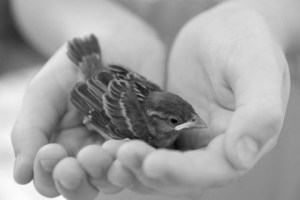
Furthermore, Jesus reveals the real reason why we should not be afraid: we have God, who is a loving and caring Father. Jesus gives a lucid yet simple explanation: how God treats a little sparrow. Sparrow is a kind of vertebrates that is practically worthless in the eyes of merchants, but for God, this little bird is His creatures, and when He created something, He has a good plan for it, and He sees to it that this plan will unfold providentially. In the word of Christian Philosopher Peter Kreeft, even God loves mosquitos. If God cares and loves the sparrow, would He not care and love for us? Again, Jesus points out a lovely truth: God knows better than we know ourselves, even He counts our hairs!
When a sparrow falls and dies, it is part of God’s perfect plan, and so when the disciples are experiencing rejections, trials, and even death, it is also part of God’s providence. Yes, often, our sufferings can be absurd. Why do we have to lose someone we love? Why do we suffer from incurable sickness? We do not understand, but even these terrible things in life are also parts of God’s providence.
We may not see it now, but perhaps we may see it at a later time, or perhaps, we never discover the reasons because of our too narrow minds. Yet, in God’s eyes, it is totally making sense. The gruesome death of martyrs, for example, is unthinkable. Still, Tertullian, a Christian apologist in 3rd century, saw it in a deeper perspective and wrote, “We spring up in greater numbers the more we are mown down by you: the blood of the Christians is the seed of Christianity.”
Jesus does not call us to enjoy a prosperous life but to be His witnesses. Though things may turn against us, Jesus tells us not to fear and worry because, in the end, all will work according to His beautiful plan because He loves us.
Valentinus Bayuhadi Ruseno, OP
 Yesus tidak pernah berjanji bahwa murid-murid-Nya akan memiliki kehidupan yang mudah dan makmur. Yesus menuntut yang sebaliknya. Setelah dipilih, kedua belas murid diutus untuk mewartakan bahwa Kerajaan Allah sudah dekat, namun mereka tidak akan pergi seperti utusan kerajaan duniawi dengan pengawalan voorijder. Tidak! Mereka akan pergi sebagai orang sederhana yang berjalan kaki dan membawa persediaan ala kadarnya. Mereka akan mengandalkan kemurahan hati tuan rumah mereka, dan bagian terburuknya adalah mereka akan menghadapi penolakan.
 Hari Raya Tubuh dan Darah Yesus Kristus berawal dari inisiatif St. Juliana dari Liege, yang meminta uskupnya dan sahabat-sahabatnya untuk menghormati secara khusus sakramen Ekaristi, dan kehadiran nyata Yesus Kristus dalam Sakramen Mahakudus. Berdirinya Ekaristi sendiri terjadi dalam Perjamuan Terakhir Tuhan, dan setiap Kamis Putih, Gereja merayakan peristiwa ini. Namun, karena Kamis Putih adalah bagian yang tidak terpisahkan dari Trihari suci Paskah, perhatian diberikan pada persiapan bagi umat beriman untuk memasuki misteri Sengsara dan Kebangkitan Tuhan kita. Karena berakar di Kamis Putih, Hari Raya Corpus Christi dirayakan pada hari Kamis setelah hari Minggu Tritunggal. Namun, di beberapa negara seperti Indonesia, perayaan dipindahkan ke hari Minggu berikutnya untuk mengakomodasi partisipasi yang lebih besar dari umat beriman.
 The solemnity of the Body and Blood of Jesus Christ takes its origin from the initiative of St. Juliana of Liege, who asked his bishop and his friends to honor, in a special way, the institution of the Eucharist, and the real presence of Jesus Christ in the Blessed Sacrament. The institution of the Eucharist itself took place in the Last Supper of the Lord, and every Holy Thursday, the Church celebrates this event. However, since Holy Thursday is an inseparable part of the Easter Triduum, the attention is given to the mystery of the Passion and Resurrection of our Lord. Because of its rootedness in Holy Thursday, the solemnity of Corpus Christi is celebrated on Thursday after the Trinity Sunday. Yet, in several countries, the celebration is moved to the next Sunday to accommodate the greater participation of the faithful.
 The two disciples went back home to Emmaus. One of them was Cleopas, and his companion probably was his wife. Perhaps they got afraid of the Roman and Jewish authorities who might go after them after they killed Jesus, the leader. Or maybe, they just got their hope and expectation shattered when Jesus, their expected Messiah, was crucified.
 Today is the day of resurrection. Today is the day Jesus has conquered sin and death. Today is the day of our victory. No wonder among the liturgical celebration of the Church, Easter is the grandest, the longest and the most spectacular. It is the time that the churches are flooded with the faithful. It is the time that parishioners got involved in many activities, practices, and services. It is the time when families gather and celebrate. It is the time the priests receive more blessings!
 Hari ini adalah hari kebangkitan Yesus. Hari ini adalah hari Yesus mengalahkan dosa dan maut. Hari ini adalah hari kemenangan kita. Tidak mengherankan di antara perayaan liturgi Gereja, Paskah adalah yang termegah, terpanjang dan paling spektakuler. Inilah saatnya gereja dibanjiri oleh umat beriman. Inilah saatnya umat paroki terlibat dalam banyak kegiatan, persiapan, dan pelayanan. Inilah saatnya keluarga berkumpul dan merayakan. Inilah saatnya para imam menerima lebih banyak berkat!
 Jika ada satu hal yang menyatukan orang-orang dari berbagai negara, bahasa, dan agama, ini adalah penderitaan. Dengan coronavirus yang menyebar sangat cepat, orang-orang dengan latar belakang yang berbeda, muda dan tua, kaya dan miskin, dan bangsawan dan rakyat jelata, dan awam dan klerus jatuh tersungkur dan gemetar. Memang, virus mikroskopis ini telah meluluh lantahkan kehidupan banyak orang. Orang-orang sakit kerah, rumah sakit kewalahan, kota-kota terisolasi, keluarga-keluarga terpisah, pekerja-pekerja menganggur, pemerintah-pemerintah tak berdaya, dan gereja-gereja kosong. Penderitaan memaksa kita untuk mengakui kelemahan manusiawi kita dan semua yang kita banggakan, ternyata hampa.
 If there is one thing that unites people from different nations, languages, and religions, that is the experience of suffering. With the ultra-fast spreading coronavirus, covid-19, people with different backgrounds, young and old, rich or poor, and noblemen or commoners, and laypeople or clergy fall in their knees and tremble. Indeed, this microscopic virus has shattered countless lives. People are dying, hospitals are overwhelmed, cities are isolated, families are separated, workers are jobless, governments are at loss, and churches are empty. Pope Francis notes that “we are just one the same boat”, and this boat is sinking. Suffering forces us to admit our human frailty and all that we are proud of, are a mere breath.
 In Medio Ecclesiae