

Third Sunday of Lent [March 24, 2019] Luke 13:1-9
“Sir, leave it for this year also, and I shall cultivate the ground around it and fertilize it; it may bear fruit in the future (Luk 13:8).”
 It normally takes around three years for a fig tree to reach its maturity and fruition. If it does not produce fruit by that time, it is not likely to bear fruit at all. The owner has a reasonable right to cut the tree, but through the effort of the gardener, it is given another chance. Like the fig tree, through the effort of our Chief Gardener, the new Adam of eternal Eden, Jesus Christ, we are given another chance to change and be fruitful.
However, it is always easier said than done. In daily reality, it is not simply a matter of instantly erasing errors on the whiteboard, of flash and clear-cut change from bad guy to good guy, from villains to heroes. Some of us are merely entrapped in the evil structures or systems that promote sin in us and through us, and we simply do not know how to get out of it. Some of us are victims of vicious cycles of sin in our families or our societies that sooner or later turn us to be the perpetrators, and we are merely powerless to find the way out.
One time, I visited a place for the youth who conflicted with the Law. I met this teenager, Joseph, not his real name. He was arrested for stealing small amount of money, or petty theft. He shared to me his story that he was without parents, and he lived together with a band of snatchers. His elders in the group taught him how to steal and snatch, and after several practices and actual deeds, he developed the habit, not only to take the money, but also to desire for an easy money. He has been in the facility for several times, and every time he was released, he promised himself not to go back to that way of life. Yet, because he no longer knew what to do and where to go outside the facility, he once again stole something for him to fill his hungry stomach. Then, again he was caught.
Then, what does it mean to repent, to change? Is there any point we observe Lenten season every year, yet no apparent change seems to take place? We miss the point if we just think that Lenten season is only about instant change.
It is a story of a struggling fig tree to be fruitful and yet find itself facing desperate end, the story of struggling humanity. It is a story of a gardener who refuses to give up on his tree, a story of God who never loses hope in humanity. The Lenten season means that despite of all our imperfection and disfigured life, we refuse to succumb to despair. It means we take courage to fight hopelessness even when no actual fruit of change seems visible in our lives. It means we always hope in the Lord who never loses hope in us.
Deacon Valentinus Bayuhadi Ruseno
 Biasanya membutuhkan waktu sekitar tiga tahun bagi pohon ara untuk mencapai masa dewasa dan berbuah. Jika tidak menghasilkan buah pada saat ini, kemungkinan besar pohon ara tersebut tidak akan berbuah sama sekali. Tentunya, Sang pemilik memiliki hak untuk menebang pohon tersebut dan menanam pohon baru. Tetapi, melalui upaya sang tukang kebun, pohon ara diberi kesempatan baru. Seperti pohon ara, melalui upaya Sang Tukang Kebun kita, Adam yang baru di taman Eden yang abadi, Yesus Kristus, kita diberi kesempatan baru untuk berubah dan berbuah.
 Tiga hari Minggu terakhir ini, kita telah mendengarkan serangkaian ajaran Yesus yang diberikan di Dataran [Luk 6]. Dua Minggu yang lalu, kita membaca tentang Sabda Bahagia. Ini adalah serangkaian kondisi yang menuntun kita menuju kebahagiaan dan berkat sejati. Minggu lalu kita mendapatkan beberapa langkah praktis untuk mencapai Sabda Bahagia ini. Dan hari Minggu ini, kita menemukan inti dari ajaran Yesus: ini adalah pembentukan hati manusia.
 Minggu lalu, kita mendengarkan ajaran Yesus Kristus tentang Sabda Bahagia. Ini adalah serangkaian kondisi yang menuntun seseorang menuju hidup berkat atau kebahagiaan sejati. Minggu ini, kita menemukan langkah-langkah praktis tentang cara mencapai kebahagiaan sejati ini. Minggu lalu, kita belajar bahwa Sabda Bahagia Yesus adalah kebalikan dari tatanan kebahagiaan duniawi. Bagi dunia, menjadi tamak akan kekayaan, berpengaruh, terkenal, dan kuat secara seksual adalah syarat untuk kebahagiaan. Yesus membalik tatanan ini dan mengatakan bahwa mereka yang murah hati, berbelas kasih dan murni hatinya adalah mereka yang benar-benar bahagia.
 Today’s Gospel is truly beautiful. We have two protagonists. They are women, and they are both pregnant. Who are they? Mary and Elizabeth. Yet, why is the story beautiful? It is just natural for women to get pregnant. Unless we need to go closer to the stories and place ourselves in the shoes of Mary and Elisabeth, we can never see the true beauty of their story.
 Injil hari ini benar-benar indah. Kita memiliki dua protagonis. Mereka adalah wanita, dan mereka berdua sedang hamil. Siapa mereka? Maria dan Elizabeth. Namun, mengapa cerita mereka indah? Tentunya, wajar bagi wanita untuk hamil. Hanya dengan melihat lebih dekat kisah mereka berdua, kita baru bisa melihat keindahan sejati dari kisah mereka.
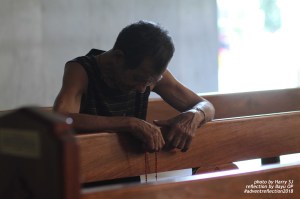 The second question that Archbishop Socrates Villegas of Lingayen-Dagupan asked us during our ordination was, “Are you broken enough?” Once again his question raised eyebrows and was, indeed, counter-intuitive. We want to be flawless, whole and perfect. We desire to achieve more in life, to be wealthy, healthy and pretty. We wish to be socially accepted, respected and gain certain prominence. We want to become somebody, and not nobody. We like others to call us as the famous doctors, the creative entrepreneurs, or successful lawyers. Or for us, people in the Church, we like people to consider us well-sought preachers, generous and builder-priests, or skillful and well-educated sisters.
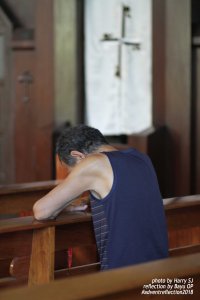 Pertanyaan kedua yang diajukan uskup agung Socrates Villegas dari Lingayen-Dagupan saat saya ditahbiskan adalah, “Apakah kamu sudah cukup terpecah dan remuk?” Sekali lagi pertanyaannya ini mengherankan. Kita ingin menjadi utuh dan sempurna. Kita ingin mendapatkan lebih banyak dalam hidup, menjadi kaya, sehat dan cantik. Kita ingin diterima secara sosial, dan dihormati dan memiliki pencapaian yang dapat dibanggakan. Kita ingin menjadi seseorang. Kita ingin orang lain menyebut kita sebagai dokter terkenal, pengusaha kreatif, atau pengacara yang sukses. Atau bagi kita, orang-orang yang melayani di Gereja, kita suka orang-orang menganggap kita sebagai pengkhotbah yang disukai, imam pembangun, atau suster yang terampil dan berpendidikan.
 In Medio Ecclesiae