
Weak Enough

Second Sunday of Advent [December 9, 2018] Luke 3:1-6

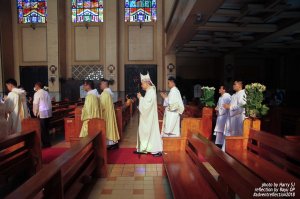
prayingDuring my ordination, Archbishop Socrates Villegas of Lingayen-Dagupan asked this question to us who would receive the sacred order, “Are you weak enough?” The question was mind-blogging and unexpected because often we have strength, power, and talents as our favorite subjects, and even obsession. We like to show to the world that we are achievers and conquerors. We parade our good education, high-earning job, or a beautiful face. The ‘superior’ mentality does not only affect the lay people traversing in the ordinary world, but also people dressed in white walking through the corridors of the Church. The clergy, as well as religious men and women, are not immune to this hunger for approval and sense of worthiness.

I have to admit also that our formation in the religious life is colored with this kind of ‘spirit.’ The study is important in our Dominican tradition, and we are struggling to meet the academic demands of philosophy and theology. Those who are excelling are honored, but those who are falling, are facing expulsion. Prayer and community life are basic in our spirituality, and we are living to meet the expectations in the seminary or convent, like regular prayers and various community activities. Those who meet the standards may pass the evaluation for ordination or religious profession, but those who are often late or absent, are deemed to have no vocation. Preaching is our name, and we give our all in our ministries. Those who are successful in their apostolate are exemplary, but those who are not able to deliver a good speech may wonder whether they are in the Order or ‘out of order.’

The ordination is for the worthy ones, meaning for those who ace all the requirements. However, the good archbishop reminds us that relying too much on our strength and goodness, we may hamper the work of God in us. When we become too handsome, the people begin focusing on us, rather than the beauty of the liturgy. When we preach too brilliantly, the people start admiring us rather than the Truth of the Word. When we teach too brightly, we outshine the Wisdom made flesh. We forget that all power and talents we have, belong to God, not ours. What we have, are weaknesses.

However, it is only in our weakness that God’s strength is shining brightly. He called Moses who was a murderer and a fugitive, to liberate Israel from the slavery. He called Jonah, a reluctant prophet, to save Nineveh. He chose Simon Peter, who betrayed Jesus, to be the leader of His Church. He appointed Paul, the Pharisee and the persecutor of Christians, to be the greatest apostle. He elected Mary, a poor and insignificant young woman, to be the mother of God.

Are we weak enough to allow God’s strength working in us? Are we enough to allow God’s beauty shining through us? Are we weak enough to let other people see God’s wisdom in us? Are we strong enough to admit that we are weak?

Deacon Valentinus Bayuhadi Ruseno, OP
Lemah

Minggu Kedua dalam Masa Adven [9 Desember 2018] Lukas 3: 1-6

processionSaat pentahbisan saya, Uskup Agung Socrates Villegas dari Lingayen-Dagupan bertanya kepada saya, “Apakah kamu cukup lemah?” Pertanyaannya tidak terduga dan bahkan membalikan nalar karena sering kita merasa bahwa kekuatan dan talenta yang kita miliki adalah hal yang penting dalam hidup kita, dan menunjukan siapa diri kita sesungguhnya sebagai milik kita. Kita ingin menunjukkan kepada dunia bahwa kita adalah orang yang berprestasi. Kita memamerkan bahwa kita memiliki pendidikan yang baik, pekerjaan yang berpenghasilan tinggi, atau rupa yang cantik. Mental ‘superior’ ini tidak hanya mempengaruhi orang awam yang bergulat dalam kehidupan sehari-hari, tetapi juga orang-orang berjubah yang putih berjalan di koridor Gereja. Para klerus, serta biarawan dan biarawati, tidaklah kebal terhadap hasrat untuk mendapatkan persetujuan dan rasa kelayakan.

Saya harus mengakui juga bahwa formasi kami dalam kehidupan religius diwarnai dengan ‘roh’ semacam ini juga. Studi adalah penting dalam tradisi Dominikan, dan kami berjuang untuk memenuhi tuntutan akademis baik di bidang filsafat, teologi dan ilmu lainnya. Mereka yang cerdas dan mendapat nilai tinggi, akan mendapat menghargai, tetapi mereka yang nilainya buruk, harus siap mundur dari formasi. Doa dan kehidupan komunitas adalah dasar dalam spiritualitas kami, dan kami hidup untuk memenuhi ekspectasi di seminari atau biara, seperti mengikuti doa dan berbagai kegiatan komunitas secara regular. Mereka yang memenuhi standar bisa lulus evaluasi untuk pentahbisan atau pengucapan kaul, tetapi mereka yang sering terlambat atau tidak hadir, dianggap tidak memiliki panggilan. Pewartaan adalah identitas kami, dan kami memberikan segalanya dalam pelayanan kami. Mereka yang berhasil dalam kerasulan menjadi teladan, tetapi mereka yang tidak mampu dan banyak mengalami kegagalan mungkin bertanya-tanya apakah mereka sungguh bagian dari Ordo Pewarta.

Pentahbisan adalah bagi yang layak, yang berarti bagi mereka yang memenuhi semua persyaratan. Namun, uskup agung Socrates yang baik mengingatkan kita bahwa terlalu mengandalkan kekuatan dan kebaikan kita sendiri, kita dapat menghambat rahmat Allah dalam diri kita. Ketika kita menjadi terlalu tampan, orang-orang mulai memusatkan perhatian pada kita, daripada keindahan liturgi. Ketika kita berkhotbah terlalu lihai, orang-orang mulai mengagumi kita daripada Kebenaran Firman. Ketika kita mengajar dengan begitu cemerlang, kita lebih bersinar dari Kebijaksanaan yang menjadi manusia. Kita lupa bahwa semua kekuatan dan bakat yang kita miliki adalah milik Tuhan, bukan milik kita. Apa yang kita miliki, adalah kelemahan.

Namun, hanya dalam kelemahan kita bahwa kekuatan Tuhan bersinar terang. Dia memanggil Musa yang adalah seorang pembunuh dan buronan, untuk membebaskan Israel dari perbudakan. Dia memanggil Yunus, seorang nabi yang pemberontak, untuk menyelamatkan Niniwe. Dia memilih Simon Petrus, yang mengkhianati Yesus, untuk menjadi pemimpin Gereja-Nya. Dia menunjuk Paulus, orang Farisi dan penganiaya Gereja perdana, untuk menjadi rasulnya yang hebat. Dia memilih Maria, seorang wanita muda yang miskin dan tidak penting, untuk menjadi bunda dari Tuhan.

Apakah kita cukup lemah untuk membiarkan kekuatan Allah bekerja di dalam kita? Apakah kita cukup agar keindahan Tuhan bersinar melalui kita? Apakah kita cukup lemah supaya orang lain melihat kebijaksanaan Tuhan di dalam kita? Apakah kita cukup lemah untuk mengakui bahwa kita lemah?

Diakon Valentinus Bayuhadi Ruseno, OP

The Gift of Ordination

First Sunday of Advent [December 2, 2018] Luke 21:25-28, 34-36

ordinationI have been in the Dominican formation for more than 12 years, and if I add four years of my minor seminary formation in Indonesia, it stretches to 16 years! It is insanely long that it occupies a more than half of my life. If we believe that everything has a purpose, I can ask myself, “what is the point of this extremely lengthy formation?” Why should I stay through thick and thin of formation life, through hours of assiduous study, through various programs, through daily rigor of prayer life?
The answer is surprisingly not difficult to see. It is because I want to become a priest and not any priest, it is a Dominican priest, and not only any Dominican priest, but it is a holy, faithful and holistically mature Dominican priest. It looks a simple answer, but every word in that answer carries certain enormous understanding and consequences. Having this so noble aim perhaps explains why the formation is incredibly extensive and long.

However, after passing through literally more than 5 thousand days in the formation, battling many tough examinations, attending countless prayers and spiritual exercise, involving myself in community activities, I am now standing before the threshold of the being-transforming rite what we call the ordination. Looking back, I am aware that I have reached that unprecedented improvements and growth. However, it is also true that I have come short in many aspects. I have committed untold stupidities, things that 14-year-old Bayu would not dare to contemplate. Thank God, that despite these shortcomings, I am still alive!

Honestly evaluating these things, I realize that I am not worthy of this ordination. I could boast some of my achievements, both in academic and non-academic fields. I could show myself as a brother who lives a religious life with certain regularity. I could boast the numbers of talks and lectures I prepared and gave. I could boast the Latin honor I received in every graduation. However, these things are just a bunch of straws!

However, why does this ordination remain within my reach despite my unworthiness? I realize that the vocation to the diaconate is a gift. In Philosophy expounded by St. Thomas Aquinas, I learn my essence is not my existence, meaning to exist is not even my right. Yet, the mere fact, I exist, means God, who is the source of all existence, has willed that I should live. Fundamentally my life is not right or a must, but a gift. My existence is an utter gift of God and so also my ordination. It is not a gift based on a merit system, otherwise, it is called a reward. It is not a gift I could demand because it is my right. It is neither a gift coming from my inheritance nor a gift that I could purchase in the Church. It is a free, absolutely free. God in the mystery of His infinite mercy and wisdom, has decided to grant me this beautiful gift. As I receive this gift despite my unworthiness, I cannot be forever grateful.

The gift does not only speak of me, the recipient. Ultimately it points to the giver. The gift represents how the giver values the recipient. The more valuable the gift is, the more precious the recipient to the giver. The ordinary gift may symbolize the goodwill of the giver, but the gift that hurts the giver is certainly extraordinary because it bears the sacrificial love of the giver. The gift of ordination reveals who my God is. He is God who sees beyond my weakness and flaws, who considers me as His precious own, who dares to share His own life and mission with me. Thus, I am forever grateful.

Br. Valentinus Bayuhadi Ruseno, OP

Amputation

Reflection on the 26th Sunday in Ordinary Time [September 30, 2018] Mark 9:36-43, 45, 47-48

“If your hand causes you to sin, cut it off.  (Mk. 9:43 )”

confessionWhen I was assigned to the hospital to serve as a chaplain, I witnessed the rise of diabetic cases as well as its terrifying effects on the patients. In simple term, diabetes is a condition in a person who can no longer naturally manage their blood sugar. In more serious cases, the body loses its natural ability to heal its wounds. In the beginning, it was a small open wound, yet since the body no longer heals, the infections set in, and this leads into gangrene or the death of the body’s tissues. I accompanied some patients who were struggling with this situation and witnessed how their fingers or even foot were darkened and deformed. When the ordinary treatment no longer worked, the amputation became the only merciful option as to prevent the spread of infections. As a chaplain, accompanying these patients was one of my toughest missions in the hospital.
In today’s Gospel, Jesus’ words are pretty harsh, if not violent. He wants the one who causes the believers to sin to be thrown into the sea. He wants hands and feet cut, and eyes plugged. He even describes Gehenna in more vivid details, “where their worm does not die, and the fire is not quenched.” The image of Jesus seems to be far different from Jesus who is gentle and merciful. What is going on? Is Jesus promoting violence? Is Jesus a schizophrenic or having a split personality?

Jesus is perfectly sane. Yet, he becomes passionate because he is teaching a serious matter with a grave consequence. This is none other than sin. Jesus knows well that sin corrupts, and like growing roots, it corrupts to every side. Sin destroys our souls, our neighbors, our environment and even our holy relationship with God. What more sinister about sin is that deforms our conscience and makes us believe that we are just doing fine. In his book ‘The Name of God is Mercy, Pope Francis speaks of the effect of sinful corruption, “Corruption is not an act but a condition, a personal and social state we become accustomed to living in… The corrupt man always has the cheek to say, ‘It wasn’t me!”…He is the one who goes to Mass every Sunday but has no problem using his powerful position to demand kickbacks…then he boasts to his friends about his cunning ways.”

Like in the case of a person struggling with diabetes and having gangrene in his finger, it is better for him to amputate the affected finger as to prevent the spreading of infection, and thus, save his other organs, and life. So it is with sin. Jesus commands us to “amputate” those areas in our lives that are corrupted by sin, as to save our souls. But, this is not easy. Like some of the patients I ministered to, they refuse to give up the precious parts of their bodies. They deny, get angry and frustrated, and try to bargain with the doctors to avoid amputation. With the same mentality, we often deny that we nurture our vices. We get angry when people correct us and reveal us our sins. We also bargain with the Lord to keep our favorite sins and tell Him that we are going to be better in other aspects of our lives. However, these do not work. A radical “amputation” is necessary to save our ailing souls.

The good news, however, is that unlike the body which will never regain the lost limbs, our souls will, in fact, grow even holier after the “amputation.” The relationship between others will be purified, our attitude towards the environment will be filled with care and mercy, and our love for God will be deepened.

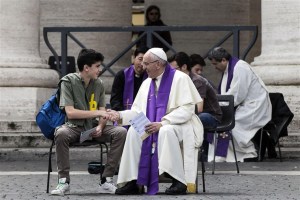
What are our sinful attitudes that harm ourselves, others and the environment ? Are we humble enough to receive corrections? Are we courageous enough to acknowledge them as sins? Do we ask God’s grace to prepare us for the sacrament of confession?

Br. Valentinus Bayuhadi Ruseno, OP

Amputasi

Renungan pada Minggu ke-26 pada Masa Biasa [30 September 2018] Markus 9: 36-43, 45, 47-48

“Dan jika tanganmu menyesatkan engkau, penggallah. (Mk. 9:43) ”

francis hearing confessionKetika saya bertugas pelayanan di rumah sakit di Manila, saya menyadari bahwa kasus diabetes berkembang secara pesat, dan juga efeknya yang menakutkan bagi para pasien. Secara sederhana, diabetes adalah suatu kondisi pada seseorang yang tidak lagi dapat secara alami mengelola gula darahnya. Dalam kasus yang lebih serius, tubuh kehilangan kemampuan alami untuk menyembuhkan luka-lukanya. Pada awalnya adalah luka yang kecil, namun karena tubuh tidak lagi bisa meyembuhkan, infeksi-infeksi pun berkembang, dan ini mengarah pada gangren atau kematian jaringan-jaringan tubuh. Saya menemani beberapa pasien yang bergulat dengan situasi ini, dan menyaksikan bagaimana jari atau bahkan kaki mereka menghitam dan berubah bentuk. Ketika pengobatan biasa tidak lagi bekerja, amputasi menjadi satu-satunya pilihan untuk mencegah penyebaran infeksi. Sebagai seorang frater yang bertugas di rumah sakit, mendampingi pasien-pasien ini adalah salah satu misi terberat saya di rumah sakit.
Dalam Injil hari ini, kata-kata Yesus sangat keras. Dia ingin orang yang menyebabkan orang lain berbuat dosa, dibuang ke laut. Dia ingin tangan dan kaki dipotong, dan mata tercungkil. Dia bahkan menggambarkan Gehenna dengan detail yang lebih jelas, “di mana ulat-ulat bangkai tidak mati dan api tidak padam (Mk. 9:48).” Yesus kali ini tampaknya jauh berbeda dengan Yesus yang lembut dan penuh belas kasihan. Apa yang sedang terjadi? Apakah Yesus mempromosikan kekerasan? Apakah Yesus seorang penderita skizofrenia atau memiliki kepribadian ganda?

Tidak ada yang salah dengan Yesus. Namun, dia menjadi penuh semangat karena dia mengajar tentang hal yang serius dengan konsekuensi sangat berat. Ini tidak lain adalah dosa. Yesus tahu benar bahwa dosa merusak, dan seperti akar yang tumbuh, dosa merusak ke segala sisi. Dosa menghancurkan jiwa kita, sesama kita, lingkungan kita dan bahkan hubungan kudus kita dengan Tuhan. Apa yang lebih menyeramkan tentang dosa adalah dosa merusak hati nurani kita dan membuat kita percaya bahwa kita tidak melakukan sesuatu yang salah. Dalam bukunya ‘The Name of God is Mercy, Paus Fransiskus berbicara tentang efek dari korupsi dosa, “Korupsi jiwa bukanlah suatu tindakan tetapi suatu kondisi, keadaan pribadi dan sosial yang menjadi kebiasaan hidup… Orang yang korup selalu memiliki muka untuk mengatakan, ‘Bukan aku!’ … Dia adalah orang yang pergi ke Misa setiap Minggu tetapi tidak memiliki masalah menggunakan posisinya yang kuat untuk meminta suap … lalu dia memamerkan kepada teman-temannya tentang cara-cara liciknya tersebut.”

Seperti dalam kasus orang yang bergulat dengan diabetes dan memiliki gangren di jarinya, lebih baik baginya untuk mengamputasi jari untuk mencegah penyebaran infeksi, dan dengan demikian, menyelamatkan organ lain, dan hidupnya. Demikian juga dengan dosa. Yesus memerintahkan kita untuk “mengamputasi” area-area dalam hidup kita yang dirusak oleh dosa, untuk menyelamatkan jiwa kita. Tapi, ini tidak mudah. Seperti beberapa pasien yang saya layani, mereka menolak menyerahkan bagian-bagian berharga dari tubuh mereka. Mereka menolak, marah dan frustrasi, dan mencoba tawar-menawar dengan dokter untuk menghindari amputasi. Dengan mentalitas yang sama, kita sering menyangkal bahwa kita memelihara sifat buruk kita. Kita menjadi marah ketika orang mengoreksi kita dan mengungkapkan dosa-dosa kita. Kita juga tawar-menawar dengan Tuhan untuk tetap menyimpan dosa-dosa favorit kita, dan mengatakan kepada-Nya bahwa kita akan menjadi lebih baik dalam aspek-aspek lain dari kehidupan kita. Namun, ini tidak akan pernah berhasil. “Amputasi” radikal diperlukan untuk menyelamatkan jiwa kita yang sakit.

Namun, kabar baiknya adalah bahwa jiwa kita tidak seperti tubuh yang tidak akan mendapatkan kembali anggota badan yang hilang, jiwa kita bahkan akan tumbuh bahkan lebih kudus setelah “amputasi”. Hubungan antara orang lain akan dimurnikan, sikap kita terhadap lingkungan akan dipenuhi dengan perhatian dan belas kasihan, dan cinta kita kepada Tuhan akan diperdalam.

Apa dosa-dosa kita yang merugikan diri kita sendiri, orang lain dan lingkungan? Apakah kita cukup rendah hati untuk menerima koreksi? Apakah kita cukup berani untuk mengakui dosa-dosa kita? Apakah kita meminta rahmat Tuhan untuk mempersiapkan kita untuk sakramen pengakuan dosa?

Frater Valentinus Bayuhadi Ruseno, OP

Half Christ

Reflection on 24th Sunday in Ordinary Time [September 16, 2018] Mark 8:27-35

“Jesus asked them, ‘But who do you say that I am?’ (Mk. 8:29)”

carrying crossSeveral years ago, I gave a talk on the introduction to Christology to a group of young Filipino professionals who wished to deepen their spirituality. The first question I asked them as we commenced the short course was, “Who do you say that Jesus is?” The answers were varied. Some gave a dogmatic formula like Jesus is God, one quoted the Bible saying Jesus is the Word made flesh, one expressed boldly that Jesus is Savior and Lord, and the rest shared personal convictions like Jesus is their closest friend, or Jesus is their Shepherd. All these answers were right, but nobody claimed that Jesus is the Christ. Considering that our subject was Christology, we missed the basic Jesus’ title, in Greek, “Christos,” in Hebrew, “Messiah,” and translated into English, the Anointed One. Fortunately, around two thousand years ago, Simon Peter was able to spell the title when Jesus Himself asked the question.
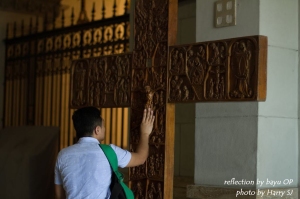
Going deeper into our Gospel today, we are at chapter 8 of the Gospel of Mark. Since Mark has 16 chapters, we are literally in the middle of this second canonical Gospel. Yet, today’s reading does only happen to be in the middle of the Gospel, but it turns out to be the turning point of the Gospel. In the first eight chapters, Mark narrates Jesus’ ministry in Galilee and some other Gentile regions in the north of Israel. Jesus is doing wonders and teaching with authority. He can draw a lot of people, and some of them will be close followers called His disciples. Meanwhile, the last eight chapters, Jesus begins to journey down south and reaches His destination in Jerusalem. There, He will face his tormentors, and He will meet His passion, death and resurrection.

Peter gets the bulls-eye answer. After all, Peter’s profession is what Mark intends to convey to his readers, “The beginning of the gospel of Jesus Christ (Mk. 1:1).” Unfortunately, when Jesus reveals His suffering and death, it does not sit well with Peter’s idea of the Messiah. Perhaps Peter gets stuck with the concept of a powerful and conquering Christ that will lead Israel into victory.  Jesus has been preaching about the coming of the Kingdom, teaching unforgettable lessons, and performing unmatched miracles. Surely, nothing, not even the great Roman empire could beat this Messiah. However, Peter just desires the first half of the Gospel, and cannot be at peace with the other half of the Gospel. If Peter and other disciples want to accept Jesus fully, then they need to embrace the other half of the Gospel of Jesus Christ as well. Following Jesus does not stop in Galilee where things are just awesome, but it has to go down to Jerusalem, where the persecution and death lurk. Thus, Jesus declares, “Whoever wishes to come after me must deny himself, take up his cross, and follow me. (Mk. 8:34).”

Often we are like Peter. We call ourselves Jesus’ disciples and accept the Gospel of Jesus Christ, but in reality, we just want half of Jesus or parts of the Gospel. We go to the Church and worship God, but we do not want to soil our hands in helping our brothers and sisters in need. Married couples enjoy the benefits of marriage, yet refuse to see children as a gift of God. Religious men and women vow to serve the Lord and His Church, but often, we serve our own interests and desires. No wonder G. K. Chesterton once wrote, “The Christian ideal has not been tried and found wanting. It has been found difficult; and left untried.” As we try to answer Jesus’ question, “Who do you think that I am?”, we are invited to reflect and to accept Jesus and His Gospel, not half, but the whole of Him.

Br. Valentinus Bayuhadi Ruseno, OP

Setengah Kristus

Renungan untuk Minggu ke-24 dalam Masa Biasa [16 September 2018] Markus 8: 27-35

“Yesus bertanya kepada mereka, “Tetapi apa katamu, siapakah Aku ini?” (Mk. 8:29)

touching the crossBeberapa tahun yang lalu, saya memberikan ceramah pengantar Kristologi bagi sekelompok profesional muda Filipina yang ingin memperdalam spiritualitas mereka. Pertanyaan pertama yang saya tanyakan kepada mereka adalah, “Menurut kamu, siapakah Yesus itu?” Jawabannya beragam. Beberapa memberikan formula dogmatis seperti Yesus adalah Allah, ada yang mengutip Alkitab dan mengatakan Yesus adalah Firman yang menjadi daging, seseorang menyatakan dengan berani bahwa Yesus adalah Juruselamat dan Tuhan, dan sisanya berbagi keyakinan pribadi seperti Yesus adalah sahabat terdekat mereka, atau Yesus adalah Gembala mereka. Semua jawaban ini benar, tetapi tidak ada yang mengklaim bahwa Yesus adalah Kristus. Mempertimbangkan bahwa ceramah kami adalah Kristologi, kami sepertinya lupa akan identitas dasar Yesus, dalam bahasa Yunani, “Christos,” dalam bahasa Ibrani, “Mesias,” yang berarti “Yang Diurapi”. Untungnya, sekitar dua ribu tahun yang lalu, Simon Petrus mampu mengucapkan identitas dasar ini ketika Yesus Sendiri menanyakan pertanyaan ini.
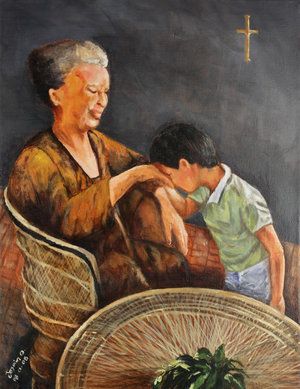
Masuk lebih dalam ke dalam Injil kita hari ini, kita berada di bab 8 Injil Markus. Injil Markus memiliki 16 bab, kita secara harfiah berada di tengah-tengah Injil ini. Namun, bacaan hari ini hanya berada di tengah-tengah Injil, tetapi ternyata menjadi titik balik dari Injil. Delapan bab pertama, Markus menceritakan pelayanan Yesus di Galilea dan beberapa wilayah non Yahudi lainnya di utara Israel. Yesus melakukan mujizat dan mengajar dengan otoritas. Dia dapat menarik banyak orang, dan beberapa dari mereka akan menjadi pengikut dekat yang disebut sebagai murid-murid-Nya. Sedangkan, delapan bab terakhir, Yesus mulai melakukan perjalanan ke selatan dan mencapai tujuan-Nya di Yerusalem. Dia akan menghadapi para penyiksanya di sana dan Dia akan menjalani sengsara, kematian, dan kebangkitan-Nya.

Petrus mendapat jawaban dengan benar. Pengakuan Petrus tidak lain adalah apa yang Markus ingin sampaikan kepada para pembacanya, “Inilah permulaan Injil tentang Yesus Kristus, Anak Allah (Mk. 1:1).” Sayangnya, ketika Yesus mengungkapkan bahwa Anak Manusia akan menderita dan wafat, Petrus merasa tidak cocok dengan gagasan tentang Mesias tersebut. Mungkin Petrus terjebak dengan konsep Kristus yang kuat dan dapat memimpin Israel menuju kejayaan. Yesus telah mewartakan tentang kedatangan Kerajaan, mengajar pelajaran yang tak terlupakan, dan melakukan mujizat yang tak tertandingi. Tentunya, kerajaan Romawi yang besar pun tidak mampu mengalahkan Mesias ini. Namun, Petrus hanya menginginkan paruh pertama dari Injil, dan tidak dapat menerima Injil secara keseluruhan. Jika Petrus dan murid-murid lain ingin menerima Yesus sepenuhnya, maka mereka perlu menerima paruh kedua dari Injil Yesus Kristus juga. Mengikuti Yesus tidak berhenti di Galilea di mana hal-hal yang luar biasa terjadi, tetapi harus turun ke Yerusalem, di mana penganiayaan dan kematian mengintai. Dengan demikian, Yesus menyatakan, “Setiap orang yang mau mengikut Aku, ia harus menyangkal dirinya, memikul salibnya dan mengikut Aku (Mk. 8:34).”

Seringkali kita seperti Petrus. Kita menyebut diri kita murid Yesus dan menerima Injil Yesus Kristus, tetapi dalam kenyataannya, kita hanya ingin separuh dari Yesus atau bagian dari Injil. Kita pergi ke Gereja dan menyembah Tuhan, tetapi kita tidak ingin membantu saudara-saudari kita yang membutuhkan. Kita aktif di Gereja, tetapi kita tetap saja membawa agenda pribadi dan mendapatkan keuntungan sendiri. Pria dan wanita yang hidup membiara juga tidak terhindar dari godaan ini. Kita berjanji untuk melayani Tuhan dan Gereja-Nya, tetapi seringkali, kita melayani kepentingan dan keinginan kita sendiri. Sewaktu kami mencoba menjawab pertanyaan Yesus, “Tetapi apa katamu, siapakah Aku ini?”, Apakah Yesus kita adalah Yesus yang hanya setengah? Apakah Yesus kita hanya mengambarkan kepentingan-kepentingan pribadi kita? Apakah kita berani mengikuti Yesus secara utuh?

Frater Valentinus Bayuhadi Ruseno, OP

Tradition

Twenty Second Sunday in Ordinary Time [September 2, 2018] Mark 7:1-8, 14-15, 21-23

“You disregard God’s commandment but cling to human tradition.” (Mk. 7:8)

mano poIn today’s Gospel, Jesus seems to denounce all traditions. However, this position is rather simplistic and unattainable. The reason is that human beings are the creatures of traditions. Tradition comes from Latin word, “tradere”, meaning “to hand down”. Thus, crudely put, tradition is anything that has been handed down from our predecessors. Traditions range from something tangible like technologies and fashions, to something intangible like values, languages, sciences and many more. I remember how my mother taught me basic Christian prayers, like Our Father, Hail Mary, and the Rosary, and how my father would regularly bring us to the Church every Sunday. This is my family’s religious traditions. As an Indonesian living in the Philippines, I appreciate the “Mano Po” tradition among the Filipinos. This is a simple gesture of respect and blessing. The younger Filipinos are to hold a hand of older Filipino, and place it on their forehead.
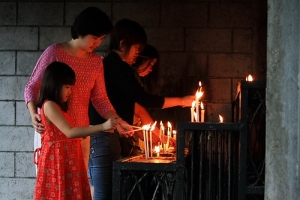
Had Jesus renounced all the traditions, He should have stopped speaking Aramaic, refrained from teaching the people, begun removing all His Jewish clothes, and walking naked! Yet, Jesus did not do those things. Jesus respects traditions and acknowledges their importance. However, Jesus also recognizes that there are some traditions that are problematic and bring more problems rather than solutions. Immersed in the stream of traditions, Jesus invites us to discern well on what traditions that bring us true worship of God and genuine progress for human society.

Going back to the time of Jesus, the Jews are particular with ritual purity because they can only worship God when they are ritually clean. In view of this worship, they carefully avoid contamination from blood, dead body and unclean animals, or any objects that are in contact with these things. Since they are not sure whether their hands and utensils are ritually clean, especially if they come from the marketplace or the fields, they make it a habit to purify their hands and utensils to evade contamination from uncleanliness. Thus, various purification rituals develop into traditions for the Jews. The intention of these traditions is good because they assist people to worship God. However, some of the Pharisees put excessive emphasis on these traditions and make them absolute as if failure to observe these rituals means they fail to revere God. They confuse between the genuine worship that brings true honor for God, and other traditional practices that assist people in achieving this worship.

Jesus does not only invite us to discern carefully various traditions we have, but Jesus also offers us a more fundamental tradition in worshiping God. Instead of “handing down” practices or things, Jesus hands down something most important, namely His own life for God and us. Jesus gives up His Body and Blood, His total self, in the Last Supper, and this sacrifice reaches its summit at the Cross. His self-offering becomes the most pleasing worship to God, and procures the gift of salvation for all of us. Because of His Tradition, the world is no longer the same. Jesus hands over this great Tradition to His Disciples and throughout the generations, the Christians are faithfully offering this sacrifice of Jesus Christ in the Eucharist. As we partake Jesus’ self-offering, we are also empowered to hand down ourselves to others. This means we are invited to make our daily sacrifices, to persevere in doing good, and to be faithful to our commitments either as spouse, parents, priests, religious, or professionals. As we live this greatest tradition daily, we do not only make the world a better place, but to offer a pleasing worship to God.

Br. Valentinus Bayuahadi Ruseno, OP

Tradisi

Minggu ke-22 pada Masa Biasa [2 September 2018] Markus 7: 1-8, 14-15, 21-23

“Perintah Allah kamu abaikan untuk berpegang pada adat istiadat manusia.” (Markus 7: 8)

burning candleDalam Injil hari ini, Yesus tampaknya menolak semua tradisi. Namun, pernyataan ini terlalu disederhanakan. Alasannya adalah bahwa manusia adalah makhluk tradisi. Tradisi berasal dari kata Latin, “tradere”, yang berarti “menurunkan”. Jadi, secara sederhana, tradisi adalah segala sesuatu yang telah diturunkan atau diwariskan dari para pendahulu kita. Tradisi berkisar dari sesuatu yang berwujud seperti teknologi, hingga sesuatu yang tidak berwujud seperti bahasa, ilmu pengetahuan, dan banyak lagi. Saya ingat bagaimana ibu saya mengajarkan saya doa-doa dasar, seperti Bapa Kami, Salam Maria, dan Rosario, dan bagaimana ayah saya secara teratur membawa kami ke Gereja setiap Minggu. Ini adalah tradisi agama keluarga saya. Sebagai orang Indonesia yang tinggal di Filipina, saya mengapresiasi tradisi “Pano Po” di antara orang Filipina. Ini adalah sikap menghormati orang yang lebih tua dan juga memberi berkat kepada yang lebih muda. Orang Filipina yang lebih muda akan memegang tangan mereka yang lebih tua, dan meletakkannya di dahi mereka.

Seandainya Yesus meninggalkan semua tradisi, Dia seharusnya berhenti berbicara bahasa Aram, menahan diri untuk mengajar orang-orang, dan mulai melepas semua pakaian Yahudi-Nya. Namun, Yesus tidak melakukan hal-hal itu. Yesus menghormati tradisi dan mengakui pentingnya hal-hal ini. Namun, Yesus juga mengakui bahwa ada beberapa tradisi yang bermasalah dan perlu ditinggalkan. Menjadi bagian dalam arus tradisi, Yesus mengajak kita untuk memahami dengan baik tradisi apa yang membawa kita kepada ibadat sejati kepada Allah dan kemajuan sejati bagi komunitas manusia.

Lebih dekat dengan Injil hari ini, orang-orang Yahudi memiliki ritual-ritual pemurnian karena mereka hanya bisa menyembah Tuhan ketika mereka bersih secara ritual atau tidak najis. Mereka pun dengan hati-hati menghindari benda-benda yang dapat membuat mereka najis seperti darah dan binatang-binatang najis, termasuk juga benda apa pun yang bersentuhan dengan hal-hal najis ini. Karena mereka tidak yakin apakah tangan dan peralatan makan mereka tidak bersentuhan dengan hal-hal najis, terutama jika mereka datang dari pasar atau ladang, mereka membuat kebiasaan untuk memurnikan tangan dan peralatan mereka untuk menghindari hal ini. Dengan demikian, berbagai ritual pemurnian berkembang menjadi tradisi bagi orang Yahudi. Ujud dari tradisi-tradisi ini baik karena mereka membantu orang-orang Yahudi bersih dari kenajisan dan dapat menyembah Tuhan. Namun, beberapa orang Farisi memberi penekanan berlebihan pada tradisi-tradisi ini dan menjadikannya absolut seolah-olah kegagalan untuk menjalankan ritual-ritual ini berarti mereka gagal untuk menghormati Tuhan. Mereka tidak bisa membedakan antara ibadat sejati yang mendatangkan kehormatan sejati bagi Tuhan, dan praktik-praktik tradisional lainnya yang membantu orang dalam mencapai ibadah ini.

Yesus tidak hanya mengundang kita untuk membedakan dengan seksama berbagai tradisi yang kita miliki, tetapi Yesus juga memberikan kepada kita sebuah tradisi yang lebih mendasar dalam menyembah Allah. Alih-alih “menurunkan” sebuah praktik atau hal, Yesus “menurunkan” sesuatu yang paling penting, yakni hidup-Nya sendiri untuk Allah dan kita semua. Yesus menyerahkan Tubuh dan Darah-Nya, diri-Nya yang sepenuhnya, dalam Perjamuan Terakhir, dan pengorbanan ini mencapai puncaknya di Salib. Persembahan diri-Nya menjadi ibadah yang paling sempurna bagi Allah, dan memenangkan rahmat keselamatan bagi kita semua. Yesus menyerahkan Tradisi besar ini kepada para murid-murid-Nya dan sepanjang zaman, kita dengan setia menjalan Tradisi ini dan mempersembahkan pengorbanan Yesus Kristus dalam Ekaristi. Sewaktu kita mengambil bagian dari persembahan diri Yesus, kita juga diberdayakan untuk “menurunkan” dan menyerahkan diri kita kepada orang lain. Ini berarti kita diundang untuk melakukan pengorbanan kita sehari-hari, bertekun dalam melakukan kebaikan, dan setia pada komitmen kita baik sebagai suami-istri, orang tua, imam, kaum religius, atau seorang profesional. Ketika kita menjalani tradisi terbesar ini setiap hari, kita tidak hanya membuat dunia menjadi tempat yang lebih baik, tetapi menawarkan ibadah yang sempurna kepada Tuhan.

Frater Valentinus Bayuahadi Ruseno, OP

Faith and Suffering

Twenty-First Sunday in Ordinary Time [August 26, 2018] John 6:60-69

“Master, to whom shall we go? You have the words of eternal life (Jn. 6:67).”

nazareno
photo by Harry SJ

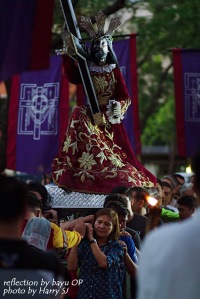
In our today’s Gospel, Simon Peter and other disciples are facing a major crossroad: whether they will believe in Jesus’ words and they need to consume Jesus’ flesh and blood as to gain eternal life, or they will consider Jesus as insane and leave Him. They are dealing with hard and even outrageously unbelievable truth, and the easiest way is to leave Jesus. Yet, amidst doubt and lack of understanding, Peter’s faith prevails, “Master, to whom shall we go? You have the words of eternal life (Jn. 6:67).” It is faith that triumphs over the greatest doubt, a faith that we need also.


I am ending my clinical pastoral education at one of the busiest hospitals in Metro Manila. It has been a truly faith-enriching and heart-warming experience. I am blessed and privileged to minister to many patients in this hospital. One of the most memorable and perhaps faith-challenging encounter is with Christian [not his real name].

When I visited the pediatric ward, I saw a little boy, around six years old, lying on the bed. He was covered by a thin blanket and seemed in pain. Then I talked to the watcher who happened to his mother, Christina [not her real name]. She told me that the dialysis did not go well and he had a little fever. As the conversation went on, I discovered that Christian was not that young. He was actually 16 years old. I did not believe my eyes, but the mother explained that it was because his kidneys shrank to the point of disappearing, and because of this terrible condition, his growth stopped, and his body also shrank. Christian has undergone dialysis for several years, and due to recurrent infections, the hospital has been his second home. Christina herself lost his husband when he died several years ago, and stopped working to take care of Christian. The older sister of Christian had to stop schooling and worked to support the family.

Looking at Christian, and listening to Christina, I was hurt, and I was almost shedding tears. Despite my long theological formation, I cannot but question God. “Why do You allow this kind of terrible suffering to an innocent little man? Why do you allow his life and future be robbed by this illness?” My faith was shaken. Then, I was asking Christina how she was able to deal with the situation. She shared that it was really difficult, but she has accepted the condition, and she continues to struggle to the end because she loved Christian. I was also asking her what made her strong, and I cannot forget her answer. She said that she was strong when she saw little Christian’s smiles, and she felt his simple happiness.

Right there and then, through Christina, I felt God has answered my questions and doubts. It is true that terrible things happen, but God never leaves us. He was there in Christian’s simple smiles. He was there in little acts of love from Christina for her son. It is true that life is full of incomprehensive sufferings and heart-breaking moments, like the loss of loved ones, the broken relationships, the health and financial problems, and perhaps the recent revelation of sexual abuses done by many Catholic priests in the US. These can trigger our anger and disappointment towards God. We shall remain angry, confused and lost if we focus on the painful reality, but God is inviting us to see Him in simple and ordinary things that bring us comfort, strength, and joy. If Jesus calls us to have faith the size of mustard seed, it is because this kind of faith empowers us to recognize God in simple and ordinary things of our lives.

Br. Valentinus Bayuhadi Ruseno, OP