
True Faith

27th Sunday in Ordinary Time [C]

October 5, 2025

Luke 17:5-10

Faith is a powerful act. Our Lord teaches that with faith even as small as a mustard seed, we could command a mulberry tree to be uprooted and planted in the sea. Yet, He also reminds us that faith alone is not enough. It must be accompanied by another essential virtue. What is that?

In simple terms, faith is an act of trust in God and in His Son, Jesus Christ. Throughout history, believers have experienced its tremendous, miraculous power. Through faith in Jesus, many find healing—both physical and psychological—even from incurable diseases. Through faith, countless people have life-transforming experiences, discovering profound meaning and joy. Through faith, many receive spiritual gifts, including extraordinary ones like healing and prophecy.

Despite this earth-shaking power, our Lord reminds us that we are ultimately God’s “servants.” Faith does not make us masters; it opens our eyes to the truth of our identity. If we believe in an almighty Creator, then we are His creatures. An unbridgeable gap exists between us: God is everything, and we are nothing. And yet, He loves us so immensely that He gave His only Son to save us and bring us into communion with Himself. This realization, driven by faith, leads us directly to humility.

The word “humility” comes from the Latin humus, meaning “soil” or “ground.” It is the realization that we are nothing and undeserving—we are, in a sense, “dirt.” Yet, God loves us unconditionally. Humility places faith in its proper context, reminding us that even our faith is a gift from God.

In fact, faith without humility is dangerous. Satan and the evil spirits have a kind of “faith”—they know with certainty that God exists and that they owe their power to Him. But without humility, they refuse to obey and serve. Ultimately, they fall.

Without humility, we risk self-deception. We might think our “great faith” makes us superior to others. While the gifts of faith are real, they can trap us into pride. Without humility, we may also treat faith as a bargaining chip, believing that if we have enough, we can control God to get what we want.

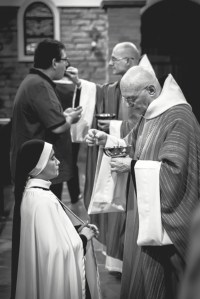
With humility, however, faith truly saves. We receive baptism from the Church and this act of humility means recognizing salvation as a gratuitous, unmerited God’s gift. We receive Holy Communion from the priest’s hand, and this act of humility means acknowledging that we need God to feed our hungry, weak souls. We Confess to God’s representative, and this act of humility means accepting that however broken we are, God still loves us and wants to heal us. Humility allows our faith to move us to love God deeply, as we fully recognize the abundance of His love for us.

Rome
Valentinus Bayuhadi Ruseno, OP


Guide Questions

  1. How do we understand faith? Is it a belief in the truth about God? An emotional attachment? Or a commitment to live according to His will?
  2. How do we understand humility? Is it simply a lack of self-confidence? Or is it the profound realization of God’s immense love for us, even in our smallness?

Forty Days in the Wilderness

First Sunday of Lent [B]

February 21, 2021

Mark 1:12-15

Why did Jesus have to stay in the wilderness for 40 days? The answer is not difficult. He was reperforming what the Israelites did when they were liberated from Egypt. The Israelites stayed for 40 years in the wilderness before they entered the promised land. Yet, there is one more thing! Mark gives us a small, however important detail: in the wilderness, Jesus was staying with the beasts. Why so? If there is one man closely connected to the beasts in the scriptures, he is no other than Adam. Jesus is the new Israel who endured the harsh conditions of the desert and the new Adam who faced the onslaught of the devil.

Jesus entered the wilderness for forty days, and He was tested there by the harsh conditions of the Judean desert. Not only facing the barrenness of the desert, but Jesus was also confronting the devil himself. From here alone, we can draw a strong connection between the Israelites in the wilderness and Jesus, as well as Adam and Jesus. Like the old Israel who struggled with their own ego, Jesus was also enduring human weakness. Like Adam was facing the tempter, the devil tempted Jesus. However, there are significant differences.

While the Israelites murmured and complained, Jesus faithfully fasted and prayed. While the Israelites were grumbling for the food and Adam ate the forbidden fruit, Jesus rejected Satan’s temptation to change stone to bread. While the Israelites were losing faith and worshipping the demon in the form of the golden calf, and Adam wanted to be like God, Jesus refused to bow down to the devil despite all the worldly glory it offered. While the Israelites losing hope in the promised land and Adam blamed the woman, Jesus remained steadfast and refused to test God. Jesus is the new Israel and the new Adam. While the old Israel faltered and Adam succumbed to the trials and temptations, Jesus emerged victorious. Jesus corrected and perfected ancient Israel and old Adam.

We are the body of Christ, and we are part of the new Israel. As Jesus enters the wilderness, so we are going to our spiritual battle. However, we can only become triumphant when we are holding on to God and participating in Christ. The devil is much stronger than us, and without God, we march for sure defeat.

How are we going to win against this spiritual battle? Jesus gives us the answer: fasting-abstinence, almsgiving, and prayer. Fasting makes us hungry, yet it makes us realize that not all our bodily desires need to be fulfilled immediately. Almsgiving may hurt our pockets, but it opens us to the truth that we live meaningfully by giving, not hoarding things. Prayer may be a waste of time, but it offers us the most fundamental reality that we are nothing without God. We are part of the new Adam and the new Israel, and only in Him, we achieve our real victory.


Valentinus Bayuhadi Ruseno, OP

photo credit: nathan-mcbride

Empat Puluh Hari di Padang Gurun

Minggu Pertama Prapaskah [B]

21 Februari 2021

Markus 1: 12-15

Mengapa Yesus harus tinggal di padang gurun selama 40 hari? Jawabannya tidak sulit. Dia mengulangi apa yang dilakukan orang Israel ketika mereka dibebaskan dari perbudakan Mesir. Orang Israel tinggal selama 40 tahun di padang gurun sebelum mereka memasuki tanah perjanjian. Namun, ada satu hal lagi! Markus memberi kita detail kecil namun penting: di padang gurun, Yesus tinggal bersama binatang-binatang. Kenapa demikian? Jika ada satu orang yang hidup bersama para binatang di dalam kitab suci, dia tidak lain adalah Adam. Yesus bukan hanya Israel baru yang menanggung kondisi keras padang gurun, tetapi juga Adam baru yang menghadapi serangan setan.

Yesus memasuki padang gurun selama empat puluh hari dan Dia diuji di sana oleh kondisi keras gurun Yudea. Tidak hanya menghadapi tandusnya gurun, tetapi Yesus juga menghadapi iblis itu di sana. Dari sini saja, kita dapat melihat hubungan yang kuat antara bangsa Israel di padang gurun dan Yesus, serta antara Adam dan Yesus. Seperti Israel kuno yang bergumul dengan ego mereka sendiri, Yesus juga menanggung kelemahan manusia. Seperti Adam menghadapi si penggoda, Yesus juga dicobai oleh iblis. Namun terdapat perbedaan yang signifikan.

Sementara orang Israel menggerutu dan mengeluh, Yesus dengan setia berpuasa dan berdoa. Sementara orang Israel menggerutu untuk mendapatkan makanan, dan Adam memakan buah terlarang, Yesus menolak godaan Setan untuk mengubah batu menjadi roti. Sementara orang Israel kehilangan iman dan menyembah iblis dalam bentuk anak lembu emas, dan Adam ingin menjadi seperti Tuhan, Yesus menolak untuk tunduk kepada iblis meskipun semua kemuliaan duniawi yang ditawarkannya. Sementara orang Israel kehilangan harapan atas tanah perjanjian dan Adam menyalahkan sang wanita, Yesus tetap teguh dan menolak untuk menguji Tuhan. Yesus adalah Israel baru dan Adam baru. Sementara Israel lama goyah dan Adam menyerah pada pencobaan dan godaan, Yesus tampil sebagai pemenang. Yesus mengoreksi dan menyempurnakan Israel lama dan Adam lama.

Kita adalah tubuh Kristus, dan kita adalah bagian dari Israel baru. Saat Yesus memasuki padang gurun, demikianlah kita pergi ke pertempuran rohani kita. Namun, kita hanya bisa menjadi pemenang ketika kita mengandalkan kepada Tuhan dan berpartisipasi di dalam Kristus. Iblis jauh lebih kuat dari kita, dan tanpa Tuhan, kita pasti akan kalah.

Bagaimana kita akan menang melawan pertempuran spiritual ini? Yesus memberi kita tipsnya: puasa-pantang, amal dan doa. Puasa membuat kita lapar namun menyadarkan kita bahwa tidak semua keinginan jasmani kita harus segera dipenuhi. Karya amal mungkin melukai kantong kita, tetapi itu membuka kita pada kebenaran bahwa kita bisa hidup bermakna dengan memberi, bukan menimbun. Doa mungkin terkesan hanya membuang-buang waktu, tetapi doa membawa kita kepada kenyataan paling mendasar bahwa tanpa Tuhan, kita bukan apa-apa. Kita adalah bagian dari Adam baru dan Israel baru, dan hanya di dalam Dia, kita mencapai kemenangan sejati kita.

Valentinus Bayuhadi Ruseno, OP

Emmanuel

Christmas – Mass during the Night [B]

December 24, 2020

Luke 2:1-14

Christmas is one of the most beautiful and joyous times of the year. Christmas is the time to gather with the families and friends and to have an exchange of gifts. Christmas is the time to put up Christmas trees, place Nativity scenes, and play Christmas songs. Surely, Christmas is the time when families once again go to the church together.
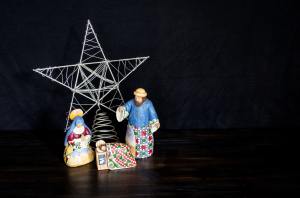
However, this year, things do not go as we want them to be. The pandemic caused by Covid-19 continues to plague our societies, and it significantly affects how we do things and relate with one another. Some of us can no longer go home because of our nature of professions or travel restrictions. Some of us will not attend the beautiful Christmas vigil liturgy because the Church remained closed. Some of us have no special meals on the table because the poor economy hits us hard. For some of us, it is just a lonely and sad Christmas because some of our family members are sick or even have passed away.

Is this still a Christmas? In these difficult situations, all the more, we are invited to reflect on the mystery of Incarnation. The drama of salvation begins with a little baby with His poor parents. Joseph was David’s son, yet he was no more than a poor carpenter, who cannot even provide a decent place for his wife to give birth. Mary was a young mother who had to endure unimaginable shame and various threats to her life. And, at the center of Christmas is the baby boy who is God and yet chose to be born in the most unworthy place of all, a cave filled with animals. He did not opt for much grander places like a royal palace or a magnificent castle. He did not decide to be wrapped with a purple royal garment, but a simple linen cloth. He did not select a golden and comfortable bed, but an unhygienic stone manger.

Looking at the circumstances, Jesus’ birth is not that impressive, but this is what makes the mystery of Incarnation touch every human heart. He did not come as an imposing and authoritarian king like Augustus. He did not come as a shrewd military leader like Julius Caesar. He did not come as a smart politician like Herod. God comes to us as the weakest baby in the humblest place. He is a God who radically loves us and wills to embrace even our weak nature.

Christmas reminds us that Jesus is with us when we are broken by economic conditions; Jesus is with us when we cannot be with our loved ones. Jesus is with us when we are losing our family members. The first Christmas points to us that God does not always spare us from suffering, but He promises to be with us in these terrible times.

One of my friends just lost his father due to Covid-19. It was sudden and untimely death. And what made it very painful is they could not give the last farewell for him as the remain brought immediately to the cemetery. When I had a chance to talk to him, I discovered he could accept the death, and then I asked him the reason. He narrated to me that before his father was admitted to the hospital, he gave his father a brown scapular. He also learned that his father passed away when he was praying the rosary. He believed that his father was not alone when he died; God is with him. Indeed, Jesus is the Emmanuel: God is with us.

Merry Christmas!

Valentinus Bayuhadi Ruseno, OP

photocredit: debby hudson

Immanuel

Malam Natal [B]

24 Desember 2020

Lukas 2: 1-14

Natal adalah salah satu masa terindah dan menggembirakan. Natal adalah waktu untuk berkumpul dengan keluarga dan para sahabat, dan juga bertukar hadiah. Natal adalah waktu memasang pohon Natal, merancang Gua Natal, dan memutar lagu-lagu Natal. Pastinya, Natal adalah saat keluarga pergi ke gereja bersama-sama.
Namun, tahun ini, banyak hal tidak berjalan seperti yang kita inginkan. Pandemi yang disebabkan oleh Covid-19 terus menghantam masyarakat kita, dan memengaruhi secara signifikan cara kita melakukan sesuatu dan berelasi satu sama lain. Beberapa dari kita tidak bisa lagi pulang karena profesi kita atau pembatasan perjalanan. Beberapa dari kita tidak akan dapat menghadiri liturgi malam Natal yang indah karena Gereja tetap tutup. Beberapa dari kita tidak memiliki makanan spesial di atas meja karena ekonomi yang buruk memukul kita dengan keras. Bagi sebagian dari kita, ini adalah Natal yang dingin dan menyedihkan karena beberapa anggota keluarga kita sakit atau bahkan telah meninggal dunia.

Apakah ini masih Natal? Dalam situasi sulit ini, semakin kita diundang untuk merenungkan misteri Inkarnasi. Drama keselamatan dimulai dengan seorang bayi kecil dengan orang tua-Nya yang miskin. Yusuf adalah putra Daud, namun dia tidak lebih dari seorang tukang kayu yang sederhana, yang bahkan tidak dapat menyediakan tempat yang layak bagi istrinya untuk melahirkan. Maria adalah seorang ibu muda, yang harus menanggung rasa malu yang tak terbayangkan dan berbagai ancaman terhadap hidupnya. Dan, di tengah Natal adalah bayi laki-laki yang adalah Tuhan sendiri, tetapi memilih untuk dilahirkan di tempat yang paling tidak layak, sebuah gua yang dipenuhi dengan binatang. Dia tidak memilih tempat yang sangat megah seperti istana atau kastil yang megah. Ia tidak memilih untuk dibungkus dengan pakaian kerajaan berwarna ungu, melainkan kain linen sederhana. Dia tidak memilih tempat tidur emas dan nyaman, tetapi palungan batu yang tidak higienis.

Melihat keadaannya, kelahiran Yesus memang tidak terlalu mengesankan, tapi inilah yang membuat misteri Inkarnasi menyentuh hati setiap manusia. Dia tidak datang sebagai raja yang mendominasi dan otoriter seperti kaisar Agustus. Dia tidak datang sebagai pemimpin militer yang lihai seperti Julius Caesar. Dia tidak datang sebagai politikus yang cerdas seperti Herodes. Tuhan datang kepada kita sebagai bayi terlemah di tempat yang paling rendah. Dia adalah Tuhan yang sangat mengasihi kita, dan ingin merangkul bahkan kodrat kita yang lemah kita.

Natal mengingatkan kita bahwa Yesus menyertai kita ketika kita bergulat dengan kondisi ekonomi; Yesus menyertai kita saat kita tidak bisa bersama orang yang kita cintai. Yesus menyertai kita saat kita kehilangan anggota keluarga kita. Natal pertama menunjukkan kepada kita bahwa Tuhan tidak selalu melepaskan kita dari penderitaan, tetapi Dia berjanji untuk selalu menyertai kita di saat-saat yang sulit ini.

Salah satu teman saya baru saja kehilangan ayahnya karena Covid-19. Hal ini adalah kematian yang tiba-tiba dan terlalu cepat. Yang membuatnya sangat menyakitkan adalah mereka tidak bisa memberikan perpisahan terakhir karena jenazah segera dikubur. Ketika saya memiliki kesempatan untuk berbicara dengannya, saya melihat dia sudah dapat menerima kepergian ayahnya. Sayapun menanyakan alasannya. Dia menceritakan kepada saya bahwa sebelum ayahnya dirawat di rumah sakit, dia dapat memberikan skapulir coklat kepada ayahnya. Dia juga mengetahui bahwa ayahnya meninggal ketika dia berdoa rosario. Dia percaya bahwa ayahnya tidak sendirian ketika dia meninggal, Tuhan menyertainya. Sungguh, Yesus adalah Imanuel, Tuhan beserta kita.

Selamat Natal!

Valentinus Bayuhadi Ruseno, OP

photocredit: debby hudson

To Honor the King

28th Sunday in Ordinary Time

October 11, 2020

Matthew 22:1-14

To understand the parable, we need to see the surprising elements that Jesus offers. Firstly, this is no ordinary wedding, but the royal wedding of the king’s son. Surely, people in the royal list are honored and privileged guests, but they refuse to come, decline the invitation twice and even mistreat the king’s servants. What they do are unthinkable! They fail to see how precious the invitation and rather choose their own trivial business. They are like throwing insult to the king who has honored them. No wonder, the king punishes them.

Yet, this king is generous and merciful king, and he decides to invite all people who are not in his original guests of honor. He grants the royal invitation and honor to all. Many indeed come and fulfil the invitation. However, there is one guy who fails to wear a wedding dress. To dress properly in attending a wedding feast is not only expected, but it shows how we honor the one who invites us. This person is a guest of honor, but he fails to appreciate the honor he receives, fails to behave accordingly, and brings great dishonor to the king. Thus, the king throws him not to any place, but to the darkness.

We are all like these wedding guests, and we receive immeasurable honor because, in reality, we do not deserve to be called by God to enter into His kingdom. Yet, the invitation is free, but it does not mean cheap. We still need to do our part to honor the one who invites us and to show utmost thanksgiving to God. The question is what wedding garment symbolizes? If we move forward to Revelation 19, we will see another wedding. This is the wedding of the Lamb, and in Rev 19:8, “…for the fine linen is the righteous deeds of the saints.” Faith in Jesus is like accepting the invitation, but we must not stop there, we shall wear also the garment of the righteous deeds. Our initial faith has to grow into charity.

The basic principle is grace is free, but it is not cheap. In fact, it is the most precious thing we ever receive in our lives. Our righteous works are not meant to be a bargaining chip with the Lord, but rather token of our gratitude. We do holy deeds not because we want to be praised, but because we want to honor Him who has called us to the heavenly banquet. As priests, we are serving the people primarily because, despite our weaknesses, we are chosen to the instruments of grace. As spouses, we are building family not simply based on emotional attractions, biological needs, and economic stability, because we are grateful to the Lord who has united husband and wife in love and grace. As parents, we are raising our children not only to become successful, rich or influential but primarily to become holy men and women because we recognize that these children are blessing from the Lord. The world is definitely a better world with people filled with gratitude, and with the saints.

This reflection is dedicated to Carlo Acutis, who is beatified today [10 Oktober], a model of holiness for all of us.

Valentinus Bayuhadi Ruseno, OP

Kerendahan Hati dan Kesombongan Rohani

Minggu ke-26 dalam Masa Biasa [A]

27 September 2020

Matius 21: 28-31

Untuk memahami perumpamaan tentang dua anak laki-laki pemilik kebun anggur ini, kita perlu membaca seluruh Matius pasal 21. Yesus baru saja memasuki kota Yerusalem dan disambut oleh orang-orang dengan teriakan “Hosana” dan ranting palem. Kemudian, Dia pergi ke area Bait Allah untuk menyucikannya dari malpraktek yang terjadi. Jadi, para penatua dan imam kepala, yang bertanggung jawab atas Bait Allah, mempertanyakan Yesus, “siapa kamu? Dengan wewenang apa Anda bertindak demikian? ”

Jadi, Yesus menjawab mereka melalui perumpamaan. Perumpamaan ini berbicara tentang dua anak laki-laki; yang pertama mewakili para penatua dan yang kedua mewakili para pemungut pajak dan pelacur. Namun, yang mengejutkan para tetua adalah mereka  menjadi antagonis dari cerita tersebut. Yang memperparah adalah para sesepuh praktis berada dalam kondisi yang lebih buruk dari para pemungut pajak, karena mereka masih jauh dari kebun anggur, dari keselamatan. Namun, alih-alih bertobat, para penatua menjadi marah dan memutuskan untuk menghabisi Yesus selamanya.

Pertanyaannya adalah “mengapa pemungut cukai bisa bertobat sedangkan yang penatua tidak?” Jawabannya ada hubungannya dengan dua kekuatan yang saling bertentangan: di satu sisi adalah kerendahan hati dan yang lainnya adalah kesombongan rohani. Kita mulai dengan kesombongan rohani. Berdasarkan tradisi Gereja, kesombongan adalah yang paling mematikan dari tujuh dosa maut. St. Thomas Aquinas menjelaskan bahwa kesombongan adalah “hasrat berlebihan atas keunggulan diri sendiri dan akhirnya menolak tunduk kepada Tuhan.” Singkatnya, manusia yang sombong menganggap diri mereka lebih baik daripada yang lain. Apa yang membuat kesombongan begitu berbahaya adalah kesombongan membuat orang berpikir bahwa mereka mandiri dan bahkan tidak membutuhkan Tuhan.

Kesombongan juga sangat susah dideteksi karena dapat mengakar bahkan dalam hal-hal rohani. Kita tidak bisa mengatakan bahwa saya bernafsu untuk berdoa, tetapi kita bisa sombong dengan kehidupan rohani kita. Kita melihat diri kita lebih suci dan lebih saleh daripada orang lain berdasarkan standar kita.

Lawan dari kesombongan adalah kerendahan hati. Menurut St. Thomas Aquinas, kerendahan hati adalah keutamaan yang “mengolah jiwa, sehingga tidak menghasratkan yang lebih dari kodratnya.” Singkatnya, kerendahan hati adalah penangkal kesombongan rohani. Kerendahan hati dalam bahasa Latin “humilitas” berakar dari kata “humus” yang berarti tanah. Orang yang rendah hati mengenali identitas mereka yang berasal dari debu, dan nafas kehidupan serta kesempurnaan adalah anugerah Tuhan. Kerendahan hati ini akan mendatangkan rasa syukur karena kita menyadari bahwa meskipun hanya debu, Tuhan sangat murah hati dan penuh belas kasihan kepada kita.

Namun, kadang kita membingungkan antara menjadi rendah hati dengan menjadi minder. Minder itu kurang percaya diri dan biasanya lari dari tanggung jawab, karena belum dewasa. Minder berakar pada citra diri yang tidak lengkap dan bahkan terdistorsi. Sementara kerendahan hati dimulai dengan pemahaman yang benar tentang diri kita sendiri, bahwa kita secara sempurna dikasihi oleh Tuhan. Orang yang rendah hati adalah orang yang kuat karena hanya yang kuat yang bisa mengakui dosa-dosanya. Orang yang rendah hati adalah orang yang dewasa karena hanya yang dewasa yang bisa mengakui kelemahannya, meminta maaf, dan meminta bantuan. Pria dan wanita yang rendah hati adalah orang yang tangguh karena mereka bisa memaafkan walaupun itu sangat sulit.

Tuhan, berikan aku kerendahan hati, agar aku mengikuti kehendak-Mu yang suci.

Valentinus Bayuhadi Ruseno, OP

Pride and Humility

26th Sunday in Ordinary Time [A]

September 27, 2020

Matthew 21:28-31

Reading the entire Matthew chapter 21, we will get the sense of the parable of the two sons of the vineyard owner. Jesus just entered the city of Jerusalem and was welcomed by the people with a shout of “Hosanna” and palm branches. Then, he proceeded to the Temple area to cleanse it from the malpractices plaguing the holy ground. Thus, the elders and chief priests, the one who was in charge of the Temple, questioned Jesus, “who are you? By what authority do you act and teach?”
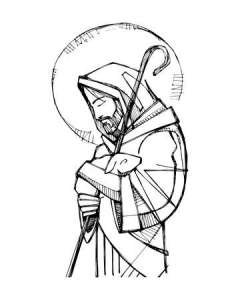
Thus, Jesus answered them through a parable. This parable speaks of two sons; the first representing the elders and the second the tax collectors and prostitutes. Yet, to the surprise of the elders, far from being the protagonists of the story, they turn to be the villains. To add insult to the injury, the elders were practically in the worse condition than these tax collectors, because they are still far from the vineyard, from salvation. However, instead of repenting, the elders got infuriated and decided to finish Jesus once for all.

The question is “why were the tax collectors able to repent while the elders were not?” The answer is something to do with two opposing powers: at one side of the ring is humility and the other is pride. We begin with pride. Based on the Church’s tradition, pride is the deadliest of seven deadly sins. St. Thomas Aquinas explained that pride is “an excessive desire for one’s own excellence which rejects subjection to God.” In short, proud men regard themselves better than others to the point of contempt. What makes pride so dangerous, it may lead even people to think they are self-sufficient and has no need even of God.

Pride is extremely subtle because it can take root even in spiritual matters. We cannot say that I am lustful for prayer, but we can be proud of our spiritual life. We see ourselves holier and more pious than others based on our standards.

At the opposite corner is humility. According to St. Thomas Aquinas, humility is a virtue that “temper and restrain the mind, lest it tends to high things immoderately.” In short, humility is the antidote of pride. Humility is rooted in the Latin word “humus” meaning soil. Humble persons recognize their identity as coming from the dust, and the breath of life and perfections are gifts of God. This humility will bring gratitude because we realized that despite nothing but dust, God is boundlessly generous and merciful to us.

However, humility and cowardice are often confused. Cowardice manifests in low self-esteem, lack of confidence, and poor in responsibility. Cowardice is rooted in incomplete and even distorted self-image. While humility begins with the right understanding of the self, that we are gratuitously loved by God. Humble people are strong people because only strong ones can confess their sins. Humble persons are mature persons because only mature ones are able to own their weakness, say sorry, and ask for help. Humble men and women are tough people because it is hard to forgive.


Lord, grant us humility, that we may follow Your holy will.


Valentinus Bayuhadi Ruseno, OP


Why Sheep?

Fourth Sunday of Easter [A]

May 3, 2020

John 10:1-10

Today is the fourth Sunday of Easter and good shepherd 5traditionally it is also called as the Good Shepherd Sunday. This is for an obvious reason. The Gospel reading tells us about Jesus who introduces Himself as the gate of the sheepfold and the Good Shepherd. The other readings also point the image of God as the good shepherd, like the world-renown psalm 23, “the Lord is my shepherd.”

The gospel of John has no parables like the other three gospels, but John has something else. The gospel gives us the seven “I AM” statements.  “I am the bread of life.” (John 6:35, 41, 48, 51); “I am the light of the world.” (John 8:12); “I am the door of the sheep.” (John 10:7,9); “I am the resurrection and the life.” (John 11:25); “I am the good shepherd.” (John 10:11, 14); “I am the way, the truth, and the life.” (John 14:6); “I am the true vine.” (John 15:1, 5). These statements reveal the particular ways Jesus relates with us His disciples. If Jesus is the bread of life, we cannot live without consuming Him. If He is the light, we cannot see and find our way home.

When Jesus proclaims that He is the door of the sheep and the good shepherd, this assumes that Jesus treats us as His sheep. The question is why sheep? Why not cuter animals like Persian cats or Shih Tzu? Why not something useful like German shepherd or horse? Ok, sheep can be useful also as farm animal. Lamb and mutton are one of the finest meats, and the wool can turn to be expensive cloth. But, does Jesus consider us as sheep because our cuteness or usefulness?

Together with goats, sheep is are one of the domesticated animals. Humans have farmed sheep for the last ten thousand years. In the Palestine at the time of Jesus, sheep is a very common animal, and despite working as carpenter, it is not difficult for Jesus to observe the life of shepherd and its flocks. What makes sheep different from goat is that sheep has no built-in self-defense mechanism. Unlike the goats, they are equipped by sturdy horns and can be aggressive when attacked. Sheep are basically defenseless and thus, they depend heavily on the shepherds to protect them.

We might raise our eyebrow and reject the idea that we are helpless like the sheep. Afterall, humans are on the top of animal kingdom because our intelligence and physical prowess.  Indeed, this is true, if we only limit ourselves to biological or natural aspect of our humanity. If we consider our spiritual life, we are no better than a sheep. Without God’s protection and His angels’, we are just punching bags of the evil spirits. Without God’s laws and guidance, we do nothing but harm ourselves. More importantly, without God, we cannot be saved.

In the final analysis, borrowing the words of Bishop Robert Barron, Christianity is the religion of salvation, and not self-help. No matter good we are, we cannot reach heaven without God’s grace. Our actions are only meaningful as far as it is aided by God’s love. The image of the sheep leads us to humble and grateful realization of who we are. We are nothing without God, yet no matter spiritually weak and defenseless we are, God remains faithful to us and will lead the green pasture because He is our Good Shepherd.

Valentinus Bayuhadi Ruseno, OP

Mengapa Domba

Minggu Paskah keempat [A]

3 Mei 2020

Yohanes 10: 1-10

good shepherd 4Hari ini adalah hari Minggu Paskah keempat dan secara tradisional juga disebut sebagai Minggu Gembala yang Baik. Bacaan Injil berbicara tentang Yesus yang memperkenalkan diri-Nya sebagai pintu gerbang domba dan juga Gembala yang Baik. Mazmur tanggapan diambil dari mazmur 23 yang menyatakan bahwa “Tuhanlah gembalaku.” St. Petrus dalam Suratnya mengatakan bahwa kita adalah domba-Nya yang hilang, tetapi sekarang telah kembali kepada Yesus sang Gembala [lih. 1 Pet 2:25].

Injil Yohanes tidak memiliki perumpamaan seperti ketiga Injil lainnya, tetapi Yohanes memiliki hal lain. Injil ini memberi kita tujuh pernyataan “AKU ADALAH”. “Aku adalah roti kehidupan.” (Yoh 6:35, 41, 48, 51); “Aku adalah terang dunia.” (Yoh 8:12); “Aku adalah pintu domba.” (Yoh 10: 7,9); “Aku adalah kebangkitan dan hidup.” (Yoh 11:25); “Aku adalah gembala yang baik.” (Yoh 10:11, 14); “Aku adalah jalan, kebenaran, dan kehidupan.” (Yoh 14: 6); “Aku pohon anggur yang benar.” (Yoh 15: 1, 5). Pernyataan-pernyataan ini mengungkapkan cara-cara istimewa Yesus berhubungan dengan kita para murid-Nya. Jika Yesus adalah roti kehidupan, kita tidak dapat hidup tanpa memakan Dia. Jika Dia adalah terang, kita tidak dapat melihat dan menemukan jalan pulang.

Ketika Yesus menyatakan bahwa Dia adalah pintu domba dan gembala yang baik, ini mengasumsikan bahwa Yesus memperlakukan kita sebagai domba-Nya. Pertanyaannya adalah mengapa domba? Mengapa tidak binatang yang lebih lucu seperti kucing Persia atau Shih Tzu? Mengapa bukan sesuatu yang bermanfaat seperti anjing German shepherd atau kuda? Ok, domba bisa bermanfaat juga sebagai hewan ternak. Daging domba adalah salah satu daging terbaik, dan wolnya bisa menjadi kain mahal. Tetapi, apakah Yesus menganggap kita sebagai domba karena keimutan atau kegunaan kita?

Bersama dengan kambing, domba adalah salah satu hewan paling awal yang telah didomestikasi. Manusia telah memelihara domba sejak sepuluh ribu tahun. Di Palestina pada zaman Yesus, domba adalah hewan yang sangat umum, dan meskipun bekerja sebagai tukang kayu, tidak sulit bagi Yesus untuk mengamati kehidupan gembala dan kawanan ternaknya. Apa yang membuat domba berbeda dari kambing adalah bahwa domba tidak memiliki mekanisme pertahanan diri. Kambing di sisi lain dilengkapi dengan tanduk yang keras dan bisa menjadi agresif ketika diserang. Domba pada dasarnya tidak berdaya dan karena itu, mereka sangat bergantung pada gembala untuk melindungi mereka.

Kita mungkin menolak gagasan bahwa kita tidak berdaya seperti domba. Bagaimanapun, manusia berada di puncak kerajaan hewan karena kecerdasan dan kecakapan fisik kita. Memang, ini benar, jika kita hanya membatasi diri pada aspek biologis atau alami dari kemanusiaan kita. Namun, jika kita mempertimbangkan kehidupan rohani kita, kita tidak lebih baik dari domba. Tanpa perlindungan Tuhan dan para malaikat-Nya, kita hanya menjadi bulan-bulanan roh jahat. Tanpa hukum dan petunjuk Tuhan, kita hanya membahayakan diri kita sendiri. Lebih penting lagi, tanpa Tuhan, kita tidak bisa diselamatkan.

Meminjam kata-kata Uskup Robert Barron, Kekristenan adalah agama keselamatan, dan bukan “self-help religion”. Betapa pun baiknya kita, kita tidak dapat mencapai surga tanpa rahmat Tuhan. Tindakan kita hanya bermakna sejauh itu dibantu oleh kasih Tuhan. Gambaran domba membawa kita pada kesadaran tentang siapa kita. Kita bukan apa-apa tanpa Tuhan, namun walaupun kita lemah secara rohani dan tidak berdaya, Tuhan tetap setia kepada kita dan akan memimpin padang rumput hijau karena Dia adalah Gembala Baik kita.

Valentinus Bayuhadi Ruseno, OP