

Reflection on the 32nd Sunday in Ordinary Time [November 11, 2018] Mark 12: 38-44
[the Scribes] devour the houses of widows and, as a pretext, recite lengthy prayers. They will receive a very severe condemnation. (Mk. 12:40)
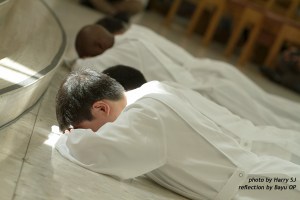 In Jesus’ time, the scribes are the well-educated Jewish men who are expert in the Law of Moses. Some of them come from the wealthy families, and others hail from the priestly clan. Being able to teach and interpret the Law, they receive the respect and honor from the ancient Jewish society. Thus, ordinary Jews will greet them and prepare them the seats of honor in the synagogues and the banquets. Surely, there is no problem with receiving greetings and sitting as honor guests. Jesus Himself is often greeted as “Teacher” or “Rabbi”, and He attends the banquets as guest of honor (see Mar 14:3). The problem comes when some of the scribes possesses “narcissistic desire” and intentionally look for these privileges.
However, not only Jesus criticizes them for this narcissistic attitude, He gravely condemns also their acts of injustice, particularly “devouring the houses of widows.” In Jesus’ time, widows (Hebrew “almanah”) is considered to be one of the poorest and weakest. They are women who do not only lose their husband, but also fall into deeper poverty because they no longer have anybody to support them. They are lucky if their family and relatives take care of them, but in difficult times, they are left to their own. The Law of Moses provides that the widows, together with the orphans and strangers should be protected (see Deu 10:18).
Since the scribes are the respected and wealthy members of the society, it is a logical choice to entrust the care of Jewish widows to them. Unfortunately, instead helping and defending the widows, some of the scribes oppress and steal from the little the widows have. To steal is evil, but to rob the poor people who place their trust in us is far greater evil. Yet, it is not yet worst. After perfectly hiding their acts of injustice, some of the scribes continue going to the Temple and reciting lengthy prayer, as if there is nothing happens. This is hypocrisy, a double-life attitude at its finest!
As my ordination day to the diaconate is drawing closer, some of my brothers in the community and friends began to call me with title of honor like “reverend” or simply, “rev”. Admittedly, I am not comfortable with it. I wish that the people remain calling me brother. However, it has become the common practice in the Catholic Church to honor her ordained ministers. It is my prayer and my sincere wish I will not be like some of the Scribes who become “narcissistic” and “covets” the people’s adulation and all the privileges it brings. George Weigel, an American Catholic author, in his recent article, traces the root of Catholic anger against the clergy in the US. He writes that while it is true that many clergymen are good and holy, it is the clerical narcissism that builds anger of the Catholic lay.
Learning from the scribes, the narcissism is the seed. The vice grows into hidden acts of injustice. And from evil of injustice, the men in white garment are turning worse as they live in hypocrisy. It is my earnest hope that we continue praying, supporting and even correcting our brothers who are ordained to become the servants of God and His people. Without God’s grace, the right dose of humility and lay people’ prayer and help, our deacons, priests and bishops may become like the scribes who earn Jesus’ condemnation.
Br. Valentinus Bayuhadi Ruseno, OP
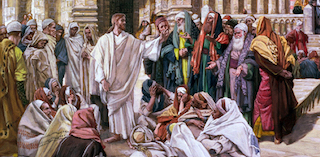 Pada masa Yesus hidup, para ahli Taurat adalah orang Yahudi terdidik dan menjadi ahli dalam Hukum Musa. Beberapa dari mereka berasal dari keluarga kaya, dan yang lain dibesarkan dari klan imam. Mampu mengajar dan menafsirkan Hukum, mereka menerima respek dan kehormatan dari masyarakat Yahudi. Dengan demikian, orang-orang Yahudi kebanyakan akan menyapa dengan hormat para ahli Taurat ini dan mempersiapkan bagi mereka kursi kehormatan di sinagoga dan perjamuan. Tentunya, tidak ada masalah dengan menerima salam dan duduk sebagai tamu kehormatan. Yesus sendiri sering disambut sebagai “Guru” atau “Rabi”, dan Dia menghadiri perjamuan sebagai tamu kehormatan (lihat Mar 14:3). Masalah muncul ketika beberapa ahli Taurat memiliki “hasrat narsistik”, menjadi gila hormat dan dengan sengaja mencari yang kehormatan dan semua hak-hak istimewa.
 The practice of fasting is as old as humanity itself. People from different cultures and religions have included fasting in their customs and traditions. The Brahmin and gurus of Hindu tradition fast and mortify their bodies. The Buddhist monks are known to abstain from eating any meat and fast regularly. Our Muslim brothers and sisters fast even from drinking water from before the dawn to sunset during the month of Ramadan. Scientists have proven that fasting has a lot of health benefits.
 Berpuasa merupakan praktek yang sangat tua dalam sejarah umat kehidupan. Orang-orang dari berbagai budaya dan agama memiliki kegiatan puasa dalam tradisi mereka. Kaum Brahmana dan para pertapa di India tekun berpuasa dan bermati raga. Para biksu Buddha tidak makan daging dan berpuasa secara teratur. Saudara-saudari kita Muslim berpuasa dari sebelum fajar menyingsing sampai matahari terbenam selama bulan Ramadhan. Ilmuwan juga telah membuktikan bahwa puasa memiliki banyak manfaat kesehatan.
 Ash Wednesday is the beginning of the liturgical session of Lent in the Catholic Church. Its name derives from an ancient tradition of the imposition of the ashes. Every Catholic who attends the mass on this day will receive a sign of the cross made of ashes on his or her forehead. The ashes are ordinarily coming from the burned palm leaves blessed at the Palm Sunday of the previous year.
 Rabu Abu adalah awal dari Masa liturgi Pra-paskah di Gereja Katolik. Nama ini berasal dari tradisi kuno di mana setiap orang Katolik yang menghadiri misa pada hari ini akan menerima tanda salib abu di dahinya. Abu ini biasanya berasal dari daun palma yang telah diberkati pada Minggu Palma tahun sebelumnya, dan kemudian dibakar.
 Luke has a poignant and unique way in narrating the story of the Annunciation. He deliberately places the story of Zachariah and of Mary side by side, and lets his readers see both stories in comparison. The first story speaks of a holy man who serves in the Temple. Zachariah is a symbol of the ideal Israelite who stands at the center of the holy ground. The second story speaks of an ordinary woman who lives in Nazareth, a small town far from the center. In a patriarchal society, Mary is a symbol of the poor and marginalized Israelite who is pushed to the peripheries. Angel Gabriel appears to both, and God does marvelous deeds for both. Yet, the Annunciation to Mary turns to be far more excellent. The Angel greets Mary with the title of honor, the highly favored one, while the angel does not even greet Zachariah. The Angel makes Zachariah mute because of his doubt, but he assures Mary when she is confused. The conception of John the Baptist is done through natural means, while the conception of Jesus in the womb of Mary takes place through the supernatural way. Zachariah and Elizabeth represent the outstanding God’s marvel in the Old Testament like when God opened the womb of Sarah, the wife of Abraham, and Hannah, the mother of Samuel, despite their old age and barrenness. Yet, what happens to Mary surpasses and outshines these Old Testament miracles.
 Lukas memiliki cara yang tajam dan unik dalam menulis kisah tentang Penerimaan Kabar Sukacita. Dia dengan sengaja menempatkan kisah Zakharia dan Maria secara berdampingan, dan membiarkan pembacanya melihat kedua cerita itu dalam perbandingan. Kisah pertama berbicara tentang seorang imam yang suci yang melayani di Bait Allah. Zakharia adalah simbol dari orang Israel ideal yang berdiri di pusat peribadatan bangsa Israel. Kisah kedua berbicara tentang seorang wanita sederhana yang tinggal di Nazaret, sebuah desa kecil yang jauh dari pusat pemerintahan dan keagamaan. Dalam masyarakat patriarki, Maria adalah simbol dari bangsa Israel yang miskin dan terpinggirkan dan terdorong ke pinggiran. Malaikat Gabriel menampakkan diri kepada keduanya, dan Tuhan melakukan perbuatan yang luar biasa bagi keduanya. Namun, Kabar Sukacita bagi Maria ternyata jauh lebih baik. Pertama, sang Malaikat menyapa Maria dengan gelar kehormatan, “Engkau yang dikaruniai”, sementara sang malaikat tidak menyapa Zakharia sama sekali. Kedua, sang malaikat membuat Zakharia bisu karena keraguannya, tapi dia meyakinkan Maria saat Maria bertanya-tanya. Ketiga, pembuahan Yohanes Pembaptis terjadi secara alamiah, sementara Yesus di dalam rahim Maria terjadi melalui cara yang supernatural. Zakharia dan Elizabeth mewakili karya besar Tuhan dalam Perjanjian Lama seperti ketika Tuhan membuka rahim Sarah, istri Abraham, dan Hannah, ibu Samuel, meskipun sudah tua dan mandul. Namun, apa yang terjadi pada Maria melampaui segala mukjizat Perjanjian Lama ini.
 In the Fourth Gospel, John the Baptist has an important role. It is not only to baptize, but to become a witness. He is to witness to the light, to the true Messiah, to Jesus Christ. When the priests, Levites, and Pharisees from Jerusalem, come to him , and interrogate him to clarify his identity, he makes it clear that he is not the Messiah, not even the prophet, but rather enigmatically saying “a voice that cries in the desert.” It seems it is an easy thing to do for John. Questions are thrown at him, and he simply gives straight and confident answers. Yet, looking deeper into the reality, it is actually the opposite.
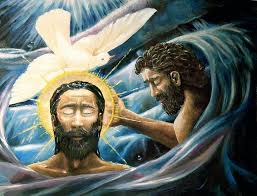 Dalam Injil Keempat, Yohanes Pembaptis memiliki peran penting: bukan hanya untuk membaptis, tapi untuk menjadi saksi. Dia bersaksi tentang sang Terang, sang Mesias sejati, Yesus Kristus. Ketika para imam dan orang-orang Farisi dari Yerusalem datang kepadanya dan menginterogasinya untuk mengklarifikasi identitasnya, dia menjelaskan bahwa dia bukanlah Mesias, bahkan bukan seorang nabi, namun dia berseru, “Akulah suara orang yang berseru-seru di padang gurun: Luruskanlah jalan Tuhan! (Yoh 1:23)” Sepertinya hal ini adalah hal mudah untuk Yohanes lakukan. Pertanyaan diajukan kepadanya, dan dia memberikan jawaban secara lugas dan percaya diri. Namun, melihat lebih dalam pada realitas zamannya, hal yang dilakukannya tidaklah semudah yang kita bayangkan.
 In Medio Ecclesiae