

30th Sunday in the Ordinary Time. October 23, 2016 [Luke 18:9-14]
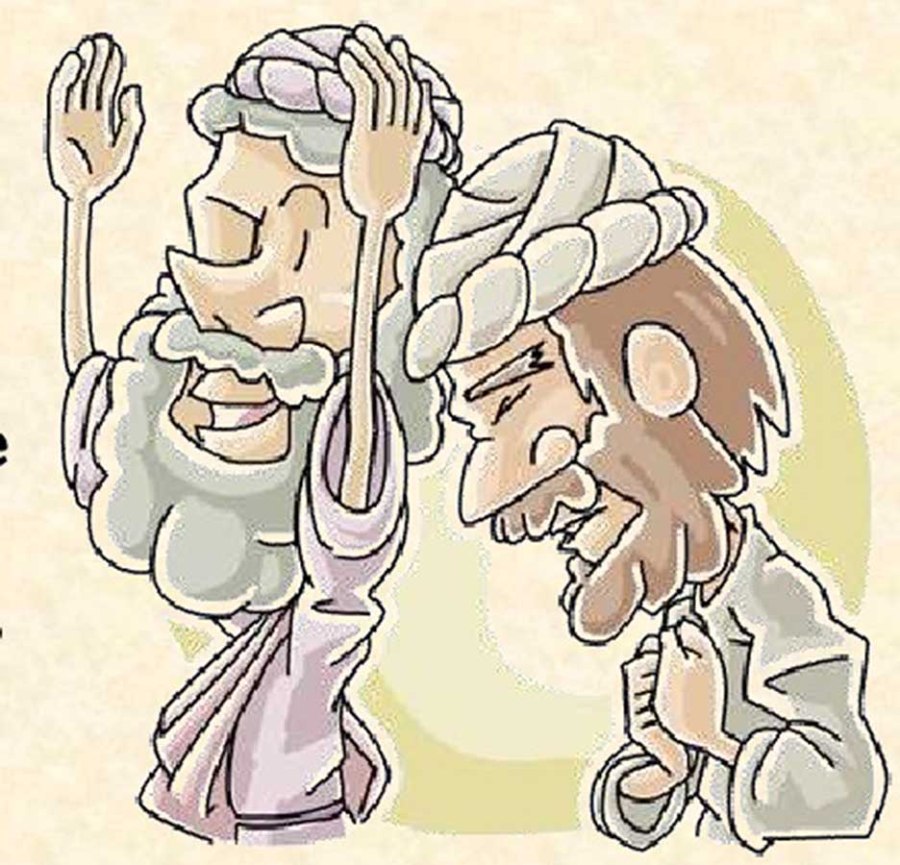
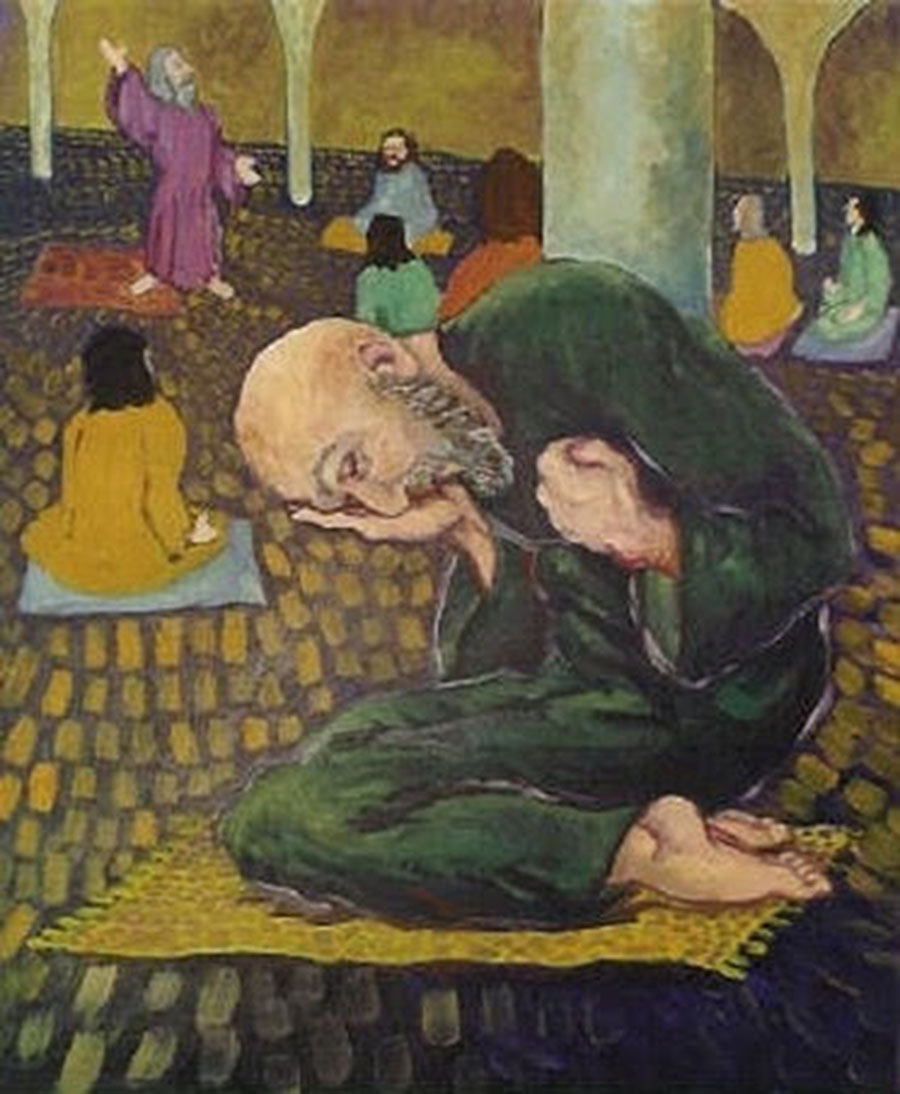
The Pharisee took up his position and spoke this prayer to himself, ‘O God, I thank you…” (Luk 18:11)
 Last Sunday, Jesus reminded us to pray without getting weary. But, in today’s Gospel, Jesus tells us that there is something more than perseverance in prayer. It has something to do with the way we pray. Not only quantity of prayer, but also the quality of prayer. Yet, how do we know that we have a quality prayer?
Once I stumbled upon a Facebook post, and it said, “Pray not because you need something, but because you got a lot to thank God for.” True enough, everything I have is God’s gift. I am nothing without Him, and it is fitting to thank Him. In fact, the highest form of worship in the Church is the Eucharist. The word Eucharist simply means thanksgiving. I liked the post right away. However, when I read the parable in today’s Gospel, I realized that even the Pharisee did a thanksgiving prayer. In fact, in original Greek, when the Pharisee thanked God, he used the word ‘eucharisto’, the root word of the Eucharist. On the other hand, the tax collector was justified because he was asking mercy and forgiveness. Does it mean prayer of supplication and begging for mercy is better and more effective than the prayer of thanksgiving and other kinds of prayer?
Yet, if we read closely, there are some interesting details in the Parable. The first is that the Pharisee expressed his self-righteousness, paraded his good works, and felt better from the rest of humanity, especially the tax collector. Meanwhile the tax collector did nothing but humble himself, acknowledging that he was a sinner and in need of God’s mercy. Thus, prayer needs a right disposition. Humility is the foundation of prayer. Indeed, repentant David himself said, “My sacrifice, God, is a broken spirit; God, do not spurn a broken, humbled heart. (Psa 51:17)”
The second detail that we often miss is that the Pharisee was actually praying to himself, not to God (see closely verse 11). True that he mentioned God, but he was talking to himself. He offered prayer to himself not to God. If then prayer is our communication with God, the Pharisee nullified the very meaning of prayer. Perhaps, by mentioning God, he wanted God to be his audience and to listen to the litany of his successes, not really to build a relationship. Certainly, it felt good and edifying, but this was not prayer. What the Pharisee did was not a prayer at all, but a self-praise and self-service.
We may hear the Holy Eucharist every day, recite the Liturgy of the Hours faithfully, and pray the rosary. We may also join the Charismatic prayer meetings or the praise and worship. We may also attend the Latin Traditional Mass, or just simply spend silent prayer or meditation. Yet, from the parable, we may ask ourselves, whether our prayers are a true prayer? Do we pray because we feel great about it? Do we pray because we are proud of our achievements? Do we pray because we are more pious than others? Does our pray make us closer to God or just to ourselves? Is humility the foundation of our prayer? Our prayer should be a quantity and quality prayer. We pray with perseverance and proper disposition. But more than these, our prayer should be a true prayer.
Br. Valentinus Bayuhadi Ruseno, OP

 When we begin to pray, we acknowledge the presence of God. Not only that, we also recognize that we are dependent on Him. No wonder that the most basic and common prayer is a prayer of petition. We pray to ask favor from God. We beg for good health, success in career, passing examination, protection from dangers, and more. Several times, I wrote that God is not a spiritual ATM and that our prayer is an ATM card. After ‘inserting our prayer’ and ‘inputting a correct amount of request’, God will produce what we wish. But, I have realized that every morning, when I pray before the Blessed Sacrament and the image of our Lady of La Naval de Manila, my prayer is a prayer of petition. I ask God for so many things, for good breakfast, for easy quiz, sometimes for suspension of classes. Certainly, I also pray for people I love and people I promised to pray for.
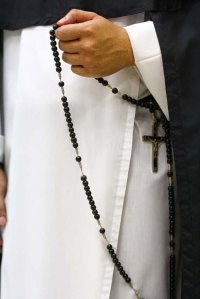 Ketika kita mulai berdoa, kita mengakui bahwa kita bergantung pada-Nya. Tidak heran jika salah satu bentuk doa yang paling mendasar dan umum adalah doa permohonan. Kita berdoa untuk meminta sesuatu dari Allah. Kita mohon untuk kesehatan, kesembuhan, sukses dalam karir, lulus ujian, perlindungan dari bahaya, dan banyak lagi. Saya pernah menulis bahwa Tuhan bukanlah ATM spiritual dan doa kita adalah kartu ATM. Setelah memasukan ‘kartu ATM doa’ dan mengetikan ‘password Amin’, Allah akan serta-merta menghasilkan apa yang kita inginkan. Tapi, saya menyadari bahwa setiap pagi, ketika saya berdoa di hadapan Sakramen Mahakudus dan bunda Maria La Naval, doa-doa saya adalah doa permohonan. Saya meminta Tuhan banyak hal, seperti sarapan yang enak, kemudahan dalam ujian, kadang-kadang berharap bisa dapat cuti lebih awal dan panjang. Tentu saja, saya berdoa juga bagi orang-orang yang saya kasihi dan mereka yang telah saya janjikan untuk didoakan.
 The scholars of the Law were representing the intellectual elite in Jewish society at the time of Jesus. While the rest of Jewish people were struggling to fill their stomach and living in bare necessity, this group had a rare access to good education. We may reasonably suspect that the scholars were affluent enough to read and study the Torah extensively and undisturbed. Compared to the ordinary Jews, they were experts with the details and interpretation of the Law. No wonder, they could easily develop the vice of pride.
 Para ahli Taurat mewakili kelompok intelektual elit di dalam masyarakat Yahudi pada zaman Yesus. Saat sebagian besar dari bangsa Yahudi berjuang untuk mengisi perut mereka, kelompok ahli Taurat memiliki akses langka untuk mendapatkan pendidikan yang terbaik. Kita bisa menduga bahwa para ahli hukum Taurat adalah cukup kaya untuk membaca dan mempelajari Kitab Suci bangsa Yahudi tak terganggu. Dibandingkan dengan orang-orang Yahudi biasa, mereka tentunya ahli dengan berbagai rincian dan interpretasi hukum Taurat. Tidak heran, mereka bisa dengan mudah menjadi tinggi hati atau sombong.
 Luke has a keen eye for the roles of woman in the life of Jesus and the Church. From the beginning of his Gospel to the end, he made sure that women have important role to play. Among the four Gospels, only Matthew and Luke wrote the infancy narrative. While Matthew had Joseph as the main character, Luke chose Mary as his protagonist. Thanks to Luke, we are able to mediate on the great stories of the Annunciation, the Visitation, and the Presentation. Due to Luke also, we may sing Mary’s Magnificat.
 n khusus bagi peran perempuan dalam kehidupan Yesus dan Gereja. Di Injilnya, ia memastikan bahwa perempuan memiliki peran penting. Di antara keempat Injil, hanya Matius dan Lukas menulis kisah kelahiran Yesus. Sementara Matius memiliki Joseph sebagai karakter utama, Lukas memilih Maria sebagai protagonisnya. Karena Lukas, kita bisa merenungkan kisah-kisah besar seperti Maria menerima Kabar Gembira, Maria mengunjungi Elizabet. Karena Lukas juga, kita bisa ikut bernyanyi Kidung Maria atau Magnificat.
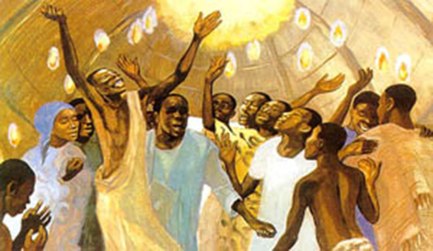 My first time to attend a Catholic Charismatic prayer meeting was around 10 years ago in Singapore. It was a gathering characterized by upbeat music and intensified prayers. As the prayer was getting intense, suddenly I witnessed some of participants began to experience kind of trance and utter unintelligible words. For a while I was dumbfounded, but soon realized that they may actually speak in tongue. This may refer to the one of the Holy Spirit’s charismatic gifts, described no less than St. Paul himself. “For one who speaks in a tongue does not speak to human beings but to God, for no one listens; he utters mysteries in spirit (1 Cor 14:2)”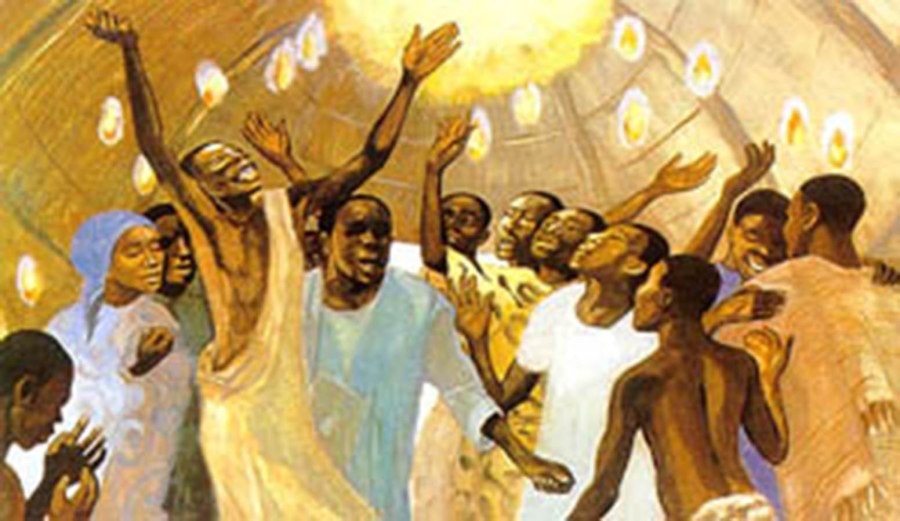
 Pertama kalinya saya menghadiri pertemuan doa Karismatik Katolik adalah sekitar 10 tahun yang lalu di Singapura. Pertemuan ini ditandai dengan musik yang upbeat dan doa yang intensif. Di tengah ibadat dan disaat doa-doa semakin intens, tiba-tiba saya menyaksikan beberapa peserta mulai mengalami sesuatu yang tidak biasa dan mengucapkan kata-kata tidak jelas. Awalnya, saya tercengang, tapi saya segera menyadari bahwa mereka sedang berbicara dalam bahasa roh. Phenomena ini merujuk pada seseorang yang dipenuhi dengan kuasa Roh Kudus dan mulai bernubuat sesuai kehendak Roh. Fenomena ini sudah ada sejak Gereja berdiri. St. Paulus sendiri menulis “Siapa yang berkata-kata dengan bahasa roh, tidak berkata-kata kepada manusia, tetapi kepada Allah. (1 Kor 14: 2)”
 In Medio Ecclesiae