The Church and the Gospel

3rd Sunday of Easter [B]
April 14, 2024
Acts 3:13-15, 17-19

The first reading gives us St. Peter’s first preaching at the Pentecost. After the Holy Spirit descended upon the disciples, they began speaking about the great wonders God had performed in different languages. Some people who witnessed the event thought that they were drunk. However, St. Peter, as the leader of the apostles, denied this allegation and went further to preach the Gospel (see Acts 2). This was the first Gospel proclaimed by the Church. What is this Gospel, and what is its content?
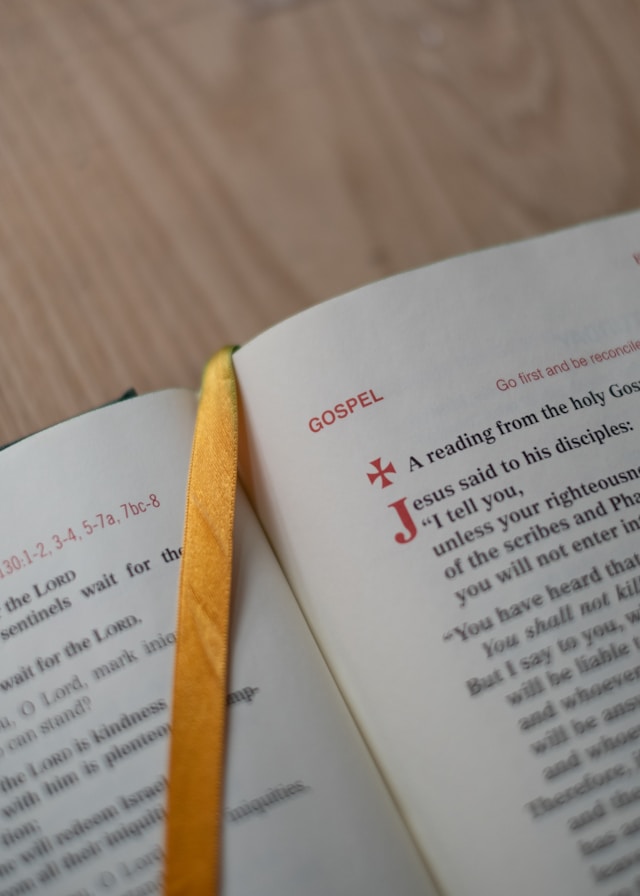
Gospel (εὐαγγέλιον, euangelion) originally refers to the imperial announcement of great news that affects many lives in the Roman empire, like the ascension of the new emperor or the major war victories. Jesus adopted the term as He proclaimed the ‘Gospel of God’ (see Mar 1:14). Then, guided by the Holy Spirit, the Church, through her leaders, especially Peter, embraced the same vocabulary in his preaching.

The Gospel that the primitive Church proclaimed focuses on Jesus and what God of Israel did to Him. Peter said that out of ignorance, some Jewish leaders handed Jesus to the Roman authority to be crucified. By doing that, the author of life was denied and put to death. Yet, God raised Him from the dead. Through this great twist of events, God has fulfilled what he had announced through the prophets. The summary of the Gospel is the death and resurrection of Jesus Christ as the fulfillment of God’s plan (see also 1 Cor 15:1-6).

Yet, the good news does not stop there. Though the Jews, the Romans, and all of us, through our sins, have a share in the death of Christ, it does not mean that we are all forever condemned. In fact, through His death and resurrection, He has brought the grace of salvation. Yet again, to make this grace effective in our lives, we must open ourselves and accept it. How to do that? St. Peter explicitly says, “Repent and be converted!”

‘I repent’ in Greek is ‘μετανοέω’ (metanoeo), and this word suggests a transformation (meta) of mindset (nous). While ‘I convert’ in Greek is ‘ἐπιστρέφω’ (epistrepho), and this verb indicates a physical movement of turning back or away. Therefore, two words point both to internal renewal and external manifestation of repentance. To believe in the Gospel is not enough to mentally say, “I accept Jesus Christ in my heart” or “I believe in His resurrection,” but we continue to live in our sinful ways. On the other hand, if we perform many services and attend many prayers but do not enthrone Jesus in our hearts, it is mere showoff or even narcissistic.

This is the Gospel that the Church preaches, and since we are part of the Church, we are also responsible for sharing and living the Gospel. We announce to our families, friends, neighbors, and indeed all people. Yet, the Gospel is never a burden but rather a proof of love. If we love our brothers and sisters, then we desire the best for them, that is their salvation. Thus, preaching the Gospel is necessary to offer them this gift of salvation.

Rome
Valentinus Bayuhadi Ruseno, OP

Holiness and Mercy

2nd Sunday of Easter – Divine Mercy [B]

April 7, 2024

John 20:19-31

The second Sunday of Easter is also known as the Divine Mercy Sunday. Though the title is relatively recent (St. John Paul II established this celebration on April 30, 2000), the truth about divine mercy is essential part of God’s characteristics revealed in the Bible.  How do we understand divine mercy and how do we practice mercy to others?

Mercy is related to the word ‘rahamim,’ which is rooted in the word ‘Rahim’ meaning ‘womb.’ Thus, ‘rahamim’ implies a mother’s natural feelings and attitude toward her children. Our good mothers keep accepting and loving us as their children, despite our stubbornness and pains we gave them. Some mothers even will not hesitate to sacrifice themselves for their children’s lives.

Another perspective to understand mercy is its indispensable connection with justice. Justice is ‘to give someone’s due,’ while mercy is to give someone that is not his due (in positive way). Good fathers generally exemplify this point. A father is a figure of justice in the family. He imposes discipline to his children, and sometimes inflict punishments if his children fail to behave properly. Yet, a good father know that justice he establishes is also an act of mercy. Aside from the fact that father’s discipline tend to be more gentle, his tough education is actually a form of tough love that shapes his children’s characters. Failure to perform justice might result in his children’s bad attitudes, and bad personality is never good for our children’s future. Thus, justice in wider perspective is mercy.

Going deeper into the divine mercy in the Bible, we also discover the intimate connection between mercy and holiness. In Sinai, God instructed the newly established Israel to be holy as God is holy (see Lev 11:44-45; 19:2; 20:26). How to be holy like God? In Sinai, God gave His laws for Israel. These laws were to form Israel as God’s nation, and by observing these laws, they separated themselves from other nations. Therefore, to be holy, to be separated from others and for God, the Israel had to obey God-given laws.

However, in the Gospel of Luke, Jesus taught, “Be merciful as your Father is merciful (Luk 6:36).” Jesus deliberately translated holiness into mercy. In Luke 6, Jesus taught beatitudes and chartered new laws just like God had done in Sinai. However, Jesus’ laws are not to make His disciples ‘exclusively separated’ from other people, but rather to touch other with acts of mercy. Holiness definitely is separation from sins and for God, but being holy is also being merciful. Holiness is to allow others to experience the divine mercy in their lives. And as our neighbours are touched by mercy, they may come closer to God.

How do you experience divine mercy in our lives? How do we express mercy to others? Do we do justice as the foundation of our mercy? Do our acts of mercy lead us closer to God?

Rome

Valentinus Bayuhadi Ruseno, OP

The Empty Tomb 

Easter Vigil – Easter Sunday [B]

March 31, 2024

Mark 16:1-7

Jesus is either everything or nothing at all. Why? Because He made an extraordinary claim that He is divine. C.S. Lewis responded to this claim with three possible answers, ‘Lunatic, Liar or Lord.’ Either Jesus was a delusional man believing that He was God, or Jesus was an evil man who wanted to deceive the world for His profit, or He is the Lord because what He claimed is true. If Jesus’ claim is true, then He deserves all our worship, our love and adoration. Yet, if Jesus’ claim is false, then He is just nobody who happened to be a lunatic or liar. Then, what is the evidence of His claim?

The answer is the resurrection of Jesus. And what is the proof of His resurrection? The empty tomb! Yes, this is the first evidence we have. If we read the four gospels, we will find a resurrection story with slight variations, but all agree with the reality of the empty tomb. If I were Jesus, I would have chosen a more dramatic and visible way of resurrection. I would have even appeared to Pilate and the chief priests to make a bold statement. Yet, Jesus chose to show an empty tomb and later appeared to the women. But, these women? These women were the same women who stood near the cross of Jesus, and they went back early in the morning to anoint the body of Jesus to give a proper burial to Jesus. These women exhibited their faithfulness and love to Jesus. 

The evidence for Jesus’ resurrection has been discussed extensively by many scholars, and I would not have enough time to cover it here. Jesus did not appear to Pilate or Annas and Caiaphas because they had decided to reject Jesus as a lunatic or liar. Thus, Jesus’ resurrection is nothing but useless. They even spread lies that the body was stolen. One scholar said, ‘For disbelievers, no proofs are ever sufficient.’

However, we are here, just like the women who visited the tomb early in the morning. We are here because we believe in Jesus, and we love Him. Jesus’ choice for an empty tomb, rather than a grandeur showoff of His resurrection, invites us to enter the empty tomb and make decisions for ourselves. Pope Francis once said that Jesus did not need to remove the stone to go out from the tomb, but for us to enter the tomb. Do we still love Jesus even when we only see emptiness? Are we still faithful even if we did not find the Lord?

Yes, we believe in Jesus, and yes, we love Him. Yet, faith, hope and love are not static, but rather something that grows. God allows us to experience crosses and even empty tombs because, through these events, we may grow in our faith and love. We must not forget that when we carry a cross, we may be like Simon of Cyrene, who carried the cross of Jesus. We must not forget that Jesus was few steps away from the empty tomb, waiting to bless us.

Celebration of Easter is not just a annual ritual, with different fancies symbols, but an invitation for us to renew and deepen our faith and love for God. Afterall, Jesus is everything to us. Blessed Easter!

Valentinus Bayuhadi Ruseno, OP

Being Truly Human

Palm Sunday of the Lord’s Passion [B]

March 24, 2024

Mark 14:1 – 15:47

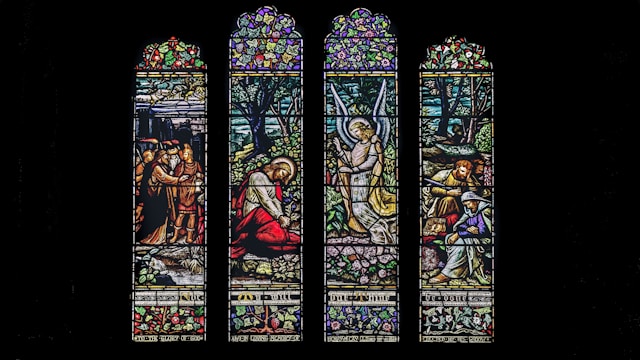
Jesus’ defining moment just before His Passion is His agony in the garden of Gethsemane. This year, we are fortunate to hear from the Gospel of Mark because Mark is not shy to express the inner life of Jesus in this crucial time. For some, this is embarrassing because Jesus was expressing His great sorrow, and thus, Jesus is seen to be too human and weak. However, we believe that God inspired Mark to write God’s words, and thus, we are to learn something precious in Jesus’ desperate moment.

Jesus was aware of what would happen to Him. He would soon face the betrayal of his disciple, a clandestine arrest, unjust trials from His haters, dreadful torture, and humiliating and most painful death. Thus, Jesus who is not only fully divine but also fully human, was experiencing the full weight of human emotions. Mark gave us some important details. Jesus was ‘troubled and distressed’ and then expressed what He felt, “My soul is sorrowful even to the death.”

St. Irenaeus once said, ‘God’s glory is a man truly alive. Here, Jesus teaches us how to be truly human and, thus, become God’s glory. He avoided two dangerous extremes in dealing with His emotions. The first extreme is neglecting or suppressing His emotions. Jesus did not act tough and pretend to be ‘the stoic man’. He did not say, ‘I am okay’, ‘everything will be alright.’ Jesus named the emotions and was frank about it. The second extreme is not to be consumed by emotions. When the emotion is extremely strong, the emotions easily engulf us and, thus, control us. Though recognizing His feelings, Jesus did not yield to them. He stood His ground.

Jesus further gave us two ways to face these overwhelming emotions. The first one is to seek good companions. Jesus invited the three closest disciples in the garden, Peter, James and John. He expressed His grave sorrow and asked them to accompany Him in this crucial moment. Unfortunately, they fell asleep, but the three were there for Jesus in His agony. The second way is to pray. Jesus bent His knees and talked to His Father. Here, we have extremely rare content of Jesus’ prayer.

Jesus said, “Abba, Father, all things are possible to you. Take this cup away from me, but not what I will but what you will (Mk 14:36).” This prayer is short but extraordinarily rich. One can say that this prayer is a short form of Our Father. Here, Jesus expressed and offered His wish that He would have been spared from suffering and violent death, but He also recognized that it is His Father’s will that Jesus would offer Himself up as the sacrifice of love for the world. In this prayer, Jesus reaffirmed His mission and did not allow the emotions to blur His vision.

Gethsemane is the precious moment that Jesus teaches us to fulfil God’s will despite difficulties and, at the same time, to become truly human. It is not God’s will to destroy our humanity but rather to perfect it, and Jesus is our model of a perfect man.

Rome

Valentinus Bayuhadi Ruseno, OP

The Covenant

5th Sunday of Lent [B]

March 17, 2024

Jeremiah 31:31-34

 In the bible, the word covenant (in Hebrew בְּרִית (Berit), in Greek διαθήκη (diatheke)) is an agreement between individual, families, tribes or nations. It is commonly used to bind the overlord king and his vassals. The supreme lord was obligated to give protection in times of need, while the vassals must be loyal and pay tributes. At the individual level, a covenant forged a familial bond between the parties. They become brothers, and thus, they must protect and help one another. Or, when the covenant involves man and woman, they become husband and wife, a new family.

Though covenant is a complex reality and even still debated by scholars, one thing is sure: that covenant is an agreement about the ‘exchange of people’ rather than the ‘exchange of items.’ A radical change of their identities is expected for those who enter the covenant. 

The term covenant is a key to understanding the bible because God took the initiative to bind Himself to Israel through covenant. There are several moments where God formed a covenant with Israel, but the most famous one is the covenant at Mount Sinai through the mediation of Moses. The Lord said, “Now, therefore, if you will obey my voice and keep my covenant, you shall be my own possession among all peoples; for all the earth is mine, and you shall be to me a kingdom of priests and a holy nation (Exo 19:5-6).”

The covenant created Israel as a nation under God’s leadership. Thus, Israelites, as citizens of God’s nation, must obey and be faithful to one God alone, that is, the Lord, and follow His Laws. However, the covenant does not only form a king-people relationship but also a family. Often, Israelites are addressed as ‘sons of God’ (see Exo 4:22 and Deu 14:1). And what is even more intriguing is that a marriage relationship is also established through this covenant. Prophet Hosea famously describes the relationship between God and Israelites as husband and wife.

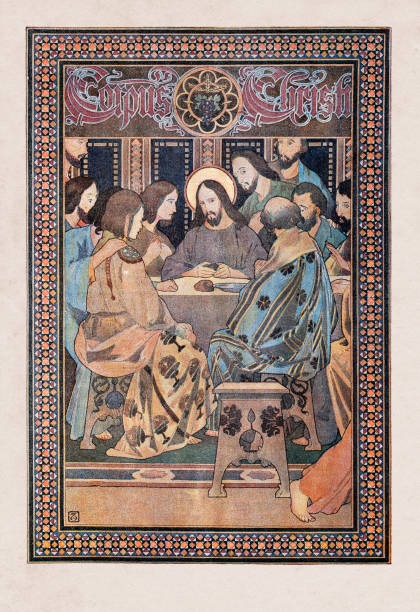
Prophet Jeremiah prophesized that there would be a new covenant (Jer 31:31, first reading). This is fulfilled in Jesus Christ. In the last supper, Jesus said, “This cup that is poured out for you is the new covenant in my blood (Luk 22:20).” One of the main purposes Jesus offered up himself at the cross is to forge and ratify this new covenant. Since the divine blood of Christ ratifies it, the covenant is everlasting and unbreakable.

Jesus offers us a covenant despite our unworthiness. Through faith and baptism, we enter the covenant, and our identity is radically transformed. The Lord is our God, and we become the people of the Kingdom of God. Yet, because of the same covenant, we are also His children, and we have a right to call God ‘our Father’. Moreover, a marriage is established. The Church is the spouse of Christ, and Christ loves His spouse so much to the point of giving His life for her. As the people of the new covenant, constantly renewed in the Eucharist, do we need to behave ourselves as obedient and loving children to our Father? Do we act as a faithful and loving spouse to Christ, our bridegroom?

Rome

Valentinus Bayuhadi Ruseno, OP

Is Faith Enough?

4th Sunday of Lent [B]

March 10, 2024

Ephesians 2:4-10

St. Paul wrote in his letter to the Ephesians, “For by grace you have been saved through faith, and this is not from you; it is the gift of God; it is not from works, so no one may boast (Eph 2:8-9, first reading).” Does it mean that what we need to do is to believe? Do we still have to receive the Eucharist and other sacraments like the Catholic Church instructs? Are we still required to do good works and acts of charity?

Often, the Catholic teaching of salvation is comically understood as ‘faith and work,’ which means that to be saved, Catholics must both believe in God and do various works prescribed by the Church, like receiving the sacraments and performing acts of mercy. Yet, this is frankly not the authentic teaching of the Church. Council of Trent decreed that “none of those things that precede justification, whether faith or works, merit the grace of justification (Decree on Justification).” The grace of God that brings us salvation, the forgiveness of sins, and holiness is always a gift from God. Nothing we do can earn it.

Since grace is a gift, just like any other gift, we either freely accept or refuse the gift. Thus, Catechism states, “God’s free initiative demands man’s free response, for God has created man in his image by conferring on him, along with freedom, the power to know him and love him (CCC 2002).” Here comes the role of faith. We say ‘yes’ to God through faith and embrace His grace. But does it mean having faith is enough, and we no longer do anything? If we believe, can we do anything we want, even evil things?

St. Paul indeed says that the grace is not from our works (verse 9), but in the next verse, St. Paul adds, “For we are his handiwork, created in Christ Jesus for the good works that God has prepared in advance, that we should live in them (Eph 2:10).” Is St. Paul contradicting himself? To understand this, we must distinguish the two ‘works’ that St. Paul uses. The first work (verse 9) refers to our efforts to get salvation outside of grace, which is futile. Meanwhile, the second work (verse 10) points to our good works in grace that are pleasing to God.

Yes, grace is freely given, but it does not mean a cheap one. Grace is not something static but active and dynamic. Grace gives us the capacity to do good works, and when we respond to it faithfully, we grow spiritually and open ourselves to more grace. The more good works in grace we offer, the more grace we receive, and the more extraordinary grace we receive, the greater capacity we have to do good works. 

We do not see our involvement in the Eucharist and other sacraments as our efforts to bribe God and get grace, but rather our ways of growing in grace. Our acts of mercy in the family and community are not our works but participation in God’s love for His people. 

(For a deeper understanding of grace, please read CCC paragraph 1987-2006)

Rome

Valentinus Bayuhadi Ruseno, OP

The Desert

1st Sunday of Lent [B]

February 18, 2024

Mark 1:12-15

What do we imagine when we hear the word ‘desert’? The image in our mind may vary depending on our experience and knowledge of the desert. Yet, we agree that the desert is barren, plagued by an unfriendly climate, and not a suitable place for humans to live. Then, why does the Spirit lead Jesus to the desert? Why do we need to experience desert moments?

When we have an image of a desert, we can think of a fertile garden as its opposition. The Bible gives us these two images, a garden, and a desert, as two contrasting places. Adam and Eve originally lived in the perfect garden, with everything provided. They had the best food and safest place; most of all, God was with them. Yet, they fell, and they had to leave the garden. They began their journey in a ‘desert’ where they had to work hard to earn their livings, where many dangers lurked, and death was their final destination.

Then, why did Jesus follow the Spirit to the desert? The answer is that Jesus is in the desert for us to find Him. Even the desert may become a holy place because our Saviour is there and blesses this place. Yes, the desert is a dangerous place, and even the evil spirits are lurking to snatch us away from God, yet Jesus is also there. His presence makes even the ugliest place on earth a beautiful and holy ground.

The presence of God in the desert is not even something new. Interestingly, the word desert in Hebrew is מדבר (read: midbar) and can be literally translated as ‘the place of the word.’ Indeed, the desert is where the Israelites endured many hardships and were tested, yet it is also where God manifested Himself and made a covenant with Israel through Moses. In fact, through the desert experience, God disciplined and formed His people.

Our natural inclination is to avoid a desert, whether a natural geographical place or a symbol of our difficult moments in life. We don’t want to experience pain and sickness, we hate to endure financial and economic difficulties, and we detest difficult relationships in our family or community. We want to be blessed, to be in the Paradise. Yet, we must not fear to walk through our deserts because Jesus is there. Indeed, our hardships can exhaust us and become the devil’s opportunity to tempt us hard, yet with Jesus, these experiences can be a means of holiness.

In the season of Lent, the Church teaches us to fast, to pray more frequently, and to increase our acts of charity. These practices invite us into the desert to feel hunger, experience discomfort, and enjoy fewer things that give us pleasure. Yet, paradoxically, when we enter voluntarily and faithfully this difficult desert of Lent, we may find Christ even there, and we are renewed in holiness.

Rome

Valentinus Bayuhadi Ruseno, OP
For God’s Glory and Human Salvation

Sixth Sunday in Ordinary Time [B]

February 11, 2024

Mark 1:40-45

1 Cor 10:30 – 11:1

Towards the end of his letter to the Corinthians, St. Paul reminded us of two basic purposes of every disciple of Christ. The first one is, “…whatever you do, do all to the glory of God (1 Cor 10:31).” The second one is, “…in everything I do, not seeking my own advantage, but that of many, that they may be saved (1 Cor 10:33).” If we summarize these two verses, St. Paul said that in everything we do, we do for the glory of God and the salvation of others.

However, is it possible to do everything for God’s glory and others’ salvation? Many of us are busy working and occupied with many other things, and often, we just barely remember the presence of God, let alone praise and thank Him. Some of us even are struggling to attend Sunday Masses. Does it mean that we are failing in this regard?

We must remember that St. Paul did not instruct us to ‘say glory to Go’ but rather ‘do everything for God’s glory.’ It is not only about singing praise or uttering from our months “glory to God, glory to God” the whole day. But, fundamentally, it is to choose to do things pleasing to God, even the ordinary and routinary things. In our works, we give glory to God when we do honest jobs. Even as we watch something on the television or our gadgets, we can do it for God’s glory when we avoid seeing things that lead us to sins and choose to engage in what is truly beneficial. Certainly, we cannot give glory to God if we are idle or wasting our time on useless things.

The second purpose is to do everything so that others may find salvation. It is a wrong attitude if we are only focused on our salvation. Our faith is not selfish and individualistic but community-oriented and loving faith. Our salvation depends on the salvation of our neighbors, also. That is a Catholic faith, a faith for universal salvation. A man’s fundamental mission is to bring his wife closer to God. Parents’ salvation hinges on the growth of their children’s holiness.

But are we responsible for the salvation of all? Yes, we are called to preach the Gospel to all, but we are mainly responsible for those close to us, like family or community members. Yet, St. Paul also made a clear message, “Give no offense to Jews or to Greeks or to the church of God (1 Cor 10:32).” Though we are not actively responsible for the salvation of all, we are expected not to cause harms or scandals that may push people away from God. We are always witnesses and disciples of Christ in the world.

Lastly, these two basic missions instructed by St. Paul are the concretization of the most fundamental laws taught by Jesus: to love God and to love our neighbors (see Mat 22:37-38). In everything we do, we do it for the glory of God and the salvation of souls.

Rome

Valentinus Bayuhadi Ruseno, OP
Preaching the Gospel

5th Sunday in Ordinary Time [B]

February 5, 2024

Mark 1:29-39

Often, we believe that the task of preaching the Gospel is only for the bishops, the priests, and the deacons, or for the religious brothers and sisters or lay catechists. Yet, this is only partially true. The truth is that each baptized person has a responsibility. Yes, you and me! But How do we preach if we don’t have the talents or capacity to do that?

Firstly, we must recognize that to preach the Gospel is an essential part of our identity as Christians. To be Christian means we become the image of Christ, or ‘the other Christ’. In today’s Gospel, Jesus made it clear that His mission is to preach the Gospel. He refused to stop in one town and enjoy the praises of the people, but rather, He had to go to other places and preach. If Jesus is committed Himself in announcing the Good News, then we, as His image, are called to reflect this commitment also. A true Christian is one who faithfully preaches the Gospel.

Jesus recognizes this mission as part of His identity and hands it down to His Church as a commandment. After His resurrection, He instructed His disciples, “Go therefore and make disciples of all nations, baptizing them in the name of the Father and of the Son and of the Holy Spirit, and teaching them to obey everything that I have commanded you (Mat 28:19-20).” Again, this mission is not optional but a must for every disciple of Jesus.

The Church understands this mission, and thus, she teaches us, “Lay people also fulfill their prophetic mission by evangelization, “that is, the proclamation of Christ by word and the testimony of life… (CCC 905).” St. Thomas Aquinas, a theologian, wrote, “To teach to lead others to faith is the task of every preacher and of each believer (STh. III,71,4 ad 3).”

Yet, how do we preach if we do not have a talent and gift? Firstly, we recognize that they are kinds of preaching particularly entrusted to the clergy, like in the liturgy. The reason is that the Church wants to ensure that preaching in this sacred venue will be done solemnly and according to orthodoxy. However, there are many other opportunities for lay people to preach, and even, in fact, there are contexts in which only lay people can bring the Gospel: marriage and family.

In the family context, men and women are bound not only by their baptism to preach the Gospel but also by their marriage’s promises. Husband and wife bring each other closer to God, and parents educate their children to love God and train them in holiness. This mission requires no special talent or training but time and commitment. We spend time praying together as a family at home or in the church. We teach our children basic prayers. We offer a good role model to our children. We bring our children to our parish for baptism and other sacraments and receive various faith instructions from the priests and catechists.

The mission to preach the Gospel is not only essential to our identity as disciples of Christ, and even our salvation depends on it. Let St. Paul’s words be our motto, “Woe to me if I don’t preach the gospel (1 Cor 9:16).”

Rome

Valentinus Bayuhadi Ruseno, OP

The unclean spirits

Fourth Sunday in Ordinary Time [B]

January 28, 2024

Mark 1:21-28

One of the highlights of Jesus’ ministry is the exorcism of the unclean spirits. Mark, the evangelist even, does not hesitate to write that expelling the unclean spirits is part of Jesus’ teaching with authority. Jesus’ authority does not only affect His human hearers but also controls the unclean spirits. Yet, who are these unclean spirits? Why does Jesus have authority over them? And how do they affect our lives?

Based on the revelation and the tradition, the Church teaches that these spirits are also God’s creation. By nature, they are spirits or angels. As a spirit, they are creatures without a body, and since they are not affected by material limitations, they are naturally superior to us humans. However, unlike the good angels that use their power to help humans, these spirits do the opposite. They wish to harm men and women. That’s why they are called the evil spirits.

If God is good, why did God create evil beings? In the beginning, God created them as good spirits. Yet, as creatures with freedom, they made a definitive choice to go against their Creator. Their rebellion against God made them fall from grace, and thus, they were called ‘the fallen angels.’ (see CCC 391-395)

Then, why do the unclean spirits obey Jesus? The answer is straightforward. Jesus is their Creator. Jesus’ authority is reflected in the Greek word chosen when Jesus drives away the demons, ‘φιμοω’ (read: phimoo). Ordinarily, this word is translated as ‘be quiet,’ but literally, it means ‘to put a muzzle.’ It is like a farmer who places a muzzle on the mouth of his rowdy ox and thus puts it under submission. The idea is that Jesus is extremely powerful to the point that He could easily put evil spirits that are beyond human comprehension under His control.

One interesting fact also is that Mark does not call these fallen angels ‘evil spirits’ but rather ‘unclean spirits’ (πνευμα ἀκάθαρτον – pneuma akatarton). In the Jewish context, to be unclean means to be ritually unfit for God. Something or someone impure cannot enter the Temple of God and, thus, cannot offer worship and become far from God. These spirits are unclean precisely because they are not fit for God and, thus, far from Him.

We can also see the uncleanliness as an effect of the evil spirits. One who is under the dominion of the evil spirits becomes unclean and, thus, is far from God. One who lives in sin and, thus, distant from God is under the influence of evil spirits to a certain extent. From here, we can understand that Jesus’ mission to drive out the unclean spirits is an integral part of His mission to make people holy and to unite people with God.

The discussion on the evil spirits is certainly vast and intriguing, but it suffices to say that Jesus is infinitely superior to the evil spirits. Therefore, to live with and in Jesus is the only way to drive away the unclean ones. It is also true that as we go closer to Jesus, the evil spirits will double their efforts, and in this situation, all the more we must cling to Jesus.

Rome

Valentinus Bayuhadi Ruseno, OP