

3rd Sunday of Advent [B]
December 15, 2024
Luke 3:10-18
We are now in the third Sunday of Advent, also known as the Gaudete Sunday. “Gaudete” is a Latin word meaning “Rejoice!” This name comes from the introit or the opening antiphon of the Mass, taken from Phil 4:4-5, “Rejoice in the Lord always; again I will say, Rejoice. Let your gentleness be known to everyone. The Lord is at hand!” Yet, why should we rejoice in this season of Advent?
The coming of the Lord is, at its heart, a cause for great joy. On the first Sunday of Advent, we heard about the terrifying events surrounding the second coming of Jesus at the end of time, “the powers of heaven will be shaken (Luk 21:26).” Yet, this fear is only those who do not love Jesus, those who are afraid of His judgment. For those who love Jesus and live according to His commandments, His coming is a reason to rejoice, for we are confident that we will be with Him.
But why do we experience profound joy when we are with Jesus? Think about our relationship with those we love. When we love someone, we desire to be close and share time together. This bond brings us joy and peace. When we love our children, we desire to be together with them and spend time with them. The experience brings joy in our hearts. It is the same with Jesus. If we truly love Jesus, we long to be united with Him, and when we embrace Jesus, we receive the joy that our hearts desire. The more deeply we love Jesus, the deeper the joy we experience when He comes.
However, the opposite is also true. If we do not love Jesus as we should, or even we hate Jesus, then we will not rejoice at His coming. Instead, we fear His coming. But what does it mean to “hate” Jesus? It can be more subtle than we think.
- Forsaking Jesus: We “hate” Jesus when we abandon Him or no longer trust in Him.
- Loving other things more: We “hate” Jesus also when we prioritize other things like wealth, popularity, and pleasures more than Jesus.
- Excessive self-love: Perhaps, most subtly, we “hate” Jesus when we love ourselves excessively and inordinately. The center of our lives is nothing but ourselves, in other words, being narcissistic. We need to be very careful with this inordinate love for ourselves because we may not be conscious about it. We are always going to the Church or active in many parish’s organizations, but the real motivation is that we can be seen by others as pious man or woman.
We rejoice because we love Jesus. Jesus understands how painful it is to be far from one we love dearly. Thus, He comes to us through His Word and in the Eucharist. While this is not a perfect union, it is enough for us to rejoice in the Lord.
Questions for reflection:
Do we love Jesus above all else? How do we love Jesus in our context as parents, spouses, children, professional, or students? What do we love ourselves more than Jesus? Do we teach other to love Jesus?




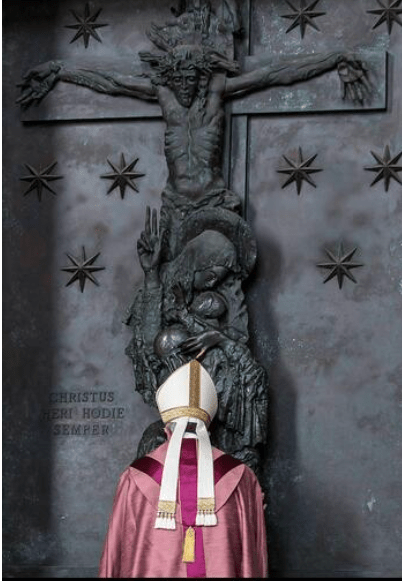
 This Sunday is special. We are still in the season of Advent, and yet we see a different liturgical color. It is a rose color [not pink!]. This beautiful color symbolizes joy and hope, and it is in line with the spirit of the third Sunday of Advent, the Gaudete Sunday. Gaudete is a Latin word meaning “Rejoice!” The name is rooted in the introit or the opening antiphon of the Mass, from Phil 4:4-5, “Rejoice in the Lord always; again I will say, Rejoice. 5 Let your gentleness be known to everyone. The Lord is near” In the second reading, St Paul reiterates the motif, “Rejoice always. Pray without ceasing. In all circumstances give thanks, for this is the will of God for you in Christ Jesus. [1 The 5:16].”
 Minggu ini cukup istimewa. Kita masih dalam masa Adven, namun kita melihat warna liturgi yang berbeda. Itu adalah warna mawar atau merah muda. Warna indah ini melambangkan kegembiraan dan harapan, dan ini sejalan dengan semangat Minggu Adven ketiga, Minggu Gaudete. Gaudete adalah kata Latin yang berarti “Bersukacitalah!” Nama ini berakar pada introit atau antiphon pembukaan Misa, dari Filipi 4: 4-5, “Bersukacitalah senantiasa dalam Tuhan! Sekali lagi kukatakan: Bersukacitalah! Hendaklah kebaikan hatimu diketahui semua orang. Tuhan sudah dekat !” Dalam bacaan kedua, Santo Paulus mengulangi motif yang sama, “Bersukacitalah senantiasa. Tetaplah berdoa. Mengucap syukurlah dalam segala hal, sebab itulah yang dikehendaki Allah di dalam Kristus Yesus bagi kamu. [1 Tesalonika 5:16]. ”
 We are entering a joyful season of Advent. The first Sunday of Advent is also the beginning of the liturgical year of the Catholic Church. Advent is from the Latin word “adventus” meaning “the coming.” From this name alone, we can already deduce the purposes of this lovely season. It is to prepare us for the coming of Jesus, yet we must not forget that the Church teaches us that there are two comings. The first coming is two thousand years ago in Bethlehem, as a baby at Mary’s hands. The second coming is Jesus’ arrival at the end of time as the glorious king and the judge.
 Kita memasuki masa Adven. Minggu pertama Adven juga merupakan awal tahun liturgi Gereja Katolik. Adven sendiri berasal dari kata Latin “adventus” yang berarti “kedatangan”. Dari nama ini saja kita sudah bisa menyimpulkan tujuan dari masa liturgi yang satu ini. Masa Adven mempersiapkan kita bagi kedatangan Yesus, namun kita tidak boleh lupa bahwa Gereja mengajarkan kita bahwa ada dua kedatangan Yesus. Kedatangan pertama terjadi dua ribu tahun yang lalu di Bethlehem, sebagai bayi kecil di tangan Maria. Kedatangan kedua adalah kedatangan Yesus di akhir zaman sebagai raja dan hakim yang mulia.
 In Medio Ecclesiae