

25th Week in Ordinary Time [A]
September 20, 2020
Matthew 20: 1-16

Among the many parables of Jesus, this parable of the owner of the vineyard is one that I find difficult to understand. Every time I read this parable, I always felt that something was wrong. Perhaps, I easily associate myself with the first-coming workers, who work from morning to sunset. They are laborers who spend their time and energy under the heat of the sun and give their efforts to meet the demands of the vineyard owner. However, they receive the same wages as those who only offer one hour of work. Of course the owner of the vineyard did not break the contract, but there still seemed to be injustice.
Maybe, this experience is like when I was studying in Manila. I was studying hard to get the best that I could achieve. Indeed, I got good grades, but what I could not accept was when my classmates who did not spent much effort, got also the same grades as I did. For me, It was not fair, but I could drop my complaint because the final grade is the prerogative of the professor.
However, things started to look different when I became a teacher myself. At one point, I needed to give my students final grades. And this is the utmost dilemma for me because I realize that on the one hand, I need to provide justice, but on the other hand, I want all my students to pass and graduate. Finally, I often chose compassion and allowed my struggling students to pass. I am fully aware that some of my students will feel that I am unfair, and that is the burden I must bear as a lecturer who chooses to be compassionate.
If we try to look closely at what vineyard owner is doing, we will find it funny and even weird. He kept looking for and hiring new persons almost every three hours. To make matters worse, he gave the same daily wages for all. In the economy and business, overspending and excess labor are a recipe for bankruptcy! However, the owner of the vineyard did not seem to care and was constantly looking for laborers. Perhaps, he knew very well that if these people were without jobs, they would starve to death, but if they worked and received less than the minimum wage, they wouldn’t be able to survive either. He couldn’t satisfy everyone, but at least he would be able to save everyone.
Learning from this parable, rather than complaining to God, we need to rejoice because our Lord is full of mercy, who even takes the initiative and seeks to seek out those of us who need salvation, and who willingly give eternal life even to those who have not lived well, but at the last moment repent.
We should rejoice because in God’s eyes, we are all the last workers to beg mercy. Who knows, the workers who come first are actually the angels, and we really are the last unworthy laborers. With our sin, we all deserve to go to hell, but God stretches out His hand and opens the Gates of Heaven. We should rejoice that heaven is not a lonely place where few righteous people deserve it, but it is full of grateful people who enjoy God’s mercy even if they are not worthy.
Valentinus Bayuhadi Ruseno, OP
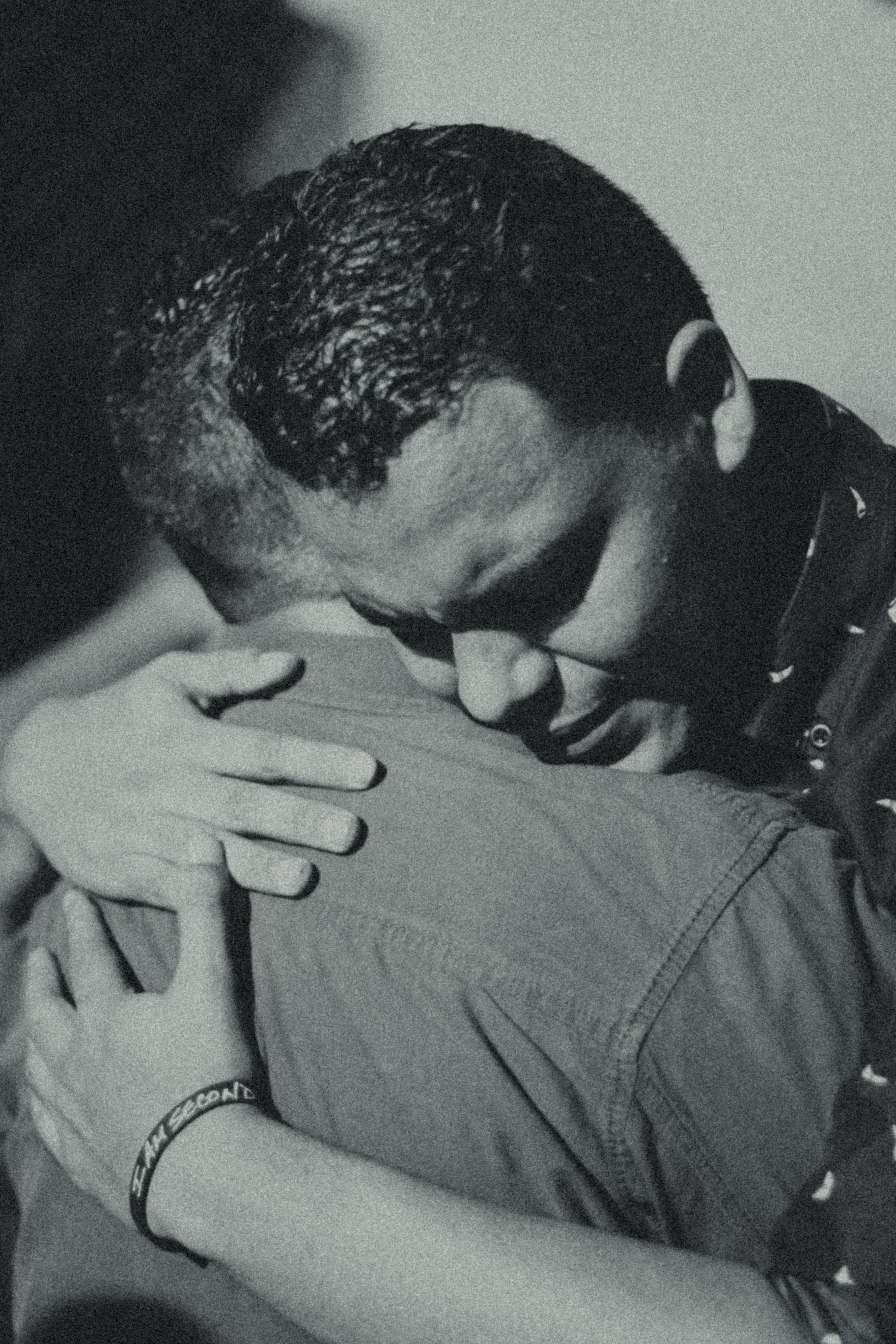
Pic: lambros lyrarakis


 Once again, we listen to one of Jesus’s most remarkable stories. There is a rich man, and this guy is insanely wealthy. He is described as someone clothed with purple and fine linen. In ancient time, fine purple linen is an utmost luxury, and usually only nobilities could afford to buy this kind of cloth. Before the coming of synthetic coloring, purple dye is coming from snails of Mediterranean Sea, and it takes thousands of snails just to dye one ordinary garment. This rich guy is also throwing party every night. At the time of Jesus, where majority must toil to earn a little and to have something to eat, to enjoy feast every night is madly extravagant. At that time, fork, knife, and napkins were not common; thus, people are eating with their hands. In very wealthy houses, they will cleanse their hands by wiping them on hunks of bread that will be thrown away. These are pieces of bread Lazarus longs to receive.
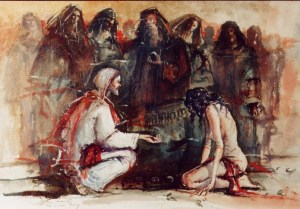 Adultery is a serious sin according to the Law of Moses. It is a violence against the Basic Law, the Ten Commandments. It is in fact, one of the few crimes that are punishable by death [Lev 20:10]. Why so cruel? It is a grave sin because adultery profanes the holiness of marriage and the gift of sexuality. In the Book of Genesis, God has willed that man and woman through marriage and their sexuality participate in God’s work of creation and caring of creation. Since marriage is a sacred calling, violation to this holy mission is an utmost insult to God who calls man and woman into marriage.
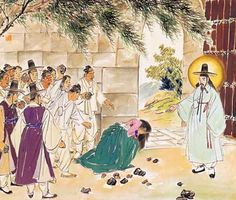 Perzinahan adalah dosa serius menurut Hukum Musa. Ini adalah pelanggaran terhadap Sepuluh Perintah Allah. Pezinahan adalah satu dari sedikit dosa yang bisa dihukum mati [Im 20:10]. Kenapa begitu kejam? Ini adalah dosa besar karena perzinahan mencemarkan kekudusan pernikahan dan karunia seksualitas. Dalam Kitab Kejadian, Tuhan menghendaki pria dan wanita melalui pernikahan dan seksualitas mereka berpartisipasi dalam karya penciptaan. Karena pernikahan adalah panggilan suci, pelanggaran terhadap misi suci ini adalah salah satu penghinaan terbesar bagi Allah yang memanggil pria dan wanita ke dalam pernikahan.
 One time, during a Bible class I facilitated, one of the participants asked me, “how was Peter able to recognize that it was Moses who stood beside Jesus during the Transfiguration?” It was a valid question, and yet I personally never thought of it. I thought of with several possible answers. Perhaps, Moses appeared bringing two stone tables of the Law. Perhaps, as Jesus was conversing with Moses and Elijah, Peter was able to pick up the names. Perhaps, the divine inspiration enlightened Peter’s mind on the identity of Moses. Eventually, I have to answer, “When you go to heaven, don’t forget to ask both Peter and Moses.”
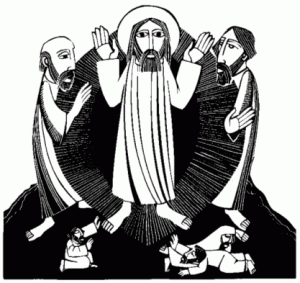 Suatu kali, saat saya mengajar kelas Alkitab, salah satu peserta bertanya kepada saya, “bagaimana Petrus dapat mengenali Musa adalah yang berdiri di samping Yesus saat Transfigurasi?” Itu adalah pertanyaan yang valid, namun saya pribadi tidak pernah memikirkan. Saya datang dengan beberapa kemungkinan jawaban. Mungkin, Musa muncul membawa dua loh batu Taurat. Mungkin, ketika Yesus berbicara dengan Musa dan Elia, Petrus dapat mengambil nama-nama itu. Mungkin, ilham ilahi menerangi pikiran Petrus tentang identitas Musa. Akhirnya, saya harus menjawab, “Ketika Anda pergi ke surga, jangan lupa untuk bertanya kepada Petrus dan Musa!”
 In Medio Ecclesiae