


25th Sunday in Ordinary Time. September 24, 2017 [Matthew 20:1-16a]
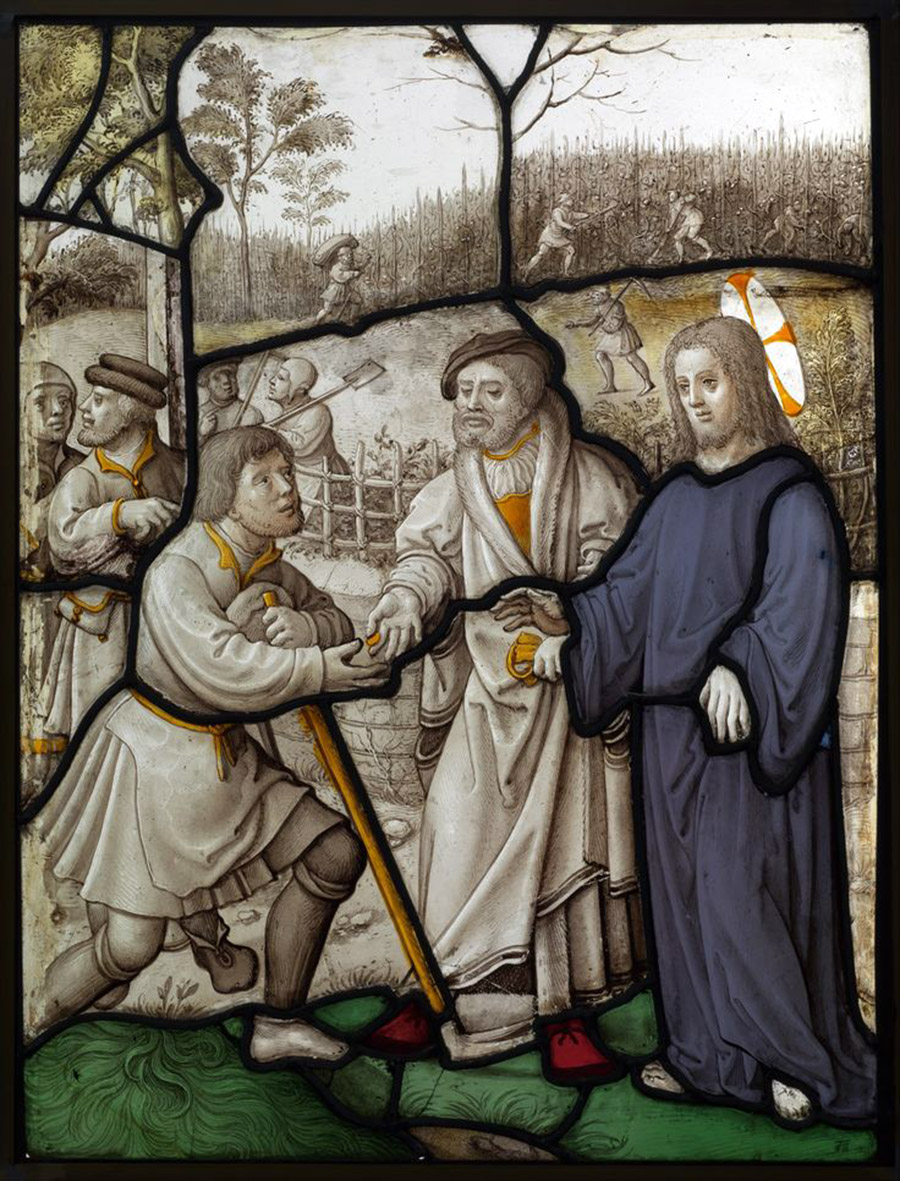
They answered, ‘Because no one has hired us.’ He said to them, ‘You too go into my vineyard.’ (Mat 20:1-16)
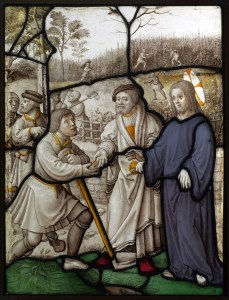 Jesus is the storyteller genius. The parable he shares to us today does not only surprise us with its unexpected ending, but it also creates a sense of puzzlement and wonder. We expect that the workers who labored the whole day would get the better wage compared to those who came late. Yet, it did not happen. All got the same wage regardless of their working hours. The vineyard owner was right to explain that he did not violate the agreement with his laborers, but deep inside us, there is something quite off. If we were militant enough, we would stage a rally to protest the vineyard owner’s decision.
This sense of puzzlement and perhaps discontent are born because we can easily identify ourselves with the laborers who came early and worked the whole day, perhaps under the scourging sun and bearing heavy load. Many of us are workers who spend 8 hours or more in the workplace, working hard, just to get something to eat and little to save. Or some of us are students who have to study hard for hours just to pass a subject. Surely, we will feel resentment and even anger when we know that some unqualified workers with less work hours or productivity, receive the same and even higher amount of salary. We, students, will get totally disappointed knowing some lazy students, with their substandard, “copy-paste” assignments, get higher grade than us. It just violates our sense of justice.
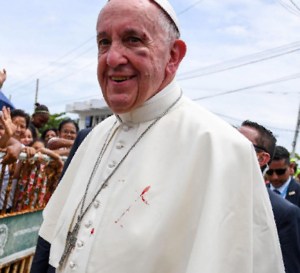
However, do we really have to identify ourselves with the laborers who worked the whole day? Who knows they are actually not representing us. In God’s eyes, all of us may be like those people who were standing idle the whole day perhaps because no other vineyard owners think that we deserve the job. Indeed, in the final analysis, we are all but unworthy sinners. Pope Francis is loved by many and working hard for the Church. In his visit to Colombia, when he greeted the people on the streets, he got tripped, his eyebrow was slightly cut, and blood came out. Yet, instead calling off the activity, he proceeded. After receiving quick medical treatment, he insisted to continue greeting the people. Despite the pain, he met the people of God even with brighter smile. Pope Francis is like one of the laborers who came early in vineyard. Once he was asked by reporters to describe himself in one word, he answered he was a sinner! If this loving and holy Pope considers himself a sinner, who are we to think that we are the righteous?
Too much focus on ourselves, we often miss the obvious actions of the vineyard owner. He exerts effort to look for laborers, not just once, but four times. This defies the business logic. Why would you hire more if you have enough workers for the day? Why would you spend much for those worked only for one hour? That’s perfect recipe for bankruptcy! The point is not really about business and profit, but about seeking diligently and embracing those who are the lost, the less and the last. It is about us sinners, unworthy of Him, yet God remains faithful in looking for us.
It is truly humbling experience to know that we are “the people idle on the streets” yet God wants us to be part of His family. Now, it is our duty to respond to his Mercy with commitment and love for others. Like the last workers, we have only “one hour”, and it is time to make the best of it for He who has been very merciful.
Br. Valentinus Bayuhadi Ruseno, OP
 Yesus adalah seorang pencerita yang luar biasa. Perumpamaan Yesus hari ini tidak hanya mengejutkan kita dengan akhir yang tak terduga, tapi juga membuat kita bertanya-tanya. Kita berharap para pekerja yang bekerja sepanjang hari akan mendapatkan upah yang lebih baik dibandingkan dengan mereka yang terlambat datang. Namun, itu tidak terjadi. Semua mendapat upah yang sama. Pemilik kebun anggur menjelaskan bahwa dia tidak melanggar kesepakatan dengan para pekerja, tapi di dalam lubuk hati kita, kita merasa ada sesuatu yang salah.
 Why is it difficult to forgive? One of the reasons is that after we are wronged, the immediate reaction is to seek justice or even revenge. We want that the pain and the loss we experienced are also felt by those who inflicted them on us. We want “a tooth for a tooth, an eye for an eye”. Unfortunately, consumed by anger and hatred, our cry for justice can easily turn into an intense desire of revenge. If justice seeks to balance scale, revenge seeks to inflict a greater punishment, or even to destroy those who have harmed us. Unless we get what is due, unless they receive what they deserve, there is no forgiveness.
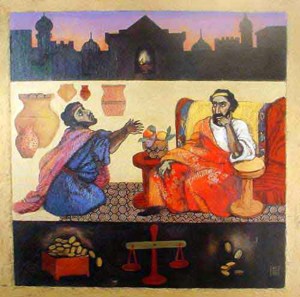 Mengapa sulit untuk memaafkan? Salah satu alasannya adalah bahwa setelah kita disakiti, reaksi kita adalah untuk mencari keadilan. Kita ingin apa rasa sakit yang kita alami juga dirasakan oleh orang-orang yang melakukannya pada kita. Kita ingin “gigi ganti gigi, mata ganti mata”. Terkadang, termakan oleh kemarahan dan kebencian, usaha kita untuk mencari keadilan dapat dengan mudah berubah menjadi keinginan membalas dendam. Jika rasa keadilan berusaha untuk menyeimbangkan skala, balas dendam berusaha untuk memberi hukuman yang lebih besar, atau bahkan untuk menghancurkan orang-orang yang telah merugikan kita. Jika kita tidak mendapatkan apa yang semestinya, jika mereka tidak menerima apa yang layak mereka dapatkan, tidak ada pengampunan.
 Today’s Gospel is well known as the Confession of Peter. Jesus asks the disciples who He is, and Simon confesses that Jesus is the Christ, the Son of the living God. He gets it right, and Jesus Himself reveals that his answer does not come from his human weakness, but from the heavenly Father. I used to think that this revelation is an instant inception of divine idea inside Simon’s mind. Right there and then, like Archimedes who discovered the Law of Hydrostatic, Simon also shouts “Eureka! I have found it!”
 Yesus bertanya kepada murid-murid siapakah Dia, dan Simon menjawab bahwa Yesus adalah Kristus, Anak Allah yang hidup. Simon Petrus menjawab dengan benar, dan Yesus sendiri mengungkapkan bahwa jawabannya tidak berasal dari kelemahan manusiawi, namun dari Bapa di surga. Dulu saya berpikir bahwa pewahyuan ini terjadi secara instan di dalam pikiran Simon. Seperti Archimedes yang menemukan Hukum Hidrostatis, Simon juga berteriak “Eureka! Aku telah menemukannya!”
 Minggu ini, Gereja merayakan Pesta Yesus yang menampakkan kemulian-Nya yang juga dikenal sebagai Transfigurasi. Kata “transfigurasi” adalah transliterasi dari kata Latin “transfigurare” yang digunakan oleh Alkitab Latin Vulgata. Ini adalah kombinasi dua kata “trans” yang berarti melintasi, dan “figura” yang berarti bentuk atau figur. Dengan demikian, transfigurasi secara harfiah berarti bahwa perubahan bentuk atau figur. Ini adalah kata yang tepat untuk menggambarkan apa yang terjadi pada Yesus di Gunung tinggi.
 From today’s parables, we learn that Jesus appreciates human labor, the use of technology, and economic activities. The parables speak of men buying and selling land, merchants making transactions, and fisher folk catching and selecting the fish. Yet, the appreciation comes with a particular condition: the activities have to be honest and just.
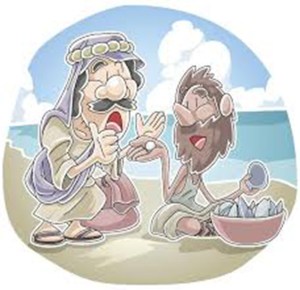 Dari perumpamaan-perumpamaan hari ini, kita menyadari bahwa Yesus sejatinya menghargai kerja, kemampuan mengunakan teknologi dan kegiatan ekonomi manusia. Perumpamaan-perumpamaan tersebut berbicara tentang seseorang yang membeli dan menjual tanah, pedagang melakukan transaksi, dan nelayan menangkap dan memilih ikan mengunakan jaring. Namun, apresiasi Yesus hadir dengan sebuah kondisi: aktivitas manusia ini harus jujur dan juga adil.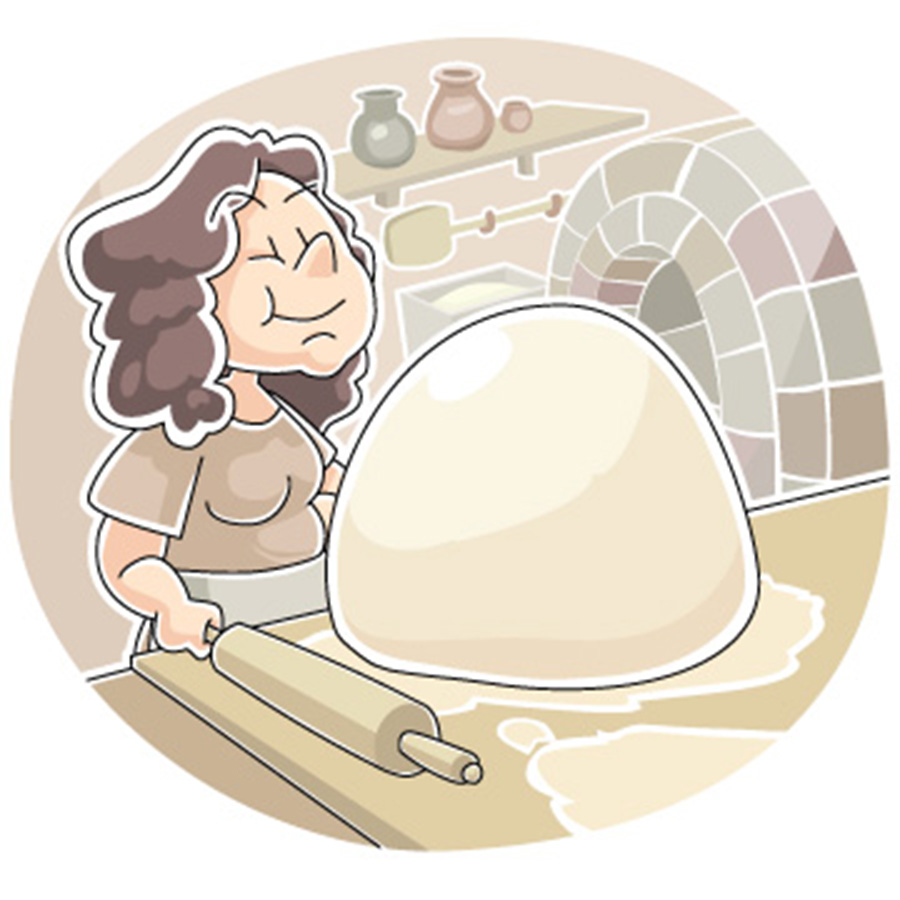
 From the several parables that Jesus tells us in today’s Gospel, we learn that Jesus is keen on how nature works. He observes how seeds of wheat and weed grow, and how the yeast would affect the dough in the process of baking. Jesus also is observant of human ingenuity in working with nature for the benefit of the human community. Men and women till the land, are observant to the cycle of nature, sow the well-prepared seeds, take care of the growth and then harvest the result for the good of community. The use of yeast for baking is a very ancient method of cooking. Women would place yeast in dough, and the microorganism would interact with the carbohydrate in the flour, creating carbon dioxide, and as an effect, the leaven dough would expand. Though unleavened bread will last longer, this yeast would make the bread softer and tastier, making it more enjoyable for human consumption.
 In Medio Ecclesiae