

Minggu Prapaskah ke-3
7 Maret 2021
Yohanes 2: 13-25

Sebagai pembaca modern, kita sering gagal paham akan Injil hari ini. Kisah Yesus yang satu ini sering menjadi dasar bagi sebagian dari kita untuk menolak penggunaan bangunan gereja untuk kegiatan non-keagamaan, apalagi untuk keperluan untuk mencari untung. Saya pribadi setuju bahwa bagian dalam gedung Gereja merupakan tempat yang dikhususkan untuk peribadatan dan doa. Ini adalah daerah suci bagi umat untuk bertemu dengan Tuhan dan mengalami surga.
Namun, Injil hari ini lebih kompleks dari apa yang sering kita pahami. Kita cenderung berasumsi bahwa Yesus membersihkan Bait Suci dari para pedagang hewan dan penukar uang karena Yesus melihat mereka sebelumnya bukan bagian dari Bait Allah, tetapi tiba-tiba mereka menjamur di area Bait Suci. Namun, jika kita kembali ke zaman Yesus, pedagang hewan dan penukar koin adalah bagian dari sistem penyembahan dari Bait Suci. Para peziarah dari berbagai belahan Palestina dan dunia berdatangan ke Bait Allah setiap hari, dan meskipun membawa hewan kurban mereka sendiri itu bisa dilakukan, hal ini tidaklah praktis. Hewan-hewan ini akan menambah beban perjalanan dan hewan-hewan ini mungkin mendapatkan cacat atau cedera di sepanjang jalan. Dengan luka atau kerusakan tersebut, hewan-hewan tersebut tidak layak lagi untuk dipersembahkan. Karenanya, sebuah solusi bagi para peziarah yang lelah ini hadir: para pedagang di Yerusalem siap membantu dengan menyediakan hewan kurban yang sehat dan layak.
Penukar uang juga terikat ke Bait Allah. Untuk mendukung pemeliharaan Bait Allah, para peziarah harus menyumbangkan sejumlah uang, namun Bait Allah tidak menerima koin Romawi. Otoritas Bait Allah menganggap koin itu sebagai tanda penindasan asing. Koin Romawi juga dianggap menghujat karena koin itu mengakui Kaisar sebagai dewa. Sementara itu, orang Yahudi tidak diperbolehkan mencetak koin mereka. Sebagai solusinya, mereka menerima koin dari kota tetangga, Tirus. Di sinilah peran para penukar koin. Tanpa penjual hewan dan layanan penukaran uang, Bait Allah Yerusalem tidak akan berfungsi sebagaimana mestinya. Sama halnya seperti jika kita perlu memproduksi anggur dan roti sendiri untuk perayaan Ekaristi.
Biasanya, pedagang hewan dan pedagang koin berada di dekat tetapi di luar Bait Allah. Namun, masalah bermula ketika otoritas Bait Allah mengizinkan para penjual ini berada di dalam area Bait Allah, terutama di sekitar pelataran bangsa-bangsa [yang diperuntukkan bagi bangsa non-Yahudi]. Pelataran bangsa-bangsa, meskipun terjauh dari tempat yang paling suci, masih merupakan bagian integral dari bait suci dan tetap menjadi tempat berdoa, terutama bagi orang-orang non-Yahudi yang percaya kepada Tuhan Israel.
Yesus tidak hanya ingin melindungi rumah Tuhan sebagai rumah doa dan penyembahan, tetapi Dia juga ingin agar orang-orang bukan Yahudi mendapat tempat di rumah doa ini. Sayangnya, Bait Allah Yerusalem dihancurkan pada 70 M oleh kekaisaran Romawi. Namun, bukan berarti visi Yesus tetap sirna. Keinginan-Nya untuk mempersatukan bangsa-bangsa dalam doa dan penyembahan kepada Tuhan yang benar terwujud dan mencapai kesempurnaan dalam tubuh-Nya, yakni Bait Allah yang baru.
Di manakah kita sekarang menemukan Tubuh [dan Darah] Kristus? Tentunya, ada dalam Ekaristi. Dalam Ekaristi, orang-orang dari berbagai bangsa dan bahasa berkumpul untuk mempersembahkan ibadat yang layak kepada Tuhan yang benar. Setiap kali kita merayakan Ekaristi, kita menjadi saksi hidup dari visi penyembahan Yesus untuk semua bangsa. Kita bisa menyembah Tuhan yang benar karena Yesus menyiapkan tempat untuk kita.
Valentinus Bayuhadi Ruseno, OP
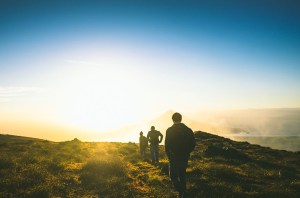 Mountain is a special place in the Bible. It is a place where God meets His people. In the Old Testament, there are many instances where mountains become a pivotal point of salvation history. After the great flood that cleansed the world, the Ark of Noah landed on Mount Ararat, and there, Noah offered sacrifice to God [see Gen 8:4]. Abraham was asked by God to offer his son Isaac on Mount Moriah. Just right before the sacrifice, the angel of God prevented Abraham and God recognized Abraham’s faith [see Gen 22]. When Moses was tending the flock of his father-in-law, Moses saw a burning bush yet was not consumed, and there, on the mount of Horeb, God called Moses to save Israelites from the Egyptians [see Exo 3]. After the liberation from Egypt, Moses and the Israelites the Law and established a covenant with God on the mount of Sinai [see Exo 24:18].
 Gunung adalah tempat khusus di dalam Kitab Suci. Ini adalah tempat dimana Tuhan bertemu dengan umat-Nya. Dalam Perjanjian Lama, ada banyak contoh di mana gunung menjadi titik penting dalam sejarah keselamatan. Setelah banjir besar yang membersihkan dunia, Bahtera nabi Nuh mendarat di Gunung Ararat dan di sana, Nuh mempersembahkan korban kepada Tuhan [lihat Kejadian 8: 4]. Abraham diminta oleh Tuhan untuk mempersembahkan putranya, Ishak, di Gunung Moria. Tepat sebelum pengorbanan, malaikat Tuhan mencegah Abraham dan Tuhan menerima iman Abraham [lihat Kejadian 22]. Ketika Musa sedang menggembalakan kawanan bapa mertuanya, Musa melihat semak bernyala tapi tidak habis terbakar, dan di sana, di gunung Horeb, Tuhan memanggil Musa untuk menyelamatkan bani Israel dari Mesir [lihat Keluaran 3].
 Why did Jesus have to stay in the wilderness for 40 days? The answer is not difficult. He was reperforming what the Israelites did when they were liberated from Egypt. The Israelites stayed for 40 years in the wilderness before they entered the promised land. Yet, there is one more thing! Mark gives us a small, however important detail: in the wilderness, Jesus was staying with the beasts. Why so? If there is one man closely connected to the beasts in the scriptures, he is no other than Adam. Jesus is the new Israel who endured the harsh conditions of the desert and the new Adam who faced the onslaught of the devil.
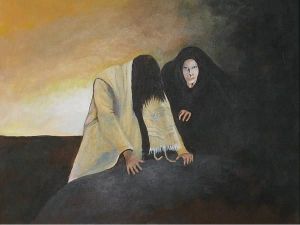 Mengapa Yesus harus tinggal di padang gurun selama 40 hari? Jawabannya tidak sulit. Dia mengulangi apa yang dilakukan orang Israel ketika mereka dibebaskan dari perbudakan Mesir. Orang Israel tinggal selama 40 tahun di padang gurun sebelum mereka memasuki tanah perjanjian. Namun, ada satu hal lagi! Markus memberi kita detail kecil namun penting: di padang gurun, Yesus tinggal bersama binatang-binatang. Kenapa demikian? Jika ada satu orang yang hidup bersama para binatang di dalam kitab suci, dia tidak lain adalah Adam. Yesus bukan hanya Israel baru yang menanggung kondisi keras padang gurun, tetapi juga Adam baru yang menghadapi serangan setan.
 Among the five human senses, the sense of touch is the most basic and foundation to other senses. The sense of sight needs to be in touch with the light spectrum. The sense of taste requires to be in contact with the chemical in the food. The sense of hearing must receive air vibration or sound waves. This sense makes us a human being, a bodily being. No wonder that many traumatic experiences [even mental problems] are rooted in the lack (or excess) of touch.
 Di antara lima indra manusia, indra peraba [sentuhan] adalah yang paling dasar dan fondasi bagi indra yang lainnya. Indra penglihatan perlu bersentuhan dengan spektrum cahaya. Indra perasa perlu bersentuhan dengan bahan kimia dalam makanan. Indra pendengaran harus menerima getaran suara di udara. Sentuhan menjadikan kita manusia, makhluk yang bertubuh. Tidak mengheran jika banyak pengalaman traumatis [bahkan masalah mental] berakar pada sentuhan yang kurang diterima atau tidak seharusnya diterima.
 Dalam menyembuhkan orang buta, Yesus melakukan sesuatu yang agak tidak biasa: Ia meludah ke tanah, membuat tanah liat dengan air liurnya, dan mengolesi tanah liat itu di mata orang buta tersebut. Saat ini kita sedang melawan Covid-19, jenis virus korona yang menyebar dengan cepat, kita dididik bahwa salah satu media kontaminasi adalah tetesan manusia seperti air yang keluar dari mulut kita. Ketika air yang sudah terkontaminasi dengan virus bersentuhan dengan mulut, hidung dan mata, itu menjadi titik awal berjangkitnya si virus di tubuh kita.
 Kita melihat Yesus sebagai beberapa figur. Beberapa orang menganggap Dia sebagai guru, beberapa memanggilnya sebagai sahabat, dan beberapa yang lain hanya akan menyatakan Dia sebagai Tuhan dan Juru Selamat. Namun, sedikit yang kita ketahui bahwa Injil memperkenalkan Dia sebagai mempelai laki-laki.
 In Medio Ecclesiae