

Second Sunday of Lent [A]
March 8, 2020
Matthew 17:1-9
 The Church has selected the story of Transfiguration as the reading of the second Sunday of Lent. We may ask how this kind of powerful story may fit into the entire season of Lent. The key is that the Transfiguration is fundamentally linked to the Cross of Jesus. In Luke’s version of the transfiguration, Jesus was talking to Moses and Elijah about His “exodus.” This reminds the ancient Israelites who exited Egypt, walked through the desert, and entered the Promised Land. Yet, the real end of the exodus is the city of Jerusalem, and eventually the holy Temple where God dwelled among His people. Just like the ancient Israelites, Jesus’ exodus has to end in Jerusalem.
The glorious moment of transfiguration is not intended to last long. Jesus has to go down and walk again toward Jerusalem. However, the disciples got it wrong when Peter offered to put a tent and to stay in the wonderful moment for good. Jesus reminded them that they need to go down. The disciples cannot stay there, and they must continue their journey.
There are moments in our lives that we believe that we have seen and reached the glory of God. We feel so blessed when we pray before the Blessed Sacrament. We experience peace during our retreat and meditation. We are inspired after we listen to the insightful preaching. We are re-energized by songs and praises. These things are good, but they are never intended to be the end of the journey. We must go down together with Jesus, and to carry our daily crosses. Jesus understands that there is no real love without suffering, no true glory without pain, and no salvation without the cross.
I am currently in the Holy Land, and I was walking in the same way Lord Jesus has set His feet. I was truly blessed that God allowed me to be on this Promised Land just months after my ordination. The joy is overwhelming. Israel is truly a land flowing with milk and honey, a truly beautiful land. I am studying the Bible for years, but only now that I truly see and touch these biblical places. My faith becomes truly alive. The more I walk through the land and places, the more I want to stay and learn. I have seen the glory of the Lord, and I want to pitch my tent. However, I cannot wait too long, and I need to go back because my mission is not [yet] at this Promised Land.
Last March 4, 2020, the house for the elderly and disabled run by the Missionaries of Charity in Aden, Yemen, was attacked by the terrorists. Four sisters were killed during the ambush. Their works for the elderly in one of the poorest countries is in itself a heroic act, but their true glory lies when they gave their lives totally for God and the people they loved. Every morning, the sisters always prayed together in the community, and this prayer [attributed to St. Ignatius of Loyola] have inspired them through the last moment of their lives:
“Lord, teach me to be generous. Teach me to serve you as you deserve; to give and not to count the cost, to fight and not to heed the wounds, to toil and not to seek for rest, to labor and to ask for reward, save that of knowing that I do Your holy will.”
Valentinus Bayuhadi Ruseno, OP
 Gereja telah memilih kisah Transfigurasi sebagai Injil Minggu Prapaskah kedua. Kita mungkin bertanya bagaimana kisah kemuliaan semacam ini dapat masuk ke dalam seluruh konteks Prapaskah. Kuncinya adalah bahwa Transfigurasi secara mendasar terkait dengan Salib Yesus. Dalam versi transfigurasi dari Lukas, Yesus berbicara kepada Musa dan Elia tentang “eksodus” -nya. Ini mengingatkan kita akan bangsa Israel kuno yang keluar dari Mesir, berjalan melewati padang pasir, dan memasuki Tanah Perjanjian. Namun, akhir eksodus yang sebenarnya adalah kota Yerusalem, dan akhirnya Bait suci tempat Allah tinggal di antara umat-Nya. Sama seperti bangsa Israel kuno, eksodus Yesus harus berakhir di Yerusalem.
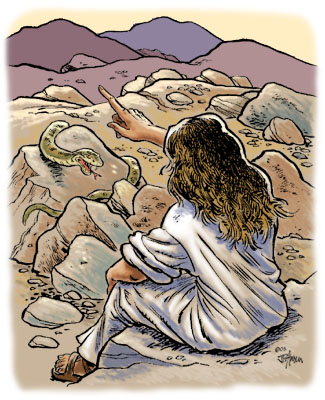 Hari Minggu Prapaskah pertama dimulai dengan kisah Yesus di padang gurun, berpuasa dan dicobai oleh iblis. Matius memberi kita lebih banyak perincian dalam kisah pencobaan, dan dari Matius, kita menemukan tiga pencobaan Kristus. Mengapa Setan menggoda Yesus? Kenapa tiga godaan?
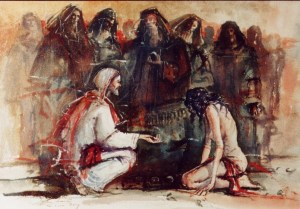 Adultery is a serious sin according to the Law of Moses. It is a violence against the Basic Law, the Ten Commandments. It is in fact, one of the few crimes that are punishable by death [Lev 20:10]. Why so cruel? It is a grave sin because adultery profanes the holiness of marriage and the gift of sexuality. In the Book of Genesis, God has willed that man and woman through marriage and their sexuality participate in God’s work of creation and caring of creation. Since marriage is a sacred calling, violation to this holy mission is an utmost insult to God who calls man and woman into marriage.
 Perzinahan adalah dosa serius menurut Hukum Musa. Ini adalah pelanggaran terhadap Sepuluh Perintah Allah. Pezinahan adalah satu dari sedikit dosa yang bisa dihukum mati [Im 20:10]. Kenapa begitu kejam? Ini adalah dosa besar karena perzinahan mencemarkan kekudusan pernikahan dan karunia seksualitas. Dalam Kitab Kejadian, Tuhan menghendaki pria dan wanita melalui pernikahan dan seksualitas mereka berpartisipasi dalam karya penciptaan. Karena pernikahan adalah panggilan suci, pelanggaran terhadap misi suci ini adalah salah satu penghinaan terbesar bagi Allah yang memanggil pria dan wanita ke dalam pernikahan.
 The Parable of the Prodigal Son is one of the most moving stories of Jesus and has been regarded as the all-time favorite. Why? I guess one of the reasons is the story of the Prodigal Son is also our story.
 Perumpamaan tentang Anak yang Hilang adalah salah satu kisah Yesus yang paling mengharukan dan telah dianggap sebagai yang paling disukai. Mengapa? Saya kira salah satu alasannya adalah kisah Anak yang Hilang adalah kisah hidup kita juga.
 It normally takes around three years for a fig tree to reach its maturity and fruition. If it does not produce fruit by that time, it is not likely to bear fruit at all. The owner has a reasonable right to cut the tree, but through the effort of the gardener, it is given another chance. Like the fig tree, through the effort of our Chief Gardener, the new Adam of eternal Eden, Jesus Christ, we are given another chance to change and be fruitful.
 Biasanya membutuhkan waktu sekitar tiga tahun bagi pohon ara untuk mencapai masa dewasa dan berbuah. Jika tidak menghasilkan buah pada saat ini, kemungkinan besar pohon ara tersebut tidak akan berbuah sama sekali. Tentunya, Sang pemilik memiliki hak untuk menebang pohon tersebut dan menanam pohon baru. Tetapi, melalui upaya sang tukang kebun, pohon ara diberi kesempatan baru. Seperti pohon ara, melalui upaya Sang Tukang Kebun kita, Adam yang baru di taman Eden yang abadi, Yesus Kristus, kita diberi kesempatan baru untuk berubah dan berbuah.
 In Medio Ecclesiae