

Second Sunday of the Ordinary Time [A]
January 19, 2020
John 1:29-34
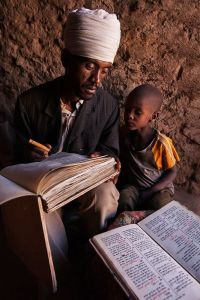 We begin the ordinary time of the liturgical year. In the Church, we have three cycles of the liturgical year: A, B, and C. every year, we have a different set of readings. In year A, the Gospel readings are mainly from the Gospel of Matthew, meanwhile, year B is from Mark and year C is from Luke. The Gospel of John does not have its separate year, but the readings from John are scattered through the years, especially in the Easter season.
The first reading is usually taken from the Old Testament and it is thematically related to the Gospel. While the second reading is coming from the letters of the apostles like St. Peter, St. John and the letter to the Hebrews, yet the majority of the second reading comes from letters of St. Paul. The second readings have their own sequence and it is not necessarily thematically related to the Gospel. The reason behind why we have this kind of liturgical setting is that to help us, the regular mass-goers, to read the Scriptures together with the Church. If we are faithfully attending the mass every Sunday, or even every day, and attentive to the readings, we will have a good grasp of the Scriptures and especially the life and works of Jesus.
However, not all the Scriptures are there in the Mass. If we go every day to participate in the Eucharist for three years, we only listen to around 30 percent of the Bible. We still have 70 percent to complete the Bible! Thus, it is highly recommended that we take the initiative to read the Bible on our own. Three to four chapters a day, and hopefully, within a year, we are able to read the entire Bible cover to cover.
I guess one of the “great sickness” of Catholics nowadays is the ignorance of the Scriptures. When I ask some Catholics whether they have the Bible, they unanimously answer that they have a Bible, and in fact, they have a collection of Bible coming from different countries. However, when I inquire whether they read the Bible regularly, only a few would confidently reply that they do.
The task of reading the Bible is getting difficult in our time because young generations or the millennials and generation Z, despite their high education, prefer to playing electronic gadgets rather than to read books, and printed materials become an obsolete. Yes, it is easy now to install a Bible on our cellphone but to spend time to read it is another thing. With so many other competing applications in our handheld device, reading the Word of God is easily relegated to the sideline.
St. Jerome reminds us that ignorance of Scriptures is ignorance of Christ. Indeed, it is too easy to say “I love Jesus”, but in reality, we are ignoring Him because we never read or attentively listen to the Scriptures. St. Paul in the beginning of his letter to the Corinthians reminds us that we are called to saints or holy. And holiness for Paul is nothing but living in Christ, but how we can live in Christ, if we do not know Christ, worse ignore him? Reading a Bible on a daily basis can become a simple yet concrete act of loving Jesus, and in fact, the way to holiness as we become more and more like Christ.
Valentinus Bayuhadi Ruseno, OP
 Kita memulai masa biasa pada tahun liturgi ini. Di Gereja Katolik, kita memiliki tiga siklus tahun liturgi: A, B, dan C. Di setiap tahun, kita memiliki serangkaian bacaan yang berbeda. Pada tahun A, bacaan Injil terutama dari Injil Matius, sementara tahun B dari Markus dan tahun C dari Lukas. Injil Yohanes tidak memiliki tahun yang khusus, tetapi bacaan dari Yohanes tersebar di sepanjang tahun, terutama di masa Paskah.
 We are entering the season of Advent. This time marks the beginning of the new liturgical year of the Church. The season itself is a preparation for us to welcome the Christmas, the coming of Jesus Christ. The word Advent is coming from the Latin word “Adventus” that simply means “arrival.” The dominant liturgical color will be purple that signifies hope and joyful expectation of the coming of our Savior.
 Kita memasuki masa Adven. Waktu ini menandai awal tahun liturgi Gereja yang baru. Masa itu sendiri adalah persiapan bagi kita untuk menyambut Natal, kedatangan Yesus Kristus. Kata Adven berasal dari kata Latin “Adventus” yang berarti “kedatangan.” Warna liturgi yang dominan adalah ungu yang menandakan harapan penuh sukacita akan kedatangan Juruselamat kita.
 The distinctive mark of being Christian is the Holy Trinity. We share the claim of monotheism [only one God] with other prominent religions, yet our belief in one God in three divine persons enables us to stand unique among others. Doubtless, our God is one, yet the same undoubtedly, there are three persons in this one God. The Father is different from the Son and the Holy Spirit. The Son is also unique. And, the Holy Spirit maintains His personal identity. Yet, they remain always one! How is this possible?!
 Tanda khas menjadi Kristiani adalah iman kepada Tritunggal Mahakudus. Kita berbagi klaim monoteisme [hanya satu Tuhan] dengan agama-agama besar lainnya, namun kepercayaan kita pada satu Tuhan dalam tiga pribadi ilahi memungkinkan kita untuk berdiri secara unik di antara yang lain. Tidak diragukan lagi Allah kita adalah satu, namun tidak diragukan juga ada tiga persona dalam satu kodrat ilahi ini. Bapa berbeda dari Putra dan Roh Kudus. Sang Putra juga benar-benar unik. Dan, Roh Kudus menjaga identitas pribadi-Nya. Namun, mereka tetap selalu satu! Bagaimana ini mungkin?!
 Salah satu sukacita terbesar menjadi seorang diakon adalah saat membaptis bayi dan anak. Kegembiraan tidak hanya hadir dari menyentuh pipi dari bayi kecil yang imut, tetapi ada sesuatu yang lebih dalam. Sebenarnya, pengalaman saya dengan pembaptisan tidak selalu menyenangkan. Saya ingat saat baptisan pertama saya di Paroki Sto. Domingo, Metro Manila, ketika saya mulai menuangkan air ke dahi sang bayi, sang gadis kecil itu tiba-tiba menangis dengan keras. Saya menyadari air telah menyentuh mata bayi perempuan itu. Saya terkejut dan tak bergerak karena tidak tahu apa yang harus saya lakukan selanjutnya. Untungnya, sang orang tua mampu menangani situasi dengan baik. Ketika bayi kecil itu tenang kembali, saya meminta maaf dan melanjutkan perayaannya. Sungguh membuat trauma!
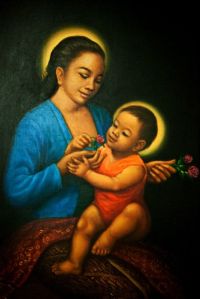 Some of us may wonder why the Church places the celebration of the solemnity of Mary, the Mother of God on January 1, or on the New Year. One may guess that the Church wants us to attend mass on the first day of the year, so as to start the year right. For those who wish to have a long holiday, it might be pretty a killjoy, but for some of us who wish to be blessed for the entire year, it is a nice thought. Yet, surely there is something deeper than that.
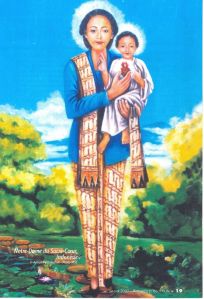 Kita mungkin bertanya-tanya mengapa Gereja menempatkan Hari Raya Maria, Bunda Allah pada tanggal 1 Januari, atau pada Tahun Baru. Orang mungkin berpikir bahwa Gereja ingin kita menghadiri misa pada hari pertama tahun baru ini. Bagi mereka yang ingin memiliki liburan panjang, ini mungkin tidak menyenangkan, tetapi bagi sebagian dari kita yang ingin diberkati sepanjang tahun, itu adalah ide yang bagus. Namun, pasti ada sesuatu yang lebih dalam mengapa tanggal 1 Januari.
 The Season of Advent has begun. This season marks the beginning of the new Church’s liturgical year as well as of the four Sundays preparation for Christmas. A curious mind may ask: why the liturgical year has to be opened by the season Advent? Why not Christmas, Lenten or Easter seasons?
 In Medio Ecclesiae