

Fourth Sunday of Lent [March 31, 2019] Luke 15:1-3, 11-32
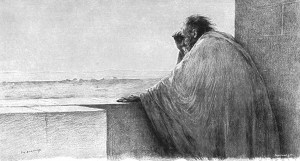 The Parable of the Prodigal Son is one of the most moving stories of Jesus and has been regarded as the all-time favorite. Why? I guess one of the reasons is the story of the Prodigal Son is also our story.
Let us look at some details of the parable especially the father and the younger son. The son demands his inheritance while his father is still alive and well. That’s a no-no! It simply means the son wishes his father’s death, and wills that he is no longer part of the family [see Sir 33:20-24]. The offended father has the authority to discipline the ungrateful son, but he does not! Because of his tremendous love for the son, he allows the son to get what he wants. Like the son, we often offend the Lord, wishing to be away from Him. We choose “the inheritance”, the good things God created like wealth, power, and pleasure above and over Him. We keep abusing His love and kindness, knowing that He is a Good Father.
However, the younger son’s action has a terrible consequence. The farther he is away from his father, the more pitiful his life becomes. The inheritance without the true owner is nothing but a passing shadow. The Jewish young man loses everything, and even becomes the caretaker of pigs, the very animal Jews hate! He becomes so low to the point of eating what the pigs eat. Like the younger son, without God, we become miserable. Yes, we may become richer, more powerful and famous, but we have lost our souls. We never become truly happy because these pleasurable things without God are mere addiction.
The son comes to his sense when he remembers his father and his life with him. Even the father is far away, it does not mean he is idle. He is drawing his lost son through good memories they share. No matter far we are from God, He is constantly pulling us back to Him through His mysterious ways. Yet, it remains our choice to heed the voice of our conscience but ignore it and plunge ourselves further into sin.
The parable also speaks about the father who is patiently waiting, looking forward to the day that his son returns home. The moment he sees his son from distance, without a second thought, he runs toward his son and embraces him and kisses him. The son never thinks that he deserves to be his son once more, and just wants to be treated like a servant. But, mercy precisely is to receive something we do not deserve. The father receives back his young man as his child.
Allow me to close this simple reflection with a story. In 1988, a terrible earthquake hit Armenia. In just four minutes, buildings crumbled, and thousands died. A man immediately ran to a school where his son studied. He had promised to his son that he would be there to fetch him. He saw that the school was now piles of rubbles. He rushed to the site where the class used to be. He started digging barehandedly. Some people tried to help him but stopped afterward. Some people discouraged him, saying, “It is useless. They are dead!” He refused to give up, and continue digging for hours. Then after more than 30 hours of searching, he heard a small voice from the rubble. He shouted, “Arman!” and he heard a response, “Father!” His boy was still alive, and together with him were other pupils. That day, the man had saved 14 children who got trapped. Arman told his friends, “I told you, my father will come no matter what!”
The parable of the Prodigal Son is so beautiful because it does not only reflect who we are but also reveals who our God is. He is a merciful Father who refuses to give up hope on us, however desperate we have become.
Deacon Valentinus Bayuhadi Ruseno, OP
 Perumpamaan tentang Anak yang Hilang adalah salah satu kisah Yesus yang paling mengharukan dan telah dianggap sebagai yang paling disukai. Mengapa? Saya kira salah satu alasannya adalah kisah Anak yang Hilang adalah kisah hidup kita juga.
 The Spirit leads Jesus to the desert and Jesus remains there for forty days. The questions are: why does the Holy Spirit bring Jesus to the desert? Why does it have to be forty days? If we are familiar with the Old Testament, we recall that the journey of the Israelites in the desert lasted for forty years – the great exodus. After the great escape from the slavery of Egypt, they needed to walk through the desert before entering the Promise Land. Yet, it is not simply about the story of greatest escape in the history, but how God formed Israel as His people. In desert, God made a covenant with Israel through the mediation of Moses. In desert, God gave the Law as the basic guide for the Israelites living as His people. In the desert, God provided them with water, manna from heaven, and protected them from their enemies. However, in the desert also, the Israelites rebelled against God. They made and worship the golden calf. They complained a lot, and they wanted to kill Moses. It was a foundational story that covered almost the four Books of Moses [Exodus, Leviticus, Numbers and Deuteronomy].
 Roh membawa Yesus ke padang gurun dan Yesus tinggal di sana selama empat puluh hari. Pertanyaannya adalah: mengapa Roh Kudus membawa Yesus ke padang gurun? Mengapa harus empat puluh hari? Jika kita akrab dengan Perjanjian Lama, kita tahu bahwa bangsa Israel berjalan di padang gurun selama empat puluh tahun. Sebuah peristiwa yang disebut juga sebagai “eksodus”. Setelah keluar dari dari perbudakan Mesir, mereka harus berjalan melalui padang gurun sebelum memasuki Tanah Perjanjian. Namun, ini bukan hanya tentang kisah pelarian mereka dari Mesir, tetapi bagaimana Allah membentuk Israel sebagai umat-Nya. Di padang gurun Sinai, Allah membuat perjanjian dengan Israel melalui mediasi Musa. Di padang gurun, Allah memberikan Hukum sebagai pedoman dasar bagi Israel yang hidup sebagai umat-Nya. Di padang gurun, Tuhan memberi mereka air, manna dari surga, dan melindungi mereka dari musuh. Namun, di padang gurun juga, Israel memberontak melawan Tuhan. Mereka membuat dan menyembah anak lembu emas. Mereka banyak mengeluh dan tidak tahu berterima kasih. Itu adalah kisah mendasar yang mencakup hampir empat Kitab Musa [Keluaran, Imamat, Bilangan dan Ulangan].
 Minggu lalu, kita mendengarkan ajaran Yesus Kristus tentang Sabda Bahagia. Ini adalah serangkaian kondisi yang menuntun seseorang menuju hidup berkat atau kebahagiaan sejati. Minggu ini, kita menemukan langkah-langkah praktis tentang cara mencapai kebahagiaan sejati ini. Minggu lalu, kita belajar bahwa Sabda Bahagia Yesus adalah kebalikan dari tatanan kebahagiaan duniawi. Bagi dunia, menjadi tamak akan kekayaan, berpengaruh, terkenal, dan kuat secara seksual adalah syarat untuk kebahagiaan. Yesus membalik tatanan ini dan mengatakan bahwa mereka yang murah hati, berbelas kasih dan murni hatinya adalah mereka yang benar-benar bahagia.
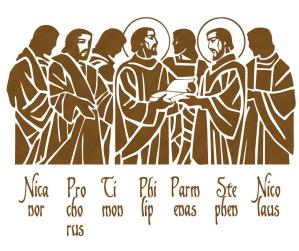 I am currently preparing for my ordination to the diaconate. It is a transitional stage before I become a priest of Jesus Christ. Despite the fact of being transitional, a deacon in itself is an important state in the life of the Church. Bishop Virgilio David, DD of Kalookan reminded the 15 newly-ordained Jesuit deacons in his homily last October that we shall not see a deacon as a mere stepping step toward higher states, like priests and bishops. It is the very core in the layers of concentric circles that make up the ordained ministries of the Church. The diaconate is not a lower rank but the core, without which both the offices of presbyters and bishops collapse. It is the foundation on which we build leadership in the Church. Yet, why do the deacons have to be placed at the core, and become the foundation?
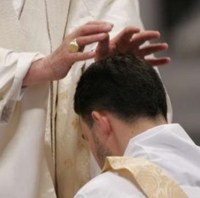 Hari-hari ini, saya sedang mempersiapkan tahbisan diakonat saya. Diakon sendiri adalah tahap transisi sebelum saya menjadi seorang imam. Terlepas dari kenyataan bahwa diakonat adalah masa transisi, seorang Diakon itu sendiri adalah masa hidup yang penting dalam kehidupan Gereja. Uskup Virgilio David, DD dari Kalookan, Metro Manila, mengingatkan 15 diakon Yesuit yang baru saja ditahbiskan Oktober lalu bahwa kita jangan melihat Diakon hanya sebagai langkah pertama menuju tingkat yang lebih tinggi, seperti imam dan uskup. Diakon adalah inti dalam lapisan lingkaran konsentris yang membentuk pelayanan tertahbis di Gereja. Diakon menjadi inti dari lingkaran pelayanan ini dan tanpa inti ini, para imam dan uskup akan runtuh. Ini adalah fondasi tempat kita membangun kepemimpinan di Gereja. Namun, mengapa Diakon harus ditempatkan sebagai inti dan menjadi fondasi?
 We discover at least three instances in the Bible in which Jesus explicitly expresses that He loves someone. The first instance is that Jesus loves the young rich man who seeks the eternal life (Mrk 10:21). The second is Jesus loves Martha, Mary, and Lazarus (Jn 11:5). The third is Jesus’ love for His disciples, especially His beloved disciple (Jn 13:34).
 Kita menemukan setidaknya tiga episode dalam Alkitab di mana Yesus secara eksplisit menyatakan bahwa Dia mengasihi seseorang. Yang pertama adalah Yesus yang mengasihi Marta, Maria, dan Lazarus (Yohanes 11: 5). Yang kedua adalah kasih Yesus bagi murid-murid-Nya (Yohanes 13:34). Yang ketiga dan menjadi fokus kita hari ini adalah Yesus yang mengasihi orang muda kaya yang mencari kehidupan kekal (Mrk 10:21).
 In Medio Ecclesiae