
Twenty-Third Sunday in Ordinary Time [September 9, 2018] Mark 7:31-37
“Jesus has done everything well; he even makes the deaf to hear and the mute to speak.” (Mk. 7:37)
 The deaf man whom Jesus heals is so blessed. He is able to see Jesus, and He finds healing. Inspired by this miracle, we wish that we will also meet Jesus and He will heal our sickness and solve our problems. Thus, we come to various places where we believe Jesus will heal us. We visit pilgrimage sites, we attend prayer and worship meetings, we recite various novenas, and we become actively involved in the Church’s organizations. We believe that our faith in Jesus will save us. However, what if our prayers are not granted? What if our problems are not solved but rather grow in number? What if our sickness is not healed, but gets worse? What if we do not feel that we are saved? One time, I visited Flora [not her real name], a colon-cancer patient, and she asked me, “Brother, I have faith in God, and I faithfully serve the Church, but why am I suffering from this terrible sickness?” Surely, it was a tough question.
In today’s Gospel, Mark, the evangelist, seems to present Jesus as the traditional faith-healer. Just like other healers, Jesus touches the affected body parts of the sick person, namely his ears and tongue. Jesus also spits because, in ancient times, saliva is believed to have therapeutic effects. The act of spitting itself is also considered to drive away evil spirits, and some diseases are thought to come from these evil spirits. Then, Jesus groans to heaven and says a word, “Ephphatha!” This is like other faith-healers who utter certain formula of magic words or incantation as to affect the healing desired. What the people need is to have faith in the faith-healer, and viola, they are healed.
Inspired by this kind of model, we begin to treat Jesus as a faith-healer. We just need to have faith in Him, and the rest will be just perfect. We believe in Him, and we will be saved. That’s all! This image of Jesus is, however, distorted and even dangerous. We reduce Jesus as mere instant problem-solver and an ultimate trouble-shooter. Again, what if we do not get what we expect despite our effort to trust in Him?
Mark is inviting us to read his Gospel more profoundly. There is something more remarkable that we, ordinary readers of the Bible, miss. In original Greek, the term for speech impediment or mute in the Gospel of Mark is “mogilalos.” This very term is also used in the book of Isaiah when the prophet prophesied, “…, and the mute tongue – “mogilalos” – sing for joy (Isa. 35:6 – our first reading)”. But, the prophecy is not only about healing the diseases, but it is about the holistic restoration of both the land and the people of God (see Isa 35:1-10). Mark does not only want to present Jesus as someone more powerful than faith-healers, but he points to us that Isaiah’s prophecy is being fulfilled. In Jesus, God has come to His people and redeemed us. Yet, what does it mean in our daily lives?
This means our faith in Jesus has to be bigger than ourselves, our personal problems and concerns. It is true that we may not have immediate healing to our sickness and solution to our problems, but our lives and our capacity to live and love are enlarged. And, as we become more loving, we begin to change also people around us. As people change, our world will become a better place.
Going back to Flora. After reflecting for a while, I answered Flora, “Well, I do not exactly know why God allows this sickness. But, as you can see, your family is doing their best to help you recover because they love you. Now, you are doing your best to get healed because you love them. See, God has made you bigger than yourself before. I believe faith is working in you.”
Br. Valentinus Bayuhadi Ruseno, OP
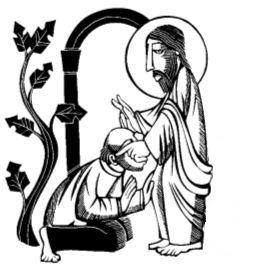 Minggu ini kita mendengar tentang Yesus yang menyembuhkan seorang tuli dan bisu. Terinspirasi oleh mukjizat ini, kita berharap bahwa Yesus akan menyembuhkan penyakit kita dan memecahkan segala masalah kita. Jadi, kita pergi ke berbagai tempat ataupun kegiatan di mana kita percaya Yesus akan menyembuhkan kita. Kita pergi ke situs ziarah, kita menghadiri pertemuan doa, dan kita menjadi aktif terlibat di Gereja. Kita percaya bahwa iman kita kepada Yesus akan menyelamatkan kita. Namun, bagaimana jika doa kita tidak dikabulkan? Bagaimana jika masalah kita tidak selesai tetapi bertambah jumlahnya? Bagaimana jika penyakit kita tidak sembuh, tetapi semakin parah? Suatu kali, saya mengunjungi Flora [bukan nama sebenarnya], pasien kanker usus besar, dan dia bertanya kepada saya, “Frater, saya memiliki iman kepada Tuhan Yesus, dan saya dengan setia melayani di Gereja, tetapi mengapa saya menderita penyakit yang mengerikan ini? “Tentunya, ini pertanyaan yang sulit dijawab.
 I am currently having my clinical pastoral education at one of the hospitals in Metro Manila. It has been one month since I started my pastoral visits. Since then, I have encountered people in different stages of illness. Many of them are fast recovering, some are taking more time to get cured, but some others have to face serious conditions. It is my ministry as a chaplain to accompany them in their journey of healing. I feel immense joy when I can witness their healing process, from one who is weak on the bed, to one who is standing and ready to leave the hospital.
 Saat ini saya menjalani pastoral di salah satu rumah sakit di Metro Manila. Sudah satu bulan sejak saya melakukan kunjungan pastoral pertama saya. Saya telah bertemu banyak pasien yang bergulat dengan berbagai jenis penyakit. Tugas pelayanan saya sebagai pekerja pastoral adalah untuk menemani mereka dalam perjalanan penyembuhan mereka. Saya merasakan sukacita yang luar biasa ketika saya dapat menjadi saksi dalam proses penyembuhan mereka, dari seseorang yang terbaring lemah di tempat tidur, sampai menjadi seseorang yang berdiri tegak dan siap untuk meninggalkan rumah sakit.
 Today we are celebrating the birth of John the Baptist. Two figures emerge as the protagonists of our today’s Gospel, Elizabeth, and Zachariah. Luke describes the couple as “righteous in the eyes of God, observing all the commandments and ordinances of the Lord blamelessly. (Luk 1:6)”. But, they have no child. The possibility to have a child is close to zero as Elizabeth is perceived to be barren and Zachariah is already old. In ancient Jewish society, children are considered to be a blessing of the Lord and a source of honor, and barrenness is a curse and shame.
 Hari ini kita merayakan kelahiran Yohanes Pembaptis. Ada dua tokoh protagonis pada Injil kita hari ini, Elizabeth, dan Zakharia. Santo Lukas mendeskripsikan pasangan itu sebagai “orang benar di hadapan Allah dan hidup menurut segala perintah dan ketetapan Tuhan dengan tidak bercacat.” (Luk 1: 6) ”. Tapi, mereka tidak memiliki anak. Kemungkinan memiliki anak juga mendekati nol karena Elizabeth adalah mandul dan Zakharia sudah tua. Dalam masyarakat Yahudi kuno, anak dianggap sebagai berkat Tuhan dan sumber kehormatan, dan kemandulan adalah kutukan dan rasa malu.

 In Medio Ecclesiae