Hidden Life, a Holy Life

Feast of the Holy Family [C]

December 29, 2024

Luke 2:41-52

Jesus did not appear in the world as a fully grown man out of nowhere, nor did He descend from the sky like an alien. Instead, He chose to be born as a little child into the family of Joseph and Mary. Interestingly, most of the events within this family, spanning more than 30 years, remain hidden. What did Jesus do during this time? Why did He choose to remain hidden during these years?
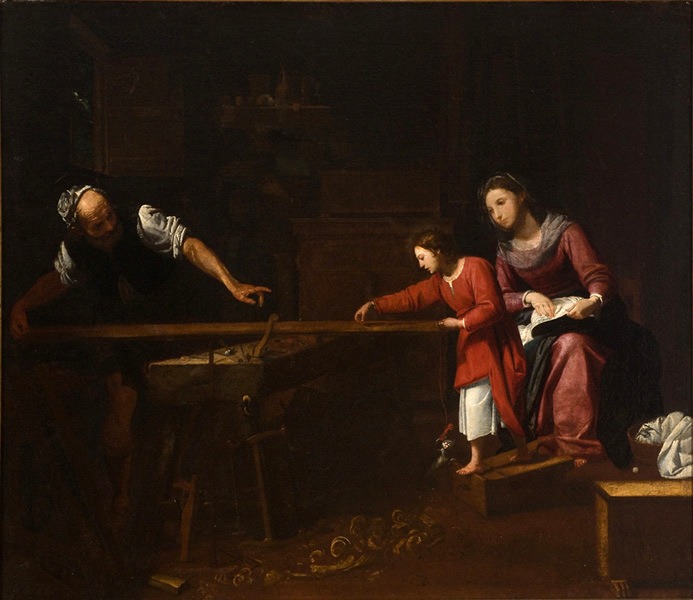
The little information we have comes from St. Luke, who tells us that Jesus submitted to the authority of Joseph and Mary and grew in age and wisdom, much like any other child (Luke 2:52). This implies that Jesus experienced and acted as any Israelite boy or man would in His time. As a baby, Jesus received constant nourishment from Mary. He learned to speak, walk, and play. As a young child, He likely helped Mary with household chores and played with His peers and relatives. When He became strong enough, He helped Joseph with his work and learned the family trade of carpentry. Being a descendant of David, Joseph was likely responsible for teaching Jesus to read, especially the Torah.

As a young man, Jesus continued to assist Joseph in his work. From time to time, they may have travelled to nearby major cities, such as Sepphoris, to work on various building projects. It’s reasonable to believe that Jesus not only learned to read the Torah but also to interpret and teach the Law of Moses under Joseph’s guidance. Young Jesus likely observed His foster father discussing and debating the precepts of the Law with local Pharisees and scribes. Perhaps He even listened as Joseph preached in the synagogue in Nazareth.

From this account, we see that there was nothing outwardly remarkable about the hidden lives of Jesus, Mary, and Joseph. Everything seemed ordinary. Had Jesus been born in our time, He would have grown up doing many of the things we commonly do. However, it would be a mistake to think that what Jesus did in Nazareth was insignificant. Jesus is not only fully human but also fully divine. His divinity sanctifies every aspect of His humanity, including the most ordinary moments of His life. Whatever Jesus did—whether working, eating, or even resting—was holy and salvific.

Through the mystery of the Incarnation, Jesus shared in our humanity. Because of this, we may share in His divinity through grace. Many of us live ordinary lives, punctuated by occasional exceptional moments. Yet, through Jesus and His hidden life, everything we do—even the smallest and most mundane tasks—can become a means of sanctification and salvation when done out of love for God and our neighbors. The little, unseen things we do in our families, schools, and workplaces can sanctify us if we offer them with love. The sufferings and pains we endure can also make us holy when we bear them patiently and without sin. Ultimately, the holiness of ordinary things is made possible when we unite everything we do, endure, and live with the living sacrifice of Jesus in the Eucharist.

Rome

Valentinus Bayuhadi Ruseno, OP

Guide questions:

Do we recognize that Jesus is present even in our daily and ordinary lives? Do we realize that even simple things we do in our lives contribute to our holiness? Do we know that God see even little and hidden acts of love we do for our parents, children and even strangers?

The Tale of Two Mothers

4th Sunday of Advent [C]

December 22, 2024

Luke 1:39-45

Mary and Elizabeth are two of the most powerful women in the Bible. Yet, their power does not stem from physical strength. Mary is a young and tender woman, while Elizabeth is elderly. Their immense strength lies in their unwavering commitment to follow the will of God. But what is God’s will for these remarkable women? They are called to be mothers.

Motherhood is often seen as a natural progression in a woman’s life. After marriage, it is generally expected that a woman will bear children. The female body undergoes incredible transformations to create a nurturing environment for a growing baby. These physiological changes are not only numerous but also gradual, adapting to the baby’s needs during pregnancy. The activities of the heart, lungs, kidneys, and other organs increase significantly to support both mother and child. Additionally, the body produces new hormones that affect various organs, metabolism, and psychological states. Even after giving birth, the mother’s body doesn’t immediately return to its pre-pregnancy state; instead, it continues to transform to support the newborn. For example, the body produces breast milk, carefully adjusted in quantity and nutrients to meet the baby’s needs.

Despite the marvel of these processes, the pregnancy has taken place to billions of women and this has led some to view it as merely a biological or mechanical function necessary for the survival of the species. Some people reduce the female body to a mere reproductive tool or see pregnancy as nothing more than a temporary vessel for the baby. This mechanical perspective on the body and the mother-child relationship has driven some to make extreme decisions, including terminating pregnancies. The reasons for such decisions are varied—fears of overpopulation, concerns about increasing carbon emissions, economic challenges, or simply the perceived inconvenience of having children.

This is where Mary and Elizabeth stands as our examples. Both women recognized that their pregnancies were not just biological processes. They understood the risks involved in their unique situations. Mary, though betrothed to Joseph, was pregnant without any involvement of a man. She risked being accused of adultery, a crime punishable by stoning under the law (Deuteronomy 22:22-24). Elizabeth, on the other hand, faced the physical dangers of pregnancy in old age, which could have jeopardized her life. Despite these risks, both women embraced their roles as mothers. Why? Because they believed that motherhood was God’s will for them—a holy vocation. They trusted that the God who called them to this sacred mission would also sustain and provide for them.

Holiness is the key to true happiness. This is why the meeting between Mary and Elizabeth is marked by joy rather than fear or anxiety. In today’s world, where having children is often viewed as a burden rather than a blessing, an act of faith, or a source of joy, Mary and Elizabeth serve as beacons of hope. Their courage and faith inspire us to see motherhood as a divine calling and a profound source of happiness.

Rome

Valentinus Bayuhadi Ruseno, OP

Questions for Reflection:

  1. How do we perceive pregnancy? Is it merely a biological process, a socio-cultural event, an economic burden, or a divine calling to holiness?
  2. For mothers: How do you view your children? How do you nurture them and guide them in their journey through life?
  3. For men: What roles do you play in supporting pregnant mothers or mothers caring for their babies?

Why Mary was Assumed into Heaven?

The Assumption of the Blessed Virgin Mary

August 15, 2024 [B]

Luke 1:39-56

Today, the Church is celebrating the great feast of the Assumption of our Blessed Virgin Mary. Through this celebration, the Church reminds us that Mary, the mother of our Lord, when the course of her life ended, was assumed both her soul and body into the heavenly glory. Yet, a question may arise: why did Mary have to go up into heaven with her soul and body immediately after her death, while the rest of us must wait until the final judgment? Is it unfair?

The reason is love. St. Thomas Aquinas teaches that love seeks the union with the beloved (see ST. I.II. q.28 a.1). In a simple way, when we love someone, we wish that we are always close to that person, and we are closer, we can have more opportunity to love. The more we love the more we are united, the more we are united, the more we love. A good example would be loving parents. They always desire to be close to their children because they can love them even more by protecting, providing, and educating them.

So also, those who love God seek to be with and please God. When we initially love God, we begin spending time in prayer and attending the Eucharist every Sunday. We start reading the Bible and learning about our faith. Yet, as we grow in love, we spend more time with the Lord, in prayers, hear the Mass more often, and are involved in ministries and community. However, we realize also that our unity with God is not perfect in this world. We need to work or go to school. We need to take care of our family. We need to attend to endless worldly affairs. Our hearts and love are divided.

However, one person loves God totally and undividedly, even in this world. She is Mary. Her life is wholly dedicated to loving Jesus, even from before His birth to the very end, the cross. She is never separated from Jesus in her life on earth. And thus, when she passed from this earth, her immense love, perfected by God’s grace, drew not only her soul but also her body into that union with God.

Mary’s assumption teaches us that union with God in heaven begins with our love here on earth. The more we love God here on earth, the easier we are drawn to heaven. Yet, how do we love God more if we also must take care of earthly matters? Indeed, we cannot pray all the time, but we can always please God by doing good and avoiding sins in everything we do. Through good moral life, we are united with God even daily. Though we are not always aware of God every second, we know that our lives and actions are oriented to God.

Surabaya

Valentinus Bayuhadi Ruseno, OP

Guide questions:

What do you have in mind when you hear the Assumption of Mary? What do you understand about this Marian dogma? What are the other three Marian dogmas? Do you have any special relationship with Mary? How do you see her?

How do you love God? How intense is your love for God? How do you improve your love for God? Do you pray often? How do you pray? Do you live a good moral life? Do you please God in your daily actions? Are you aware of God’s laws? Is there any sin that you are struggling with now?

Kenapa Maria Diangkat ke Surga?

Santa Perawan Maria Diangkat ke Surga

15 Agustus 2024 [B]

Lukas 1:39-56

Hari ini Gereja merayakan hari raya Maria Diangkat ke Surga. Melalui perayaan ini, Gereja mengingatkan kita bahwa Maria, bunda Tuhan kita, ketika perjalanan hidupnya berakhir di bumi, jiwa dan raganya diangkat ke dalam kemuliaan surgawi. Namun, sebuah pertanyaan mungkin muncul: mengapa Maria harus naik ke surga dengan jiwa dan raganya segera setelah kematiannya, sementara kita semua, harus menunggu sampai penghakiman terakhir? Bukankah ini sedikit tidak adil?

Alasannya adalah kasih. Santo Thomas Aquinas mengajarkan bahwa kasih mencari persatuan dengan yang dikasihi (lihat ST. I.II. q.28 a.1). Secara sederhana, ketika kita mengasihi seseorang, kita berharap agar kita selalu dekat dengan orang tersebut, dan dengan menjadi dekat, kita dapat memiliki lebih banyak kesempatan untuk mengasihi. Semakin kita mengasihi, semakin kita dipersatukan, dan semakin kita dipersatukan, semakin kita mengasihi. Contoh yang baik adalah orang tua yang baik. Mereka selalu ingin dekat dengan anak-anak mereka karena dengan dekat, mereka dapat lebih mengasihi anak-anak mereka dengan cara melindungi, menyediakan, dan mendidik anak-anak mereka.

Demikian juga, mereka yang mengasihi Allah berusaha untuk bersama dengan Allah. Ketika kita mulai mengasihi Allah, kita mulai meluangkan waktu untuk berdoa dan menghadiri Ekaristi setiap hari Minggu. Kita mulai membaca Alkitab dan belajar tentang iman kita. Ketika kita bertumbuh dalam kasih, kita menghabiskan lebih banyak waktu dengan Tuhan, lebih banyak waktu dalam doa, lebih sering mendengarkan Misa, terlibat dalam pelayanan dan dalam komunitas. Namun, kita juga menyadari bahwa kesatuan kita dengan Tuhan tidaklah sempurna di dunia ini. Kita perlu bekerja atau bersekolah. Kita perlu mengurus keluarga kita. Kita perlu mengurus urusan duniawi yang tak ada habisnya. Hati dan kasih kita pun terbagi.

Namun, ada satu orang yang mengasihi Allah secara total dan tidak terbagi bahkan di dunia ini. Dia adalah Maria. Hidupnya sepenuhnya didedikasikan untuk mengasihi Yesus, bahkan sejak sebelum kelahiran-Nya hingga akhir hayat-Nya di kayu salib. Dia tidak pernah terpisah dari Yesus dalam kehidupannya di dunia. Dan dengan demikian, ketika ia meninggal dunia, kasihnya yang luar biasa, yang disempurnakan oleh rahmat Allah, tidak hanya menarik jiwanya tetapi juga tubuhnya ke dalam persatuan dengan Allah.

Diangkatnya Maria ke surga mengajarkan kepada kita bahwa persatuan dengan Allah di surga dimulai dengan kasih kita di bumi. Semakin kita mengasihi Allah di bumi ini, semakin mudah kita ditarik ke surga. Namun, bagaimana kita dapat mengasihi Allah lebih dalam jika kita juga harus mengurus hal-hal duniawi? Memang, kita tidak dapat berdoa setiap saat, tetapi kita dapat selalu menyenangkan hati Allah dengan berbuat baik dan menghindari dosa dalam segala hal yang kita lakukan. Kita juga dapat mengasihi Allah melalui kasih terhadap sesama. Melalui kehidupan moral yang baik, kita dipersatukan dengan Tuhan bahkan dalam kehidupan sehari-hari. Meskipun kita tidak selalu sadar akan Tuhan setiap saat, kita tahu bahwa hidup dan tindakan kita berorientasi pada Tuhan.

Surabaya

Valentinus Bayuhadi Ruseno, OP

Pertanyaan-pertanyaan panduan:

Apa yang ada di benak Saya ketika Saya mendengar Maria Diangkat ke Surga? Apa yang Saya pahami tentang dogma Maria ini? Apakah tiga dogma Maria yang lain? Apakah Saya memiliki hubungan khusus dengan Maria?

Bagaimanakah Saya mengasihi Allah? Seberapa kuatkah kasih Saya kepada Allah? Bagaimana Saya meningkatkan kasih Saya kepada Allah? Apakah Saya sering berdoa? Bagaimana cara Saya berdoa? Apakah Saya menjalani kehidupan moral yang baik? Apakah Saya menyenangkan hati Allah dalam tindakan Saya sehari-hari? Apakah Saya mengetahui hukum-hukum Allah? Apakah ada dosa yang sedang Saya hadapi sekarang?

Full of Grace

4th Sunday of Advent [B]

December 24, 2023

Luke 1:26-38

‘Full of Grace’ is the most iconic title of the Blessed Virgin Mary. Every time we recite ‘Hail Mary,’ we immediately recognize that the first title after the name of Mary is full of grace. Not only is it her most recognized title, but it is also the most ancient. Even it goes back to the Bible, the first chapter of Luke’s Gospel. The angel Gabriel appeared and greeted Mary, ‘Hail, full of grace!’ (Luk 1:28). However, if we carefully read this passage, the title ‘Full of Grace’ is not there. What did the angel say to Mary? Why do we have ‘Full of Grace’ in the first place?

The title ‘Full of Grace’ appears in the Vulgate version of the Bible. Vulgate is the Latin Bible translation done by St. Jerome in the early fifth century. In Latin, it is ‘gracia plena’. Since Latin is the official language of the Roman Catholic Church, ‘gracia plena’ became the standard title of Blessed Virgin Mary and got translated into different languages. When ‘Hail Mary’ and the holy rosary became the most popular devotion in the Catholic world, the title ‘full of grace’ could no longer be separated from Mary, the mother of Jesus. But what is written in the Bible?

What St. Luke wrote in Greek is ‘κεχαριτωμένη’ (read: kecharitomene), and it literally means ‘one who has been graced’ or ‘one who has received grace.’ So, is St. Jerome mistaken? Not really. St. Jerome decided not to make a literal translation but rather a more poetic one, and by this choice, St. Jerome wanted to draw our attention to the total and continuous presence of grace in the life of Mary. Yet, why is the title ‘κεχαριτωμένη’ extremely important for Mary and us?

Firstly, we need to understand the meaning of the word ‘grace .’In Greek, it is ‘χάρις’ (read: Charis), and its most fundamental meaning is ‘gift’ or ‘favor .’Yet, in the New Testament, the word grace does not simply mean any gift, like birthday or graduation gifts, but it is the ultimate and the most important gift. Grace refers to God’s gift of salvation. The salvation is not only from sins and death but also for God. When we are saved, not only are our sins forgiven, but we are also enabled to share the divine life of the Holy Trinity. Grace is the gift of salvation, the gift of holiness, and the gift of heaven. (for a fuller discussion, see CCC 1996-2007)

Mary is wholly unique because she is the first person who has received grace even before our Lord was crucified and resurrected, and in fact, before He was born. The reality of grace perfectly manifested in her. It is not that Mary was worthy but that she was chosen. She did not earn it, but grace was given freely. It is not because of Mary’s plan but God’s providence. Yet, the moment of Annunciation also shows us that grace is free but never cheap. Though grace has filled her since the beginning, Mary still has to make the free choice to accept the grace and make it fruitful in her life. Thus, she said, “May it be done to me according to your word!” Mary’s yes to God’s grace is not only a one-time action but a lifetime commitment, even in the face of the cross.

Our Savior has died, risen for us, and poured out His grace for our redemption. Yet, like Mary, we must choose freely to accept the grace in our lives; through it, we flourish in God’s friendship. This is why we avoid sins, go to the mass regularly and devoutly, or do works of mercy. Not because we want to earn salvation, but to grow in God’s grace and express our thanks for the grace freely given.

Rome

Valentinus Bayuhadi Ruseno, OP

Mariafobia

Hari Raya Maria Diangkat ke Surga [C]

15 Agustus 2022

Lukas 1:39-56

Umat ​​Katolik sering dituduh menghormati Maria secara berlebihan. Beberapa orang bahkan melihat kita memberikan Maria sebuah penyembahan yang hanya untuk Tuhan. Tuduhan ini tentu tidak benar, tetapi akar kesalahpahaman dapat ditelusuri lebih lanjut. Saya menemukan setidaknya tiga alasan dari apa yang saya sebut ‘Mariaphobia’ ini.

Penyebab pertama adalah sebagian orang bingung antara penyembahaan dan doa. Ketika kita berlutut dan berdoa kepada Maria, kita tidak menyembahnya. Kata ‘berdoa’ di sini sejatinya sama dengan ‘meminta bantuan’ atau ‘mengajukan permohonan’. akar kata bahasa Inggris ‘prayer’ adalah bahasa Latin, ‘praegare’ yang berarti ‘memohon bantuan’. Sama dengan kata ‘doa’ yang berakar dari kata Arab yang artinya juga ‘memohon’. Apa yang sebenarnya terjadi ketika kita mendekati Maria adalah kita memintanya untuk berdoa bagi kita kepada Tuhan. Sama halnya ketika kita meminta kepada orang tua atau orang yang kita anggap dekat dengan Tuhan untuk mendoakan kita. Maria sangat dekat dengan putra-Nya, dan kita bisa sangat yakin bahwa Yesus mendengarkan permintaannya. Sementara itu, tindakan penyembahan baik dalam Kitab Suci maupun tradisi Katolik, selalu hadir dalam bentuk persembahan kurban. Kita hanya mempersembahkan kurban kepada Allah, dan ini terjadi dalam Ekaristi, saat kita mempersembahkan kurban sempurna Yesus Kristus kepada Bapa dalam Roh Kudus.

Akar kedua adalah bahwa beberapa orang masih bingung tindakan penyembahan dan tindakan penghormatan. Sementara menghormati dan menyembah saling berhubungan erat, mereka dapat dibedakan dengan benar. Dalam teologi Katolik, kita menggunakan kata-kata Yunani ‘latria’ dan ‘dulia’. Latria adalah tindakan penyembahan yang pantas hanya untuk Tuhan, sedangkan dulia adalah tindakan penghormatan kepada makhluk ciptaan (seperti para kudus dan malaikat). Sementara latria datang dalam bentuk persembahan kurban, dulia dapat hadir dalam berbagai cara. Kita bisa menghormati seseorang dengan memeluk mereka, memberi mereka bunga, menundukkan kepala, dan bahkan memberikan gelar kehormatan. Jadi, ketika kita mempersembahkan bunga kepada Maria atau menyimpan foto-fotonya, itu tidak berarti suatu tindakan penyembahan, melainkan tindakan kasih dan kehormatan.

Alasan ketiga adalah bahwa sebagian orang masih melihat hubungan antara Tuhan dan makhluk ciptaan-Nya sebagai relasi oposisi. Ada paham yang menyatakan bahwa jika kita menghormati dan mencintai ciptaan, kita tidak menghormati dan mencintai Tuhan. Namun, relasi ini tidak tepat. Seperti seorang ayah yang baik yang membekali anak-anak-Nya dengan hal-hal duniawi agar mereka bertumbuh dan berhasil, demikian pula Tuhan memberikan karunia-karunia rohani-Nya agar putra-putri-Nya bertumbuh dalam kekudusan. Bagaikan seorang ayah yang bangga dengan prestasi anak-anaknya, demikian pula Allah bersuka cita dengan pertumbuhan rohani anak-anaknya. Ketika Maria diangkat ke surga, itu hanya karena Tuhan. Dan, ketika Maria dihormati karena dia ada di surga, tubuh dan jiwanya, kehormatan yang sejati adalah milik Allah.

Kita tidak perlu takut mendekat kepada Maria, karena dia membawa kita kepada Yesus. Kita tidak perlu takut menghormati Maria, karena sejatinya ini menghormati Allah. Kita tidak perlu takut mencintai Maria, karena kita mencintai Allah melalui Maria.

Valentinus Bayuhadi Ruseno, OP

Mariaphobia

The Solemnity of the Assumption [following the Liturgical celebration in Indonesia]
August 14, 2022
Luke 1:39-56

The Catholics are often accused of honoring Mary excessively. Some people even see us as giving Mary an adoration that is due to God alone. These allegations surely are untrue, but the roots of misunderstanding can be explored further. I discover at least three probable reasons of these ‘Mariaphobia’.

The first cause is that some people confuse the act of worship and the act of asking intercession. When we kneel and pray to Mary, we do not worship her. The word ‘praying’ here is equal to ‘asking help’. In fact, the root of English word ‘prayer’ is Latin, ‘praegare’ which simply means ‘to seek help’. What truly happens when we approach Mary is that we ask her to pray for us to God. It is the same when we ask our parents or people whom we consider close to God to pray for us. Mary is very close to His son, and we can be very confident that Jesus listens to her requests. Meanwhile, the act of worship both in the Bible and the Catholic tradition, always comes in the form of sacrificial offerings. We only offer sacrifice to God, and this takes place in the Eucharist, as we present the sacrifice of Jesus Christ to the Father in the Holy Spirit.

The second root is that some of people confuse the act of worship and the act of honoring. While honoring and worshiping are closely interconnected, they can be properly distinguished. In Catholic theology, we use the fancy Greek words ‘latria’ and ‘dulia’. Latria is act of worship proper to God, while dulia is act of honor to creatures (like the saints and angels). While latria comes in the form of sacrifice, dulia may manifest in various ways. We can honor someone by hugging them, giving them flowers, bowing our heads, and even giving honorific titles. Thus, when we are offering Mary flowers or keeping her pictures, it does not mean an act of worship, but rather act of love and honor.

The third reason is that some people confuse the relationship between God and His creatures. While it is true that God and human beings are infinitely different, but it does not mean that there is no connection between God and humans. While God is the infinite creator, and men and women are finite creatures, God loves us dearly. Like a good father who equips His children with earthly things so that they may grow and be successful, so God provides His spiritual gifts so that His children may grow in holiness. Like a good father who is proud of the achievements of his kids, so God is pleased with the spiritual growth of His children. When Mary was assumed into heaven, it is only because of God. And, when Mary is honored because she is in heaven, body and soul, the true honor belongs to God.

Mary becomes the eschatological model, or hope of what happen to us in the future when we follow Christ faithfully. Mary is faithful and loves His son, Jesus, from the beginning to the cross, and she follows Jesus in His resurrection and coming home to heave. If we are faithful to Jesus, till the end like Mary, we will receive what Mary has received.

Valentinus Bayuhadi Ruseno, OP

Ibu Kita di Surga

Hari Raya Asumsi [B]

15 Agustus 2021

Lukas 1:39-56

Selain ibu saya, Bunda Maria adalah perempuan pertama dan paling penting dalam hidup saya. Saya mengenalnya sangat awal dalam hidup, dan devosi saya terus tumbuh sejak saat itu. Ketika saya pindah ke Filipina untuk formasi Dominikan, saya menyaksikan devosi yang hidup dan membara dari orang-orang Filipina terhadap Bunda kita, namun pada saat yang sama, saya juga merasakan serangan yang ganas terhadap sang Bunda. Bagaimana mungkin orang-orang yang menyebut dirinya pengikut Yesus berani menyerang ibu-Nya? Bagi saya, itu tidak terpikirkan! Biasanya, tuduhan yang sering saya dengar adalah, “Mengapa berdoa kepada Maria? Mengapa begitu menghormatinya seolah-olah dia adalah tuhan?” Jelas bagi kita, umat Katolik, bahwa Maria layak mendapat kehormatan besar karena perannya dalam misteri keselamatan, tetapi juga jelas bagi kita bahwa dia adalah seorang manusia.

Pada awalnya saya ingin membelanya habis-habisan, namun ketika saya membawa ini dalam doa, saya bertanya kepada Bunda Maria, apa yang akan dia lakukan terhadap mereka yang menyerang dan mengejeknya? Dia menjawab, “Saya terus berdoa dan mengasihi mereka. Mereka juga anak-anakku.” Jawabannya membuka mata, dan saya mulai memasuki dialog dengan mereka untuk memahami alasan di balik kebencian mereka terhadap Maria. Salah satu alasan yang saya temukan adalah bahwa bagi mereka, iman pada dasarnya adalah “tentang Yesus dan saya.” Yesus adalah penyelamat dan Tuhan pribadi saya, dan hanya Dia saja sudah cukup. Maria dan orang-orang kudus lainnya adalah penghalang, Gereja dan sakramen tidak diperlukan, dan tradisi adalah beban yang tidak perlu. Ini adalah iman saja [sola fide] yang paling murni.

Saya setuju bahwa iman harus murni, tetapi tidak individualistis. Saya percaya kepada Yesus sebagai penyelamat pribadi saya, tetapi Dia juga memanggil kita ke dalam persekutuan orang-orang kudus. Jika kita meneliti Alkitab, Tuhan memanggil orang-orang dalam konteks keluarga: Adam dan Hawa, Nuh dan keluarganya, Abraham dan Sarah, Israel dan anak-anaknya, Musa bersama Harun dan Mariam, dan Daud dengan keluarganya. Sebenarnya, kata kunci ‘perjanjian’ yang menyatukan seluruh Alkitab berarti sumpah agung untuk membangun sebuah ikatan keluarga. Yesus sendiri memanggil kedua belas murid untuk menjadi figur bapa dalam kerajaan-Nya, yakni keluarga Allah.

Jika Tuhan memanggil kita ke dalam sebuah keluarga, kita tidak sendirian dalam perjalanan menuju Yesus ini. Kita memiliki saudara dan saudari di surga yang mendukung kita, dan membantu kita dengan cara yang luar biasa. Kita juga memiliki saudara dan saudari di bumi ini, dan merupakan tanggung jawab kita untuk mendukung dan membimbing mereka dalam perjalanan ini. Dogma Maria diangkat ke surga menyatakan bahwa, kita bukan hanya realitas duniawi, tetapi bagian dari keluarga surgawi, dan kabar yang menggembirakan adalah bahwa kita memiliki ibu yang baik di surga.

Saat Maria mengantisipasi kebutuhan pasangan di Kana bahkan sebelum mereka menyadarinya, Maria menjadi perantara bagi kita bahkan sebelum kita menyadarinya. Saat Maria dengan setia mengikuti Putranya di bumi, Maria dengan setia menemani kita dalam perjalanan duniawi kita. Saat Maria berdiri kokoh di samping salib Putranya, Maria juga berdiri di samping kita dalam pencobaan hidup ini.

Bunda Maria, doakanlah kami!

Valentinus Bayuhadi Ruseno, OP

Our Mother in Heaven

The Solemnity of the Assumption [B]

August 15, 2021

Luke 1:39-56

Together with my mother, Blessed Virgin Mary are the women in my life. I knew her very early in my life, and my devotion has continued to grow since then. When I moved to the Philippines for my Dominican formation, I witnessed the lively and vibrant devotion of the Filipinos toward our Lady. Yet, at the same time, I experienced the ferocious assault against her. How come people who call themselves followers of Jesus dare to attack His mother? For me, it was unthinkable! Usually, the usual accusations are, “Why pray to Mary? Why honor her so much as if she is a god?” It is clear for us Catholics that Mary deserves incredible honor because of her role in the mystery of salvation, but it is also clear that she is a human.

photocredit: Kelly Sikkema

In the beginning, I was more than eager to defend her, yet as I brought this in prayer, I ask our Lady, what would she do to those who attack and mock her? She answered, “I continue to pray and love them. They are also my children.” Her answer was an eye-opener, and I began to enter their shoes to seek the reason behind their hatred toward Mary. One of the reasons I discovered is that for them, faith is basically “about Jesus and I.” Jesus is my personal savior and Lord, and He alone is enough. Mary and other saints are obstacles, the Church and the sacraments are not needed, and the traditions are unnecessary burdens. It is faith alone at its purest.

I do agree that faith needs to be pure but not simplistic and individualistic. I believe in Jesus as my personal savior, but He also calls us into a communion of saints. If we survey the Bible, God calls people in the context of a family: Adam and Eve, Noah and his family, Abraham and Sarah, Israel and his children, Moses together with Aaron and Mariam, and David with his family. The keyword ‘testament’ or ‘covenant’ that unites the entire Bible means a solemn oath to build a family. Jesus Himself called the twelve disciples to be the father figures in His kingdom, His family of God.

If God calls us into a family, we are not alone in this journey toward Jesus. We have our brothers and sisters in heaven who are cheering for us and helping us in ways we could never imagine. We also have brothers and sisters here on earth, and it is our responsibility to support and guide them in this journey. The dogma of the Assumption tells us that we are not just earthly realities but belong to a heavenly family, and what is more edifying is that we have a good mother in heaven.

As Mary anticipated the couple’s needs in Cana before they even noticed, Mary intercedes for us even before we realize. As Mary faithfully followed her Son on earth, Mary loyally accompanies us in our earthly journey. As Mary firmly stood before the cross of her Son, Mary also stands beside us in these trials of life.

Our Blessed Mother, pray for us!

Valentinus Bayuhadi Ruseno, OP

Mary’s Fiat

Fourth Sunday in Ordinary Time [B]

December 20, 2020

Luke 1:28-36

Christmas is fast approaching, and the Church is inviting us to reflect on the story of the Annunciation. Allow me to once more focus on the Blessed Virgin’s Fiat. To appreciate her answer to God’s will and plan, we need to see at least two things. Firstly, it is her historical and social context. Secondly, it is the language analysis of her response.

Mary was a young girl. According to tradition, she was around 13 or 14 years old when she got married. For many of us, living in urban settings, Mary’s marriage was remarkably too early. But, this kind of practice was nothing but expected. Lives were hard, and many people died too young due to sickness, famine, calamity, or wars. To sustain a healthy number of populations, young girls were prepared for the duty of motherhood.

Mary was betrothed to Joseph from the family of David. In the Jewish community, betrothal is the first formal step in a Jewish marriage. The exchange of vows was done in this betrothal. Mary and Joseph were spouses in the eye of Jewish law and society, except for the intimate relationship. The couple had to wait around one year before the bride moved to the house prepared by the groom from the betrothal. Usually, there was a light procession from the bride’s original place to the new house, where the wedding ceremony and reception would occur.

Legally, Mary was Joseph’s wife, and if something wrong happened, it was judged to be adultery. The Law of Moses abhors adultery since it reflects Israel’s infidelity toward Yahweh, breaking the sacred covenant. Thus, for those who were unfaithful, severe punishment awaited them. In Deu 20:22, the Torah explicitly stated that if a betrothed woman commits adultery, she and the man shall be stoned to death.  As a good Jew, Mary was aware of this terrible consequence when archangel Gabriel announced the glad tiding. If she gave her affirmation, she might face certain, untimely death. Nobody would believe her if she tried to defend her supernatural virginal conception. “She must be insane!” some would say. However, despite this imminent horrible future, Mary accepted her mission.

Now, why did she say her Fiat? I used to think that Mary’s fiat is about surrendering everything to God.  She did not understand, but her faith enabled her to trust in God’s providence. In the face of ominous dangers, to have this kind of faith is extremely remarkable. However, as I read more about this Fiat, I discover that Mary’s Fiat is more than an act of self-surrender. The Greek word used by Mary is “genomai.” This word is rather special because it expresses not an act of submission but an act of longing. This tiny detail spells the great difference. Mary did not just submit to the will of God, but she longed to do it. She was not passively accepting her fate but rather proactively fulfilling God’s plan in her. There were no traces of fear, doubt, and worry. Her yes was driven by passion, hope, and eagerness. Despite bleak tomorrow, she knew that she was about to depart into an unimaginably amazing journey. For her, the Lord’s plan is always the best and the only way to reach our utmost potential.

Do we have what it takes to have Mary’s Fiat?

Valentinus Bayuhadi Ruseno, OP

photocredit: Phil hearing