

Solemnity of the Nativity of John the Baptist [June 24, 2018] Luke 1:57-66, 80
“The Lord had shown his great mercy toward her, and they rejoiced with her.” (Lk. 1:58)
 Today we are celebrating the birth of John the Baptist. Two figures emerge as the protagonists of our today’s Gospel, Elizabeth, and Zachariah. Luke describes the couple as “righteous in the eyes of God, observing all the commandments and ordinances of the Lord blamelessly. (Luk 1:6)”. But, they have no child. The possibility to have a child is close to zero as Elizabeth is perceived to be barren and Zachariah is already old. In ancient Jewish society, children are considered to be a blessing of the Lord and a source of honor, and barrenness is a curse and shame.
However, the archangel Gabriel appears to Zachariah and tells him that his wife will get pregnant despite her barrenness and his advanced age. Paying close attention to their names, we may discover even richer meaning. Zachariah, from the Hebrew word “Zakar” means to remember, and Elizabeth, a compound Hebrew words, “Eli,” and “Sabath” means God’s oath or promise. Thus, both names may mean God remembers His promise. In the Bible, when God remembers, it does simply mean God recalls something from memory, but it means God fulfills what He has promised. As God has fulfilled His promise to Zachariah’s ancestors, so God also remembers His promise to Elizabeth. The story of Elizabeth reverberate the stories of great women in the Old Testament: Sarah (Gen 15:3; 16:1), Rebekah (Gen 25:21), Rachel (Gen 29:31; 30:1), the mother of Samson and wife of Manoah (Jdg 13:2-3), and Hannah (1Sa 1:2).
What is God’s promise to Elizabeth and Zachariah, and eventually to all of us? St. Luke the evangelist points to us that God’s promise is to show His great mercy to Elisabeth and Zachariah (see Luk 1:58). The birth of John the Baptist is a sign of God’s mercy towards the righteous couple. Thus, the birth of every child is a sign of God’s promise fulfilled, a sign of God’s mercy to every parent. We recall that mercy is not something we deserve. Mercy is the embodiment of gratuitous love, the gift of love. Mercy is an utter gift. Through every child, God shows His great mercy to us, and together with Elizabeth and Zachariah, we shall rejoice because of this gift.
We are living in the world that is increasingly uncomfortable with the presence of the little children around us. There is this new fundamentalist mentality creeping into millennial generation. It is a mentality that promotes individual success as the prime and absolute value of happiness. Thus, anything that stands in its way has to be eradicated. This includes marriage, family life and finally children. They are no longer seen as a gift to be received with gratitude, but liabilities to be avoided. When I visited South Korea last year, my Dominican Korean friend told me that young generation of Korea is working very hard to the point that they longer consider marriage and having children as their priorities. Indeed, unlike in the Philippines or Indonesia, it was not easy to spot little children playing freely. I guess the decline in population growth is a problem in many progressive countries.
We deny neither the fact that it is a backbreaking responsibility to raise children nor the reality that not all of us are called to become parents. However, it is also true that children are a gift not only to the particular family, but to the entire humanity, and thus, every one of us has the sacred call to protect and take care of the wellbeing of our children. We shall protect our children from any form of child abuse, from the debilitating effects of poverty, from the egocentric and contraceptive mentality and from evil of abortion. To honor a gift is to honor the giver, and thus, to honor every child is to honor the God who gives them to us.
Br. Valentinus Bayuhadi Ruseno, OP
 Hari ini kita merayakan kelahiran Yohanes Pembaptis. Ada dua tokoh protagonis pada Injil kita hari ini, Elizabeth, dan Zakharia. Santo Lukas mendeskripsikan pasangan itu sebagai “orang benar di hadapan Allah dan hidup menurut segala perintah dan ketetapan Tuhan dengan tidak bercacat.” (Luk 1: 6) ”. Tapi, mereka tidak memiliki anak. Kemungkinan memiliki anak juga mendekati nol karena Elizabeth adalah mandul dan Zakharia sudah tua. Dalam masyarakat Yahudi kuno, anak dianggap sebagai berkat Tuhan dan sumber kehormatan, dan kemandulan adalah kutukan dan rasa malu.

 Luke has a poignant and unique way in narrating the story of the Annunciation. He deliberately places the story of Zachariah and of Mary side by side, and lets his readers see both stories in comparison. The first story speaks of a holy man who serves in the Temple. Zachariah is a symbol of the ideal Israelite who stands at the center of the holy ground. The second story speaks of an ordinary woman who lives in Nazareth, a small town far from the center. In a patriarchal society, Mary is a symbol of the poor and marginalized Israelite who is pushed to the peripheries. Angel Gabriel appears to both, and God does marvelous deeds for both. Yet, the Annunciation to Mary turns to be far more excellent. The Angel greets Mary with the title of honor, the highly favored one, while the angel does not even greet Zachariah. The Angel makes Zachariah mute because of his doubt, but he assures Mary when she is confused. The conception of John the Baptist is done through natural means, while the conception of Jesus in the womb of Mary takes place through the supernatural way. Zachariah and Elizabeth represent the outstanding God’s marvel in the Old Testament like when God opened the womb of Sarah, the wife of Abraham, and Hannah, the mother of Samuel, despite their old age and barrenness. Yet, what happens to Mary surpasses and outshines these Old Testament miracles.
 Lukas memiliki cara yang tajam dan unik dalam menulis kisah tentang Penerimaan Kabar Sukacita. Dia dengan sengaja menempatkan kisah Zakharia dan Maria secara berdampingan, dan membiarkan pembacanya melihat kedua cerita itu dalam perbandingan. Kisah pertama berbicara tentang seorang imam yang suci yang melayani di Bait Allah. Zakharia adalah simbol dari orang Israel ideal yang berdiri di pusat peribadatan bangsa Israel. Kisah kedua berbicara tentang seorang wanita sederhana yang tinggal di Nazaret, sebuah desa kecil yang jauh dari pusat pemerintahan dan keagamaan. Dalam masyarakat patriarki, Maria adalah simbol dari bangsa Israel yang miskin dan terpinggirkan dan terdorong ke pinggiran. Malaikat Gabriel menampakkan diri kepada keduanya, dan Tuhan melakukan perbuatan yang luar biasa bagi keduanya. Namun, Kabar Sukacita bagi Maria ternyata jauh lebih baik. Pertama, sang Malaikat menyapa Maria dengan gelar kehormatan, “Engkau yang dikaruniai”, sementara sang malaikat tidak menyapa Zakharia sama sekali. Kedua, sang malaikat membuat Zakharia bisu karena keraguannya, tapi dia meyakinkan Maria saat Maria bertanya-tanya. Ketiga, pembuahan Yohanes Pembaptis terjadi secara alamiah, sementara Yesus di dalam rahim Maria terjadi melalui cara yang supernatural. Zakharia dan Elizabeth mewakili karya besar Tuhan dalam Perjanjian Lama seperti ketika Tuhan membuka rahim Sarah, istri Abraham, dan Hannah, ibu Samuel, meskipun sudah tua dan mandul. Namun, apa yang terjadi pada Maria melampaui segala mukjizat Perjanjian Lama ini.
 Reading this Sunday’s Gospel, I feel that Jesus is reprimanding His priests and ministers for “preaching and yet not practicing.” Unfortunately, many of us are failing in this matter. We preach forgiveness, but some priests are having prolonged quarrels with other co-priests and some of their parishioners. We teach kindness and friendship of God, yet some of us appear to be aloof and snobbish. We proclaim justice, but sometimes we fail to be just to the simple people working in the parish or convent.
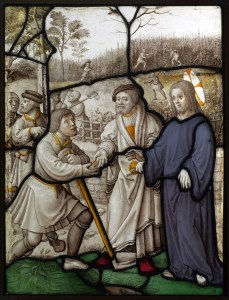 Jesus is the storyteller genius. The parable he shares to us today does not only surprise us with its unexpected ending, but it also creates a sense of puzzlement and wonder. We expect that the workers who labored the whole day would get the better wage compared to those who came late. Yet, it did not happen. All got the same wage regardless of their working hours. The vineyard owner was right to explain that he did not violate the agreement with his laborers, but deep inside us, there is something quite off. If we were militant enough, we would stage a rally to protest the vineyard owner’s decision.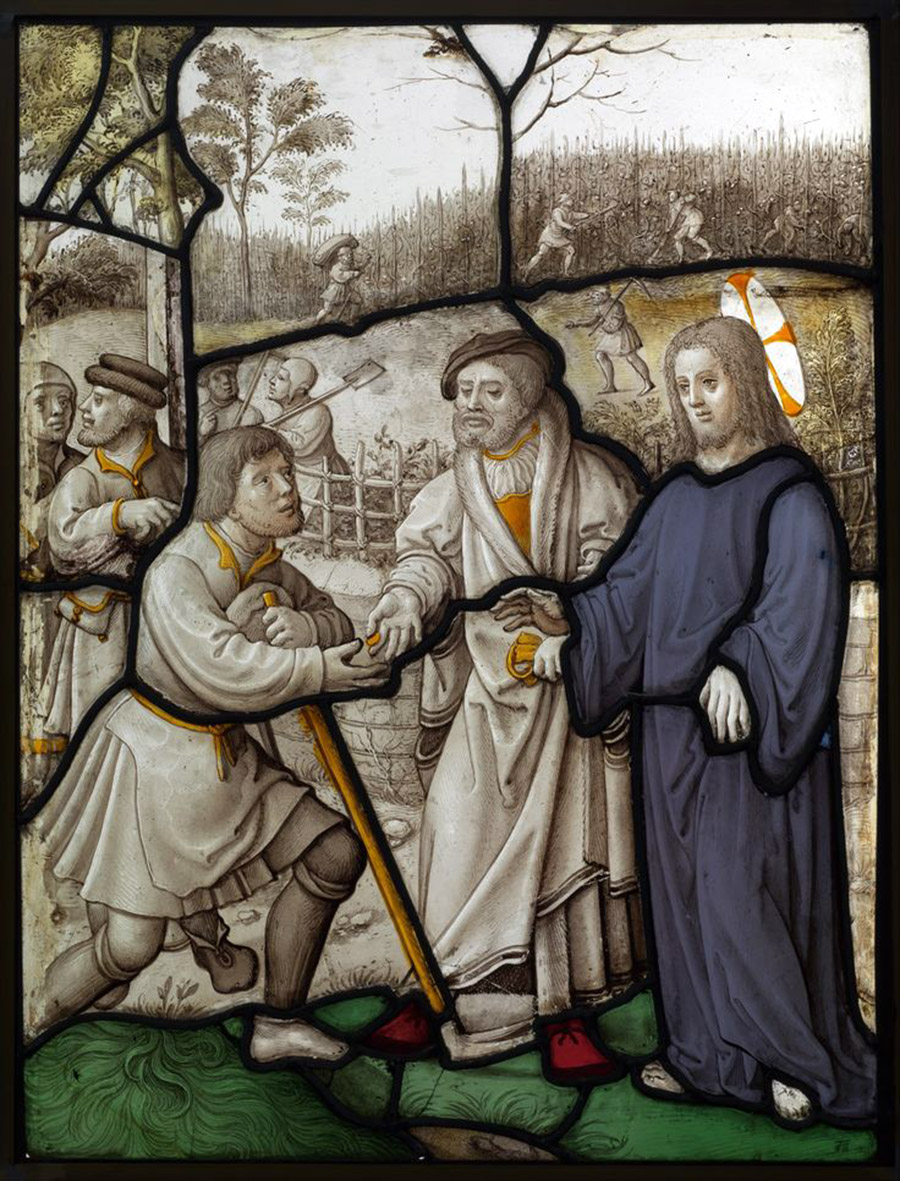
 Yesus adalah seorang pencerita yang luar biasa. Perumpamaan Yesus hari ini tidak hanya mengejutkan kita dengan akhir yang tak terduga, tapi juga membuat kita bertanya-tanya. Kita berharap para pekerja yang bekerja sepanjang hari akan mendapatkan upah yang lebih baik dibandingkan dengan mereka yang terlambat datang. Namun, itu tidak terjadi. Semua mendapat upah yang sama. Pemilik kebun anggur menjelaskan bahwa dia tidak melanggar kesepakatan dengan para pekerja, tapi di dalam lubuk hati kita, kita merasa ada sesuatu yang salah.
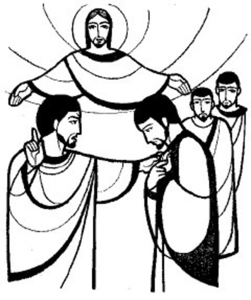 Jesus understands that in any human community, including His own community of disciples, or the Church, there are always members affected by human weakness and sinfulness. Even in the Christ-oriented communities like the religious convents, the parishes, and various ministries and groups in the Church, inevitably we are hurting each other. Thus, Jesus, the Just God and merciful man, outlines a procedure or ‘fraternal correction’ to deal with misunderstanding, quarrels, and conflicts. It begins with the individual and personal encounter, then when it does not work, we ask the help of a witness or mediator, and lastly it goes up to the community level.
 In Medio Ecclesiae