We are the Seventy

14th Sunday in Ordinary Time [C]
July 3, 2022
Luke 9:1-12, 17-20

In today’s Gospel, Jesus is sending His seventy disciples for a mission. Yes, we are reading it correctly; it is not just twelve disciples, but seventy. While we are used to the celebrated mission of the Twelve, Luke informs us about the less famous mission of the seventy. We are not sure who are these people. Perhaps, Matthias, who would replace Judas, was among them, but the rest we are almost clueless. However, for sure, these are people who have the same commitment, dedication, and passion like the big names, Peter, John, Andrew, and Matthew. These are the people who let ‘the dead’ bury their dead parents [see Luk 9:59]. These are the disciples that follow Jesus, leave everything and are willing to be dispatched into a difficult mission to preach the Kingdom, to heal the sick, and to drive out the demons.

photocredit: Jun Sahagun

We might also ask why seventy? If Twelve apostles represent the twelve tribes of Israel, what will the seventy signify? Surprisingly, when we go back to the Old Testament, seventy is also a significant figure. It is the sum number of the descendants of Jacob who migrated to Egypt [Gen. 46:27]. It was the number of the elders who were elected to help Moses in his task in leading Israel and to offer sacrifice in the wilderness [Exo 24:1]. Thus, seventy become the symbol of both Israel itself and the leaders of Israel. According to Jewish tradition, seventy is also the number of nations that came down from Noah [see Gen 11]. By choosing and commissioning His seventy disciples, Jesus sends His message to the world that He is establishing His New Israel with its leaders, and this Israel will include all people from all nation.

The story of the seventy disciples reminds us that the disciples of Jesus are not just the twelve. They are many others who have the same level of commitment like the Twelve yet somehow forgotten. While the Twelve represents the well-known figures of the Church like the pope and the bishops, the seventy bring to mind the nameless yet countless priests, religious men and women, and laity who are tirelessly building up the Body of Christs.

Some priests are popular among the laity because of their stormy preaching or funny homily, or actively engaged in social media, but they are countless priests who dedicate their lives to serve God’s people in the rural areas, in the middle of the tropical jungles, or in secluded islands. Perhaps, many of us do not even recognize the name of the priests who baptized us, who made us children of God! Surely, we possess Catholic laypeople who are influential in the society. We are proud of them because they are successful statesmen, businessmen, professionals, athletes, or entertainers that fearlessly acknowledge their Catholic before the public. Yet, the majority of the lay people are serving the Church and the societies without much noise. Perhaps, we do not recognize the names of catechists who teach us faith, or of Sunday School teachers who prepare us for the first communion. Definitely many of us are Catholic parents who dedicate our lives to raise God-fearing kids, but sometimes, misunderstood and unappreciated by our own children.

Our works and service may not be recognized in the eyes of the world, yet Jesus says, ‘do not rejoice because the spirits are subject to you, but rejoice because your names are written in heaven.’ Afterall, holiness is a quiet yet meaningful journey.

Valentinus Bayuhadi Ruseno, OP

Anger and God’s Wisdom

13th Sunday in Ordinary Time
June 26, 2022
Luke 9:51-62

Anger is integral part of human emotions. Since it is part of our humanity, anger as our emotion is God’s gift. Yet, just like other God’s gifts to us, anger serves both as a blessing or a curse. It goes back to our decision to how we will express it.

Photocredit: Miguel Bruna

In today’s Gospel, James and his brother, John were infuriated that Jesus, their beloved master, was not welcome by the Samaritans. They even claimed, “Lord, do you want us to call down fire from heaven to consume them? [Luk 9:54]” We are not sure whether James and John literally had the power to send fire from heaven, or it is just an expression that they would retaliate in a violent manner. Yet, Jesus rebuked them, and worse things were averted.

Yet, who are these Samaritans and why were Jesus’ disciples so irritated with them? The Jews and the Samaritans shared a long and yet problematic history. It begins with 10 Israelite tribes that seceded from the Kingdom of David after Solomon passed away. They formed the Northern kingdom, and later, their capital was at Samaria. While two tribes who were loyal to the David’s line, called themselves the Southern kingdom. Unfortunately, in 722 BC, the Assyrian empire came and crushed Samaria. Many of them were exiled to Assyria, and the empire brought people from other nations to settle in former Northern kingdom’s land. Thus, the interactions between the foreign immigrants and the Israelite remnants were unavoidable. Israelites from the South recognized the Samaritans as foreigners, mixed breeds, or idolators, while the Samaritan continued to believe that they are the remnants of the 10 tribes of Israel. In time of Jesus, the Samaritan would harass the Jewish pilgrims going to Jerusalem, while the Jewish people refused entry to their towns for the Samaritan.

With the long enmity and sour incident, James and John had the right to get angry, but why then did Jesus rebuke them instead? It is interesting to note that in the future encounters, Samaritans would receive Jesus and believe in Him [John 4; Act 8]. Jesus knew well that Samaritan was not a hopeless case, yet more importantly, anger-turn-violence is not the solution. Jesus recognized anger is integral to our human nature, but violence brings more anger. It is vicious cycle.

Often, we only know violence as expressions of anger. Some of our parents disciplined us using harsh words, and sometimes physical violence. A husband uses his violence to dominate his control over his wife. In the schools, sometimes, we find other students who bully us. When we are online, we read all kind of cursing, body shaming, and vulgar words and pictures. In the workplaces, people with higher positions vent their wrath to those who are in the lower position. Abortion is one of the most brutal act of parents to their unborn babies.

How then do we prevent our anger turning violence? Firstly, we need to recognize and own our anger. Do not suppress it because suppression is another kind of violence towards ourselves. Secondly, we ask what the root of our anger is. Is it justifiable? Or is it coming from our pride? Thirdly, we think for the best options to express our anger. Surely, it is not easy, especially when violent ways are deeply rooted in our characters. Yet, we can always rely on God’s grace, and start with small and simple steps.

Valentinus Bayuhadi Ruseno, OP

Trinity: the Basic and the Mystery

Trinity Sunday [C]
June 12, 2022
John 16:12-15

Sunday after the Pentecost Sunday is dedicated to the Most Holy Trinity. it generally turns to be the most dreaded Sunday for many preachers. The truth is indeed difficult to understand, to the point that many priests have neither courage to preach nor proper knowledge to explain. Yet, the Church insists that once a year we go deeper into the mystery of all mysteries, the truth of all truths. Thus, we begin with simple question: why Trinity?

photocredit: Mark Jennings

The answer is not difficult. It is the Truth! It is the Truth that God Himself reveals to us through the Scriptures and the Tradition. Why not teaching a simple concept about God, why giving the people a high complex understanding of God? The simpler truth is not truer than the more complex truth. A simple additional is not truer than sophisticated calculus. In fact, oversimplistic truth can lead to errors.

There are at least three basic errors or heresies about Trinity. The first one is polytheism. Christianity is not polytheistic religion. Trinity is not three gods or tritheism. The holy Trinity is one God in three divine person. The second error is modalism. This teaches that there is only one God and He uses three ‘modes’ of existence or appearance. God appears to be the Father when He created, to be the Son when He saves us, and to be the Holy Spirit when He sanctifies us. It is like a water. Sometimes, water is in the state of liquid, but it can be also solid or gas. Thus, the distinction of the divine persons are not real. The third and final heresy is Arianism. This teaching comes from Arius, a priest of Alexandria, in the fourth century. Simply put, Arius taught that Father is the only true God, while the Son and the Holy Spirit are real, but not the true God.

So, how do we get the correction understanding of Trinity? To help us, we shall need a little help from the Fathers of the Church who employ the terms ‘nature’ and ‘person.’ They seem complicated, but they are actually not. Nature answers the question ‘WHAT is it?’ while person answers ‘WHO is it?’ For example: what is Joseph? Joseph is a man. Who is that man? He is Joseph. Joseph’s nature is human, and Joseph is a person.

Let us apply this to God. What are the Father, and the Son and the Holy Spirit? One God. They are not three gods, because the divine nature cannot be divided, and each possesses the divine nature perfectly. Who is this God? The Father and the Son and the Holy Spirit. One divine What in three divine Whos!

The truth is a hard to swallow, but we continue to live and honor this greatest mystery because in the end, we are going to live in this divine love of the Holy Trinity.

Valentinus Bayuhadi Ruseno, OP

The Holy Name of God

3rd Sunday of Lent [C]

March 19, 2022

Exodus 3:1-15

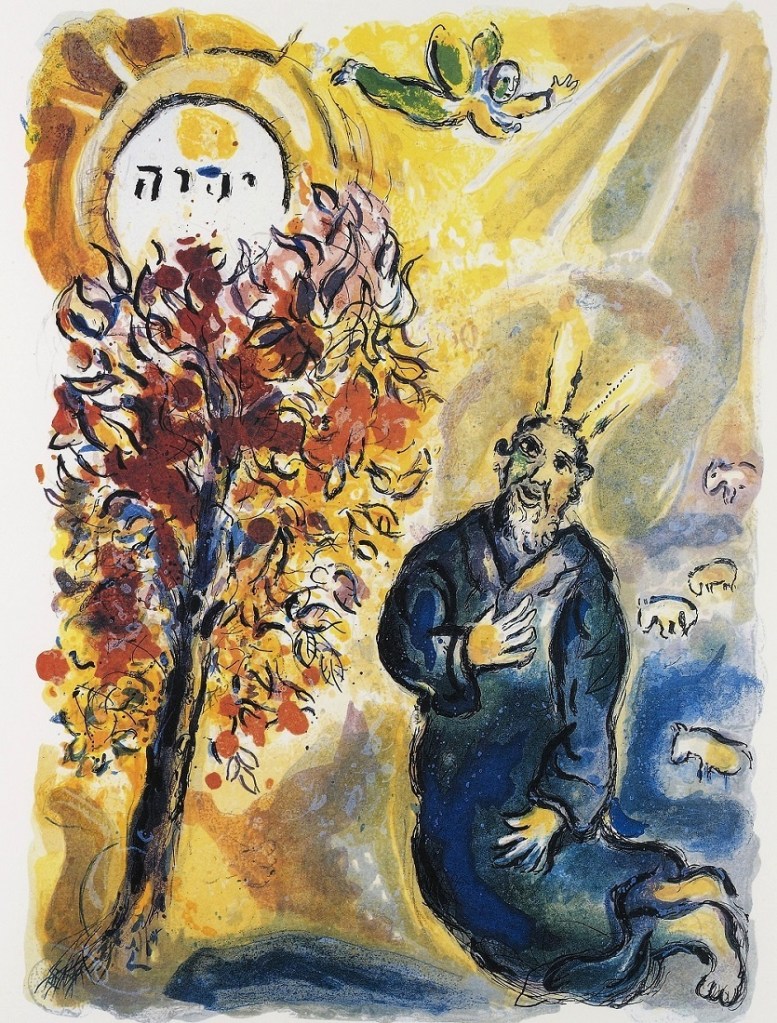
One historic moment in the history of salvation is the revelation of God’s personal name. Moses was just a murderer and fugitive who could have spent his entire life as a shepherd in Midian. Yet, God has another plan for him. He manifested Himself as the burning fire, yet not consuming its surrounding bush. A marvellous sight indeed! Moses was curious, and God called him and introduced Himself as the God of Abraham, Isaac, and Jacob. Moses recognized these names as his revered forefathers. Perhaps this was the first time Moses remembered the God of his forefathers after years.

Then, God called Moses for a mission. He was to lead His people free from slavery and bring them to the Promised Land. God had listened to the sufferings of His people and remembered the promise He made to Abraham. Before accepting God’s mission, Moses asked the name of God, and the reason was that the elders and the people of Israel seemed not to know His name. In the past, Jacob asked the name of God, but He refused. Yet, this time, God decided to reveal His sacred name. But why?

One of the reasons is that there were many gods in Eygpt, and to distinguish the true and one God from the false gods, His personal and unique name becomes necessary to be known. Another reason is that the people of Israel had lived in Egypt for so long, and they lived like the Egyptians, including worshipping the gods of the Egyptians. Thus, God had to reveal His name to make a clear break from the old habits and false idols. This was the only name worthy of all honour, glory and worship. So, Who is His name?

The first revelation is ‘I AM WHO AM’ or ‘I AM’ [Exo 3:14]. A strange name! Yet, this name reveals the deepest identity of God, who He is in Himself. The word ‘To BE’ here is the same word used in ‘Let there BE light’. This name of God unveils that God is the Eternal Existence Himself and the source of all other existences, both in the heavens and on the earth.

We own our existence to Him, and we cannot exist without Him. God is involved in our lives, not in incidental manners, like someone who helps us do our jobs or aids us in our daily needs. He is with us at the most fundamental level. He is ever active in supporting our very existence. Without Him, we are going back to nothingness. Thus, we are literally nothing without Him. The act of bringing us into reality and sustaining us is not other than the act of love. No wonder John, in his letter, declared that God is love.

Every time we call the name of God, we remember that we exist, live and breathe because of Him. Every moment of our lives is the concrete evidence of His love, and every moment of our lives is the perfect opportunity to offer thanksgiving.

Valentinus Bayuhadi Ruseno, OP

Yesus, sang Setan, dan Sabda Allah

Minggu Prapaskah ke-1 [C]
6 Maret 2022
Lukas 4:1-13

Minggu Prapaskah ke-1 [C]
6 Maret 2022
Lukas 4:1-13

Pada Minggu pertama Prapaskah, Gereja selalu memberikan bacaan Injil tentang Yesus di padang gurun selama 40 hari. Ada beberapa alasan untuk pilihan ini. Pertama, karena Yesus tinggal selama empat puluh hari di padang gurun, kita juga diundang untuk memasuki padang gurun Prapaskah selama 40 hari. Kedua, karena Yesus berpuasa dan berdoa di padang gurun, kita juga dipanggil untuk berpuasa dan berdoa selama masa Prapaskah ini. Ketiga, Yesus mengajar kita bagaimana melawan iblis dan godaannya. Karena saat ini kita berada di Tahun Liturgi C, kita dapat belajar dari kisah Yesus di padang gurun dari sudut pandang Lukas. Salah satu yang menonjol dalam perdebatan antara Yesus dan sang iblis adalah bagaimana firman Tuhan digunakan.

Pada Minggu pertama Prapaskah, Gereja selalu memberikan bacaan Injil tentang Yesus di padang gurun selama 40 hari. Ada beberapa alasan untuk pilihan ini. Pertama, karena Yesus tinggal selama empat puluh hari di padang gurun, kita juga diundang untuk memasuki padang gurun Prapaskah selama 40 hari. Kedua, karena Yesus berpuasa dan berdoa di padang gurun, kita juga dipanggil untuk berpuasa dan berdoa selama masa Prapaskah ini. Ketiga, Yesus mengajar kita bagaimana melawan iblis dan godaannya. Karena saat ini kita berada di Tahun Liturgi C, kita dapat belajar dari kisah Yesus di padang gurun dari sudut pandang Lukas. Salah satu yang menonjol dalam perdebatan antara Yesus dan sang iblis adalah bagaimana firman Tuhan digunakan.

Yesus menghadapi tiga godaan Iblis. Ini adalah tiga area di mana pribadi manusia secara rohani lemah. Yang pertama adalah godaan kedagingan, dan hal ini menyerang keinginan kita untuk kenikmatan badani seperti makanan dan hubungan suami-istri. Yang kedua adalah godaan keserakahan, dan hal ini mengeksploitasi keinginan kita untuk memiliki hal-hal yang kita lihat. Terakhir tapi paling mematikan, adalah godaan keangkuhan. Godaan ini membingungkan cinta-diri yang sejati dengan perilaku narsistik. Godaan ini adalah yang terburuk karena keangkuhan akhirnya menyedot kita ke dalam gagasan palsu bahwa kita bisa menjadi tuhan-tuhan kecil.

Ini adalah godaan yang Iblis lemparkan kepada Yesus. Godaan kedagingan diluncurkan ketika Yesus lapar dan diminta untuk mengubah batu dan roti. Godaan keserakahan dimulai ketika Yesus dibawa untuk melihat keajaiban dunia dan ditawarkan untuk memiliki semuanya. Terakhir, godaan keangkuhan dimulai ketika Yesus diundang untuk memamerkan kuasa-Nya karena Dia memiliki otoritas untuk memerintahkan para malaikat.

Tentu saja, iblis gagal total. Namun, yang lebih menarik adalah cara Yesus melawan iblis. Setiap kali iblis melancarkan serangan, Yesus dengan bijak membalasnya dengan kutipan dari Perjanjian Lama. Sungguh, Firman Tuhan adalah senjata ampuh melawan serangan dan godaan iblis. Jadi, penting bagi kita untuk mengenal Alkitab kita dan mempelajarinya dengan baik.

Namun, itu bukan akhir dari cerita karena iblis pun menggunakan ayat Alkitab. Dia mengutip bagian dari Mazmur 91, “Dia akan memerintahkan malaikat-malaikat-Nya tentang kamu, untuk menjaga kamu… [Mzm 91:11]”. Apa yang lebih luar biasa adalah bahwa Mazmur 91 secara tradisional digunakan untuk pengusiran setan. Iblis menggunakan kata-kata yang digunakan untuk mengusirnya! Bagaimana ini mungkin? Pasalnya, iblis menggunakan ayat alkitab di luar konteks dan hanya sesuai dengan tujuannya, yaitu menjebak Yesus.

Dari kisah ini, kita mendapat pelajaran berharga. Kata-kata Kitab Suci, bila digunakan dengan cara yang tidak tepat dan hanya sesuai dengan tujuan kita, menjadi alat Iblis. Kita dipanggil untuk meneladani Yesus dalam menjalankan firman Tuhan. Hanya jika kita benar-benar membaca Alkitab dalam konteks yang tepat dan dalam relasi kasih dengan Tuhan, ini benar-benar menjadi Firman Tuhan yang penuh kuasa.

Valentinus Bayuhadi Ruseno, OP

Jesus, the devil, and the Word of God

1st Sunday of Lent [C]
March 6, 2022
Luke 4:1-13

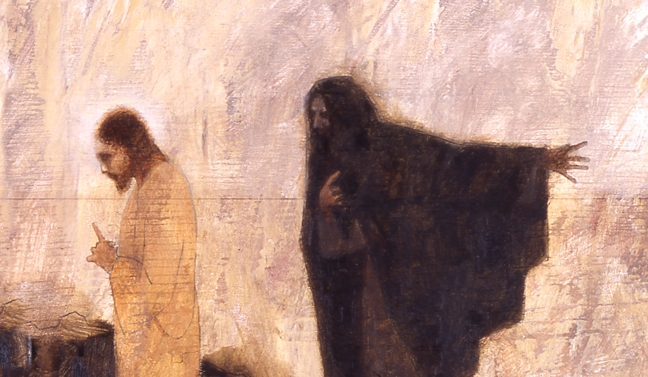
On the first Sunday of Lent, the Church always gives the Gospel reading on Jesus in the desert for 40 days. There are several reasons for this choice. Firstly, as Jesus stayed for forty days in the desert, we are also invited to enter the desert of Lenten season for 40 days. Secondly, as Jesus fasted and prayed in the desert, we are also called to fast and pray during this season of Lent. Thirdly, Jesus teaches us how to fight against the devil and his temptation. Since we are currently in the Liturgical Year C, we can learn from the story of Jesus in the wilderness from Luke’s perspective. One is prominent in the debate between Jesus and the devil is how the word of God is used.

Jesus is facing three devil’s temptations. The traditions call the three Concupiscences. These are three areas where human persons are spiritually weak. The first is the lust of the flesh, and it attacks our desire for bodily pleasures like food and sexual relationship. The second is the lust of eyes, and it exploits our desire to possess the things we see. Lastly but most deadly is pride. This confuses genuine self-love with narcissistic behaviors. This is the worst because pride eventually sucks us into the false idea that we can become a god without God.

These are the temptations that the devil throws into Jesus. The lust of the flesh is launched when Jesus is hungry and asked to turn stone and bread. The lust of the eye is commenced when Jesus is brought to see the worldly wonders and offers to have them all. Lastly, the temptation of pride is initiated when Jesus is invited to show off His power as He has the authority to command the angels.

Surely enough, the devil fails miserably. Yet, what is more, interesting is the way Jesus resists the devil. Every time the devil launches an attack, Jesus wisely counters it with the quotations from the Old Testaments. Indeed, the Word of God is a powerful weapon against the assault and temptation of the devil. Thus, we need to know our Bible and learn them by heart!

Yet, that is not the end of the story because even the devil uses the Bible verse. He quotes parts of Psalm 91, “He will command his angels concerning you, to guard you… [Psa 91:11]”. What is more remarkable is that Psalm 91 is traditionally used for exorcism. The devil is using the very words that used to expel him! How is this possible? The reason is that the devil uses the bible verse out of context and only to suit his purpose: to trap Jesus.

From this story, we learn a valuable lesson. The words of Scriptures, when misused way and only to fit our purpose, are become the instruments of the devil. We are called to imitate Jesus in living the word of God. Only if we indeed read the Bible in its proper context and a loving relationship with God, they truly become the powerful Word of God.

Valentinus Bayuhadi Ruseno, OP

Beyond Ordinary Love

7th Sunday in Ordinary Time [C]
February 20, 2022
Luke 6:27-38

‘To love your enemies’ is considered the most difficult of Jesus’ teachings. It is not only extremely tough, but it is practically impossible. Our natural tendency and feelings are to hate those who hurt us and despise those who harm us. Especially when we are still hurting, we want to get even as soon as possible. We desire our enemies to feel our pains, and the more pain, the better. How is this teaching even possible?

photocredit: Jan Tyson

However, Jesus does not say, ‘like your enemies’, but ‘love them’. The Gospel even specifies that the Greek word for ‘love’ here is ‘agape’. This is a love based not primarily on emotions but free will and commitment. It may be impossible to change our adverse feelings toward someone who hurt us, but it remains possible to decide not to inflict injuries and even do something good for them. Thus, after He says, ‘love your enemies, Jesus further clarifies, ‘do good to those who hate you, bless those who curse you, and pray for those who abuse you.’ To do good, bless, and pray are not feelings of love but acts of love. St. Thomas Aquinas synthesizes this teaching of Jesus and defines love as ‘to will the good of others’

Yet, despite the truth about agape and our God-given ability to perform something against our natural inclination, loving our enemies is just a hard pill to swallow. Though we know the theories, we are also struggling to do it. Then, we are back at our original question: ‘why does Jesus teach something impossible?’

To answer this, we have to see a bigger picture. The teaching to love our enemies is not the only hard saying of Jesus. Through His ministries, Jesus teaches several teachings and commandments that seems unthinkable. Jesus declares that divorce is not the plan of God for man and woman. Jesus reveals that His body is real food and His blood is a real drink, and only by consuming His body and blood we can have eternal life. And, most of all, Jesus unveils the most profound mystery of God, the Trinity, and He Himself is the second person of the Trinity than became flesh. All of these are humanly impossible to do and to believe, but why does Jesus insist on teaching them?

The answer lies in the grace of God. Jesus understands that these are divine revelations, and relying only on human wisdom and strength, we are bound to fail. Thus, the Holy Spirit and His grace supply what is fundamentally lacking in us. Like we cannot believe in Jesus as our Lord unless moved by the Holy Spirit, we will not be able to love our enemies unless the same Holy Spirit empowers us. Jesus knows that His teachings are humanly impossible, but He also gives us the necessary grace to enable us to perform the impossible. Then, loving our enemies is indeed grace-filled love and supernatural love. If we are still finding it hard to love our enemies, perhaps, this is the time to rely more on God’s grace.

Valentinus Bayuhadi Ruseno, OP

Woe to You

6th Sunday in Ordinary Time [C]
February 13, 2022
Luke 6:17, 20-26

Today’s Gospel presents us with the Beatitudes according to St. Luke. There is a fundamental similarity with Matthew’s version [see Mat 5:1-11], yet there are also some glaring differences between the two. One of the most apparent distinctions is the presence of ‘woes’ in Luke’s version. What is a ‘woe’ anyway?


In the context of the Bible, ‘woe’ is a cry of impending distress used by the prophet Israel [see Is 5:8–22; Amos 6:1; Hab 2:6–20]. The prophets called for repentance of Israel and return to the Lord God, yet if the Israelites remained stubborn, the woe should become a reality, and they would endure the terrible consequences. In the Gospel, Jesus practically did what His predecessors had done. Yet, there is also something new that Jesus introduced.


The prophets were pronouncing the woes to hardened people of Israel who truly did wicked things before the Lord. They worshipped other gods, abandoned the true God, and even worse, offered their children to these gods. They were also involved in sexual immorality and injustice to the weak and the poor. The Israelites were violating every single commandment in the Decalogue. In this context, God’s severe judgment was right and just. However, if we try to compare the prophets of the Old Testament and Jesus, we notice something remarkably odd.


Jesus’ woes were to those who are rich, filled with food, laughing, and praised. Jesus never said, ‘woe to you, idolaters!’ or ‘woe to you adulterers!’, but He pronounced judgment to those who are laughing. But why? Is it not to laugh is healthy? Is it genuinely evil to have money? Is it wrong to praise someone who deserves it? It seems that Jesus is a bit excessive when giving away His woes.
However, we must see entire things of Jesus’ saying. Jesus did not simply say ‘woe to you, rich people.’ The complete sentence is, ‘woe to you, who are rich, for you have received your consolation.’ Jesus emphasized the truth that the woe is for those who make wealth their consolation. Earthly goods, including wealth, are naturally good, but they always serve as means, not the end. The same with laughter and other bodily pleasures. These are good and natural to us human persons. In fact, laughter makes us uniquely human, as no other animals can do the same. Yet, again, if we prioritize our bodily pleasures and lose God in the process, everything will be for nothing.


It is also the same with praises and affirmation we receive. Parents’ honest appreciation will solidify our self-esteem as little kids, and genuine commendation will make us grow in confidence. Yet, if we are obsessed with getting praises and oblations, this may do more harm than good. The highest honors belong to God.


Like the prophets of old, Jesus sounded harsh teachings, but He is genuinely concerned with our salvation and happiness. Jesus tells us that if we fail to make God our end, blessing, especially earthly ones, can turn curses and woes. Jesus’ tough love constantly pulls us away from the eternal sadness.

Valentinus Bayuhadi Ruseno, OP

The Called

5th Sunday in Ordinary Time [C]
February 6, 2022
Luke 5:1-11

This Sunday, we listen to the vocation stories of three great persons in the Bible: Isaiah, Paul, and Peter. Indeed, they have their own unique stories with a different context. Isaiah had a vision of the heavenly Temple of God. Paul was making his journey towards Damascus. In contrast, Simon was doing his job as a fisherman. However, there is something common with the three of them.

photocredit: Jacquelin o Gara

Simon, Paul, and Isaiah admitted that they were sinners before God. The most obvious case is Paul, who used to be the persecutor of the Church. He was involved in many terrible sufferings of many Christians, and in fact, he saw the Lord in his mission to bind the Catholics in a chain in Damascus. Before the Lord, Isaiah claimed that he was a man of unclean lips and living among the people of the unclean lips. We are not entirely sure what ‘unclean lips’ means. It may refer to the sin of blasphemy that is insulting God’s name. Another possibility is the sin of untruthfulness. Isaiah and the Israelites were living in lies and dishonesty.

Meanwhile, Simon acknowledged before Jesus that he was a sinful man. Again, we are not sure what Simon’s sin was. He might be someone who possessed anger issues, which affected his life and others.

The response of Jesus to Simon’s admission of his sinfulness was not belittling his condition. Jesus never said, “It is fine. It is not a big deal!” Jesus recognized Simon’s human weakness and frailty. Perhaps, in His divine intellect, Jesus knew that Simon would eventually deny Him thrice and run away like a coward. Yet, Jesus still called Simon and said, “Do not be afraid; you will be catching men.”

God does not call Simon, Paul, and Isaiah because they are perfect and blameless men. God calls them despite their sinfulness and invites them to be part of His work. God makes Simon the fisher of men, Paul the greatest apostle to the nations, and Isaiah the great prophet of the Old Testament. Amazing things happen when we say ‘yes’ to God’s plan. They failed and faltered, and God will raise them again. If we say ‘no’ to God’s plan and our excuse is that we are sinful, weak, and incapable, that is false humility and, in fact, lack of faith. We do not trust God enough that He can transform us into a better version of ourselves. We doubt that God will equip us for the mission.

Yet, it is equally vital always to remember who we are: both weak and sinful as well as loved and called. We cannot be boastful if we succeed in our ministries because apart from God, we are nothing. Paul said in his letter that he is the most hardworking among all the apostles, but immediately he admitted that it was because of the grace of God [see 1 Cor 11:10]. Paul eventually concluded, “Whoever boasts should boast in the Lord [1 Cor 1:31].”

Valentinus Bayuhadi Ruseno, OP

Agape

5th Sunday in Ordinary Time [C]
January 30, 2022
Luk 4:21-30
1 Cor 12:31 – 13:13

What is the greatest gift of the Holy Spirit for Paul? Is it speaking in tongue? Gift of understanding intricate mysteries of God? Gift of performing mighty deeds or healing? For Paul, it is love.

photocredit: Brett Jordan

Paul himself says that if we have the gift of tongues to speak foreign languages or the language of angels, it will be useless without love. If we have the gift of prophecy or possess the knowledge and understanding of the mysteries of faith or the faith to move the mountains, they will be meaningless without love. If we donate everything we have, and to the point of sacrificing ourselves, but the motive is not to love, then it will be useless.

But, what makes this love is special? In Greek, several words can be translated as ‘love,’ namely ‘eros,’ ‘filia,’ and ‘agape.’ Eros is a love that unites man and woman in marriage and is open to new life. Filia is the love of friendship. People who have the same interest or vision in life tend to like and stick together as friends. Then, we have ‘Agape.’ This kind of love is radically different from Eros and Filia. While the other two are love moved by emotional power, agape primarily is the willpower and commitment. No wonder it is also called sacrificial love.

One powerful element that Paul introduces to the agape as a gift of the Holy Spirit is that it is not a static gift. It is not only something received and then given. Paul calls it ‘the most excellent way.’ The word ‘way’ points to journey, process, and growth. Agape is dynamic and growth-oriented. We do not only love, but we also grow in love.

In English, the words used to describe agape are adjectives, but these words are verbs in original Greek. Agape is not something static but action-oriented and dynamic. Agape is not simply patient, but agape is trying to be patient. Agape is not merely kind, but it is performing kindness. There is a transformation from someone who does not care about others to someone who learns to show compassion. Agape is not simply quick-tempered but is making a great effort not to be destructive in expressing anger.

What is fantastic about agape is that it is a gift of God for every Christian, and we possess the ability to learn and grow in love. We might not have the gift of healing, or the gift of prophecy, or the gift of performing miracles, but we can learn to be more patient with one another. We might not have the charism to teach or the authority to govern our communities, but we can decide not to be rude to people we do not like. We might not be the most brilliant guys in the group or someone who contributes a lot to others, but we can always be someone who patiently listens.

Agape is both the most fundamental as well as the most excellent. We are called to grow in love each time because, in the end, all things will cease, and only love remains.

Valentinus Bayuhadi Ruseno, OP