

The Solemnity of the Body dan Blood of Christ [Corpus Christi] – B
June 6, 2021
Mark 14:12-16;22-26
The Solemnity of the Body and Blood of Christ or Corpus Christi is the estuary of all the great feasts we have celebrated. We started from the great Holy Week and culminated in the Easter Triduum. Forty days after Easter Sunday, we worship Christ, who ascended into Heaven, and then He sent the Holy Spirit among the disciples on the day of Pentecost. And, just last Sunday, we gave our most excellent adoration to the Holy Trinity. Now, we have Corpus Christi. But, why this feast?

Guided by the Holy Spirit, the Church has recognized the importance of the solemnity of Corpus Christi. The entire economy of creation and salvation streams down to this mystery. God created the world so that the world may share in His love. However, men and women fell into sin and departed from God’s love. Yet, His love and mercy are infinitely bigger than our wickedness, and He commissioned His Son to take up human nature and live among us. Not only to become a human, but Jesus also offered Himself on the cross for our salvation. St. John perfectly summed up, “For God so loved the world, He sent His only begotten Son, so that everyone who believes in may not perish but may have eternal life [John 3:16].” However, it is not the end of God’s amazing love story! The risen Christ miraculously transformed into the Eucharist to become our daily bread. In the most blessed sacrament of the Eucharist, “the body and blood, together with the soul and divinity, of our Lord Jesus Christ and, therefore, the whole Christ is truly, really, and substantially contained [CCC 1374].”
For those without faith, this bread is just a white tasteless wafer, but for us, who are called to eternal life, the bread is no longer bread but the fullness of Christ. When Jesus is there, the Holy Trinity is there as well. When the Trinity is there, the entire angelic hosts and choirs of saints are there as well. Receiving the Eucharist is receiving the whole Heaven, the eternal life. This is the will of Christ Himself, “Amen, amen, I say to you, unless you eat the flesh of the Son of Man and drink his blood, you do not have life within you. Whoever eats my flesh and drinks my blood has eternal life, [Jn 6:53-54].”
The Eucharist is the proof of God’s love. It is not enough for God to become human, not enough for Him to die and rise for us, not enough for Him to open the gates of Heaven. He wants us to share His divine life and love now and here.
Yet, Heaven is meant to be shared. As Jesus shares His life and love in the Eucharist, we are invited to become little Eucharists in our daily lives. As Jesus nourishes us with His Body and Blood, do we nourish people with our body and blood? As parents, do we offer our bodies and blood to our children so that they may experience true heavens? Do we bring Heaven to our family and communities? Do we become the agent of love to our societies?
Valentinus Bayuhadi Ruseno, OP


 Leprosy in the time of Jesus is not only physically and mentally deadly, but also spiritually incapacitating. Leprosy or currently known as the Hansen’s disease is horrifying sickness because it does not kill the person slowly, but it gradually deforms and incapacitates the person. The bacteria cause terrible damage in peripheral nervous to the point that the person is no longer feeling the sensation, especially pain. Without this sensation, the person fails to recognize and avoid bodily injuries. Losing limbs is shared among the victims with advanced stages of leprosy.
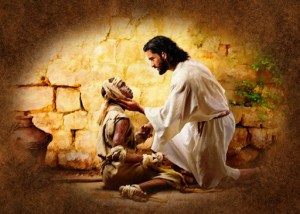 Penyakit kusta pada zaman Yesus tidak hanya mematikan secara fisik dan mental, tetapi juga melumpuhkan secara rohani. Kusta atau yang sekarang dikenal dengan penyakit Hansen adalah penyakit yang mengerikan karena tidak hanya membunuh orangnya secara perlahan, tetapi lambat laun akan merusak wujud dan melumpuhkan orang tersebut. Bakteri kusta menyebabkan kerusakan yang parah pada jaringan saraf sehingga orang tersebut tidak lagi dapat merasakan sensasi, terutama rasa sakit. Tanpa sensasi ini, orang tersebut gagal mengenali dan menghindari cedera pada tubuh. Kehilangan anggota tubuh seperti jari adalah hal yang biasa terjadi pada penderita kusta stadium lanjut.
 Jesus cannot be separated from His healing ministries. Some of the healings are remarkable, like the healing of a woman with the hemorrhage and Jarius’ daughter [Mark 5:321-43]. They are astonishing because these are practically impossible cases. The woman has suffered for twelve years without sign of hope, and Jarius’ daughter is as good as dead. Yet, Jesus does heal not only those with grave illness but also those with curable sickness.
 Yesus tidak dapat dipisahkan dari pelayanan penyembuhan-Nya. Beberapa kisah kesembuhan merupakan kejadian yang luar biasa seperti kesembuhan seorang wanita dengan pendarahan dan juga anak perempuan Jarius [Markus 5: 321-43]. Penyembuhan ini adalah mujizat karena kasus-kasus yang dihadapi Yesus adalah hal-hal mustahil disembuhkan pada zaman-Nya. Sang wanita telah menderita pendarahan selama dua belas tahun tanpa harapan, dan putri Jarius sebenarnya sudah meninggal. Di sisi lain, Yesus tidak hanya menyembuhkan orang yang sakit parah, tapi juga mereka yang sakitnya tergolong tidak membahayakan.
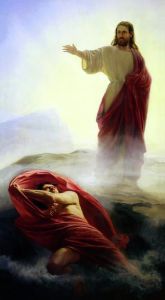 Jesus performed His first exorcism in the Gospel of Mark. Reading the context, we discover that Jesus was teaching in the synagogue, and the people recognized Him teaching with authority. When Jesus taught with authority, it does not merely mean He preached with eloquence and chrism, but His teachings manifested in powerful signs, like healings and exorcism.
 Yesus melakukan pengusiran setan atau eksorsisme pertama-Nya dalam Injil Markus. Membaca konteksnya, kita menemukan bahwa Yesus sedang mengajar di sinagoga dan orang-orang mengenali Dia mengajar dengan otoritas. Ketika Yesus mengajar dengan otoritas, ini tidak hanya berarti Dia berkhotbah dengan kefasihan dan krisma, tetapi ajaran-Nya dimanifestasikan dalam tanda-tanda yang nyata dan menakjubkan, seperti penyembuhan dan pengusiran setan.
 In Medio Ecclesiae