Jesus, Not Our Ordinary King

Palm Sunday of the Lord’s Passion

April 13, 2025

Luke 19:28-40 and Luke 22:14–23:56

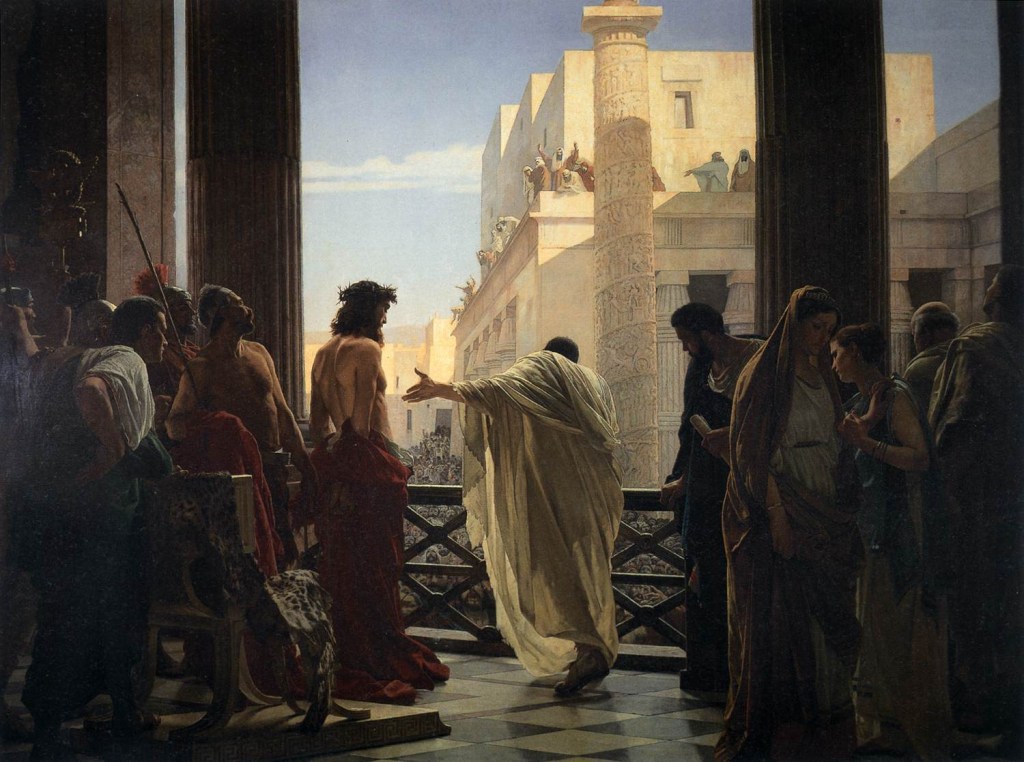
Palm Sunday is one of the most unique liturgical celebrations in the Church because it features two Gospel readings: Jesus’ triumphal entry into Jerusalem (Luke 19:28-40) and the Passion of Christ (Luke 22:14–23:56). These readings are not accidental; the Church intentionally pairs them to reveal their profound connection. But what is this relationship?

The first Gospel presents Jesus entering Jerusalem, the city of King David and his successors. His disciples follow closely while some residents welcome Him, proclaiming Him as king. Yet the Gospel clarifies that Jesus is no ordinary earthly ruler. He isn’t a militarily powerful king riding a stallion, but a humble sovereign on a donkey. He comes in the name of the Lord – not through royal lineage, political systems, or deception. He reigns not over a single nation, but over all creation, as even “the stones will cry out” to declare His kingship.

The second Gospel, the Passion narrative, further reveals Christ’s kingship. He doesn’t rule through violence but embraces it and bring it to an end on the cross. His kingdom operates not through terror but through law of love, sacrificing Himself so His people might be redeemed from sin and then live.

As we enter Holy Week, we’re invited to examine our identity as God’s people. Do we love our King or fear Him? If we truly love Him, we must learn to love as He loved. For two thousand years, countless martyrs have followed Christ’s example to the point of death. Even today in the 21st century, Christians face persecution: Nigerian priests abducted and murdered; Syrian Christian communities attacked and displaced; growing anti-Christian hostility in Israel.

Many of us live where faith can be expressed freely, yet these environments present different dangers – materialism, complacency, or cowardice in witnessing to Christ. We’re tempted to prioritize self over God, to love ourselves rather than Jesus

We consider St. Catherine of Siena’s example. During her time, the pope was residing in Avignon, France rather than Rome since he was afraid of dealing with people who opposed him there. However, rather than becoming a leader in faith and example of moral, the pope involved himself more in politics. She courageously went to Avignon and confronted Gregory XI, urging his return, “If you die in Rome, you die a martyr – but if you stay here, you die a coward.” Her actions flowed from radical love for Christ the King.

If Jesus is our King, how then shall we follow Him?

Guide Questions:

Do we truly love Jesus as our King? How does our love for Christ manifest practically? Are we prepared to profess our faith in challenging environments? Would we sacrifice for others out of love for Jesus? Are we ready to endure hardship as Christians?

Being Truly Human

Palm Sunday of the Lord’s Passion [B]

March 24, 2024

Mark 14:1 – 15:47

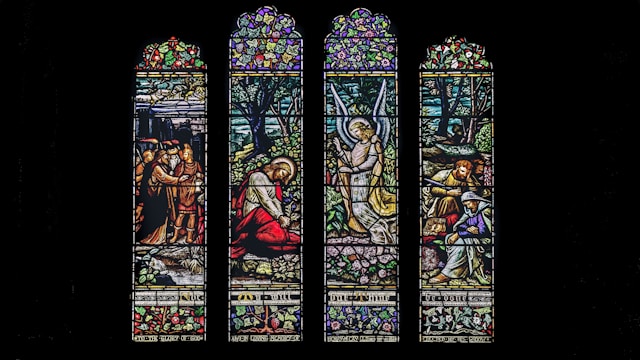
Jesus’ defining moment just before His Passion is His agony in the garden of Gethsemane. This year, we are fortunate to hear from the Gospel of Mark because Mark is not shy to express the inner life of Jesus in this crucial time. For some, this is embarrassing because Jesus was expressing His great sorrow, and thus, Jesus is seen to be too human and weak. However, we believe that God inspired Mark to write God’s words, and thus, we are to learn something precious in Jesus’ desperate moment.

Jesus was aware of what would happen to Him. He would soon face the betrayal of his disciple, a clandestine arrest, unjust trials from His haters, dreadful torture, and humiliating and most painful death. Thus, Jesus who is not only fully divine but also fully human, was experiencing the full weight of human emotions. Mark gave us some important details. Jesus was ‘troubled and distressed’ and then expressed what He felt, “My soul is sorrowful even to the death.”

St. Irenaeus once said, ‘God’s glory is a man truly alive. Here, Jesus teaches us how to be truly human and, thus, become God’s glory. He avoided two dangerous extremes in dealing with His emotions. The first extreme is neglecting or suppressing His emotions. Jesus did not act tough and pretend to be ‘the stoic man’. He did not say, ‘I am okay’, ‘everything will be alright.’ Jesus named the emotions and was frank about it. The second extreme is not to be consumed by emotions. When the emotion is extremely strong, the emotions easily engulf us and, thus, control us. Though recognizing His feelings, Jesus did not yield to them. He stood His ground.

Jesus further gave us two ways to face these overwhelming emotions. The first one is to seek good companions. Jesus invited the three closest disciples in the garden, Peter, James and John. He expressed His grave sorrow and asked them to accompany Him in this crucial moment. Unfortunately, they fell asleep, but the three were there for Jesus in His agony. The second way is to pray. Jesus bent His knees and talked to His Father. Here, we have extremely rare content of Jesus’ prayer.

Jesus said, “Abba, Father, all things are possible to you. Take this cup away from me, but not what I will but what you will (Mk 14:36).” This prayer is short but extraordinarily rich. One can say that this prayer is a short form of Our Father. Here, Jesus expressed and offered His wish that He would have been spared from suffering and violent death, but He also recognized that it is His Father’s will that Jesus would offer Himself up as the sacrifice of love for the world. In this prayer, Jesus reaffirmed His mission and did not allow the emotions to blur His vision.

Gethsemane is the precious moment that Jesus teaches us to fulfil God’s will despite difficulties and, at the same time, to become truly human. It is not God’s will to destroy our humanity but rather to perfect it, and Jesus is our model of a perfect man.

Rome

Valentinus Bayuhadi Ruseno, OP

Menjadi Manusia Sejati

Minggu Palem Sengsara Tuhan [B]

24 Maret 2024

Markus 14:1 – 15:47

Momen yang menentukan bagi Yesus sebelum salib-Nya adalah sakratul maut di taman Getsemani. Tahun ini, kita bersyukur dapat mendengar versi Injil Markus karena Markus tidak ragu mengungkapkan kondisi batin Yesus pada saat yang genting ini. Bagi sebagian orang, hal ini memalukan karena Yesus mengungkapkan kesedihan-Nya yang mendalam, dan dengan demikian, Yesus terlihat terlalu manusiawi dan lemah. Namun, kita percaya bahwa ini adalah Firman Tuhan, dan dengan demikian, kita dapat belajar sesuatu yang berharga dari saat-saat genting Yesus ini.

Yesus menyadari apa yang akan terjadi pada-Nya. Dia akan segera menghadapi pengkhianatan dari murid-Nya, penangkapan, pengadilan yang tidak adil, penghujatan dari para pembenci-Nya, penyiksaan yang mengerikan, dan kematian yang sangat menyakitkan. Yesus yang tidak hanya sepenuhnya ilahi tetapi juga sepenuhnya manusiawi, mengalami beban penuh emosi manusiawi. Markus memberikan kita beberapa detail penting. Yesus ‘sangat takut dan gentar’ dan kemudian mengungkapkan apa yang Yesus rasakan, “Jiwaku sangat sedih seperti mau mati.”

St. Irenaeus pernah berkata, “Kemuliaan Allah adalah manusia yang sungguh-sungguh hidup.” Di sini, Yesus mengajarkan kepada kita bagaimana menjadi manusia yang sesungguhnya dan dengan demikian menjadi kemuliaan Allah. Yesus mengajarkan kita untuk menghindari dua hal ekstrem yang berbahaya dalam menangani emosi. Ekstrim yang pertama adalah mengabaikan atau menekan emosi. Yesus tidak berpura-pura menjadi ‘orang yang kuat.’ Dia tidak berkata, ‘Saya tidak apa-apa’, atau ‘semuanya akan baik-baik saja’. Yesus mengartikulasikan emosi-emosi yang Dia rasakan, dan dengan demikian, Dia merangkul emosi dan kemanusian-Nya. Ekstrim kedua adalah tidak dikuasai oleh emosi. Ketika emosi itu sangat kuat, emosi dengan mudah menelan kita dan, dengan demikian, mengendalikan kita. Meskipun menyadari perasaan-Nya, Yesus tidak memberikan kendali pada perasaan itu. Dia tetap berdiri teguh.

Yesus kemudian memberikan dua cara agar tidak termakan oleh emosi yang meluap ini. Yang pertama adalah memiliki sahabat-sahabat yang baik. Yesus mengundang tiga murid terdekat-Nya ke taman, yaitu Petrus, Yakobus dan Yohanes. Dia mengungkapkan kesedihan-Nya yang mendalam dan meminta mereka untuk menemani-Nya di saat-saat genting ini. Sayangnya, mereka tertidur, tetapi ketiganya ada di sana untuk menemani Yesus dalam masa sulit ini. Cara kedua adalah dengan doa. Dalam kesedihan, Yesus berbicara kepada Bapa-Nya. Di sini, kita mendengarkan isi doa Yesus yang sangat langka.

Yesus berkata, “Ya, Bapa, bagi-Mu segala sesuatu mungkin. Ambillah cawan ini dari pada-Ku, tetapi janganlah seperti yang Kukehendaki, melainkan seperti yang Engkau kehendaki (Mrk. 14:36).” Doa ini singkat tetapi luar biasa dalam. Bisa dikatakan bahwa doa ini adalah bentuk singkat dari doa ‘Bapa Kami’. Di sini, Yesus mengungkapkan dan mempersembahkan hasrat-Nya agar Dia terhindar dari penderitaan dan kematian yang kejam. Namun, Ia juga menyadari bahwa misi-Nya adalah untuk melaksanakan kehendak Bapa. Inilah kehendak Allah agar Yesus akan mempersembahkan diri-Nya sebagai kurban kasih bagi dunia. Dalam doa ini, Yesus menegaskan kembali misi-Nya dan tidak membiarkan emosi mengaburkan visi-Nya.

Getsemani adalah momen berharga dimana Yesus mengajarkan kita untuk memenuhi kehendak Tuhan meskipun menghadapi kesulitan dan, pada saat yang sama, menjadi manusia yang sesungguhnya. Bukanlah kehendak Allah untuk menghancurkan kemanusiaan kita melainkan untuk menyempurnakannya, dan Yesus adalah teladan kita sebagai manusia yang sempurna.

Roma

Valentinus Bayuhadi Ruseno, OP

Mengapa Daun Palma

Minggu Palma Mengenangkan Sengsara Tuhan
2 April 2023
Matius 21:1-11

Minggu Palma menandakan dimulainya pekan suci dalam liturgi Gereja. Pada saat yang sama, perayaan liturgi pada hari Minggu ini merupakan salah satu yang paling unik di antara hari Minggu lainnya. Hari ini dinamakan ‘Minggu Palma Mengenangkan Sengsara Tuhan’ karena ada dua bacaan Injil yang berbeda: Yesus yang memasuki kota Yerusalem dan Kisah Sengsara dari Injil Sinoptik (Matius, Markus, atau Lukas, tergantung pada tahun liturgi). Namun, jika kita membaca Injil Matius ini dengan cermat, kita tidak akan menemukan kata ‘palma’. Jadi, di manakah kita dapat menemukan kata ‘Palma’?

photocredit: Grant Whitty

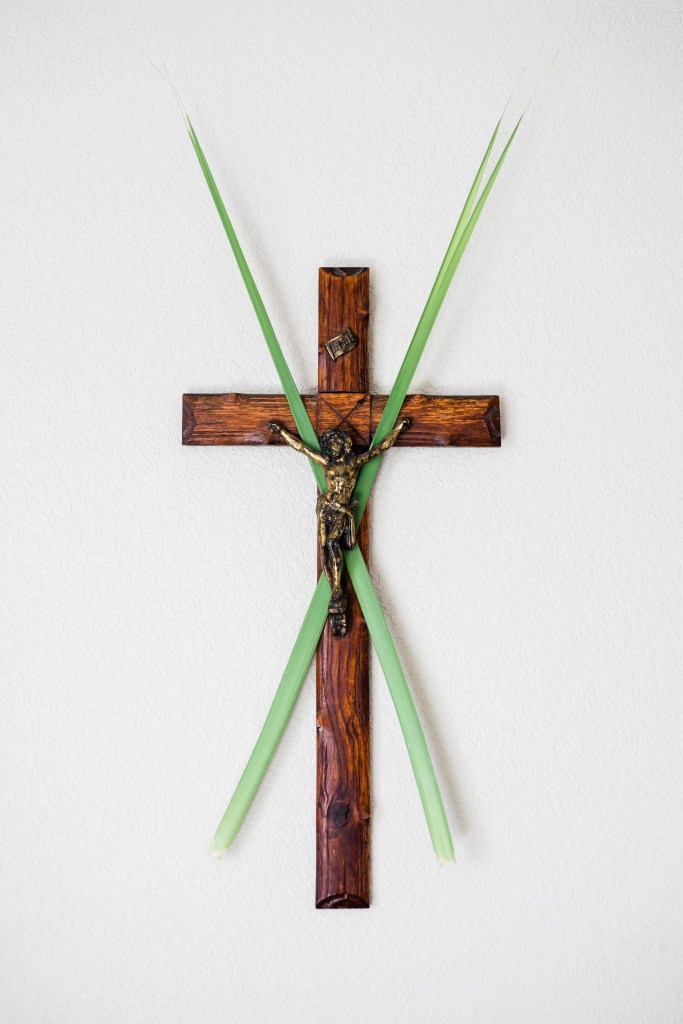
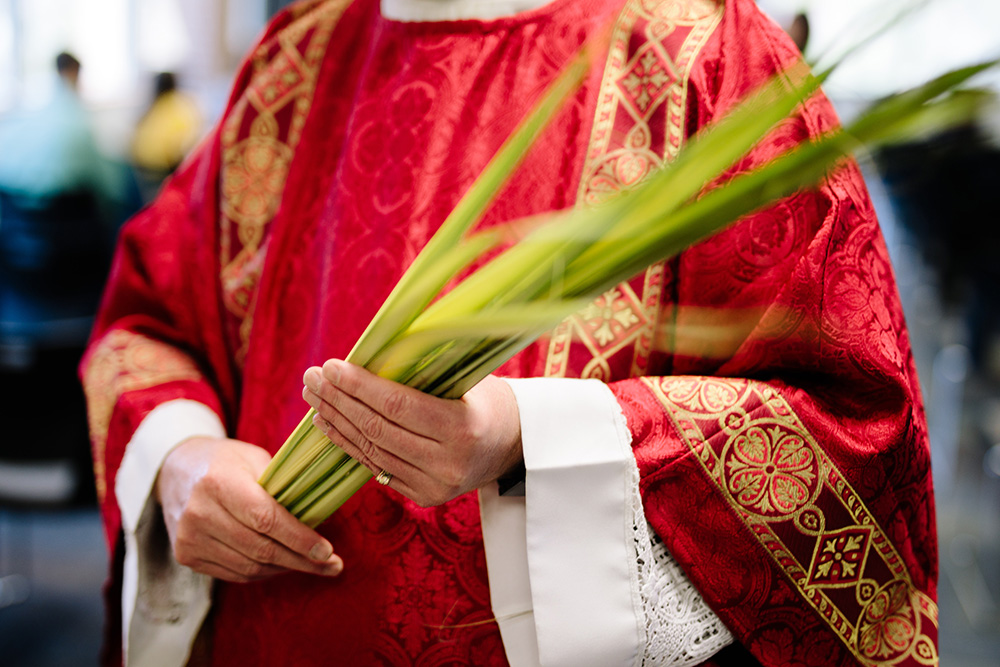
Sebelum kita menjawab pertanyaan ini, saya akan berbagi sedikit pengalaman pribadi saya dengan Minggu Palma. Pengalaman pertama saya dengan kegiatan kudus ini tentu saja di Indonesia, secara khusus di Jawa. Umat akan membawa daun palma ke Gereja untuk diberkati dan kemudian dibawa pulang untuk diletakkan pada salib. Jenis daun yang biasa digunakan adalah dari palem bambu. Dulu saya percaya bahwa ini adalah satu-satunya jenis ranting dan daun yang digunakan Gereja di seluruh dunia. Namun, ketika saya datang ke Filipina untuk pendidikan imamat, saya menemukan bahwa orang Filipina menggunakan daun pohon kelapa. Kemudian, ketika saya datang ke Roma, saya menemukan bahwa umat beriman menggunakan jenis ranting yang berbeda-beda!

Kembali ke pertanyaan kita, ‘di mana kita menemukan palma dalam Injil?’ Jawabannya adalah tidak dalam Injil Sinoptik, tetapi dalam Injil Yohanes (lihat Yoh 12:13). Namun, meskipun bacaan Injil hari ini tidak menyebutkan kata “palma,” kemungkinan besar banyak orang di Yerusalem yang menggunakan ranting-ranting palma karena pohon kurma (juga termasuk jenis pohon palma) berlimpah di daerah tersebut. Namun, pertanyaan yang paling penting adalah ‘mengapa kita menggunakan ranting dan daun pohon palma?’

Dalam Perjanjian Lama, Mazmur 118:25-27 menggambarkan bagaimana orang-orang menyambut Mesias dengan arak-arakan ranting-ranting pohon saat Dia memasuki Yerusalem. Demikian pula dalam 1 Makabe 13:51, orang-orang Yerusalem memasuki benteng dengan ranting-ranting pohon palma setelah musuh-musuh mereka diusir. Kisah-kisah ini menggambarkan bahwa ranting-ranting pohon, terutama palma, adalah simbol kedatangan Mesias dan kemenangan-Nya.

Namun, jika kita melihat dari sudut pandang yang lebih luas, kehadiran ranting-ranting pohon dalam peristiwa masuknya Yesus ke Yerusalem menjadi simbol akan misi keselamatan-Nya. Pada mulanya, Adam dan Hawa tinggal di taman di mana berbagai macam tanaman dan pohon tumbuh. Dosa dan ketidaktaatan mereka yang pertama adalah memakan buah dari sebuah pohon. Sekarang, dalam penebusan-Nya, Yesus membalikkan kutukan itu. Sengsara-Nya dimulai di taman Getsemani. Tindakan kasih dan ketaatan-Nya yang terakhir juga melibatkan pohon (kayu salib).

Saat kita memegang dahan palma, semoga ini tidak menjadi ritual tahunan untuk pamer. Palma mengingatkan kita akan komitmen kita untuk berpartisipasi dalam misi penebusan Yesus, untuk berjalan ke dalam sengsara-Nya, dan memikul salib kita masing-masing bersama-Nya. Hal ini tidak pernah mudah, tetapi kita tidak pernah sendirian dan pahala yang akan kita terima tidak dapat kita bayangkan. Semoga kita juga terinspirasi oleh saudara-saudari kita yang memilih untuk mati bagi Kristus, dan bukannya hidup menyangkal Dia. Para martir ini telah berjuang dalam pertandingan yang baik, telah sampai pada garis akhir, dan telah memelihara iman (lih 2 Tim. 4:7). Sekarang, mereka telah menerima daun-daun palma sebagai tanda kemenangan mereka (lihat Why. 7:9)!

Roma
Valentinus Bayuhadi Ruseno, OP

Why Palm

Palm Sunday of the Lord’s Passion
April 2, 2023
Matthew 21:1-11

Palm Sunday signals the beginning of the most sacred week in the liturgy of the Church. At the same time, the liturgical celebration of this Sunday is one of the most unique among the other Sundays. The day is named Palm Sunday of the Lord’s Passion because it includes two different Gospel readings: the triumphant entrance of Jesus to Jerusalem and the Passion Narrative from the Synoptic Gospels (Matthew, Mark, or Luke, depending on the liturgical year). However, if we carefully read today’s Gospel, we will not find the word ‘palm’. So, where do we find ‘Palm’?

Before we answer this question, I will share a little of my personal experience with Palm Sunday. My first experience with this solemn event is surely in my own country Indonesia. There, people will bring palm branches to the Church to be blessed and later, we bring these home to be placed on our crucifixes. The type of branches commonly used are from areca palms or bamboo palms. I used to believe that this is the only type branch the Church uses worldwide. Yet, when I come to the Philippines for my priestly formation, I discover that the Filipinos make use of coconut palm branches. Then, when I come to Rome, I find out that the faithful are using different kind of branches!

Going back to our question, ‘where do we find palm in the gospel?’ The answer is that not in the synoptic gospels but in the Gospel of John (see John 12:13). However, while today’s Gospel reading does not mention the word “palm,” it is likely that many people in Jerusalem used palm branches because date palm trees were abundant in the area. Yet, the most important question remains ‘why do we use palm branches?’

In the Old Testament, Psalm 118:25-27 describes how people would welcome the Messiah with a procession of branches when he entered Jerusalem. Similarly, in 1 Maccabees 13:51, people of Jerusalem entered the citadel with palm branches after their enemies were driven out. These stories illustrate that tree branches, especially palm, are symbols of the coming of the Messiah and his victory.

However, if we see from a bigger perspective, the presence of branches in Jesus’ entry to Jerusalem becomes a powerful symbol of His mission of salvation. In the beginning, Adam and Eve lived in the garden where various plants grew. Their first sin and disobedience involved the tree. Now, in His redemption reverses the curse. His Passion begins in the garden of Gethsemane. His final act of love and obedience involve the tree of the cross.

As we are holding our palm branches, may it not become a meaningless annual ritual. They remind us on our commitment to participate in mission of Jesus’ redemption, to walk into His Passion, and to carry our own crosses with Him. It is never easy, but we are never alone and the reward is beyond our imagination. May we be inspired also by our brothers and sisters who chose to die for Christ, rather live denying Him. These martyrs have fought a good fight, have finished the race, and have kept the faith (see 2 Tim 4:7). Now, they have received the palm branches as the sign of their victory (see Rev 7:9)!

Rome
Valentinus Bayuhadi Ruseno, OP
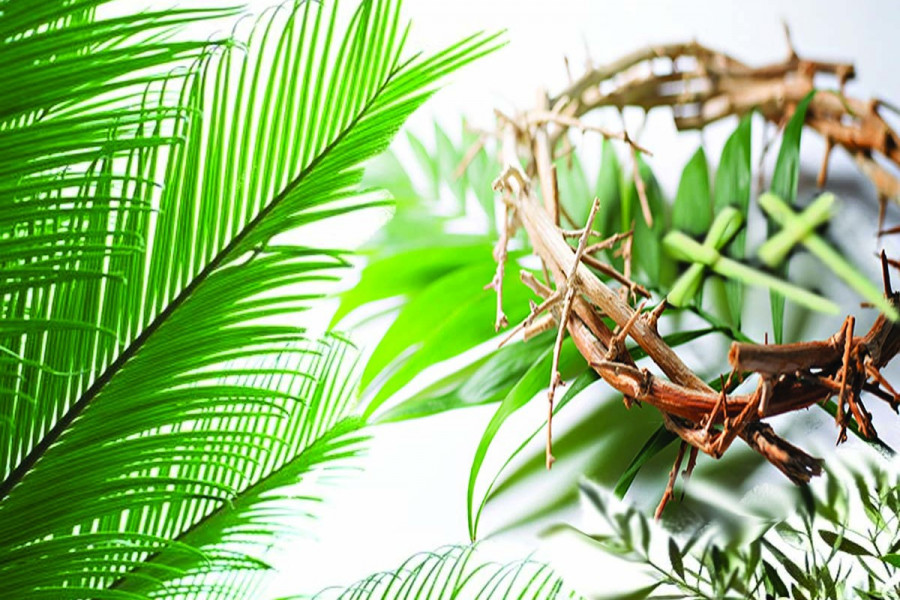
Jesus’ Prayers on the Cross

Palm Sunday of The Lord’s Passion
April 10, 2022
Luke 22:14 – 23:56

Every Palm Sunday, we listen to the Passion Narrative of Jesus Christ. Since we are in the liturgical year C, we hear from the Gospel of Luke, and it is notedly the longest among the four Gospel. If we try to compare the passion narratives of the four Gospels, we will discover basic similarities, but also some obvious nuances. What makes Luke’s account unique?

photocredit: Grant Witthy

Surely, there are several unique stories in Luke, but one outstanding character of Jesus is that Luke consistently describes Jesus as someone who loves to pray. In short, Jesus always prays, especially in His important moments of His life. He prays when John is baptizing Him. He is praying while in the desert for forty days. He prays at the mountain when He is transfigured. He prays in the Garden of Gethsemane. Even, Jesus prays when he is the cross.

Luke even gives us a window to what Jesus expresses to His Father. Jesus’ first prayer in the cross is ‘Father, forgive them, for they do not know what they are doing [Luk 23:34].’ We remember that His close friend denies Him, another betrays Him, and others are running away from Him. He is accused falsely and tortured brutally. He receives treatment worse than animals. He is even going to die like the worst criminals, in the most agonizing and humiliating way possible. Yet, despite all these, He prays for all of them, and gives His forgiveness. Jesus does not only teach ‘to love one’s enemies’ or ‘to pray for those who persecute you’. Jesus truly walks the talk.
Jesus does not stop there. When one of the thieves is asking for Jesus’ forgiveness. Jesus does not only forgive, but He also promises Him paradise. Despite the terrible situations, Jesus does not only pray, but also blesses a man who needs its most. Lastly, Jesus closes His earthly with another prayer, “Father into your hands I commends my spirit.” This time, Jesus recites Psalm 31:6. His entire life has been an obedience to God’s will, and it is proper that He ends it with giving His spirit peacefully to His Father.
Certainly, there are so much to learn and reflect from these three prayers of Jesus. Yet, one thing we can learn from here is Jesus teaches us how to face life full of sorrow and sufferings. Our lives may be difficult, but it does not mean we have to become bitter and vengeful. The first step is to pray. Instead, uttering curses and hatred, we bring our problems and sufferings into prayers. ‘Cast all your worries upon him because he cares for you [1 Pet 5:7]’. The second step is to forgive and to seek forgiveness. One of the reasons why life is so bitter is because we refuse to forgive. To forgive is not about forgetting, but it is about to let go our hatred and resentment, and let God fills us with His peace. The third step is to be grateful. Is it possible to be grateful? When we offer our sufferings to God and to unite them with Christ’s suffering, our trials and sorrow even can become blessing for others. Then, we know we know that our sufferings are never useless. We have always a reason to be grateful.

Valentinus Bayuhadi Ruseno, OP

The Colt

Palm Sunday of the Lord’s Passion [B]

March 28, 2021

Mark 11:1-10; Mark 14 – 15

Palm Sunday marks the beginning of the Holy Week, a most sacred week in our liturgical year. This year’s celebration may be different from other years because of the pandemic, but this does not stop us from having a solemn and meaningful celebration. One of the usual questions people ask about the celebration of Palm Sunday: “Why did Jesus ride a donkey?” Jokingly I replied, “well, an online taxi was not yet available during that time!”

The standard answer to this question is that Jesus would like to show Himself as a meek and humble king, rather than a power-lust and war freak general who rides a stallion. This answer is correct, but it does not give us a complete picture. If we try to go deeper into Mark gospel alone, we will unearth the Old Testaments’ fulfillments.

photocredit: laura gariglio

The choice of the colt is deliberate on the part of Jesus because He is fulfilling the prophecy of Zachariah. In essence, the prophet Zechariah foretold that someday a gentle, yet victorious king will enter Jerusalem, riding a colt [see Zec 9:9]. Yet, there are more!

If we go back to the Old Testament, we will find a king of Israel who indeed rode this humble animal. He was Salomon, David’s son when he was ascending to his throne [1 Kings 1:33]. By riding a colt, He signifies that He is the new Salomon ascending to His new throne, the cross.

Mark is telling us also that people are spreading their clothes also before Jesus. Going back to the Old Testament, we also discover a king of Judah whose ascension to the throne received this kind of gesture also from the people. His name is Jehu [2 Kings 9:12]. Aside from that, Mark is informing us that people welcome Jesus with leafy branches. Again, if we go back to the old testament, green branches were used to receive Judas Maccabeus, who retook Jerusalem from the enemy’s hands [2 Mac 10:7]. Jesus is indeed a gentle king, but He is also a victorious conqueror of His enemies. One more thing is that Mark added the expression ‘… our Father David…” David is undoubtedly not one of the Israelites patriarchs [Abraham, Isaac, and Jacob]. Still, the people of Israel recognized king David as the nation’s father, a king that protects and provides for his people.

From here, we can draw a stunning conclusion on this Palm Sunday. Jesus is riding on the unridden colt to show that He is Messiah King in the line of David, in the likeness of Salomon and Jehu, as well as a victorious king who will conquer His enemies. Yet, there is something even remarkable. Mark gives us a unique detail: this colt is untamed and untrained. Jesus’ choice to ride this wild animal shows His mastery over wild beasts and nature. He is not just the king of Israel, the king of humankind, but He is a king of all nature. Indeed, a colt is a good ride for the king of the universe.

However, we must not be happy too soon. There are more secrets to be opened and more prophesies to be fulfilled as we enter the drama of Holy Week.

Valentinus Bayuhadi Ruseno, OP

Keledai

Minggu Palma Mengenangkan Sengsara Tuhan [B]

28 Maret 2021

Markus 11: 1-10; Markus 14 – 15

Minggu Palma menandai awal Pekan Suci, minggu paling sakral dalam tahun liturgi kita. Perayaan tahun ini mungkin berbeda dari tahun-tahun lainnya karena pandemi, namun hal tersebut tidak menghentikan kita untuk menjalankan perayaan yang khusyuk dan bermakna. Salah satu pertanyaan yang biasa diajukan tentang perayaan Minggu Palma, “Mengapa Yesus menunggangi keledai?” Dengan bercanda, saya menjawab, “Ya, mungkin taksi online belum ada pada saat itu!”

Jawaban standar untuk pertanyaan ini adalah bahwa Yesus ingin menunjukkan diri-Nya sebagai raja yang lemah lembut dan rendah hati, dan bukan seorang jenderal yang haus kekuasaan dan suka berperang yang disimbolkan dengan kuda dewasa. Jawaban ini benar, tetapi tidak memberi kita gambaran yang lengkap. Jika kita mencoba untuk masuk lebih dalam ke Injil Markus saja, kita akan menemukan banyak penggenapan Perjanjian Lama.

Pemilihan keledai ini dilakukan oleh Yesus karena Dia memenuhi nubuat Zakharia. Intinya, nabi Zakharia menubuatkan bahwa suatu hari nanti seorang raja yang lembut namun jaya akan memasuki Yerusalem, menunggangi seekor keledai muda [lihat Zak 9:9]. Tapi, ini bukan satu-satunya nubuat yang dipenuhi Yesus.

Jika kita kembali ke Perjanjian Lama, kita akan menemukan seorang raja Israel yang benar-benar menaiki keledai. Dia adalah Salomon, putra Daud, ketika dia dinobatkan sebagai raja dan naik takhta [1 Raja 1:33]. Dengan mengendarai seekor keledai muda, Yesus menandakan bahwa Dia adalah Salomon baru yang naik ke tahta baru-Nya, salib.

Markus juga memberi kita informasi bahwa orang-orang juga menyebarkan pakaian mereka di hadapan Yesus. Kembali ke Perjanjian Lama, kita juga menemukan seorang raja Yehuda yang menerima perlakuan yang sama seperti ini juga dari rakyatnya. Namanya adalah Yehu [2 Raja 9:12]. Selain itu, Markus menulis bahwa orang-orang menyambut Yesus dengan ranting-ranting yang hijau. Sekali lagi, jika kita kembali ke perjanjian lama, ranting hijau digunakan untuk menerima Yudas Makabe, yang berhasil merebut kembali Yerusalem dari tangan musuh [2 Mak 10:7]. Yesus memang raja yang lembut, tetapi Dia juga pemenang yang jaya atas musuh-musuh-Nya. Satu hal lagi adalah bahwa Markus menambahkan ungkapan ‘… Bapa kita Daud…” Daud sejatinya bukanlah salah satu dari bapa bangsa Israel [yaitu Abraham, Ishak, dan Yakub]. Namun, orang Israel mengakui raja Daud sebagai bapak bangsa mereka, seorang raja yang melindungi dan memimpin rakyatnya.

Dari sini, kita bisa menarik kesimpulan yang menakjubkan pada Minggu Palma ini. Yesus menunggangi keledai muda untuk menunjukkan bahwa Dia adalah Raja Mesias dalam garis keturunan Daud, seperti Salomon dan Yehu, serta raja yang jaya yang akan menaklukkan musuh-musuh-Nya. Namun, ada sesuatu yang bahkan luar biasa. Markus memberi kita detail unik: keledai ini belum pernah ditunggangi. Artinya keledai ini masih liar dan belum terlatih. Pilihan Yesus untuk menunggangi binatang yang masih liar ini menunjukkan kekuasaann dan otoritas-Nya atas binatang-binatang buas dan alam. Dia bukan hanya raja Israel, raja umat manusia, tetapi Dia adalah raja dari segala alam. Sungguh, seekor keledai adalah tumpangan yang sempurna bagi raja alam semesta.

Namun, kita tidak boleh terlalu cepat gembira. Ada lebih banyak rahasia yang harus dibuka dan lebih banyak nubuatan yang harus digenapi saat kita memasuki drama Pekan Suci.

Valentinus Bayuhadi Ruseno, OP