The Man and the Seed

11th Sunday in Ordinary Time [B]
June 16, 2024
Mark 4:26-34

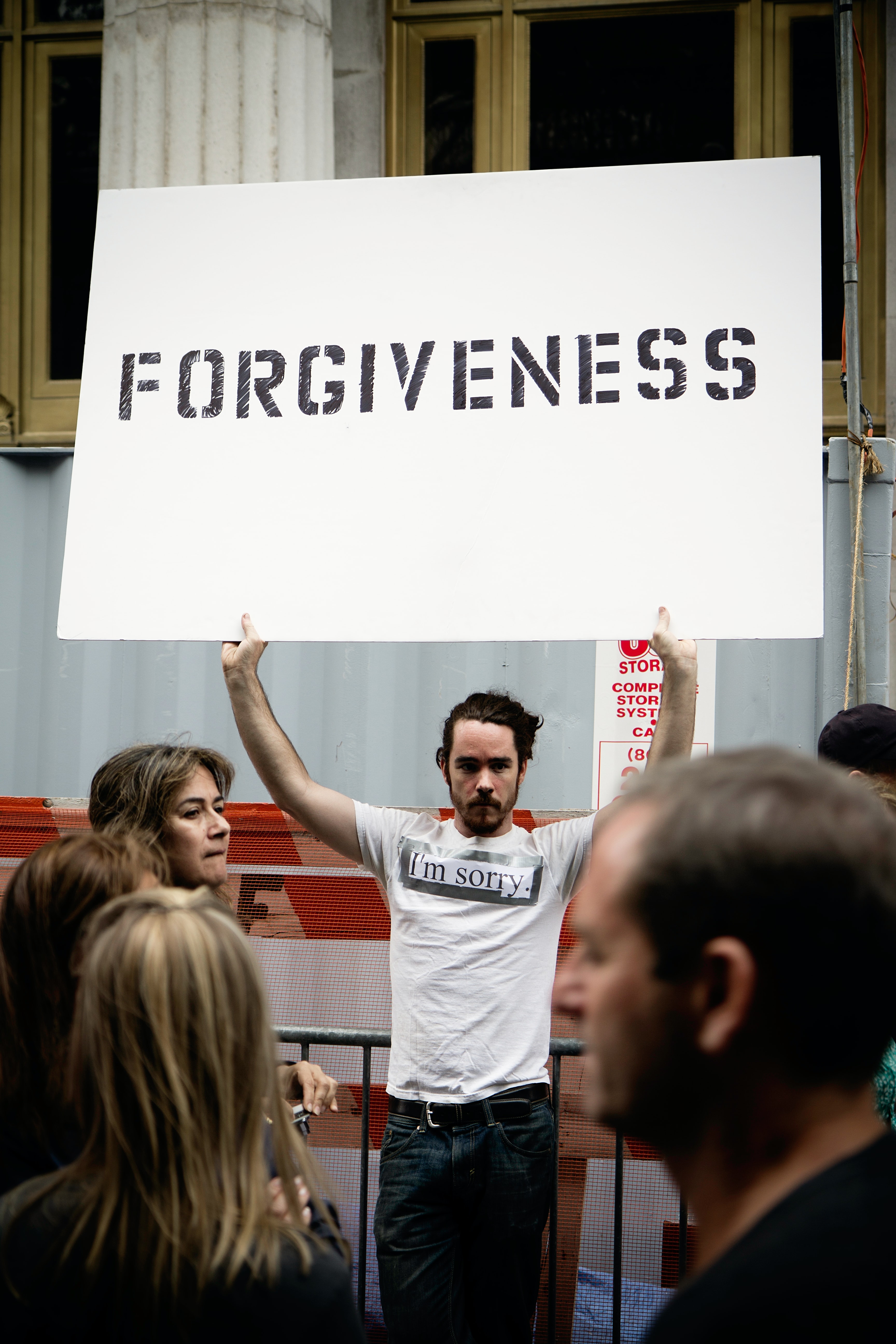
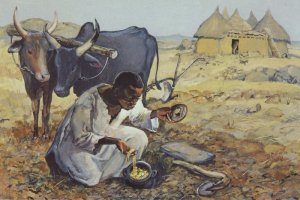
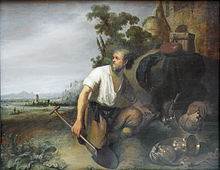
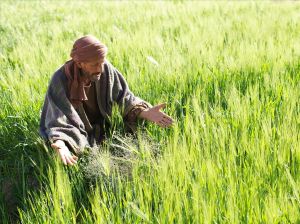
There is something ‘unusual’ in Jesus’ parable. I am not a farmer, but I can sense that the parable’s man seemed clueless about what he was doing. He simply threw the seed and went away sleeping. What is really happening here? What does Jesus want to teach us through this parable?

Though man’s way can be a valid way of cultivating a plant, it is not the best way of farming. Good farmers will ensure that the seed will grow well through constant care. They would choose the best type of seeds for the season. Seeds for spring are different from those for autumn. Then, they will prepare the soil and scatter the seeds, considering the proper spacing. Enough water is also crucial for the healthy growth of the plant. Farmers also always watch for things that may destroy their harvest, like wild animals, pests, and thieves.

However, the man in the parable just sown the seed and went away. He did not act like a good farmer. What’s really happening here? To answer this, we must look closely at the text. Jesus never described the man as a farmer. Jesus said, ’a man’ (Greek: ἄνθρωπος, Anthropos). Another interesting thing is that Jesus described the man not as ‘planting the seed’ but ‘throwing the seed’ (Greek: βάλλω, ballo). From this information, we can safely conclude that the man in the parable did not intend to cultivate the seed but rather to throw it away. Yet, despite being rejected, the seed mysteriously grew and bore fruits.

Then, the kingdom of God is a rejected seed that has survived and even produced a large harvest. This kingdom of God may refer to Jesus, the King of the Kingdom, who was rejected by the elders and crucified by the Romans and yet rose from the dead and became the source of salvation for those who believe. The kingdom of God may also point to the Church as the body of Christ that was initially persecuted severely, and both her leaders and her members were tortured and martyred. Yet, eventually, the Church grows exponentially into the most significant human community in the world.

The parable also speaks to us, especially when facing suffering and our faith is challenged. For some people, just being the disciples of Christ, we must endure hatred, discrimination, violence, and even death threats. For others, being part of the Catholic Church, our faith is questioned and ridiculed. However, the spiritual danger also threatens those practicing their faith in peace. We may take our faith for granted when things are safe and easy. We go to the Church just because everyone is going to the Church or because we feel good about it. Our understanding of our faith becomes very shallow. Another danger is that we become arrogant and self-righteous, looking down on other Christians and thus failing to love them. We turn to be ‘the man’ in the parable who rejected the seed.

For those who are like ’a rejected seed’, we have faith that God works in mysterious ways to bring us growth in suffering. Yet, at the same time, as we grow in faith, we must be careful not to become like ‘the man’ who throws a rejected seed.

Rome
Valentinus Bayuhadi Ruseno, OP

To Honor the King

28th Sunday in Ordinary Time

October 11, 2020

Matthew 22:1-14

To understand the parable, we need to see the surprising elements that Jesus offers. Firstly, this is no ordinary wedding, but the royal wedding of the king’s son. Surely, people in the royal list are honored and privileged guests, but they refuse to come, decline the invitation twice and even mistreat the king’s servants. What they do are unthinkable! They fail to see how precious the invitation and rather choose their own trivial business. They are like throwing insult to the king who has honored them. No wonder, the king punishes them.
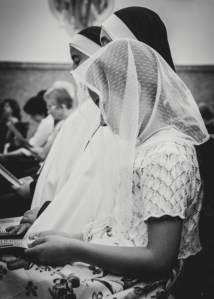
Yet, this king is generous and merciful king, and he decides to invite all people who are not in his original guests of honor. He grants the royal invitation and honor to all. Many indeed come and fulfil the invitation. However, there is one guy who fails to wear a wedding dress. To dress properly in attending a wedding feast is not only expected, but it shows how we honor the one who invites us. This person is a guest of honor, but he fails to appreciate the honor he receives, fails to behave accordingly, and brings great dishonor to the king. Thus, the king throws him not to any place, but to the darkness.

We are all like these wedding guests, and we receive immeasurable honor because, in reality, we do not deserve to be called by God to enter into His kingdom. Yet, the invitation is free, but it does not mean cheap. We still need to do our part to honor the one who invites us and to show utmost thanksgiving to God. The question is what wedding garment symbolizes? If we move forward to Revelation 19, we will see another wedding. This is the wedding of the Lamb, and in Rev 19:8, “…for the fine linen is the righteous deeds of the saints.” Faith in Jesus is like accepting the invitation, but we must not stop there, we shall wear also the garment of the righteous deeds. Our initial faith has to grow into charity.

The basic principle is grace is free, but it is not cheap. In fact, it is the most precious thing we ever receive in our lives. Our righteous works are not meant to be a bargaining chip with the Lord, but rather token of our gratitude. We do holy deeds not because we want to be praised, but because we want to honor Him who has called us to the heavenly banquet. As priests, we are serving the people primarily because, despite our weaknesses, we are chosen to the instruments of grace. As spouses, we are building family not simply based on emotional attractions, biological needs, and economic stability, because we are grateful to the Lord who has united husband and wife in love and grace. As parents, we are raising our children not only to become successful, rich or influential but primarily to become holy men and women because we recognize that these children are blessing from the Lord. The world is definitely a better world with people filled with gratitude, and with the saints.

This reflection is dedicated to Carlo Acutis, who is beatified today [10 Oktober], a model of holiness for all of us.

Valentinus Bayuhadi Ruseno, OP

Menghormati Sang Raja

Minggu ke-28 di Masa Biasa

11 Oktober 2020

Matius 22: 1-14

Untuk memahami perumpamaan yang kita dengar Minggu ini, kita perlu melihat elemen-elemen yang mengejutkan. Pertama, perjamuan ini bukalah perjamuan pernikahan biasa, tapi pernikahan putra raja. Tentunya, orang-orang dalam daftar undangan adalah tamu terhormat dan istimewa, tetapi mereka menolak untuk datang sampai dua kali dan bahkan menganiaya para utusan raja. Apa yang mereka lakukan tidak terpikirkan! Mereka gagal untuk melihat betapa berharganya undangan tersebut dan malah memilih urusan-urusan sepele mereka sendiri. Mereka sama saja melontarkan hinaan kepada raja yang telah menghormati mereka. Tak heran, raja menghukum mereka.

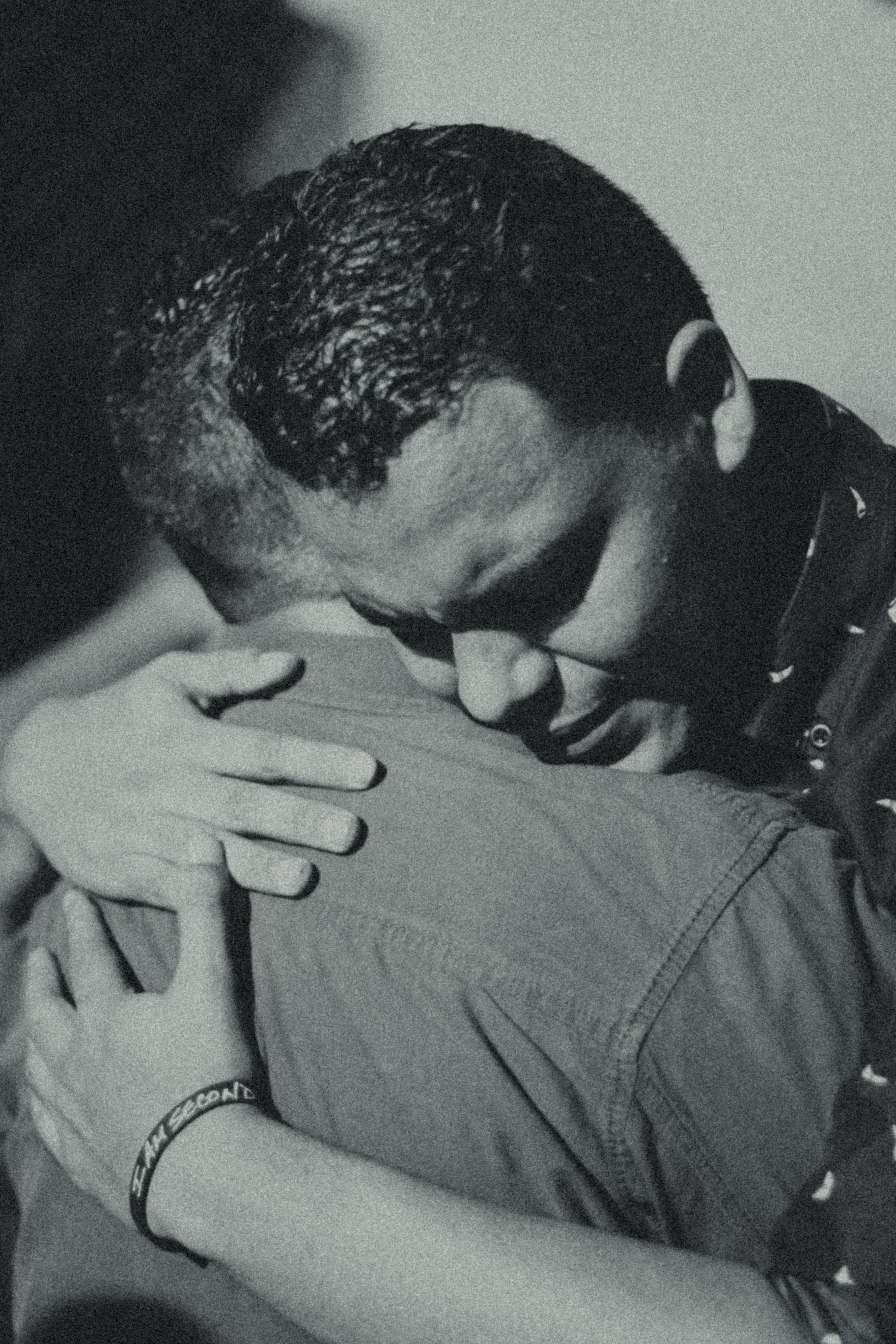
Namun, raja ini adalah raja yang murah hati, dan dia memutuskan untuk mengundang semua orang yang bukan bagian dari tamu kehormatannya. Dia memberikan undangan kerajaan dan kehormatan bagi semua orang. Banyak yang memang datang dan memenuhi undangan tersebut. Namun, ada satu orang yang gagal mengenakan pakaian yang layak bagi perjamuan. Berpakaian pantas dalam menghadiri perjamuan pernikahan tidak hanya sesuatu yang wajar, tetapi juga menunjukkan bagaimana kita menghormati orang yang mengundang kita. Orang ini adalah tamu kehormatan, tetapi dia gagal menghargai kehormatan yang dia terima, gagal berperilaku sesuai harapan, dan membawa aib besar kepada raja. Karena itu, raja melemparkannya bukan ke sembarang tempat, melainkan ke kegelapan yang berkesudahan.

Kita sama seperti tamu perjamuan nikah ini karena kita menerima penghormatan yang tak terukur karena pada kenyataannya kita tidak pantas dipanggil oleh Tuhan untuk masuk ke dalam kerajaan-Nya. Pada sudah sepatutnya, kita perlu melakukan bagian kita untuk menghormati Dia yang mengundang kita, dan untuk menunjukkan rasa syukur yang terbaik kepada Tuhan. Pertanyaannya kemudian, apa yang dimaksudkan dengan pakaian yang layak untuk perjamuan pernikahan ini? Jika kita melihat Kitab Wahyu 19, kita akan melihat sebuah perjamuan pernikahan juga. Ini adalah perjamuan pernikahan Anak Domba, dan dalam Wahyu 19: 8, “… karena lenan halus itu adalah perbuatan benar orang-orang kudus.” Iman kepada Yesus itu seperti menerima undangan dan datang ke perjamuan, tetapi kita tidak boleh berhenti sampai di situ, kita juga akan mengenakan pakaian yang terbentuk dari perbuatan-perbuatan benar. Iman awal kita harus tumbuh menjadi kasih.

Prinsip dasarnya adalah rahmat itu cuma-cuma, tapi itu tidak murahan. Faktanya, rahmat bersatu dengan Tuhan ini adalah hal paling berharga yang pernah kita terima dalam hidup kita. Perbuatan-perbuatan benar kita tidak dimaksudkan sebagai alat tawar-menawar dengan Tuhan, melainkan sebagai tanda terima kasih kita. Kita melakukan perbuatan benar bukan karena kita ingin dipuji, tetapi karena kita ingin menghormati Dia yang telah memanggil kita ke perjamuan surgawi. Sebagai imam, kami melayani umat terutama karena meskipun memiliki kelemahan, kami dipilih untuk menjadi saran rahmatnya. Sebagai pasangan suami-istri, kita dipanggil untuk membangun keluarga tidak hanya berdasarkan ketertarikan emosional, kebutuhan biologis, dan stabilitas ekonomi, tetapi rasa syukur kepada Tuhan yang telah mempersatukan suami istri dalam kasih dan rahmat. Sebagai orang tua, kita membesarkan anak-anak kita tidak hanya untuk menjadi sukses, kaya atau berpengaruh, tetapi terutama untuk menjadi pria dan wanita yang kudus karena kita menyadari bahwa anak-anak ini adalah berkat dari Tuhan. Dunia akan menjadi dunia yang lebih baik dengan orang-orang yang dipenuhi rasa syukur, dan dengan orang-orang kudus.

Refleksi ini didedikasikan bagi Carlo Acutis yang pada hari ini [10 Oktober] menjadi seorang beato, seorang model kekudusan bagi kita semua.

Valentinus Bayuhadi Ruseno, OP

picture by : mateus campos filipe

Parable of Mercy

25th Week in Ordinary Time [A]

September 20, 2020

Matthew 20: 1-16

lambros-lyrarakis vineyard 2

Among the many parables of Jesus, this parable of the owner of the vineyard is one that I find difficult to understand. Every time I read this parable, I always felt that something was wrong. Perhaps, I easily associate myself with the first-coming workers, who work from morning to sunset. They are laborers who spend their time and energy under the heat of the sun and give their efforts to meet the demands of the vineyard owner. However, they receive the same wages as those who only offer one hour of work. Of course the owner of the vineyard did not break the contract, but there still seemed to be injustice.

Maybe, this experience is like when I was studying in Manila. I was studying hard to get the best that I could achieve. Indeed, I got good grades, but what I could not accept was when my classmates who did not spent much effort, got also the same grades as I did. For me, It was not fair, but I could drop my complaint because the final grade is the prerogative of the professor.

However, things started to look different when I became a teacher myself. At one point, I needed to give my students final grades. And this is the utmost dilemma for me because I realize that on the one hand, I need to provide justice, but on the other hand, I want all my students to pass and graduate. Finally, I often chose compassion and allowed my struggling students to pass. I am fully aware that some of my students will feel that I am unfair, and that is the burden I must bear as a lecturer who chooses to be compassionate.

If we try to look closely at what vineyard owner is doing, we will find it funny and even weird. He kept looking for and hiring new persons almost every three hours. To make matters worse, he gave the same daily wages for all. In the economy and business, overspending and excess labor are a recipe for bankruptcy! However, the owner of the vineyard did not seem to care and was constantly looking for laborers. Perhaps, he knew very well that if these people were without jobs, they would starve to death, but if they worked and received less than the minimum wage, they wouldn’t be able to survive either. He couldn’t satisfy everyone, but at least he would be able to save everyone.

Learning from this parable, rather than complaining to God, we need to rejoice because our Lord is full of mercy, who even takes the initiative and seeks to seek out those of us who need salvation, and who willingly give eternal life even to those who have not lived well, but at the last moment repent.

 We should rejoice because in God’s eyes, we are all the last workers to beg mercy. Who knows, the workers who come first are actually the angels, and we really are the last unworthy laborers. With our sin, we all deserve to go to hell, but God stretches out His hand and opens the Gates of Heaven. We should rejoice that heaven is not a lonely place where few righteous people deserve it, but it is full of grateful people who enjoy God’s mercy even if they are not worthy.

Valentinus Bayuhadi Ruseno, OP

Pic: lambros lyrarakis

Perumpamaan Kerahiman

Minggu ke-25 dalam Waktu Biasa [A]

20 September 2020

Matius 20: 1-16

Di antara banyak perumpamaan Yesus, perumpamaan tentang pemilik kebun anggur yang satu ini adalah perumpamaan yang sulit saya pahami. Setiap saya membaca perumpamaan ini, saya selalu merasa ada yang tidak beres. Mungkin, saya dengan mudah mengasosiasikan diri dengan pekerja yang pertama datang, yang bekerja dari pagi hingga matahari terbenam. Mereka adalah para buruh yang menghabiskan waktu dan energi mereka di bawah terik matahari dan mengerahkan upaya mereka untuk memenuhi tuntutan pemilik kebun anggur. Namun, mereka menerima upah yang sama dengan mereka yang hanya memberikan satu jam kerja. Tentunya pemilik kebun anggur tidak melanggar kontrak, tapi tetap sepertinya ada ketidakadilan.

Mungkin, pengalaman ini seperti saat saya masih kuliah di Manila. Saya belajar keras untuk mendapatkan yang terbaik yang bisa saya raih. Memang, saya mendapat nilai baik, tetapi yang membuat saya tidak terima adalah ketika teman-teman sekelas saya yang saya tahu bahwa mereka pas-pasan, mendapat nilai yang sama dengan saya. Bagi saya, itu tidak adil, tetapi saya tidak dapat melayangkan keluhan saya karena nilai akhir adalah hak prerogatif dosen.

Namun, hal ini mulai terlihat berbeda ketika saya menjadi dosen. Pada satu titik, saya perlu memberi nilai akhir kepada siswa saya. Dan ini adalah saat yang paling dilematis bagi saya karena saya menyadari bahwa di satu sisi, saya perlu memberikan keadilan, tetapi di sisi lain, saya ingin semua siswa saya lulus dan berhasil. Akhirnya, saya lebih sering memilih belas kasihan dan mengizinkan murid-murid saya yang pas-pasan untuk lulus. Saya sepenuhnya sadar bahwa beberapa siswa saya akan merasa bahwa saya tidak adil, dan itulah beban yang harus saya tanggung sebagai dosen yang memilih untuk berbelas kasihan.

Jika kita mencoba melihat dengan teliti apa yang dilakukan pemilik kebun anggur, kita akan menganggapnya lucu dan bahkan aneh. Dia terus mencari dan memperkerjakan orang baru hampir setiap tiga jam. Lebih parah lagi, dia memberikan upah harian yang sama untuk semua. Dalam ekonomi dan bisnis, pengeluaran berlebihan dan kelebihan tenaga kerja adalah resep kebangkrutan! Tapi, si pemilik kebun anggur sepertinya tidak peduli dan terus mencari tenaga kerja. Mungkin, dia tahu betul jika orang-orang ini tanpa pekerjaan, mereka akan mati kelaparan, namun jika mereka bekerja dan menerima kurang dari upah minimum, mereka juga tidak akan bisa bertahan hidup. Dia tidak bisa memuaskan semua orang, tapi setidaknya dia akan bisa menyelamatkan semuanya.

Belajar dari perumpamaan ini, daripada mengeluh kepada Tuhan, kita perlu bersukacita karena Tuhan kita penuh belas kasihan, yang bahkan Dialah berinisiatif dan berupaya untuk mencari kita yang membutuhkan keselamatan, dan yang dengan sedia memberikan kehidupan kekal bahkan bagi mereka yang selama hidupnya tidak baik, tetapi pada saat terakhir bertobat.

 Kita harus bersukacita karena dalam mata Tuhan, kita semua adalah pekerja terakhir yang memohon belas kasihan pemilik kebun anggur. Siapa tahu, pekerja yang datang pertama sebenarnya adalah para malaikat, dan kita benar-benar pendatang terakhir yang tidak layak. Dengan dosa kita, kita semua pantas masuk neraka, tapi Tuhan mengulurkan tangan-Nya dan membuka Gerbang Surga. Kita harus bersukacita bahwa surga bukanlah tempat yang sepi di mana hanya sedikit orang benar yang layak mendapatkannya, tetapi surga penuh dengan orang-orang yang bersyukur yang menikmati belas kasihan Tuhan walau tidak layak.

Valentinus Bayuhadi Ruseno, OP

Picture: Maja Patric

Belas Kasih: Jalan Kehidupan

Minggu ke-24 di Masa Biasa [A]

13 September 2020

Matius 18: 21-35

josue-escoto-UkpYNiJyx8A-unsplash

Minggu lalu, Injil berbicara tentang bagaimana perlu menegur saudara kita yang berdosa. Jika seorang saudara berdosa kepada kita, kita wajib memberikan koreksi dalam kasih. Minggu ini, Injil berbicara tentang apa yang harus kita lakukan jika seseorang yang telah menerima koreksi, bertobat dan meminta pengampunan. Jawabannya sederhana: kita memaafkannya, dan kita merangkulnya kembali ke dalam persekutuan.

Simon Petrus mencoba untuk mengesankan Guru-nya. Dia menyatakan bahwa dia bersedia memaafkan hingga tujuh kali. Simon Petrus ingin menunjukkan kepada Yesus bahwa dia juga mampu memiliki standar yang tinggi. Yang mengejutkan adalah Yesus tidak terkesan, dan pada kenyataannya, mengajarkan kepada para murid keutamaan lainnya yakni tentang keadilan, belas kasihan dan pengampunan.

Kali ini, Yesus mengajar dengan metode favorit-Nya: menceritakan sebuah perumpamaan, dan kita akan menghargai perumpamaan ini jika kita dapat mengenali konteks sejarah dan hal yang tidak terduga. Seorang hamba berhutang 10.000 talenta kepada seorang raja. Pada zaman Yesus, talenta adalah koin emas yang berharga, dan itu setara dengan 6.000 dinar. Satu dinar sendiri setara dengan upah satu hari kerja. Jadi, hamba ini berhutang 60.000.000 hari kerja kepada tuannya [atau sekitar 160.000 tahun kerja!]. Yang paling mengejutkan bukanlah jumlah hutang sang hamba, tetapi sikap sang raja yang dengan mudah mengampuni dan menghapus seluruh hutang ketika hamba memohon belas kasihan.

Oleh karena itu, ketika raja menerima berita bahwa hamba yang telah dimaafkan ini menolak untuk mengampuni sesama hamba yang memiliki hutang yang jauh lebih kecil [100 dinar], kemarahannya dapat dibenarkan, dan belas kasihannya berubah menjadi keadilan.

Dengan bercermin pada perumpamaan ini, kita memahami bahwa di hadapan Tuhan Allah, kita tidak berbeda dengan hamba ini. Kita tidak berhak mendapatkan apapun dari Tuhan kecuali satu hal: neraka! Dosa telah menghancurkan hubungan kita dengan Tuhan, dan kita menciptakan lubang yang sangat dalam. Tidak ada yang dapat kita lakukan untuk menutup celah yang tidak terbatas ini. Hanya Tuhan yang mahakuasa yang memiliki kemampuan untuk membangun jembatan yang mustahil diseberangi ini. Syukurlah, Yesus telah meyakinkan kita bahwa Bapa-Nya juga adalah kerahiman itu sendiri. Meskipun kita tidak pantas mendapatkan apa-apa selain neraka, Tuhan telah membukakan pintu surga bagi kita.

Karena tidak ada yang bisa mendapatkan belas kasihan Tuhan, kerahiman-Nya selalu cuma-cuma, tetapi tidak berarti hal ini murahan. Tuhan ingin kita melakukan sesuatu juga untuk menerima belas kasihan-Nya. Dia mau kita untuk berbelas kasihan. Dia mengampuni kita, maka kita juga perlu mengampuni mereka yang telah menyakiti kita. Yesus sendiri mengingatkan kita bahwa kita harus berbelas kasihan seperti Bapa kita di surga yang penuh belas kasihan [Luk 6:36]. Berbelas kasihan bukanlah sekedar pilihan. Sesungguhnya, keadilanlah yang akan diterapkan pada kita di penghakiman terakhir.

Kita tahu bahwa mengampuni itu sulit, tetapi sekali lagi kita bisa belajar dari Yesus bagaimana cara mengampuni. Di kayu salib, Dia berkata, “Bapa, ampunilah mereka; karena mereka tidak tahu apa yang mereka lakukan [Luk 23:34]. ” Langkah pertama adalah berdoa untuk orang-orang yang telah bersalah kepada kita. Dengan sering berdoa, kita melatih hati kita untuk melepaskan amarah dan kepahitan kita, dan bahkan belajar mengasihi seperti Tuhan mengasihi orang-orang yang memusuhi Dia.

Valentinus Bayuhadi Ruseno, OP

Mercy is the Option

24th Sunday in Ordinary Time [A]

September 13, 2020

Matthew 18:21-35

felix-koutchinski-QARM_X5HWyI-unsplash


Last Sunday, the Gospel spoke about the fraternal correction. If a brother has offended us, we are obliged to offer charitable correction. This Sunday, the Gospel tells us what to do if a person who has received a correction, is repenting and asking for forgiveness. The answer is simple: we forgive him, and we embrace him back into the communion.

Simon Peter, the spokesperson of the disciples, is trying to impress his Master. He offers that he is willing to forgive up to seven times. Simon Peter wants to show Jesus that he is also capable of having a high standard. To his surprise, Jesus is not impressed, and in fact, teaches the disciples another great lesson about justice, mercy and forgiveness.

This time, Jesus pulls out His favorite method: telling a parable, and we will appreciate the parable if we are able to recognize the historical context and its surprise. A servant owes 10,000 talents to a king. In Jesus’ time, talent is a precious gold coin, and it equals to 6,000 denarii. One denarius itself is equivalent to a wage of one day labor. Thus, this servant owes 60,000,000 days of work to His Master [or around 160,000 years of work!]. Yes, despite the unthinkably fantastic amount of debt, the king easily forgives and erases the entire debt when the servant begs for mercy. This king’s attitude is even more insane!

Therefore, when the king receives the news that this forgiven servant refuses to forgive another fellow servant with infinitely smaller debt [100 denarii], his anger is justifiable, and expectedly, his mercy turns to justice.

Reflecting this parable, we understand that before the Lord God, we are no different from this servant. We deserve nothing from the Lord except one thing: hell! Sin has destroyed our relationship with God, and we created an infinitely bottomless pit. Finite as we are, nothing we can do to close the infinite gap. Only the infinitely powerful God possesses the ability to build the impossible bridge. Fortunately, Jesus has assured us that His Father is also the Mercy Himself. Though we deserve nothing but hell, God has opened the gate of Paradise to us.

Since nobody can earn God’s mercy, His mercy is always free, but it does not mean it is cheap. God wants us to do something also to receive His mercy. He expects us to be merciful. If He forgives us, then we need to forgive those who have hurt us. Jesus Himself reminds us that we should be merciful as our Father in heaven is merciful [Luk 6:36]. Being merciful is not an option. In fact, it is the justice that will be applied to us in the final judgment.

We know that to forgive is tough, but again we may learn from Jesus how to forgive. At the cross, He said, “Father, forgive them; for they do not know what they are doing [Luk 23:34].” The first step is to pray for those people who have offended us. By praying often, we train our heart to let go of our anger and bitterness, and even to learn to love the way God loves even those people who wish Him not to exist at all.

Valentinus Bayuhadi Ruseno

The True Treasure

17th Sunday in Ordinary Time [A]

July 26, 2020

Matthew 13:44-52

parable of hidden treasureThe parables of the hidden treasure and of fine pearl are among the shortest yet loveliest parables of Jesus. Finding a fine pearl or a hidden treasure is surely an exciting discovery.  We can naturally share the joyful experience. Yet, the key to unlock the secrets of the parables is to spot the surprising twists. If we find a treasure, we instinctively grab it and bring it home.  If the treasure is exceedingly huge and many, we can grab some and use them to buy the land. It is a bit reckless to sell everything first and then buy the land. What if the owner of the land suddenly refused to give up the land? The same goes for the purchase of the fine pearl. Sometimes a businessman would make a risky investment to gain more profit. Yet, to throw everything for a pearl is a bit of foolishness. The merchant still needs money to sustain his daily life and business, and what if the investment fails?
Through two parables, Jesus teaches His disciples that His kingdom is immensely precious, and in order to achieve it, we have to give up everything. We cannot cheat or steal it. We have to merit it in the right way. The teaching itself is not something novel in the gospel of Matthew. Back in chapter 10, Jesus tells that those who love their parents more than Jesus, is not worthy of Jesus. It is all or nothing for Jesus. It is the same with His kingdom.

Is it possible to give up everything for Jesus and His Kingdom? The answer depends whether we consider the Kingdom as something truly precious for us. The merchant, for example, may recognize that it is a fine pearl, but if he does not see it as extremely precious, he will not sell everything he has to buy that pearl. To simply know is existentially different from accepting it as precious. One remains in the mind and the other goes down to the heart. We may recognize that Jesus is our Savior and Lord, but do we value Him and make Him as our top priority? We may be aware that the Church is the Kingdom of God, but do we hold her a precious? Do we give up everything for Jesus and His body, the Church?

How do we make something precious? When we love someone or something, we value them. When they are valuable, we treasure them. When they are our treasures, there our hearts are. We see a little child. She loves her toys. These become valuable to her. And as her valuables, she spends her time with them and takes care of them. When we love our work, we value it and we make it our priority. When we love our family, we treasure them, and we exert our time and effort to make them happy.

We may be baptized as a Catholic and our parents teach us that Jesus is our Lord. We may study in Catholic schools and go to the Church from time to time. But, do we love Jesus and His Church? Are Jesus is valuable and precious to us that we are willing to surrender everything for Him? Do we treasure Jesus and place our hearts in Him?

Valentinus Bayuhadi Ruseno, OP

Harta Sejati

Minggu ke-17 dalam Masa Biasa [A]

26 Juli 2020

Matius 13: 44-52

parable of hidden treasure 2Perumpamaan tentang harta terpendam dan mutiara yang indah adalah salah satu dari perumpamaan Yesus yang paling pendek namun memikat. Menemukan mutiara yang sangat indah atau harta yang tersembunyi tentu saja merupakan penemuan yang luar biasa. Kita secara alami dapat merasakan kebahagiaan dari orang-orang menemukan hal yang berharga ini. Namun, kunci untuk membuka rahasia perumpamaan adalah untuk menemukan hal-hal yang mengejutkan dari cerita tersebut. Jika kita menemukan harta terpendem, kita secara naluriah langsung mengambilnya dan membawanya pulang. Jika harta itu sangat besar dan banyak, kita dapat mengambil sebagian dan menggunakannya untuk membeli tanah. Agak ceroboh rasanya untuk menjual semuanya dulu dan kemudian membeli tanah tersebut. Bagaimana jika pemilik tanah tiba-tiba menolak menyerahkan tanah itu? Hal yang sama berlaku untuk pembelian mutiara yang indah. Terkadang seorang pengusaha melakukan investasi berisiko untuk mendapatkan lebih banyak keuntungan. Namun, menjual segalanya untuk mutiara tersebut adalah sebuah tindakan yang gegabah. Pedagang itu masih membutuhkan uang untuk mempertahankan kehidupan dan bisnisnya sehari-hari, dan bagaimana jika investasinya gagal?
Melalui dua perumpamaan ini, Yesus mengajar murid-murid-Nya bahwa kerajaan-Nya sangat berharga, dan untuk mencapainya, kita harus menyerahkan segalanya. Kita tidak bisa menipu atau mencurinya. Kita harus menerimanya dengan cara yang benar. Ajaran seperti ini sendiri bukanlah sesuatu yang baru dalam Injil Matius. Kembali pada bab 10, Yesus menyatakan bahwa mereka yang lebih mengasihi orang tua mereka daripada Yesus, tidak layak bagi Yesus. Semua atau tidak sama sekali bagi Yesus! Prinsip yang sama juga berlaku bagi kerajaan-Nya.

Apakah mungkin untuk menyerahkan segalanya untuk Yesus dan Kerajaan-Nya? Jawabannya tergantung apakah kita menganggap Kerajaan sebagai sesuatu yang benar-benar berharga bagi kita. Pedagang itu, misalnya, bisa saja melihat bahwa Mutiara itu adalah mutiara yang indah, tetapi jika ia tidak melihatnya sebagai sangat berharga, ia tidak akan menjual segala yang ia miliki untuk membeli mutiara itu. Sekedar mengetahui itu berbeda dari menerimanya sebagai sesuatu yang berharga. Yang satu tetap ada di pikiran dan yang lain bergerak di dalam hati. Kita mungkin menyadari bahwa Yesus adalah Juruselamat dan Tuhan kita, tetapi apakah kita menghargai Dia dan menjadikan Dia sebagai prioritas utama kita? Kita mungkin sadar bahwa Gereja adalah Kerajaan Allah, tetapi apakah kita menganggapnya berharga? Apakah kita menyerahkan segalanya untuk Yesus dan tubuh-Nya, Gereja?

Bagaimana kita membuat sesuatu yang berharga? Ketika kita mencintai seseorang atau sesuatu, kita menghargainya. Ketika mereka berharga, kita menjadikannya seperti harta kita. Ketika itu adalah harta kita, di sanalah hati kita berada. Kita melihat seorang anak kecil. Dia mencintai mainannya. Ini menjadi berharga baginya. Dan sebagai barang berharga, dia menghabiskan waktunya bersamanya dan merawatnya. Ketika kita mencintai pekerjaan kita, kita menghargainya dan menjadikannya sebagai prioritas kita. Ketika kita mencintai keluarga kita, kita menghargai mereka, dan kita mengerahkan waktu dan upaya kita untuk membuat mereka bahagia.

Kita dapat dibaptis sebagai seorang Katolik dan orang tua kita mengajar kita bahwa Yesus adalah Tuhan kita. Kita mungkin belajar di sekolah-sekolah Katolik dan pergi ke Gereja setiap Minggu. Tetapi, apakah kita mengasihi Yesus dan Gereja-Nya atau hal ini hanya sebatas pengetahuan di kepala? Apakah Yesus berharga dan berharga bagi kita sehingga kita rela menyerahkan segalanya untuk-Nya? Apakah kita menghargai Yesus dan menaruh hati kita di dalam Dia?

Valentinus Bayuhadi Ruseno, OP

Wheat among the Weeds

16th Sunday in Ordinary Time [A]

July 19, 2020

Matthew 13:24-43

wheat n weed 1The parable of the wheat and weed is one of a kind. If we survey the details, we are supposed to raise our eyebrows. Firstly, if you become a person who will destroy your opponent’s field of wheat, you know that there are several other effective ways to accomplish that. We can simply set a small fire on the wheat, and the entire field will eventually turn to be an inferno. But, the enemy chose unorthodox tactic: to sow seeds of weed during the planting period. While the weed may disturb the growth of the wheat, they will not sufficiently damage and stop the harvest.  So, what is the purpose? What is surprising is that the decision of the field’s owner. When he was notified about the presence of the weed, he immediately knew the culprit, and instead to act promptly and protect their wheat, he decided to allow the weeds to thrive among his wheat.

As expected, the disciples were puzzled by the parable, and when the disciples asked the meaning of this parable, they found another mind-blogging answer. The owner of the field is God Himself and He allowed the children of the evil one to grow among the children of God both in the world and in the Church. Yes, God allows that! He allows His children will not have a smooth journey and growth in the world. God allows His children to be harassed, bullied, and even persecuted by the evil one. God allows His children to experience trials and difficult moments. The question is why?

We may take the cue from St. Paul. He once magnificently wrote, “We know that all things work together for good for those who love God, who are called according to his purpose [Rom 8:28].” God allows bad things to happen because these are for our good! What kind of goodness why we may ask? From our human perspective, perhaps it is nothing but absurd, but from His vantage point, things fall into its proper places.

Jesus invites us to call God as Father, and letter to the Hebrews reminds us, “for the Lord disciplines those whom he loves, and chastises every child whom he accepts [Heb 12:6].” Trials and difficulties are God’s pedagogy toward whom He loves. As parents, we know care and discipline have to work hand in hand. We are well aware that true discipline is also a way of loving. If we want our children to succeed in their lives, we need to teach them to delay their gratification. We allow them to experience pain and difficulty first before we give them a reward. My parents used to ask me to study and finish their homework first before I could enjoy watching television. It resulted not only in good grades, but also my acquired habit not to run from problems, but to endure it.

I do believe that it is also the same as our Father in heaven. He loves us by allowing us to endure the pain in this world so that we may truly appreciate the spiritual gifts. Allow me to end this reflection, by quoting St. Paul, “We also boast in our sufferings, knowing that suffering produces endurance, and endurance produces character [as children of God], and character produces hope, and hope does not disappoint us..” [Rom 5:3-5]

Valentinus Bayuhadi Ruseno, OP