
Jesus the Lamb of God

Second Sunday in Ordinary Time [C]

January 18, 2026

John 1:29-34

Today, John the Baptist identifies Jesus as “the Lamb of God who takes away the sin of the world.” For us as Catholics, this title is one of the most familiar, for we proclaim it at every Mass moment before receiving Holy Communion. But do we understand what it means? Why must we make this specific acclaim before approaching the altar?
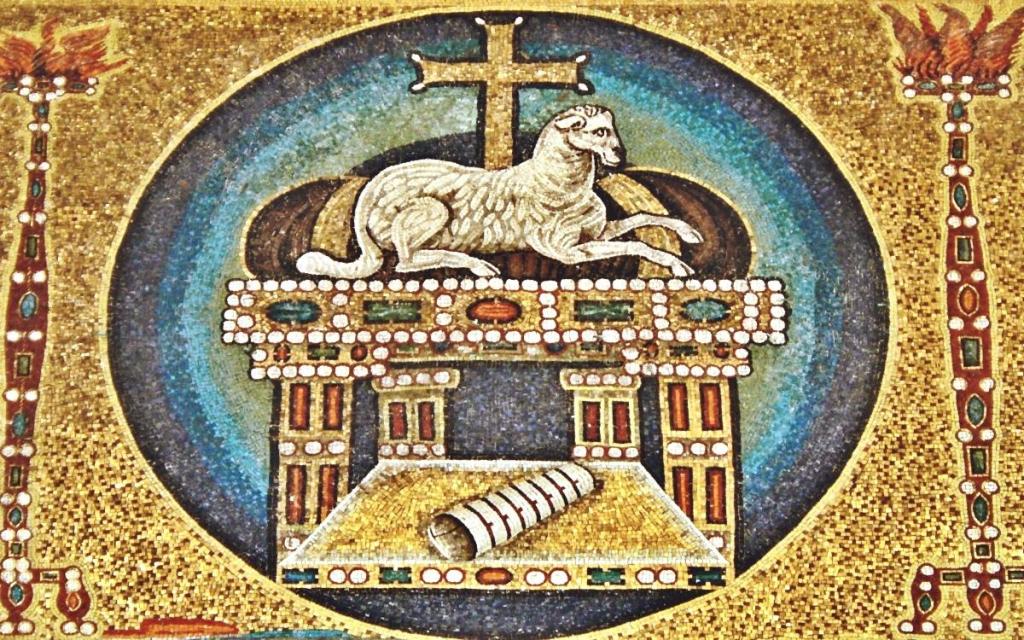
To grasp the weight of this title, we must look back to the Old Testament. The lamb was the quintessential sacrificial animal of Israel. It was a lamb that served as the sacrifice of the Passover, the instrument through which God saved Israel from death and liberated them from the slavery of Egypt. The lamb was also central to the worship of the Sanctuary: in the “Tamid,” the daily offering (Ex 29:39); the “Olah,” the burnt offering (Lev 1:10); the “Shelamim,” the peace offering (Lev 3:7); and the “Hattat,” the sin offering (Lev 4:32).

We might ask, “Why the lamb?” The reason is partly practical. Sheep were abundant in the ancient world, but unlike other livestock, the lamb offers the least resistance when faced with death. It does not fight; it does not scream. This silence inspired the prophet Isaiah to describe the Suffering Servant: “Like a lamb that is led to the slaughter, and like a sheep that before its shearers is silent, so he opened not his mouth.”

Yet, Jesus is no ordinary lamb. He is the Lamb of God. The Greek phrase ho amnos tou Theou implies not only a lamb belonging to God but a lamb provided by God. Jesus is the perfect victim, prepared not by human hands, but by the Father. He is the fulfillment of Abraham’s prophecy to Isaac: “God himself will provide the lamb.” Because He is of God, He is the only offering truly acceptable to God.

Jesus, therefore, is the Lamb of God because He is the total fulfilment of every ancient sacrifice.

  • Like the Passover Lamb, He is slain and consumed so that we might be spared from eternal death.
  • Like the Tamid, He is offered daily in the Eucharist.
  • Like the Olah, He is given totally in obedience to the Father.
  • Like the Shelamim, He is our peace (Eph 2:14).
  • Like the Hattat, He becomes the offering that cleanses us of sin (2 Cor 5:21).

This is why we cry out, “Lamb of God… have mercy on us.” We are acknowledging that without His perfect sacrifice, we could not be saved from our sins. And finally, when we pray, “Grant us peace,” we confess that without Jesus—our true Peace Offering—there can be no reconciliation between us and the Father.

Rome

Valentinus Bayuhadi Ruseno, OP

Questions for reflection:

“How do we prepare ourselves to worthily receive the sacrifice of Jesus in the Eucharist? How do we participate in the Mass? Do our actions during the liturgy bring us closer to Jesus, or do they distract us? Finally, how do we offer our lives to God through our daily activities?”

Consecrated

The Feast of Presentation of the Lord [C]

February 2, 2025

Luke 2:22-40

Today, we are celebrating the Feast of the Presentation, commemorating the biblical event when Mary and Joseph presented the newborn Jesus at the Temple in Jerusalem. But why must Jesus be presented at the Temple in the first place?

Joseph and Mary brought Jesus to the Temple because He was Mary’s firstborn. According to the Law of Moses, all firstborn males, whether human or animal, must be consecrated to the Lord (see Exodus 13:1-2; 11-16). The word “consecrated” here means to be made holy (Hebrew: kados), and to be holy means to belong to the Lord. The most common way to consecrate something is through sacrifice, signifying a transition from the ordinary realm to the divine realm.

Certainly, blood sacrifice was only required for livestock animals, such as sheep or goats. These animals were slaughtered and burned at the altar, signifying their transition from this world to the divine realm. However, not all things had to be killed. In the case of working animals, like donkeys, and firstborn humans, they were brought to the Temple and presented to the priest. Then, the owner or parents were required to redeem their firstborn by offering animals to be sacrificed in their place. To redeem Jesus, Joseph and Mary offered a pair of turtledoves or pigeons, a sacrifice commonly offered by the poor.

Why must the firstborn child be consecrated to the Lord? The Book of Exodus (chapter 12) tells us that, just before the Israelites left Egypt, the tenth plague that killed the Egyptian firstborns took place. The Israelite firstborns were spared because of the Passover sacrifice—the unblemished lamb that was slain, its blood placed on the doorposts, and its flesh roasted and eaten. In this way, the Passover lamb was sacrificed to redeem the firstborn Israelites from death.

What is interesting is that Luke never tells us that Jesus was redeemed. Yes, He was presented, and Mary and Joseph did offer sacrificial animals, but the word “redeem” is absent from the story. It seems that Luke deliberately omits this word to emphasize that Jesus is presented as the true firstborn—the Passover Lamb—who will be sacrificed so that we may be redeemed from sin and death.

As Christians, we no longer follow the ritual of consecrating firstborns as outlined in Exodus 13. The reason is that we are all consecrated, or set apart, for the Lord through our baptism. Through His sacrifice on the cross, Jesus is the Passover Lamb (1 Cor 5:7) who saves us from sin and death and redeems us for God. Now, we belong to the Lord, and as God’s possession, we are holy. This is why St. Paul, in his letters (1 Cor 1:2; Eph 1:1; Phil 1:1), does not refer to the Church’s members as Christians but as the “holy ones” or the “saints.” As people consecrated to God, we are called to live holy lives, for God is holy (Lev 11:44).

Rome

Valentinus Bayuhadi Ruseno, OP

Questions for Reflection:

Are we aware that we have been consecrated to the Lord? What does holiness mean? Do we live as holy people of God? How do we live a holy life in our daily routines? Do we help others grow in holiness? If so, how?