Peace of Easter

Second Sunday of Easter [C]

April 27, 2025

John 20:19-31

The risen Christ’s first words to His disciples were, “Peace to you!” In Hebrew, this is literally “Shalom lakem” (שָׁלוֹם לָכֶם), a greeting frequently found in the Old Testament (Judges 6:23; 1 Samuel 1:17; 20:42; 25:6; etc.). Another Jewish variation, though not biblical, is “Shalom aleichem” (שָׁלוֹם עֲלֵיכֶם), meaning “Peace be upon you!” But was Jesus’ greeting merely cultural, or did it carry deeper significance?

To understand this, we must first explore the biblical meaning of “shalom.” One of the most common words in Scripture, appearing 237 times in the Old Testament, “shalom” is often translated as “peace.” Yet it signifies far more: the total well-being of a person, rooted in right relationships—with oneself, others, and God.

When the risen Christ appeared to the disciples, they were gripped by fear of the “Jews”. Interestingly these “Jews” may refer to three things: the Jewish authorities, Jesus Himself, a Jewish man, and even they themselves because they are Jews. They feared the authorities who had killed Jesus, knowing they could be next. They feared Jesus, remembering their failures: Judas’ betrayal, Peter’s denial, and their own abandonment. Would He now punish them? And they feared themselves: they feel unworthy and incapable disciples; they are underserved of Jesus’ mercy and forgiveness; they are broken and sinful. They fear of their own lives and future.

Yet Jesus’ words cut through their terror: “Peace to you.” This was no ordinary greeting. It was a divine assurance. They need not fear the authorities, for if they could not stop Jesus, they could not stop His followers. They need not fear Jesus, for He came not to condemn but rather to have mercy and forgive their weaknesses. When He repeated, “Peace to you,” and added, “As the Father has sent me, so I send you,” He affirmed their calling despite their flaws. Jesus assures them once again that despite their unworthiness, they remained chosen, and despite their weakness and failures, God’s grace is sufficient to perfect what is lacking in them.  

True shalom flows only from the risen Christ—a peace that reconciles us to God, heals our relationships, and silences our inner shame.  We know that we are sinners, yet we are redeemed so that we are in peace with God. We know that we often have difficult relationship with our neighbors, but we are invited to ask mercy and be merciful to other. We are aware that we are weak and incapable in loving God and others, but God’s grace is sufficient to complete what is lacking in us.

Rome

Valentinus Bayuhadi Ruseno, OP

Guide question:

Do you have peace in our lives? What are we afraid of? Do we have peace with God? Do we have peace with our neighbors? Do we have peace with ourselves? What are things that make us fail to achieve shalom?

Divine Mercy

Second Sunday of Easter [A]

April 19, 2020

John 20:19-31

ViaDolorosa0181The second Sunday of Easter is also known as the Divine Mercy Sunday. The liturgical celebration of the Divine Mercy Sunday is declared in the year 2000 by Pope St. John Paul II who had a strong devotion to the Divine Mercy revealed to St. Faustina. Though the feast itself is something recent, the truth of divine mercy is fundamental in the Bible and Sacred Tradition. If there is one prevailing character of God, it is not other than mercy. In the Old Testament, there are at least two Hebrew words that can be translated as mercy. One is rāḥam and the other is ḥeṣedh.

The word Raham is closely related to a woman’s womb. It is the feeling and action that flow from the womb, the source and nurturer of new life. Mercy comes from the realization that we belong to the same womb, that we are siblings. Thus, when one of our brothers is suffering or struggling with a difficulty, we easily empathize with him and are moved to alleviate his hardship. Yet, mercy can be also understood as a maternal impulse towards someone who has come from her womb. It is the genuine yearning that moves a mother to do anything for her children. Mercy in this sense, I believe, is more proper to God. He cannot but be merciful and embrace our sufferings and even weakness because we are coming from God’s spiritual womb. No wonder, the Church dare asserts that we are God’s children.

The word “Hesedh” is also a powerful word and it may mean a steadfast love or a relentless fidelity to a covenant. Our God is a person who is unthinkably bold to tie Himself to a covenant with weak humans like Adam and his descendants. Because of this, the Bible is nothing but a story of a faithful God who gives Himself to unfaithful men and women. From Adam who failed to his duty to guard the garden, down to Peter who denied Jesus three times, humanity is terribly disloyal, but God remains faithful and offers His forgiveness to rebuild the shattered relationship.

The choice of the Second Sunday of Easter to be the Divine Mercy is an excellent decision because the Gospel speaks powerfully how God’s mercy operates. The risen Jesus appeared to the disciples and gave them the authority to forgive sins. This is the story of the institution of the sacrament of reconciliation. Forgiveness is the first and foremost manifestation of mercy. Though the authority to forgive belongs properly to God, the risen Christ has willed that this authority is shared with His apostles. Since the apostles are the first bishops, the same power is handed down to their successors. And the bishops shared this divine power and responsibility to their co-workers, the priests.

The Gospel begins with the disciples who were afraid. They were afraid for many reasons, but one of the strongest reasons was that they were afraid of Jesus. They have abandoned and been unfaithful to Him, and they heard that Jesus has risen. They thought that it was the time of judgment, time to get even. Yet, Jesus appeared and His first word is not a word of anger or judgment, but “peace” or “shalom”. The disciples should no longer be afraid and be at peace because despite their unfaithfulness because they have been forgiven.

The Easter season begins with the assurance that God is merciful and offering us the forgiveness we do not deserve. And this season invites us to forgive more because we are forgiven, to become the apostles of peace because we have received peace from Jesus.

Valentinus Bayuhadi Ruseno, OP

Kerahiman Ilahi

Minggu Kedua Paskah [A]

19 April 2020

Yohanes 20: 19-31

confession at streetHari Minggu Paskah kedua juga dikenal sebagai Minggu Kerahiman Ilahi. Perayaan Minggu Kerahiman Ilahi ditetapkan pada tahun 2000 oleh St. Yohanes Paulus II yang memiliki devosi khusus kepada kerahiman Ilahi yang diwahyukan kepada St. Faustina. Meskipun perayaan liturgi ini sendiri adalah sesuatu yang baru, kebenaran akan kerahiman Ilahi adalah sesuatu yang mendasar dalam Alkitab dan Tradisi Suci. Jika ada satu karakter Allah yang paling penting, ini tidak lain adalah kerahiman-Nya. Dalam Perjanjian Lama, setidaknya ada dua kata Ibrani yang dapat diterjemahkan sebagai kerahiman. Yang satu adalah rāḥam dan yang lainnya adalah ḥeṣedh.
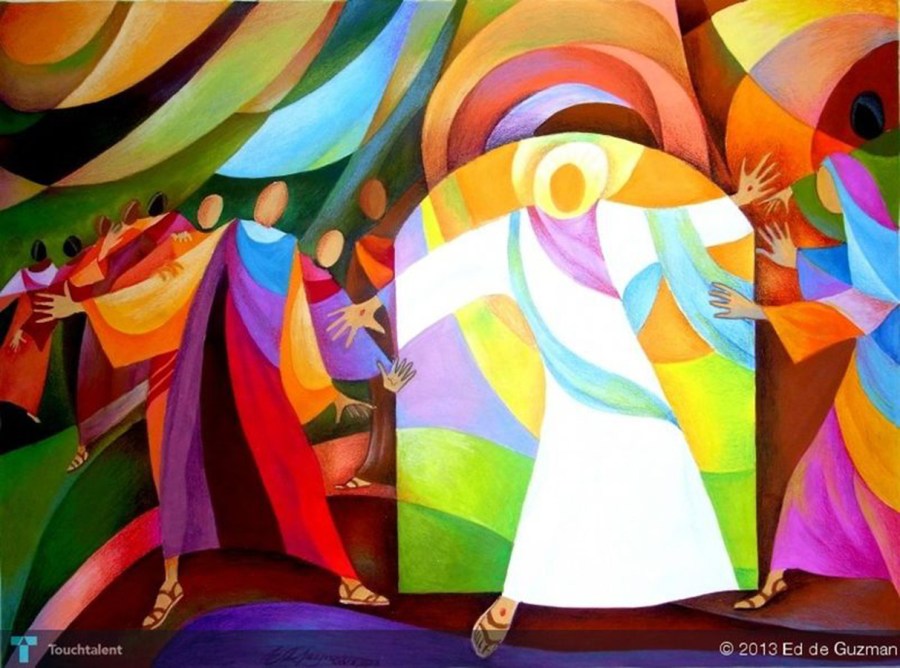
Kata “Raham” terkait erat dengan rahim wanita. “Raham” adalah perasaan dan tindakan yang mengalir dari rahim yang adalah sumber dan pemelihara kehidupan baru. Kerahiman datang dari kesadaran bahwa kita berasal dari rahim yang sama, bahwa kita bersaudara. Maka, ketika salah satu saudara kita menderita atau bergulat dengan kesulitan, kita dengan mudah berempati dan tergerak untuk meringankan kesulitannya. Namun, “raham” dapat juga dipahami sebagai perasaan keibuan terhadap seseorang yang telah datang dari rahimnya. Perasaan tulus inilah yang menggerakkan seorang ibu untuk melakukan segalanya untuk anak-anaknya. Kerahiman dalam pengertian ini lebih pantas bagi Tuhan. Dia tidak bisa tidak berbelas kasih dan merangkul penderitaan dan bahkan kelemahan kita karena kita datang dari “rahim rohani” Tuhan. Tidak heran, Gereja berani mengajarkan bahwa kita adalah anak-anak Allah.

Kata “Hesedh” juga merupakan kata yang penting dan ini bisa berarti kasih yang teguh atau kesetiaan yang tak kenal batas. Tuhan kita adalah pribadi yang sangat berani mengikat diri-Nya pada sebuah perjanjian dengan manusia yang lemah seperti Adam dan keturunannya. Karena itu, jika kita rangkum isi Alkitab, ini tidak lain adalah sebuah kisah tentang Allah yang setia yang memberikan diri-Nya kepada manusia yang tidak setia. Dari Adam yang gagal menjalankan tugasnya untuk menjaga taman, sampai ke Petrus yang menyangkal Yesus tiga kali, umat manusia terkenal sebagai makhluk yang sulit untuk setia. Namun, Tuhan tetap setia dan memberikan pengampunan-Nya untuk membangun kembali hubungan yang hancur karena ulah manusia ini.

Pilihan Minggu Kedua Paskah untuk menjadi Minggu kerahiman Ilahi adalah keputusan yang sangat tepat karena Injil berbicara bagaimana kerahiman Ilahi beroperasi. Yesus yang bangkit menampakkan diri kepada para murid dan memberi mereka wewenang untuk mengampuni dosa. Ini adalah kisah tentang institusi sakramen rekonsiliasi. Pengampunan adalah manifestasi pertama dan utama dari kerahiman. Meskipun otoritas untuk mengampuni adalah milik Allah, Kristus yang bangkit telah menghendaki bahwa otoritas ini dibagikan kepada para rasul-Nya. Karena para rasul adalah para uskup pertama, kuasa yang sama diberikan kepada penerus mereka. Dan para uskup membagikan kuasa Ilahi dan tanggung jawab ini kepada rekan kerja mereka, para imam.

Injil dimulai dengan para murid yang takut. Mereka takut karena banyak sebab, tetapi salah satu alasan terkuat adalah mereka takut kepada Yesus. Mereka telah meninggalkan dan tidak setia kepada-Nya, dan mereka mendengar bahwa Yesus telah bangkit. Mereka berpikir bahwa ini adalah saat penghakiman, saat untuk membalas dendam. Namun, Yesus menampakkan diri dan kata-kata pertamanya bukanlah kata kemarahan atau penghakiman, tetapi “damai” atau “shalom”. Para murid seharusnya tidak lagi takut dan damai karena terlepas dari ketidaksetiaan mereka karena mereka telah diampuni.

Masa Paskah dimulai dengan jaminan bahwa Allah berbelas kasih dan menawarkan kepada kita pengampunan yang tidak pantas kita terima. Dan masa ini mengundang kita untuk lebih mengampuni karena kita telah diampuni, dan untuk menjadi rasul perdamaian karena kita telah menerima kedamaian dari Yesus.

Valentinus Bayuhadi Ruseno, OP

Jesus’ Shalom

Second Sunday of Easter (Divine Mercy Sunday) [April 8, 2018] John 20:19-31

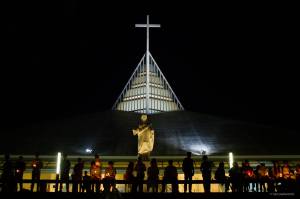
“Jesus came and stood in their midst and said to them, “Peace be with you.”  (Jn. 20:19)

jesus n people
photo by Harry Setianto SJ

Fear is a natural and basic human emotion. Fear plays an important role in human survival because it alerts us of impending dangers or evil, and moves us to avoidance. The science of anatomy would locate the source of this emotion inside our amygdala, a primitive part of our brain that we share with other animals. Yet, unlike animals that simply flee in the presence of a predator, with our complex brain, we also face a complex kind of fear as we perceive a complex meaning of danger. We do not only fear predators, but we fear also losing our jobs, sickness, and our terror teachers or bosses. We are afraid of height (acrophobia), of small spaces (claustrophobia), and even of banana (Bananaphobia)! Because of our superior mind, our fear is even enlarged as we can anticipate far away dangers or even that does not exist yet. This creates anxiety and worriedness.


In the Gospel, we discover that Jesus’ disciples are afraid. They fear the “Jews.” They may be accused of stealing the body of Jesus by the Roman soldiers and Jewish authorities who discover the empty tomb. Or, simply the disciples are anxious about their future, of what will be of them after the death and the news of Jesus’ resurrection. Shall they disband themselves, go back to their former way lives, or shall they remain together? Will Jesus come and get even with them? Overcome by fear and uncertainty, they lock themselves. They are paralyzed, their hearts shrink, and they glue themselves to safe yet fragile things. Like the disciples, fear freezes us and lock us in our comfort zone. Fear of getting hurt, we stop loving. Fear of failures, we no longer pursue our dreams. Fear of being manipulated, we refuse to help others. Fear of betrayal, we shun commitments.

However, fear does not have the last say. Despite the locked room, the Lord enters in their midst. The first word He says is Peace, in Hebrew, “Shalom.” Then, Jesus shows his wounds to them, a proof that He is truly Jesus, their teacher, who was crucified and risen. Seeing the Lord, joy explodes in their hearts, and they fear no more. Jesus’ Shalom is powerful and empowering. Jesus’ Shalom gives inner strength in the face of uncertain future. Jesus’ Shalom gives the courage to embrace sufferings and trials.

Jesus is truly risen and appears to the disciples, but this does not change the disciples’ situations. Their future remains uncertain. The hostile Jewish authorities still attempt to shut them down. The Roman soldiers may arrest them. They do not know yet how to sustain their small community. Their situations remain bleak, but one thing has changed. They are no longer afraid. With His Shalom in their hearts, Jesus breathes His Holy Spirit on them and sends them on a mission to forgive. As they have been forgiven and received mercy, they become the missionaries of peace, as they bring forgiveness to others. As the stone door of the tomb cannot stop the risen Lord, now the locked doors cannot hinder the empowered disciples.

Jesus’ Shalom is the grace of resurrection for all of us. True that our situations and problems do not change much, but fear can no longer freeze us. We are called to go out from our locked rooms and become the missionaries of peace and mercy. Despite the pain, failure, and frustration, we continue to love, serve and commit because this is who we are, the people who have received Jesus’ Shalom, God’s mercy and the Holy Spirit. We are not afraid because we are Easter People!

Br. Valentinus Bayuhadi Ruseno, OP

Shalom

Minggu Paskah Kedua (Minggu Kerahiman Ilahi) [8 April 2018] Yohanes 20: 19-31

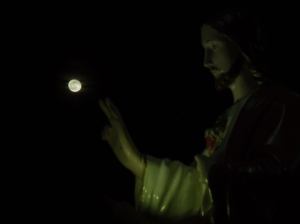
“Pada waktu itu datanglah Yesus dan berdiri di tengah-tengah mereka dan berkata: “Damai sejahtera bagi kamu!. ” (Yoh. 20:19)

Jesus n moon
photo by Harry Setianto, SJ

Ketakutan adalah emosi manusia yang alami dan mendasar. Takut memainkan peran penting dalam kelangsungan hidup manusia karena emosi ini memperingatkan kita akan datangnya bahaya, dan menggerakkan kita untuk menghindarnya. Ilmu anatomi menunjukan bahwa sumber emosi ini ada di dalam amygdala, bagian primitif dari otak yang juga dimiliki oleh hewan lain. Namun, tidak seperti binatang yang melarikan diri di hadapan predator, dengan otak yang lebih kompleks, kita juga menghadapi jenis ketakutan yang kompleks. Kita tidak hanya takut pada pemangsa, tetapi kita juga takut kehilangan pekerjaan, akan penyakit, dan kehilangan orang yang kita kasihi. Ada yang takut akan ketinggian (acrophobia), akan ruang kecil (claustrophobia), dan bahkan terhadap pisang (Bananaphobia)! Karena pikiran kita yang superior, ketakutan kita bahkan membesar karena kita bisa mengantisipasi bahaya yang masih jauh atau bahkan yang sesungguhnya belum ada. Inilah dasar dari kecemasan dan kekhawatiran.


Dalam Injil, para murid Yesus ketakutan. Mereka takut pada “orang Yahudi.” Mereka mungkin takut akan ditangkap karena dituduh mencuri tubuh Yesus oleh tentara Romawi dan penguasa Yahudi yang menemukan kuburan yang kosong. Para murid juga mungkin cemas akan masa depan mereka, apa yang akan terjadi setelah kematian dan berita tentang kebangkitan Yesus. Haruskah mereka membubarkan diri, kembali ke kehidupan mereka sebelumnya, atau apakah mereka akan tetap bersama? Akankah Yesus datang dan membalas mereka? Dikuasai oleh rasa takut dan ketidakpastian, mereka mengunci diri. Mereka lumpuh, hati mereka mengkerut, dan mereka merekatkan diri pada hal-hal yang aman namun rapuh. Seperti para murid, rasa takut membekukan kita dan mengunci kita di zona nyaman kita. Takut terluka, kita berhenti mengasihi. Takut akan kegagalan, kita tidak lagi mengejar impian kita. Takut dimanipulasi, kita menolak membantu orang lain. Takut pengkhianatan, kita menghindari komitmen.

Namun, rasa takut tidak memiliki kata terakhir akan hidup kita. Meskipun ruangan terkunci, Tuhan masuk di tengah-tengah mereka. Kata pertama yang Dia katakan adalah “Damai”, dalam bahasa Ibrani, “Shalom.” Kemudian, Yesus menunjukkan luka-lukanya kepada mereka, sebuah bukti bahwa Dia benar-benar Yesus, guru mereka, yang disalibkan dan bangkit. Melihat Tuhan, sukacita memenuhi hati mereka, dan mereka tidak takut lagi. Shalom Yesus mengampuni dan memberdayakan. Shalom Yesus memberikan kekuatan batin dalam menghadapi masa depan yang tidak pasti. Shalom Yesus memberikan keberanian untuk menerima penderitaan dan cobaan.

Yesus benar-benar bangkit dan menampakkan diri kepada para murid, tetapi ini tidak mengubah situasi para murid. Masa depan mereka tetap tidak pasti. Otoritas Yahudi masih berusaha untuk menghancurkan mereka. Para prajurit Romawi setiap saat dapat menangkap mereka. Komunitas mereka sangat kecil dan lemah. Situasi mereka tetap suram, tetapi satu hal telah berubah. Mereka tidak takut lagi. Dengan Shalom-Nya di dalam hati para murid, Yesus menghembuskan Roh Kudus-Nya kepada mereka dan mengirim mereka dalam misi untuk mengampuni. Karena mereka telah diampuni dan menerima belas kasihan, mereka menjadi misionaris perdamaian dan mereka membawa pengampunan kepada orang lain. Seperti pintu batu kubur tidak dapat menghentikan Tuhan yang bangkit, sekarang pintu yang terkunci tidak dapat menghalangi para murid yang diberdayakan.

Shalom Yesus adalah anugerah kebangkitan bagi kita semua. Benar bahwa situasi dan masalah kita tidak banyak berubah, tetapi rasa takut tidak bisa lagi membekukan kita. Kita dipanggil untuk keluar dari kamar kita yang terkunci dan menjadi misionaris perdamaian dan belas kasihan. Meskipun sakit, gagal, dan penuh dengan frustrasi, kita terus mengasihi, melayani dan berkomitmen karena ini adalah siapa kita sesungguhnya, orang-orang yang telah menerima Shalom Yesus, belas kasihan Tuhan dan Roh Kudus. Kita tidak takut karena kita adalah umat yang tertebus!

Shalom!

Frater Valentinus Bayuhadi Ruseno, OP

The Spirit of Pentecost

Pentecost Sunday. June 4, 2017 [John 20:19-23]

“Receive the Holy Spirit. Whose sins you forgive are forgiven them… (Jn 20:22-23)”

pentecost holy spiritPentecost is the commemoration of the descent of the Holy Spirit upon the first disciples in the upper room. The usual images we have in our mind are usually dramatic and vivid. The disciples gathered in the upper room, suddenly the strong wind filled the room, followed by the appearance of the tongues of fire. Inspired by the Holy Spirit, the disciples began to speak various languages, and proclaimed the Gospel. This depiction of Pentecost comes from the Acts of Apostles (our first reading today). The same Acts tells us that Pentecost took place 50 days after Easter Sunday (Pentecost itself simply means ‘50’ in Greek).

However, the outpouring of the Holy Spirit in today’s Gospel from John gives us a slightly different image from that of the Acts. It is less dramatic, less lively, and less miraculous. There was no strong wind, no tongues of fires that rested on the disciples’ heads, no awesome ability to speak various languages. Only Jesus and His disciples. Yet, if we look closely on Jesus’ actions and words as well as the context of the story, the Pentecost that it represents is a poignant and transformative image.

The disciples locked themselves inside the room because of fear of the Jews. Their master just was executed, and they were afraid that the Jewish authorities and the Roman soldiers would also arrest them. But, it is also possible that they were actually afraid that risen Jesus would get back on them. They deserted Jesus when He was seized, persecuted and sentenced to death. They ran away when He was humiliated on the cross and died as a shameful criminal. It was a payback time, and Jesus could throw them to fire of hell in an instant. Yet, Jesus came not to exact vengeance, but to offer peace. He came not to satisfy His wrath, but to give them the Holy Spirit. This Spirit is the spirit of forgiveness, the power to heal, and the energy to unity. It also the Spirit of mission, of their being sent by Jesus. Indeed, Jesus bore the wounds in His body, but despite His wounds and pains, Jesus forgave them and empowered them to forgive in His Holy Spirit. Jesus showed them that violence only breeds violence, and vengeance causes more harm, and only forgiveness can bring true peace.

In our world today, many of us are hurt by violent words and actions of others, aggravated by the silence of good people. The natural tendency is to be angry and seek for justice. Yet, often, what happens is that we nurture the anger and hatred, and wait until the right time to vent this wrath in even more violent ways. But, keeping anger and hatred destroys nobody except ourselves. We become restless, stressed, and sick. Without realizing it, we become just like those who have hurt us. Pentecost is not just a commemoration of what happened in early Christianity, we need Pentecost right now and here. We pray for the Holy Spirit who empowers us to forgive others and ourselves, for the Spirit of Jesus who brings true peace and justice, for the Spirit of God who heals our brokenness.

Blessed Pentecost!

Br. Valentinus Bayuhadi Ruseno, OP

Roh Pentakosta

Hari Raya Pentakosta. 4 Juni 2017 [Yohanes 20: 19-23]

Terimalah Roh Kudus. Jikalau kamu mengampuni dosa orang, dosanya diampuni (Yoh 20: 22-23).”

apperance of jesusPentakosta adalah peringatan turunnya Roh Kudus atas para murid di ruang atas. Gambaran yang ada di dalam pikiran kita biasanya dramatis dan nyata. Murid-murid berkumpul di ruang atas, tiba-tiba angin kencang memenuhi ruangan, diikuti oleh munculnya lidah-lidah api. Terinspirasi oleh Roh Kudus, para murid mulai berbicara dalam berbagai bahasa, dan memberitakan Injil. Gambaran Pentakosta ini benar adanya karena ini berasal dari Kisah Para Rasul (bacaan pertama kita hari ini). Sebenarnya, Kisah Para Rasul juga mengatakan bahwa Pentakosta terjadi 50 hari setelah hari Minggu Paskah (Pentakosta sendiri berarti ’50’ dalam bahasa Yunani).

Namun, pencurahan Roh Kudus dalam Injil hari ini yang berasal dari Injil Yohanes memberi kita gambaran yang sedikit berbeda dengan Kisah Para Rasul. Gambarannya kurang dramatis, kurang hidup, dan kurang menakjubkan. Tidak ada angin kencang, tidak ada lidah api yang melayang di kepala murid-murid, tidak ada kemampuan mengagumkan untuk berbicara dalam berbagai bahasa. Hanya Yesus dan murid-murid-Nya. Namun, jika kita melihat secara dekat tindakan dan kata-kata Yesus serta konteks cerita ini, Pentakosta dalam Injil Yohanes adalah sangat kuat dan transformatif.

Para murid mengunci diri di dalam ruangan karena takut pada orang Yahudi. Guru mereka baru saja dieksekusi, dan mereka takut bahwa penguasa Yahudi dan tentara Romawi juga akan menangkap mereka. Tapi, mungkin saja mereka benar-benar takut karena Yesus yang bangkit akan kembali kepada mereka dan membuat perhitungan. Mereka meninggalkan Yesus saat Ia ditangkap, dianiaya dan dijatuhi hukuman mati. Mereka lari dan menyangkal-Nya saat Dia dipermalukan di kayu salib dan mati sebagai penjahat yang memalukan. Itu adalah saatnya bagi Yesus untuk menuntut balas, dan Yesus bisa saja melemparkan mereka ke api neraka dalam sekejap. Namun, Yesus datang tidak untuk membalas dendam, tapi untuk membawa kedamaian. Dia datang untuk tidak memuaskan murka-Nya, tetapi untuk memberi mereka Roh Kudus. Roh ini adalah roh pengampunan, kekuatan untuk menyembuhkan, dan energi yang menyatukan kesatuan. Memang, Yesus menanggung luka-luka di tubuh-Nya, namun terlepas dari luka dan penderitaan-Nya, Yesus mengampuni mereka dan memberdayakan mereka untuk mengampuni diri-sendiri dan satu sama lain di dalam kekuatan Roh Kudus-Nya. Yesus menunjukkan kepada mereka bahwa kekerasan hanya melahirkan kekerasan, dan balas dendam menyebabkan lebih banyak kerugian, dan hanya pengampunan yang dapat membawa kedamaian sejati.

Di dunia kita saat ini, banyak dari kita terluka oleh kata-kata dan tindakan orang lain. Kecenderungan alamiah kita adalah marah dan mencoba mencari keadilan. Namun, seringkali, yang terjadi adalah kita menumbuhkan kemarahan dan kebencian, dan menunggu sampai waktu yang tepat untuk melampiaskan kemarahan ini dengan cara yang lebih jahat lagi. Tapi, sesungguhnya menyimpan kemarahan dan kebencian tidak menghancurkan siapa pun kecuali diri kita sendiri. Kita menjadi gelisah, stres, dan sakit. Tanpa disadari, kita menjadi seperti orang yang telah menyakiti kita.

Pentakosta bukan hanya peringatan tentang apa yang terjadi di awal Gereja, kita membutuhkan Pentakosta sekarang. Kita berdoa agar Roh Kudus memberdayakan kita untuk mengampuni orang lain dan diri kita sendiri, karena hanya Roh Yesus yang membawa kedamaian dan keadilan yang sejati, karena hanya Roh Allah yang menyembuhkan luka-luka kita. Kita berdoa agar Roh Kudus memampukan kita menjadi murid-murid-Nya yang juga membawa pengampunan dan damai, karena hanya dengan Roh Kebenaran, keluarga kita, lingkungan kita, masyarakat kita, bangsa kita dan dunia kita akan menjadi tempat yang lebih baik.

Salam Pentakosta!

Frater Valentinus Bayuhadi Ruseno, OP

Preaching Peace

14th Sunday in Ordinary Time. July 3, 2016 [Luke 10:1-12, 17-20]

 “Into whatever house you enter, first say, ‘Peace to this household (Luk 10:5).”

sending 72 The life of Jesus’ disciples is difficult. It is all the more difficult because we are sent to preach peace. Nothing is harder to sell than peace. In the world intoxicated with fundamental ideologies and narrow-mindedness, violence has become daily food. In Syria and Iraq, the war seems far from an end, and every day, it claims countless of innocent lives. Suicide bombings and shooting rampage insanely become common occurrences. Just recently, some unidentified individuals detonated themselves inside a busy airport in Istanbul, Turkey, killing more than 40 people and injuring countless others. Few weeks back, a heavily armed guy opened fire inside a gay bar in Orlando, US, and murdered more 50 persons. It was the worst case in the US history.

Violence breeds violence. Fear of violence even fuels more violence. A couple days ago, I was able to have conversation with Prof. Steven Friesen from the University of Texas. We discussed a lot of things, but one thing that caught my attention was how fear has influenced many Americans. The law has been passed that now a student may carry a gun inside the campus and the classroom. Prof. Friesen could not find the logic in it. The students are not allowed to smoke inside the school, but they are permitted to bring a fire arm!

Sadly, the culture of violence is not far from us. It is in our daily midst. Physical violence is the most obvious one, but not the only one. Violence can take forms of bullying, verbal abuses, sexual harassment, discrimination and even indifference. Violence may happen in our workplace and our own house. We may do violence to our friends, family members and even our environment. The grimmer part is that often, we are not aware of doing this. Giving recollections and retreats to the youth, I am privileged to listen to their personal stories. It is saddening that some of these kids turn to be victims of domestic violence. Their intellectual and emotional growth was hampered, and they bear the traumatic experience for the entire of their lives. My fear is that they will embody their suppressed anger and hatred inside and turn to be the perpetrators of violence themselves.

We are the Disciples of Christ. This means we are sent to preach peace. We may join the anti-violence movement in our society. I myself supporting our bishops’ call to end vigilantism and uphold rule of law in the Philippine nation that has increasingly turned bloody in his fight against illegal drugs and crime. Yet, the best place to preach peace is within ourselves. We examine our own lives and we may be surprised with little violence we do every day. To preach peace means to stop doing subtle violence, to ask forgiveness, and to repair the damages. I have to admit that sometimes, I committed violence myself. Involved in the teaching and formation ministry, at times, I need to push people to their limit. Yet, instead helping them, I hurt them.

It is true preaching peace is difficult. At times, in promoting peace, we receive violence. At times, we are discouraged by the result. At times, despite our good effort, we do violence even to our beloved ones. Yet, we must not back down. Without preaching peace, we shall always be part of violence. Without preaching peace, we shall never attain peace in ourselves. Without preaching peace, we stop following Christ and his way of the cross.

Br. Valentinus Bayuhadi Ruseno,m OP

Mewartakan Kedamaian

Minggu Biasa ke-14/ 3 Juli 2016/ Lukas 10: 1-12, 17-20

 “Kalau kamu memasuki suatu rumah, katakanlah lebih dahulu: Damai sejahtera bagi rumah ini. (Luk 10: 5).”

sending 72 - 2Menjadi murid Yesus adalah sulit. Dan hal ini semakin sulit karena kita diutus untuk mewartakan kedamaian. Sekarang ini, kedamaian adalah hal yang paling sulit dipromosikan. Dalam dunia yang mabuk dengan ideologi fundamentalis dan kepimikiran sempit, kekerasan telah menjadi makanan sehari-hari. Di Suriah dan Irak, perang tampaknya tak akan berakhir, dan setiap harinya, mengklaim nyawa orang-orang tak berdosa. Bom bunuh diri dan penembakan gila-gilaan menjadi kejadian umum. Baru-baru ini, beberapa orang yang tidak dikenal meledakkan diri di dalam bandara sibuk di Istanbul, Turki, menewaskan lebih dari 40 orang dan melukai banyak lainnya. Beberapa minggu yang lalu, seorang pria bersenjata melepaskan tembakan di dalam sebuah bar di Orlando, AS, dan membunuh lebih 50 orang. Ini adalah kasus terburuk dalam sejarah AS.

Kekerasan menelurkan kekerasan. Ketakutan akan kekerasan bahkan melahirkan lebih banyak kekerasan. Beberapa hari yang lalu, saya bercakap-cakap dengan Prof. Steven Friesen dari University of Texas. Kami membahas banyak hal, tapi satu hal yang menarik perhatian saya adalah bagaimana rasa takut telah mempengaruhi banyak orang Amerika. Sebuah undang-undang telah disahkan bahwa sekarang mahasiswa dapat membawa senjata di dalam kampus dan ruang kelas. Prof. Friesen tidak bisa menemukan logika di dalamnya. Para siswa tidak diperbolehkan untuk merokok di dalam kampus, tapi mereka diizinkan untuk membawa senjata api!

Yang memprihatinkan adalah budaya kekerasan tidak jauh dari hidup kita sehari-hari. Kekerasan fisik adalah salah satu yang paling jelas, tetapi bukan satu-satunya. Kekerasan dapat mengambil bentuk intimidasi, pelecehan baik seksual dan perkataan, diskriminasi dan bahkan ketidakpedulian. Kekerasan bisa terjadi di tempat kerja kita dan rumah kita sendiri. Kita mungkin melakukan kekerasan terhadap teman-teman, anggota keluarga kita dan bahkan lingkungan kita. Bagian suramnya adalah bahwa sering, kita tidak sadar melakukan hal ini. Saat memberikan rekoleksi dan retret bagi kaum muda, saya bersyukur bisauk mendengarkan kisah-kisah pribadi mereka. Hal ini memprihatinkan bahwa beberapa dari mereka ini adalah  korban kekerasan dalam rumah tangga. Pertumbuhan intelektual dan emosional mereka terhambat, dan mereka menanggung pengalaman traumatis di sepanjang hidup mereka. Ketakutan saya adalah bahwa mereka akan mewujudkan kemarahan dan kebencian yang tersembunyi dan berubah menjadi pelaku kekerasan itu sendiri.

Kita adalah murid-murid Kristus. Ini berarti kita diutus untuk mengajarkan kedamaian. Kita mungkin bergabung dengan gerakan anti-kekerasan dalam masyarakat kita. Namun, tempat terbaik untuk mewartakan kedamaian dalam diri kita sendiri. Kita memeriksa hidup kita sendiri dan kita mungkin akan terkejut dengan tidak kekerasan yang kita lakukan setiap hari. Memberitakan perdamaian berarti kita berhenti melakukan kekerasan yang terkadang sangat halus, untuk meminta maaf, dan untuk memperbaiki keadaan. Saya harus mengakui bahwa kadang-kadang, saya melakukan kekerasan. Terlibat dalam pelayanan dan formasi kaum awam, terkadang, saya harus mendorong orang untuk melakukan yang terbaik. Namun, alih-alih membantu mereka, aku menyakiti mereka.

Memang benar memberitakan kedamaian adalah sulit. Kadang-kadang, dalam mewartakan kedamaian, kita menerima kekerasan. Kadang-kadang, kita tidak kecewa oleh hasilnya. Kadang, meskipun upaya yang terbaik, kita tetap melakukan kekerasan bahkan untuk orang-orang yang kita cintai. Namun, kita boleh menyerah. Tanpa mewartakan damai, kita akan selalu menjadi bagian dari kekerasan. Tanpa mewartakan damai, kita tidak akan pernah mencapai kedamaian dalam diri kita sendiri. Tanpa mewartakan damai, kita berhenti mengikuti Kristus di jalan salib.

Frater Valentinus Bayuhadi Ruseno,  OP