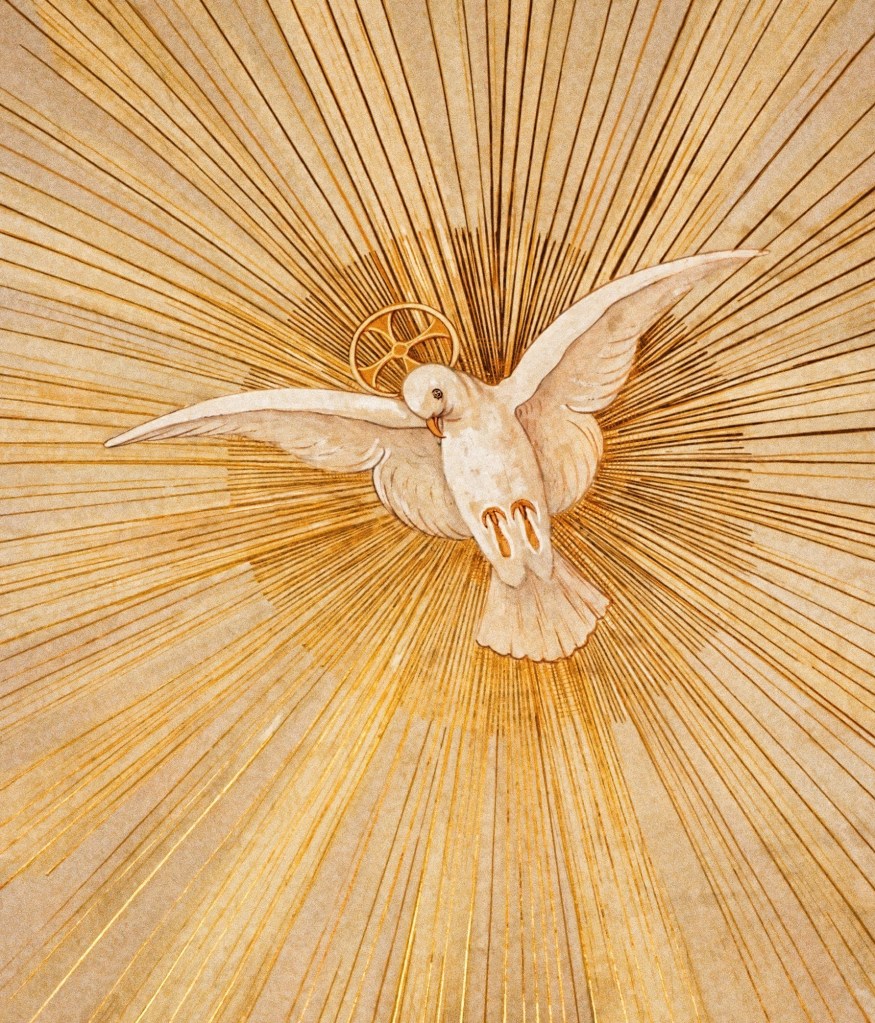
The Holy Spirit and His Gifts

Pentecost [C]

June 8, 2025

1 Cor 12:3-13

Today, the Church celebrates Pentecost, the day when the Holy Spirit descended upon Jesus’ apostles and the first disciples, marking the beginning of the Church. From that moment onward, the Holy Spirit, the third person of the Holy Trinity, has played a central role in guiding and sustaining the life of the Church, working through His grace and gifts. It is no surprise that we call Pentecost the feast of the Holy Spirit. Yet, as we reflect on these spiritual gifts, we must do so with wisdom and discernment.

We live in a time when many Christians—both Catholic and non-Catholic—are experiencing the gifts of the Holy Spirit in remarkable ways. This renewed outpouring has awakened us to the Spirit’s active presence in our lives. Some have received the gift of prophecy, speaking words that call others to repentance. Others have been given the gift of healing, becoming instruments through which the Spirit restores health to the sick. Still others pray in tongues, their praises flowing in languages they do not understand (for the list of gifts of the Holy Spirit, see 1 Cor 12:8-10). These are extraordinary encounters, even life-changing for many.

Yet while these gifts should fill us with gratitude and deepen our awareness of the Holy Spirit’s work, there is a danger in focusing too much on the experiences themselves. Some begin to fixate on the sensations rather than the Giver, treating spiritual gifts as a measure of their faith. Some of us may believe that speaking in tongues is proof of holiness, or that lacking miraculous healings means we are distant from God. Those who receive such gifts may grow prideful, while those who do not may feel like failures in their Christian life.

This mindset is not only misguided but spiritually harmful. And while it may seem like a modern problem, the same struggles existed in the early Church. Nearly two thousand years ago, the Church in Corinth were richly blessed with spiritual gifts, yet their community was plagued by division, disorder in worship, and pride. They compared gifts, competed over who had the “better” manifestations, and even used them as a measure of spiritual superiority.

Paul confronted this distortion head-on, reminding them that spiritual gifts are not for personal glory but for the building up of the Church (1 Cor 12). He taught them that the most important gift is not the gift of tongue, of healing or miracles, but the gift of love. He even wrote especially against those who seek the gift of tongue, “If I speak in the tongues of mortals and of angels, but do not have love, I am a noisy gong or a clanging cymbal (1 Cor 13:1).” He warned that pursuing spectacular gifts without love was meaningless.

Jesus Himself taught that the greatest gift the Father gives us is the Holy Spirit (Luk 11:13), and the greatest gift the Spirit gives is love.

Rome

Valentinus Bayuhadi Ruseno, OP

Guide Questions:

Do we ask the Father for the Holy Spirit? Do we pray to the Holy Spirit? What do we ask from the Holy Spirit? Do we ask the gifts of the Holy Spirit and what gifts?

Roh Kudus dan Karunia-karunia-Nya

Pentekosta [C]

8 Juni 2025

1 Kor 12:3-13

Hari ini, Gereja merayakan Pentekosta, hari Roh Kudus turun di atas para rasul dan murid-murid Yesus yang pertama, yang menandai dimulainya Gereja. Sejak saat itu, Roh Kudus, pribadi ketiga dari Tritunggal Mahakudus, telah memainkan peran sentral dalam membimbing dan menopang kehidupan Gereja. Roh Kudus bekerja melalui rahmat dan karunia-karunia-Nya. Tidaklah mengherankan jika kita menyebut Pentekosta sebagai hari raya Roh Kudus. Namun, ketika kita merenungkan karunia-karunia rohani ini, kita harus bijak karena ada bahaya yang mungkin kita hadapi. Bahaya apakah itu?

Kita hidup di masa ketika banyak umat Kristiani – baik Katolik maupun non-Katolik – mengalami karunia-karunia Roh Kudus dengan cara yang luar biasa. Pencurahan yang berlimpah ini telah menyadarkan kita akan kehadiran Roh Kudus yang aktif dalam hidup kita. Beberapa orang telah menerima karunia bernubuat, mengucapkan kata-kata yang memanggil orang lain untuk bertobat. Yang lainnya telah diberi karunia penyembuhan, menjadi alat Roh Kudus memulihkan kesehatan orang-orang sakit. Yang lainnya lagi berdoa dalam bahasa roh, pujian-pujian mereka mengalir dalam bahasa yang tidak mereka pahami (untuk daftar karunia-karunia Roh Kudus, lihat 1 Kor. 12:8-10). Ini adalah pengalaman-pengalaman yang luar biasa, bahkan mengubah hidup banyak orang.

Namun, meskipun karunia-karunia ini seharusnya memenuhi kita dengan rasa syukur dan memperdalam kesadaran kita akan karya Roh Kudus, ada bahaya jika kita terlalu berfokus pada karunia-karunia itu sendiri. Beberapa dari kita mulai terpaku pada sensasi yang kita rasakan daripada Sang Pemberi, bahkan memperlakukan karunia-karunia rohani sebagai ukuran iman. Beberapa dari kita mungkin percaya bahwa berbahasa roh adalah bukti kekudusan, atau bahwa tidak adanya mukjizat kesembuhan berarti kita jauh dari Allah. Kita yang menerima karunia-karunia dapat menjadi sombong, sementara kita yang tidak menerimanya mungkin merasa gagal dalam kehidupan Kristiani kita.

Pola pikir seperti ini tidak hanya tidak benar tetapi juga berbahaya. Dan meskipun ini mungkin tampak seperti masalah modern, pergumulan yang sama juga terjadi pada Gereja mula-mula. Hampir dua ribu tahun yang lalu, Gereja di Korintus diberkati dengan berbagai karunia rohani, namun komunitas mereka terganggu oleh perpecahan, kekacauan dalam ibadah, dan kesombongan. Mereka membandingkan karunia-karunia, bersaing untuk menentukan siapa yang memiliki karunia yang “lebih baik”, dan bahkan menggunakannya sebagai ukuran keunggulan rohani.

Paulus mengkritisi pola pikir yang salah ini, mengingatkan mereka bahwa karunia-karunia rohani bukanlah untuk kemuliaan pribadi, tetapi untuk membangun Gereja (1 Kor 12:7). Ia mengajarkan kepada mereka bahwa karunia yang paling penting bukanlah karunia bahasa roh, kesembuhan atau mukjizat, tetapi karunia kasih. Ia bahkan menulis secara khusus kepada mereka yang mencari karunia bahasa roh, “Jika aku berkata-kata dengan bahasa manusia dan bahasa malaikat, tetapi tidak mempunyai kasih, maka aku adalah gong yang nyaring dan simbal yang bergemerincing (1 Kor 13:1).” Dia memperingatkan bahwa mengejar karunia-karunia yang spektakuler tanpa cinta kasih tidak ada artinya.

Yesus sendiri mengajarkan bahwa karunia terbesar yang diberikan Bapa kepada kita adalah Roh Kudus (Luk. 11:13), dan karunia terbesar yang diberikan Roh Kudus adalah kasih. Karena dengan mengasihi, kita menemukan kepenuhan hidup.

Roma

Valentinus Bayuhadi Ruseno, OP

Pertanyaan Panduan:

Apakah kita meminta Roh Kudus kepada Bapa? Apakah kita berdoa kepada Roh Kudus? Apa yang kita minta dari Roh Kudus? Apakah kita meminta karunia-karunia Roh Kudus dan untuk tujuan apa? Apakah kita memohon karunia untuk mengasihi?

When is the Birthday of the Church?

Pentecost [B]

May 19, 2024

John 20:19-23

The solemnity of the Pentecost is usually called the birthday of the Church. But is this really true, or is it just a popular myth?

If we try to go into the official teaching of the Church, we will discover a passage from the Catechism of the Catholic Church, especially paragraph 766. Here, I quote, “The Church is born primarily of Christ’s total self-giving for our salvation, anticipated in the institution of the Eucharist and fulfilled on the cross. “The origin and growth of the Church are symbolized by the blood and water which flowed from the open side of the crucified Jesus.” “For it was from the side of Christ as he slept the sleep of death upon the cross that there came forth the ‘wondrous sacrament of the whole Church.’ ” As Eve was formed from the sleeping Adam’s side, so the Church was born from the pierced heart of Christ hanging dead on the cross.”

In short, the Church’s birthday is on Good Friday. The Church recognizes herself as the new Eve, born from the heart of Christ to be His bride. Consequently, calling the feast of Pentecost the birthday of the Church seems to be false. Yet, the truth is more profound than it seems.

Suppose we carefully observe the liturgy of the Pentecost, especially in the preface of Pentecost (a prayer said by the priest just before the Eucharist prayer). We will discover an interesting piece of information. I quote, “[We] give you thanks, Lord, holy Father… you bestowed the Holy Spirit today on those you made your adopted children uniting them to Your Only Begotten Son. This same Spirit, as the Church came to birth, opened to all people the knowledge of God…” In short, the liturgy of Pentecost is also celebrating the Church’s birthday.

So, how do we make sense of these seemingly conflicting pieces of information? Why does the official teaching of the Church seem to contradict the liturgy? To understand this, we need to see the birth of the Church not as one single instantaneous happening but rather as a process of giving birth. As the baby’s head is the first to come out, and then the rest of the body, we can see the ‘head of the Church’ came to being first under the cross of Christ and then the rest of ‘the body’ in the Pentecost. John, the beloved apostle, and Mary, the mother of Jesus, represented the head. While in the Pentecost, under the influence of the Holy Spirit, Peter, and other disciples began to proclaim God’s great things to all nations.

Another way to see this truth is that the Church was indeed born twice, first from Christ and second from the Holy Spirit. Following St. Paul, the Church is the body of the Church (Eph 1:22; CCC 792), and the Church also is the temple of the Holy Spirit (1 Cor 6:16, CCC 797). As the body of Christ, we are an organic unity between us and Christ, the source of our salvation. As the temple of the Holy Spirit, we are united to the Holy Spirit, the source of our holiness and our reason to sanctify others.

Happy birthday to the Catholic Church!

Rome

Valentinus Bayuhadi Ruseno, OP

Kapan Hari Ulang Tahun Gereja?

Pentekosta [B]

19 Mei 2024

Yohanes 20:19-23

Hari raya Pentekosta biasanya disebut sebagai hari ulang tahun Gereja. Namun, apakah hal ini benar adanya, atau hanya mitos yang cukup populer?

Jika kita mencoba masuk ke dalam ajaran resmi Gereja, kita akan menemukan ajaran penting di Katekismus Gereja Katolik, khususnya paragraf 766. Di sini, saya mengutip, “Tetapi Gereja lahir terutama karena penyerahan diri Kristus secara menyeluruh untuk keselamatan kita, yang didahului dalam penciptaan Ekaristi dan direalisasikan pada kayu salib. “Permulaan dan pertumbuhan itulah yang ditandakan dengan darah dan air, yang mengalir dari lambung Yesus yang terluka di kayu salib” (LG 3). “Sebab dari lambung Kristus yang berada di salib, muncullah Sakramen seluruh Gereja yang mengagumkan” (SC 5). Seperti Hawa dibentuk dari rusuk Adam yang sedang tidur, demikian Gereja dilahirkan dari hati tertembus Kristus yang mati di salib (Bdk. St. Ambrosius).

Singkatnya, hari ulang tahun Gereja adalah pada hari Jumat Agung. Gereja mengakui dirinya sebagai Hawa yang baru, yang lahir dari hati Kristus untuk menjadi mempelai-Nya. Oleh karena itu, menyebut hari raya Pentekosta sebagai hari ulang tahun Gereja tampaknya salah. Namun, kebenarannya lebih dalam daripada yang terlihat.

Jika kita mengamati dengan saksama liturgi Pentekosta, terutama dalam prefasi Pentekosta (doa yang diucapkan oleh imam sebelum Doa Syukur Agung), kita akan menemukan sebuah informasi yang menarik. Saya mengutip, “…kami selalu dan di mana pun bersyukur kepada-Mu, Tuhan, Bapa Yang Kudus… Engkau menganugerahkan Roh Kudus kepada mereka yang Engkau jadikan anak-anak angkat-Mu melalui persekutuan dengan Putra Tunggal-Mu. Roh yang sama, pada awal kelahiran Gereja, telah menganugerahkan pengetahuan akan Allah kepada semua bangsa…”  Singkatnya, liturgi Pentekosta juga merupakan perayaan ulang tahun Gereja.

Jadi, bagaimana kita memahami informasi yang tampaknya saling bertentangan ini? Mengapa ajaran resmi Gereja tampaknya bertentangan dengan liturgi Gereja? Untuk memahami hal ini, kita perlu melihat kelahiran Gereja bukan sebagai satu kejadian yang terjadi seketika, melainkan sebagai sebuah proses melahirkan. Sebagaimana kepala bayi adalah yang pertama kali keluar, dan kemudian seluruh tubuhnya, kita dapat melihat ‘kepala Gereja’ muncul pertama kali di bawah salib Kristus dan kemudian seluruh ‘tubuh’ pada hari Pentekosta. Yohanes, rasul yang dikasihi, dan Maria, ibu Yesus, mewakili kepala. Pada hari Pentekosta, di bawah kuasa Roh Kudus, Petrus dan murid-murid lainnya mulai memberitakan perkara-perkara besar Allah kepada segala bangsa, dan membaptis mereka menjadi anggota Gereja.

Cara lain untuk melihat kebenaran ini adalah bahwa Gereja memang dilahirkan dua kali, pertama dari Kristus dan kedua dari Roh Kudus. Mengikuti Santo Paulus, Gereja adalah tubuh dari Kristus (Ef. 1:22; KGK 792), dan Gereja juga adalah bait Roh Kudus (1 Kor. 6:16, KGK 797). Sebagai tubuh Kristus, kita adalah satu kesatuan organik antara kita dan Kristus, sumber keselamatan kita. Sebagai bait Roh Kudus, kita dipersatukan dengan Roh Kudus, sumber kekudusan kita dan alasan kita untuk menguduskan sesama.

Selamat ulang tahun untuk Gereja Katolik!

Roma

Valentinus Bayuhadi Ruseno, OP

The Holy Spirit and the Gift of Tongue

Pentecost [A]
May 28, 2023
John 20:19-23 [Acts 2:1-11]

The day of Pentecost is also called the day of the outpouring of the Holy Spirit upon the Church that Christ has just established. As the Holy Spirit came down to each disciple in the form of tongue like fire, the disciples began to speak different languages as to proclaim God’s great deeds. Many people call this miraculous ability to speak different languages in the day of Pentecost as ‘the gift of tongue’. But, did the disciples truly receive the gift of tongue? What is the gift of tongue all about? And, what did exactly happen to the disciples?

Firstly, why does it call as the gift of tongue? Luke, the author of the Acts of the Apostles, described what happened to the disciples. after they had received the Holy Spirit, they began to speak other languages (Greek: ἕτεραι γλῶσσαι – eterai glossai). The word ‘glossa’ in Greek can mean both tongue (the instrument of speech) and language itself. Thus, if the disciples received the gift of tongue, it means they receive the gift of language.

Secondly, what language did the disciples speak? Contrary to some popular beliefs, the disciples did not speak some unintelligible languages or language of the ‘spirit’ or of the angels. They uttered normal human languages. But, what language did the disciples actually say? We can say that the disciples were speaking new languages. Some disciples may speak Greek, others may say in Latin, other still may speak other Mediterranean languages of that time. Yet, there is another theory. It says that the disciples remained speaking in their native language, most probably Galilean Aramaic, but those who were present heard them in their own native languages. This is properly speaking, not really gift of tongue, but the gift of hearing or the gift of translation. The Holy Spirit ‘translated’ the words of the disciples in the hearers’ ears.

The gift of the Holy Spirit in the day of Pentecost is indeed remarkable, but what is it for us? In reality, most of us do not have this kind of extraordinary gift of tongue. I have been in Rome for almost one year, and spent all the time to study Biblical languages, Hebrew and Greek. Yet, after almost a year, I am still struggling with these languages. I wish the Holy Spirit come down during the day of Pentecost and suddenly I could speak Hebrew and Greek!

While it is true that most of us do not have the gift of tongue, but it does not mean we do not possess the Holy Spirit of Pentecost. In fact, if we only focus on the gift of tongue or the gifts of the Spirit, we may miss the entire point. The Pentecost is about the Spirit that gives new birth to each disciple that they become a new person in Christ. As new creations, they now have the courage to preach ‘the mighty deeds of God’.

Pentecost means we allow the Holy Spirit enter into our lives and inspire us to share the Gospel of Jesus Christ in our own particular ways. When we teach our children to pray and bring them to the Church, it is a Pentecost. When some of us volunteer as catechists and even involve in teaching the catechumens, it is a Pentecost. When we do our best to resist the ways of the world, and follow Jesus, it is a Pentecost.

Blessed Pentecost!

Valentinus Bayuhadi Ruseno, OP

The Holy Spirit and Us

Pentecost Sunday [B]

John 20:19-23

May 23, 2021

The Pentecost is the feast of the Holy Spirit. We are celebrating the descent of the Holy Spirit upon the Church, and this event commences the age of the Holy Spirit. With the help of the Holy Spirit, the disciples slowly grew and gradually expanded into the biggest community in the world. However, among the three divine persons, the Holy Spirit is often left behind and sometimes misunderstood. Surely, this reflection does not and cannot cover the entire subject of pneumatology, but it offers us a little piece of information that hopefully will lead us to gratitude.

Firstly, Faith in Jesus Christ is fundamentally a gift of the Holy Spirit. St. Paul reminds us that without the help of the Holy Spirit, we will not believe in Jesus as our Lord and God [see 1 Cor 12:]. To believe in a creator and almighty God may not be difficult because our mind can discern His existence. However, to believe in the God who took the human nature in the womb of a humble woman, and eventually suffered death on the cross is just beyond human ordinary reasoning. This Jesus did not stop on the cross, but He rose from the death, and decided to be present sacramentally and really in the Eucharist. The God of the universe become a small white host! Without this supernatural gift of the Holy Spirit, it is naturally impossible to have this extraordinary faith. Yet, for those who have the gift of faith, believe in Jesus seems as natural as breathing. 

Secondly, the Holy Spirit animates and strengthens the Church here on earth. Often, we mistakenly thought that the Holy Spirit only functioned when someone begins speaking in tongue. Yet, the Holy Spirit’s roles are more much massive and fundamental that. The Holy Spirit strengthens us in the time of trials. That’s why we ask for the gift of fortitude. The Holy Spirit enlightens us when we are having hard time in understanding our faith and the meaning of life. That’s why we ask for the gift of understanding. These are just two of seven gifts of the Holy Spirit! The Holy Spirit inspired the writers of the Sacred Scriptures that they were empowered to produce the Word of God. And, only the Holy Spirit can make the sacraments the means of God’s grace.

Thirdly, the Holy Spirit is the source of our holiness. The Holy Spirit does not only make the beginning of our faith possible; He does not only sustain and nourish our growth in hope, but He also gives spiritual fruits. For us who are persevering and relying on the Holy Spirit, we enjoy the fruit of the Holy Spirit: love, joy, peace, patience, kindness, generosity, faithfulness, gentleness, self-control [see Gal 5:22]. In fact, the eternal bliss in heaven is a gift of the Holy Spirit. We recall that the only sin that will not be forgiven is the blasphemy against the Holy Spirit [see Mat 12:30]. The Church has taught us that this sin is the final impenitence [CCC 1864]. If we obstinately reject the works of the Holy Spirit within us, we throw insult to the Holy Spirit, and if until our dying breath, we close our hearts to Him, then salvation is lost.

The Holy Spirit is in the beginning of our journey of faith, He is present along the way and He grants the final gift of salvation. Praise be to the Holy Spirit!

Valentinus Bayuhadi Ruseno, OP

Roh Kudus dan Kita

Minggu Pentekosta [B]

Yohanes 20: 19-23

23 Mei 2021

Pentekosta adalah hari raya Roh Kudus. Kita merayakan turunnya Roh Kudus ke atas Gereja, dan momen ini memulai era Roh Kudus. Dengan bantuan Roh Kudus, para murid perlahan-lahan tumbuh dan secara bertahap berkembang menjadi komunitas terbesar di dunia. Namun, sayangnya, di antara ketiga pribadi ilahi, Roh Kudus sering kali sering dilupakan dan terkadang disalahpahami. Tentunya, refleksi ini tidak akan dan tidak dapat mencakup seluruh pneumatologi [subjek tentang Roh Kudus], tetapi saya mencoba menawarkan secuil refleksi yang diharapkan akan membawa kita pada rasa syukur kepada Roh Kudus.

Pertama, iman kepada Yesus Kristus pada dasarnya adalah karunia Roh Kudus. Santo Paulus mengingatkan kita bahwa tanpa bantuan Roh Kudus, kita tidak akan bisa percaya kepada Yesus sebagai Tuhan dan Allah kita [lihat 1 Kor 12:3]. Untuk percaya akan adanya Allah sebagai pencipta dan mahakuasa mungkin tidak sulit karena pikiran dan logika kita dapat membuktikan  keberadaan Tuhan. Namun, percaya pada Tuhan yang mengambil kodrat manusia di dalam rahim seorang wanita yang sederhana, dan akhirnya menderita di kayu salib adalah di luar nalar manusia biasa. Bahkan Yesus ini tidak berhenti di kayu salib, tetapi Dia bangkit dari kematian, dan memutuskan untuk hadir secara sakramental dan nyata dalam Ekaristi. Allah alam semesta menjadi hosti putih kecil! Tanpa karunia supernatural Roh Kudus ini, secara alami mustahil untuk memiliki iman yang luar biasa ini. Namun, bagi mereka yang memiliki karunia iman, percaya kepada Yesus tampak sealami bernafas.

Kedua, Roh Kudus menghidupkan dan memperkuat Gereja di bumi ini. Seringkali, kita salah mengira bahwa Roh Kudus hanya berfungsi ketika seseorang mulai berbicara dalam bahasa roh. Namun, peran Roh Kudus jauh lebih masif dan mendasar dari itu. Roh Kudus menguatkan kita pada saat masa-masa sulit. Itu sebabnya kita meminta karunia keperkasaan. Roh Kudus menerangi kita ketika kita mengalami kesulitan dalam memahami iman kita dan makna hidup. Itu sebabnya kita meminta karunia pengertian. Ini hanyalah dua dari tujuh karunia Roh Kudus! Jangan lupa juga bahwa Roh Kudus mengilhami para penulis Kitab Suci sehingga tulisan yang mereka hasilkan adalah Firman Tuhan sendiri. Dan, hanya Roh Kudus yang dapat menjadikan sakramen sebagai sarana rahmat Tuhan.

Ketiga, Roh Kudus adalah sumber kekudusan kita. Roh Kudus tidak hanya memungkinkan permulaan dari iman kita, Dia tidak hanya menopang dan memelihara pertumbuhan kita dalam pengharapan, tetapi Dia juga memberi buah-buah rohani. Bagi kita yang bertekun dan mengandalkan Roh Kudus, kita akan menikmati buah Roh Kudus: cinta, sukacita, damai, kesabaran, kebaikan, kemurahan hati, kesetiaan, kelembutan, pengendalian diri [lihat Gal 5:22]. Bahkan, kebahagiaan abadi di surga adalah karunia Roh Kudus. Kita ingat bahwa satu-satunya dosa yang tidak akan diampuni adalah penghujatan terhadap Roh Kudus [lihat Mat 12:30]. Gereja telah mengajar kita bahwa dosa ini adalah kekerasan hati kita untuk bertobat sampai akhir [KGK 1864]. Jika kita dengan tegas menolak pekerjaan Roh Kudus di dalam diri kita, kita menghina Roh Kudus, dan jika sampai nafas terakhir kita, kita menutup hati kita kepada-Nya, maka keselamatan kitapun hilang.

Roh Kudus ada di awal perjalanan iman kita, Dia hadir di sepanjang jalan dan Dia memberikan karunia terakhir keselamatan. Segala hormat dan pujian bagi Roh Kudus!

Valentinus Bayuhadi Ruseno, OP

The Birthday of the Church

Pentecost Sunday [A]

May 31, 2020

John 20:19-23

pentecost coptic“Happy Birthday!” today is the feast of Pentecost, and today is the birth of the Church. We should rejoice because our Church is getting older by age, but getting ever stronger by vitality and creativity in preaching the Good News. Yet, the question is why we celebrate the birthday of the Church on the Pentecost Sunday?

To answer this, we need to understand the biblical meaning of the celebration of Pentecost and what took place to the disciples on the day the Holy Spirit descended upon them. The word Pentecost means the fiftieth, and the feast of Pentecost takes place on the fiftieth day after Sunday Easter. However, the Christian feast itself is originally a Jewish religious festival: the feast of Shavuot or the Feast of Weeks. The feast took place seven weeks after the grand celebration of the Passover. Together with Passover and the Feast of Tabernacle (Booths), Pentecost are the major pilgrimage festivals that require any male Jews to make their way to Jerusalem. Initially, the feast is agricultural in nature. The people of Israel gave thanks for the successful harvests and offered the fruits of their harvest to the Lord. Yet, it also gained a religious meaning. In the feast of Shavuot, the Israelites commemorate the giving of the Law and the making of the covenant with the Lord God in Mount Sinai.

This explains why many people from different nations gathered in around the place of the disciples: they were pilgrims of Pentecost. This answers a more fundamental question about the identity of the Holy Spirit: Why did the Holy Spirit have to present Himself as fire, and no other image like a dove? If we go back to the Sinaitic event itself, we are going to find something remarkable. When God made His covenant and handed down His Law, He appeared Himself to entire Israel as fire [see Exo 19:18]. The Holy Spirit appeared in fire simply because He was the same God who manifested Himself in Sinai. The Pentecost Sunday reveals the fundamental truth about the Holy Spirit that the promised Paraclete is divine.

In Sinai, the Israelites received the Law and entered into a covenant with the Lord. God embraced them and made them “a priestly kingdom and a holy nation [see Exo 19:6]. Israelites became a nation that belongs to God. In the new Pentecost, the Holy Spirit came upon the disciples and instilled in them the New Law of Love. He fashioned them to be new People of God [see Pet 2:9]. The new community of God’s family has been born!

Yet, these new people are even greater. The Holy Spirit empowered the disciples to preach the Good News to people from different nations and languages. The Pentecost reversed the negative effect of the tower of Babel [see Gen 11:1-9]. When people were so proud of themselves and tried to become like God with their power, different languages turned out to be a curse that divides them. Yet, with the Holy Spirit that transformed the hearts and instilled humility, languages become a blessing that unites the different people.

We thank the Holy Spirit that gave birth to the Church. We give thanks to the Holy Spirit that has called us to part of the new people of God.

Valentinus Bayuhadi Ruseno, OP

Selamat Ulang Tahun, Gereja!

Minggu Pantekosta [A]

31 Mei 2020

Yohanes 20: 19-23

pentecost 3“Selamat ulang tahun!” Hari ini adalah hari raya Pentekosta, dan hari ini adalah kelahiran Gereja. Kita harus bersukacita karena Gereja kita bertambah dalam usia, tetapi semakin kuat, bijaksana dan kreatif dalam memberitakan Kabar Baik. Namun, pertanyaannya adalah mengapa kita merayakan ulang tahun Gereja pada hari Minggu Pentekosta?

Untuk menjawab ini, kita perlu memahami makna alkitabiah dari perayaan Pentekosta dan apa yang terjadi pada para murid pada saat Roh Kudus turun ke atas mereka. Kata Pentekosta berarti “yang kelima puluh”, dan hari raya Pentekosta terjadi pada hari kelima puluh setelah Minggu Paskah. Namun, pesta Gereja itu sendiri pada awalnya adalah sebuah festival keagamaan Yahudi: Hari Raya Shavuot atau Hari Raya Tujuh Minggu. Perayaan itu berlangsung tujuh minggu setelah perayaan akbar Paskah. Bersama-sama dengan Paskah dan Hari Raya Pondok Daun, Pentekosta adalah perayaan perziarahan utama yang mengharuskan setiap pria Yahudi untuk melakukan perjalanan ke Yerusalem. Awalnya, ini adalah perayaan agrikultural. Orang-orang Israel bersyukur atas panen yang berhasil dan mempersembahkan hasil panen mereka kepada Tuhan. Namun, itu juga memiliki makna religius. Dalam perayaan Shavuot, orang Israel memperingati pemberian Hukum dan pembuatan perjanjian dengan Tuhan Allah di Gunung Sinai.

Ini menjelaskan mengapa banyak orang dari berbagai bangsa berkumpul di sekitar tempat para murid: mereka adalah peziarah Pentekosta. Perayaan ini juga menjawab pertanyaan yang lebih mendasar tentang identitas Roh Kudus: Mengapa Roh Kudus harus menampakkan diri-Nya sebagai api, dan tidak dengan citra yang lain seperti merpati? Jika kita kembali ke peristiwa di gunung Sinai itu sendiri, kita akan menemukan sesuatu yang luar biasa. Ketika Allah membuat perjanjian-Nya dan menyerahkan Hukum-Nya, Dia menampakkan diri-Nya kepada seluruh Israel sebagai api [lihat Kel 19:18]. Roh Kudus hadir dalam api hanya karena Dia adalah Allah yang sama yang memanifestasikan diri-Nya di Sinai. Hari Minggu Pentekosta mengungkapkan kebenaran mendasar tentang Roh Kudus bahwa Parakletos yang dijanjikan itu adalah Tuhan.

Di Sinai, orang Israel menerima Hukum dan masuk ke dalam perjanjian dengan Tuhan. Allah menjadikan mereka “kerajaan imamat dan bangsa yang kudus [lihat Kel 19: 6]. Bangsa Israel menjadi bangsa yang kepemilikan Tuhan. Dalam Pentekosta yang baru, Roh Kudus turun ke atas para murid dan menanamkan dalam diri mereka Hukum Cinta Kasih yang Baru. Dia membentuk mereka untuk menjadi Umat Allah yang baru [lihat Pet 2: 9]. Komunitas baru keluarga Allah telah lahir hari ini!

Namun, umat Allah baru ini bahkan lebih besar. Roh Kudus memberi kuasa kepada para murid untuk memberitakan Kabar Baik kepada orang-orang dari berbagai bangsa dan bahasa. Pentekosta membalikkan efek negatif dari menara Babel [lihat Kejadian 11: 1-9]. Ketika orang-orang begitu bangga pada diri mereka sendiri dan berusaha menjadi seperti Tuhan dengan kekuatan mereka, berbagai bahasa berubah menjadi kutukan yang memecah belah mereka. Namun, dengan Roh Kudus yang mengubah hati dan menanamkan kerendahan hati, bahasa menjadi berkat yang menyatukan orang-orang yang berbeda.

Kita bersyukur kepada Roh Kudus yang telah melahirkan Gereja. Kita bersyukur kepada Roh Kudus yang telah memanggil kita untuk menjadi bagian dari umat Allah yang baru.

Valentinus Bayuhadi Ruseno, OP