Time and Prayer

29th Sunday in Ordinary Time [C]

October 19, 2025

Luke 18:1-8

In the parable of the persistent widow and the unjust judge, Jesus gives us a clear command: “pray always without becoming weary.” He invites us to persevere, especially when God asks us to wait for an answer. But why does a loving Father, who knows our needs, allow this waiting?

This period of waiting is not a sign of God’s absence, but His profound love. Here are three reasons God may allow us to wait.

1. Time Heals and Purifies Our Prayers

Often, our initial prayers are born from intense emotion—grief, distress, or even anger. In our urgency, we can confuse our genuine needs with our selfish wants. We do not always know what is truly good for us.

God uses the gift of time to help us settle our hearts and purify our intentions. He reforms our prayers, transforming them from demands into dialogues, from pleas for personal gain into words of trusting surrender, from “Be it done according to my will.” to “Be it done to me according to Your will.”

2. Time Builds Essential Virtues

We live in a world of instant results, and we can carry this impatience into our relationship with God. When we don’t get what we want immediately, we can become restless and frustrated.

Waiting teaches us the true meaning of patience—which is not just the ability to wait, but the ability to keep a good attitude while waiting. As St. Francis de Sales reminds us, “Every one of us needs half an hour of prayer each day, except when we are busy… then we need an hour.” The more we patiently pray, the more recognize that many things are beyond our control. The more we patiently ask, the more we realize how powerless we are. Yet, though we are powerless, we are not helpless or hopeless since we are now relying ourselves on someone beyond us, God the creator of heavens and earth.

3. Time Deepens Our Intimacy with God

It is easy to treat God like a heavenly vending machine, focused solely on the gifts we seek. Waiting refocuses our attention from the gifts to the Giver.

The more time we spend in prayerful waiting, the more we seek to know God for who He is—not just as a wish-fulfiller, but as a loving Father. We begin to focus less on our list of needs and more on our relationship with Him. This is the heart of prayer, which St. Teresa of Ávila defined as “nothing else than being on terms of friendship with God.”

A Story of Purified Prayer:
A senior nun once shared how, as a young novice, she wanted to leave the convent to get a job and support her mother financially. Her prayers were consumed with this plan. Her spiritual director gently asked her: “Would leaving truly be the best help? Is God limited to only one way of providing?”

She began to change her prayers. She stopped telling God what to do and started entrusting her mother entirely to His care. In time, relatives and friends came forward to support her mother, and she found the peace to persevere in her vocation. This simple story shows how God uses time to purify our prayers and draw us closer to Himself.

Valentinus Bayuhadi Ruseno, OP

Guide Questions for Personal Reflection:

  • Do I pray? Is there a consistent, daily space for God in my life?
  • How do I pray? Is my prayer a list of requests, or is it a conversation that includes listening?
  • How long do I pray? Do I give up when an answer isn’t immediate?
  • What do I ask from God? Are my prayers focused on my will, or on seeking to understand His?
  • How do I react when I don’t get what I prayed for? Does it lead to doubt, or to a deeper trust in His wisdom?
  • Do I ask for grace? Do I pray not just for specific outcomes, but for the strength, peace, and trust to endure the wait?

Pengakuan Bartimeus

Hari Minggu ke-30 dalam Waktu Biasa [B]
27 Oktober 2024
Markus 10:46-52

Bartimeus adalah seorang yang buta, dan hidupnya penuh dengan penderitaan. Dunia kuno adalah tempat yang kejam dan bahkan tanpa belas kasihan bagi para penyandang disabilitas. Dalam beberapa budaya kuno, bayi yang lahir dengan ketidaksempurnaan fisik akan ditinggalkan di hutan atau dibuang ke jurang. Mereka dikutuk dan akan membawa kutukan bagi orang-orang di sekitarnya. Jika penyandang disabilitas selamat dari masa kanak-kanak, mereka akan terus terpinggirkan, dirundung dan diejek. Bartimeus mengemis, dan itu adalah satu-satunya pilihan yang tersisa untuk bertahan hidup. Gerbang kota Yerikho adalah tempat yang ideal karena banyak orang yang akan melintasi jalan ini.

Namun, meskipun buta dan miskin, Bartimeus adalah orang pertama yang menyebut Yesus sebagai Putra Daud. Gelar “Putra Daud” adalah unik karena beberapa nubuat penting dalam Perjanjian Lama berbicara tentang putra Daud. Salah satu yang terkenal adalah dari 2 Samuel 7, yang mengatakan bahwa Allah akan menegakkan kerajaan putra Daud untuk selama-lamanya (ay.13). Nubuat serupa juga dapat ditemukan dalam Yesaya 9:6-7 dan Yeremia 23:5-6.

Jauh di dalam hatinya, Bartimeus tahu bahwa Yesus adalah penggenapan dari nubuat-nubuat ini. Bartimeus tahu Dia adalah Raja Israel untuk selama-lamanya. Ironisnya, tidak ada murid lain yang memanggil Yesus dengan gelar penting ini. Dibutuhkan seorang yang buta untuk melihat kebenaran. Kemudian, Yesus membenarkan pengakuan Bartimeus dan memberinya mukjizat penglihatan. Kisah ini diakhiri dengan Bartimeus yang mengikuti Yesus. Mungkin inilah alasan mengapa Markus dapat menulis kisah Bartimeus. Ia tetap menjadi pengikut Yesus bahkan setelah kematian dan kebangkitan Yesus, dan namanya dikenal oleh Gereja awal.

Bartimeus adalah salah satu dari sedikit tokoh yang mengakui identitas Yesus yang sebenarnya dalam Injil Markus. Ironisnya, tokoh-tokoh ini bukanlah pengikut Yesus. Roh-roh jahat menyebut Yesus sebagai ‘yang kudus dari Allah’ (Mrk. 1:24). Perwira Romawi, musuh orang Yahudi, mengakui Yesus sebagai Anak Allah (15:39). Perempuan dari Siria, tentunya bukan putri Israel, memanggil Yesus dengan sebutan Tuhan (7:28). Satu-satunya murid yang mengakui identitas Yesus adalah Simon Petrus ketika ia mengakui bahwa Yesus adalah Mesias (8:29). Namun, Petrus juga gagal memahami apa yang ia akui ketika Yesus menegurnya karena ia memiliki pemahaman yang salah tentang identitas sebagai Mesias.

Melalui Bartimeus dan tokoh-tokoh lainnya, Markus memberi kita sebuah pelajaran penting. Ya, kita adalah pengikut Kristus. Ya, kita dibaptis. Ya, kita pergi ke Gereja setiap hari Minggu. Namun, itu tidak berarti kita melihat siapa Yesus. Meskipun Bartimeus buta secara fisik, ia memiliki iman yang memampukannya untuk melihat siapa Yesus sebenarnya, dan hal ini menyelamatkannya. Kita mungkin memiliki mata fisik yang sehat, tetapi apakah kita memiliki iman yang benar untuk melihat Yesus dan mengikuti-Nya?

Roma
Valentinus Bayuhadi Ruseno, OP

Pertanyaan refleksi:
Kita mungkin mengakui bahwa Yesus adalah Allah, tetapi apakah kita mengasihi Dia dengan segenap hati, jiwa, dan kekuatan kita, atau malah kita menyembah ilah-ilah lain seperti uang, kesenangan, dan ketenaran? Kita mungkin mengatakan bahwa Yesus adalah Tuhan dan Raja, tetapi apakah kita hidup sesuai dengan perkataan dan perintah Raja kita, atau malah apakah kita hanya melakukan apa pun yang ingin kita lakukan? Kita mengakui Yesus sebagai Juruselamat kita, tetapi apakah kita hidup sebagai orang yang telah diselamatkan dan ditebus, atau malah apakah kita masih diperbudak oleh dosa-dosa?

Keagungan yang Sejati

Minggu ke-25 dalam Masa Biasa [B]

22 September 2024

Markus 9:30-37

Pertanyaan tentang menjadi besar atau agung adalah pertanyaan yang paling sering muncul di benak para murid dan juga di benak kita. Apakah yang dimaksud dengan menjadi besar? Apakah kebesaran yang sesungguhnya? Apa yang membuat kita menjadi hebat? Apakah Yesus mengajarkan kita untuk mengejar keagungan, atau apakah Dia menghindarinya?

Para murid berdebat di antara mereka sendiri, “Siapakah yang terbesar? Dan pertanyaan ini tidak muncul begitu saja, melainkan karena Yesus menyatakan jati diri-Nya. Dalam bab sebelumnya, Yesus menyatakan kepada murid-murid-Nya bahwa Dia adalah Kristus atau Mesias yang dinanti-nantikan oleh bangsa Israel. Namun, Yesus menjelaskan lebih lanjut bahwa Mesias ini harus mengalami penolakan, penderitaan, dan kematian. Sayangnya, para murid tidak memahami kebenaran ini dan tetap bertahan dalam keyakinan lama mereka. Mereka mengira Yesus adalah Mesias seperti Raja Daud, yang akan memimpin Israel menuju kemenangan melawan musuh-musuh mereka. Mesias tidak hanya harus membebaskan Israel dari penindasan Romawi, tetapi juga membawa kemakmuran ekonomi, kebebasan beragama, dan pembaharuan. Berpikir bahwa seorang Mesias akan menderita dan kalah adalah hal yang tidak dapat dipahami dan tidak dapat diterima.

Namun, Yesus mengambil kesempatan ini untuk mengajarkan tentang arti keagungan yang sebenarnya. Yesus tidak menentang gagasan kebesaran atau memiliki otoritas atau kekuasaan. Sebaliknya, Yesus menjelaskan bahwa untuk mencapai kebesaran yang sejati, seseorang harus menggunakan kuasa dan otoritasnya untuk melayani dan menjadi yang terakhir. Namun, apa yang dimaksud dengan melayani? Apakah cukup dengan bergabung dan melibatkan diri kita dalam program-program amal atau kerasulan? Apakah melayani sekedar berarti memberikan sumbangan kepada orang miskin atau Gereja?

Setelah Yesus mengajar para murid tentang keagungan yang sejati, Dia melakukan sesuatu yang luar biasa. Dia menempatkan seorang anak kecil di tengah-tengah para murid-Nya dan memberkati anak itu. Dia berkata, “Barangsiapa menyambut seorang anak kecil seperti ini dalam nama-Ku, ia menyambut Aku, dan barangsiapa menyambut Aku, ia tidak menyambut Aku, melainkan Dia yang mengutus Aku.” Dari sini, kita dapat menyimpulkan bahwa untuk menjadi besar adalah dengan menerima seorang anak kecil di dalam nama Yesus. Lalu, di manakah kita menerima seorang anak kecil di dalam nama Yesus? Jawabannya adalah di dalam keluarga.

Menjadi orang tua, ayah, dan ibu adalah panggilan keagungan sejati. Menerima anak-anak kecil yang lemah dalam sukacita, membesarkan mereka dalam iman, dan akhirnya mempersembahkan mereka kepada Tuhan, semua ini membutuhkan pengorbanan seumur hidup. Hal ini secara praktis mengubah kita menjadi hamba yang rendah hati. Kebesaran ini tidak membuat kita menjadi terkenal, kaya secara materi, berkuasa secara politik, atau cantik secara fisik. Bahkan, kita menjadi sebaliknya! Tetapi hal ini memungkinkan kita untuk menerima Yesus dan Bapa dalam hidup kita. Yesus tampaknya berbicara tentang masa depan di mana anak-anak kecil ditolak dan bahkan dibunuh.

Akhirnya, keagungan sejati tidak ada di bumi ini, melainkan di surga. Tidak heran jika dalam tradisi Katolik, orang-orang kudus terbesar di surga adalah Maria, ibu Yesus, dan Yusuf, ayah angkat Yesus. Baik Maria maupun Yusuf menerima bayi kecil Yesus dalam hidup mereka dan membesarkan-Nya dengan penuh kasih dan sukacita. Mereka menjadi contoh utama kebesaran sejati.

Manila

Valentinus Bayuhadi Ruseno, OP

Pertanyaan-pertanyaan untuk refleksi:

Bagaimana kita memahami keagungan sejati? Apakah kita berusaha untuk menjadi hebat? Apakah kita melayani orang lain? Bagaimana caranya? Apakah kita juga berkorban untuk orang lain? Apa saja yang kita korbankan? Apakah kita menyadari menjadi orang tua sebagai panggilan hebat? Bagi para orang tua, bagaimana kita menerima dan mengasihi anak-anak kita? Pengorbanan apa yang kita lakukan untuk anak-anak kita? Apakah kita sadar bahwa kita harus membawa anak-anak kita kepada Allah? Bagi mereka yang belum menikah, bagaimana kita menerima dan mengasihi anak-anak kecil dalam hidup kita?

Kuasa untuk Mengasihi 

Hari Minggu ke-15 dalam Masa Biasa

14 Juli 2024 

Markus 6:7-13

Dalam Injil hari ini, Yesus mempercayakan kuasa kepada para murid-Nya. Kuasa ini terdiri dari beberapa kuasa seperti mengusir setan, menyembuhkan orang sakit, dan mewartakan pertobatan. Pertanyaan yang perlu direnungkan adalah mengapa Yesus memberikan otoritas seperti ini kepada murid-murid-Nya? Mengapa Yesus tidak memberikan kuasa yang lebih berguna seperti kuasa untuk mengendalikan orang, atau kuasa untuk menghasilkan uang?

Pertama, dari kisah ini, kita melihat bahwa Yesus mengasihi murid-murid-Nya dan sebagai bukti kasih-Nya, Ia berani mempercayakan otoritas-Nya kepada murid-murid yang lemah dan terkadang tidak dapat diandalkan. Yesus tidak menimbun segala sesuatu untuk diri-Nya sendiri, melainkan membagikan diri-Nya kepada murid-murid-Nya agar murid-murid-Nya dapat bertumbuh, bahkan melalui kegagalan dan kelemahan.

Kedua, otoritas yang Yesus berikan bukanlah sesuatu yang bertujuan untuk memanipulasi orang. Memang, Yesus bisa saja memberikan kuasa untuk mengendalikan pikiran orang kepada murid-murid-Nya, dan kuasa ini bisa sangat berguna untuk menarik lebih banyak orang kepada Yesus secara instan. Orang-orang akan melakukan segalanya untuk Yesus atau untuk murid-murid-Nya, tetapi ini bukanlah kuasa yang sesungguhnya karena hal ini hanya akan mengobjektifikasi (menjadikan benda mati) orang-orang dan ini tidak lebih dari sekadar manipulasi. Ya, Yesus dapat menciptakan otoritas untuk mengendalikan ekonomi bagi murid-murid-Nya, dan hal ini dapat menghasilkan kekayaan yang luar biasa bagi Yesus dan kelompok-Nya. Namun, pada akhirnya, pengendalian kekayaan melalui manipulasi hanyalah korupsi dan keserakahan.

Ketiga, jika kita perhatikan dengan saksama, kuasa yang dipercayakan Yesus kepada murid-murid-Nya adalah kuasa untuk melayani dan mengasihi. Menyembuhkan orang sakit tanpa meminta imbalan, mengusir setan yang menyiksa manusia, dan memberitakan pertobatan demi keselamatan jiwa-jiwa adalah kuasa yang membawa kekudusan bagi manusia, untuk membawa mereka lebih dekat kepada Tuhan. Namun, yang luar biasa adalah bahwa otoritas untuk mengasihi ini melahirkan lebih banyak lagi kasih, kasih yang penuh kesabaran, gigih, antisipatif tetapi tersembunyi. Sebagai contoh, untuk mewartakan pertobatan, para murid harus berjalan bermil-mil jauhnya, menahan rasa lapar dan teriknya matahari, serta mempersiapkan apa yang harus mereka katakan. Mereka juga harus menghadapi rasa takut akan penolakan, dan pada akhirnya berdamai dengan hasil yang tidak memuaskan. Ini adalah langkah-langkah kecil dan tersembunyi untuk mencapai pemberitaan tentang pertobatan, dan langkah-langkah ini juga merupakan tindakan-tindakan kasih.

Kita, murid-murid Kristus, diberi otoritas untuk mengasihi. Sebagai suami, kita memiliki otoritas untuk mengasihi pasangan kita. Sebagai orang tua, kita memiliki otoritas untuk mendidik anak-anak kita. Sebagai imam, kita dipercayakan otoritas untuk melayani umat Allah. Namun, otoritas ini bahkan dibangun di atas tindakan-tindakan kasih yang kecil dan tersembunyi namun gigih. Untuk mengasihi anak mereka yang masih kecil, pasangan suami istri harus rela kurang tidur, menyiapkan dan menyediakan makanan bayi pada waktu yang tepat, membeli dan mengganti popok bayi, dan masih banyak lagi hal-hal kecil lainnya. Dan, ketika anak kita tumbuh besar, dia mungkin tidak akan menyadari apa yang telah dilakukan oleh orangtuanya. Apa yang dia sadari adalah bahwa dia sekarang adalah seorang gadis yang sehat dan percaya diri dengan masa depan yang cerah. 

Kasih tidak selalu megah dan sensasional, tetapi sering kali, kecil, konstan dan tidak dihargai. Namun, kasih seperti inilah yang memberdayakan kita untuk memenuhi misi kehidupan kita. Ini adalah otoritas kita untuk mengasihi.

Valentinus Bayuhadi Ruseno, OP

Holiness and Mercy

2nd Sunday of Easter – Divine Mercy [B]

April 7, 2024

John 20:19-31

The second Sunday of Easter is also known as the Divine Mercy Sunday. Though the title is relatively recent (St. John Paul II established this celebration on April 30, 2000), the truth about divine mercy is essential part of God’s characteristics revealed in the Bible.  How do we understand divine mercy and how do we practice mercy to others?

Mercy is related to the word ‘rahamim,’ which is rooted in the word ‘Rahim’ meaning ‘womb.’ Thus, ‘rahamim’ implies a mother’s natural feelings and attitude toward her children. Our good mothers keep accepting and loving us as their children, despite our stubbornness and pains we gave them. Some mothers even will not hesitate to sacrifice themselves for their children’s lives.

Another perspective to understand mercy is its indispensable connection with justice. Justice is ‘to give someone’s due,’ while mercy is to give someone that is not his due (in positive way). Good fathers generally exemplify this point. A father is a figure of justice in the family. He imposes discipline to his children, and sometimes inflict punishments if his children fail to behave properly. Yet, a good father know that justice he establishes is also an act of mercy. Aside from the fact that father’s discipline tend to be more gentle, his tough education is actually a form of tough love that shapes his children’s characters. Failure to perform justice might result in his children’s bad attitudes, and bad personality is never good for our children’s future. Thus, justice in wider perspective is mercy.

Going deeper into the divine mercy in the Bible, we also discover the intimate connection between mercy and holiness. In Sinai, God instructed the newly established Israel to be holy as God is holy (see Lev 11:44-45; 19:2; 20:26). How to be holy like God? In Sinai, God gave His laws for Israel. These laws were to form Israel as God’s nation, and by observing these laws, they separated themselves from other nations. Therefore, to be holy, to be separated from others and for God, the Israel had to obey God-given laws.

However, in the Gospel of Luke, Jesus taught, “Be merciful as your Father is merciful (Luk 6:36).” Jesus deliberately translated holiness into mercy. In Luke 6, Jesus taught beatitudes and chartered new laws just like God had done in Sinai. However, Jesus’ laws are not to make His disciples ‘exclusively separated’ from other people, but rather to touch other with acts of mercy. Holiness definitely is separation from sins and for God, but being holy is also being merciful. Holiness is to allow others to experience the divine mercy in their lives. And as our neighbours are touched by mercy, they may come closer to God.

How do you experience divine mercy in our lives? How do we express mercy to others? Do we do justice as the foundation of our mercy? Do our acts of mercy lead us closer to God?

Rome

Valentinus Bayuhadi Ruseno, OP

Being Truly Human

Palm Sunday of the Lord’s Passion [B]

March 24, 2024

Mark 14:1 – 15:47

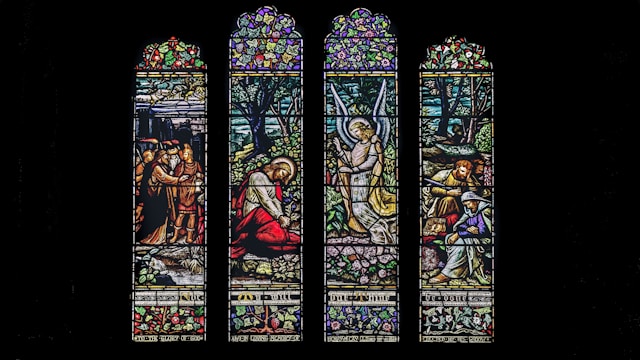
Jesus’ defining moment just before His Passion is His agony in the garden of Gethsemane. This year, we are fortunate to hear from the Gospel of Mark because Mark is not shy to express the inner life of Jesus in this crucial time. For some, this is embarrassing because Jesus was expressing His great sorrow, and thus, Jesus is seen to be too human and weak. However, we believe that God inspired Mark to write God’s words, and thus, we are to learn something precious in Jesus’ desperate moment.

Jesus was aware of what would happen to Him. He would soon face the betrayal of his disciple, a clandestine arrest, unjust trials from His haters, dreadful torture, and humiliating and most painful death. Thus, Jesus who is not only fully divine but also fully human, was experiencing the full weight of human emotions. Mark gave us some important details. Jesus was ‘troubled and distressed’ and then expressed what He felt, “My soul is sorrowful even to the death.”

St. Irenaeus once said, ‘God’s glory is a man truly alive. Here, Jesus teaches us how to be truly human and, thus, become God’s glory. He avoided two dangerous extremes in dealing with His emotions. The first extreme is neglecting or suppressing His emotions. Jesus did not act tough and pretend to be ‘the stoic man’. He did not say, ‘I am okay’, ‘everything will be alright.’ Jesus named the emotions and was frank about it. The second extreme is not to be consumed by emotions. When the emotion is extremely strong, the emotions easily engulf us and, thus, control us. Though recognizing His feelings, Jesus did not yield to them. He stood His ground.

Jesus further gave us two ways to face these overwhelming emotions. The first one is to seek good companions. Jesus invited the three closest disciples in the garden, Peter, James and John. He expressed His grave sorrow and asked them to accompany Him in this crucial moment. Unfortunately, they fell asleep, but the three were there for Jesus in His agony. The second way is to pray. Jesus bent His knees and talked to His Father. Here, we have extremely rare content of Jesus’ prayer.

Jesus said, “Abba, Father, all things are possible to you. Take this cup away from me, but not what I will but what you will (Mk 14:36).” This prayer is short but extraordinarily rich. One can say that this prayer is a short form of Our Father. Here, Jesus expressed and offered His wish that He would have been spared from suffering and violent death, but He also recognized that it is His Father’s will that Jesus would offer Himself up as the sacrifice of love for the world. In this prayer, Jesus reaffirmed His mission and did not allow the emotions to blur His vision.

Gethsemane is the precious moment that Jesus teaches us to fulfil God’s will despite difficulties and, at the same time, to become truly human. It is not God’s will to destroy our humanity but rather to perfect it, and Jesus is our model of a perfect man.

Rome

Valentinus Bayuhadi Ruseno, OP

Full of Grace

4th Sunday of Advent [B]

December 24, 2023

Luke 1:26-38

‘Full of Grace’ is the most iconic title of the Blessed Virgin Mary. Every time we recite ‘Hail Mary,’ we immediately recognize that the first title after the name of Mary is full of grace. Not only is it her most recognized title, but it is also the most ancient. Even it goes back to the Bible, the first chapter of Luke’s Gospel. The angel Gabriel appeared and greeted Mary, ‘Hail, full of grace!’ (Luk 1:28). However, if we carefully read this passage, the title ‘Full of Grace’ is not there. What did the angel say to Mary? Why do we have ‘Full of Grace’ in the first place?

The title ‘Full of Grace’ appears in the Vulgate version of the Bible. Vulgate is the Latin Bible translation done by St. Jerome in the early fifth century. In Latin, it is ‘gracia plena’. Since Latin is the official language of the Roman Catholic Church, ‘gracia plena’ became the standard title of Blessed Virgin Mary and got translated into different languages. When ‘Hail Mary’ and the holy rosary became the most popular devotion in the Catholic world, the title ‘full of grace’ could no longer be separated from Mary, the mother of Jesus. But what is written in the Bible?

What St. Luke wrote in Greek is ‘κεχαριτωμένη’ (read: kecharitomene), and it literally means ‘one who has been graced’ or ‘one who has received grace.’ So, is St. Jerome mistaken? Not really. St. Jerome decided not to make a literal translation but rather a more poetic one, and by this choice, St. Jerome wanted to draw our attention to the total and continuous presence of grace in the life of Mary. Yet, why is the title ‘κεχαριτωμένη’ extremely important for Mary and us?

Firstly, we need to understand the meaning of the word ‘grace .’In Greek, it is ‘χάρις’ (read: Charis), and its most fundamental meaning is ‘gift’ or ‘favor .’Yet, in the New Testament, the word grace does not simply mean any gift, like birthday or graduation gifts, but it is the ultimate and the most important gift. Grace refers to God’s gift of salvation. The salvation is not only from sins and death but also for God. When we are saved, not only are our sins forgiven, but we are also enabled to share the divine life of the Holy Trinity. Grace is the gift of salvation, the gift of holiness, and the gift of heaven. (for a fuller discussion, see CCC 1996-2007)

Mary is wholly unique because she is the first person who has received grace even before our Lord was crucified and resurrected, and in fact, before He was born. The reality of grace perfectly manifested in her. It is not that Mary was worthy but that she was chosen. She did not earn it, but grace was given freely. It is not because of Mary’s plan but God’s providence. Yet, the moment of Annunciation also shows us that grace is free but never cheap. Though grace has filled her since the beginning, Mary still has to make the free choice to accept the grace and make it fruitful in her life. Thus, she said, “May it be done to me according to your word!” Mary’s yes to God’s grace is not only a one-time action but a lifetime commitment, even in the face of the cross.

Our Savior has died, risen for us, and poured out His grace for our redemption. Yet, like Mary, we must choose freely to accept the grace in our lives; through it, we flourish in God’s friendship. This is why we avoid sins, go to the mass regularly and devoutly, or do works of mercy. Not because we want to earn salvation, but to grow in God’s grace and express our thanks for the grace freely given.

Rome

Valentinus Bayuhadi Ruseno, OP

Rejoice, Pray, and Give Thanks

Gaudete Sunday. 3rd Sunday of Advent [B]

December 17, 2023

John 1:6-8, 19-28

In this Gaudete Sunday, St Paul teaches, “Rejoice always. Pray without ceasing. In all circumstances, give thanks, for this is the will of God for you in Christ Jesus. [1 The 5:16].” St. Paul gives us three fundamental characteristics of Christians: to rejoice always, pray ceaselessly, and give thanks in all things. St. Paul reminds us that these characters are not an option but God’s will for us. Yet, how can we be joyful amid suffering? How can we pray when we are occupied with our duties and work? How can we give thanks in times of trial?

The key is that we cannot rely on our power but on God’s grace that empowers us to do these three impossible tasks. Through God’s grace, we are empowered to rejoice always, even amid difficult times. Rejoice [Greek ‘χαίρω’ – chairo] is neither simply a fleeting emotion nor happiness that comes from externally induced substance. To rejoice is an action we choose to do. This action flows from the realization that God is in control of every event of our lives. Even in the most painful moments, God allows those to occur because He has a good purpose for us. Indeed, God does not tell us in advance His plans, making it complicated. Yet, the Holy Spirit comes and bestows us faith and hope in Him and His providence.

God’s grace also enables us to thank the Lord every moment. To be grateful and to rejoice are, in fact, closely connected, just like two sides of the same coin. We can give thanks in all circumstances because the Holy Spirit helps us to see that everything we do and experience has a purpose. And, when everything we do, we do for the love of God. This act became a blessing and a cause of joy. The word for give thanks in Greek is ‘εὐχαριστέω’ [eucharisteo], and it has the same root as the word Eucharist. Thus, every time we celebrate the Eucharist, we offer our sacrifice of Jesus Christ and our lives as thanksgiving to God.

Lastly, how do we pray without ceasing? To spend a little time for prayer every day is already difficult. Does it mean we have to resign from our jobs, abandon our responsibilities in the family, and enter seclusion to pray? Indeed, there are better things to do than this. To pray unceasingly can be done at least in two ways. Firstly, we pray as a community of believers, the Church, one body of Christ. Thus, when we cannot pray this time, other brothers and sisters in other places will pray for us and on our behalf. Since millions of Catholics pray worldwide, our prayers are unbroken and unstoppable.

Secondly, we rely on the Holy Spirit to pray for us. St. Paul himself told us, “Likewise the Spirit helps us in our weakness; for we do not know how to pray as we ought, but the Spirit himself intercedes for us with sighs too deep for words (Rom 8:26-27).” We ask the Holy Spirit to be present and sanctify every activity of our day, and before we rest, we offer our day to the Lord.

Rejoice always, pray ceaselessly, and give thanks in all things!

Rome

Valentinus Bayuhadi Ruseno, OP

Holy Families

Feast of the Holy Family [B]

December 27, 2020

Luke 2:22-40

We are celebrating the feast of the Holy Family, and indeed, we are celebrating not only the family of Jesus, Mary, and Joseph but every human family. Through this liturgical celebration, the Church is inviting us to recognize the importance and the value of our family. Not only acclaiming the fundamental worth of family, but we are also invited to embrace and celebrate family lives.

At a human level, many social experts have understood that healthy and thriving societies begin in robust families. The families do not only fill the communities with human populations, but they provide an environment where children can grow into physically and psychologically mature men and women. A healthy and mature adult turns to be an asset to society.

From the perspective of faith, the Church always considers family as the basic unit of society and the Church herself. In his apostolic exhortation, Familiaris Consortio, Pope St. John Paul II affirmed the family’s fundamental role as the intimate community of life and love. In the family, husband and wife learn to love each other deeper and deeper every day. In the family, parents offer unconditional and sacrificial love for their children. In the family, the children learn to give honor and respect to their parents and their brothers and sisters. Because only in love, human persons find their true fulfillment as God’s image who is Love.

The Scriptures also give premium to family life. To honor our mother and father is one of the Torah’s highest commandments [Exo 20:]. Sirach even claimed that honoring our parents can atone for our sins [Sir 3:3]. St. Paul himself, in his letter to the Colossians, instructed each member of the family on how to behave [see Col 3:12-21].

Yet, going back to Jesus, we discover that for Him, a family is indeed indispensable. As God, Jesus could have come to us directly from heaven. He did not need human aid. Yet, He chose to be born of the virgin Mary, and through the angel, instructed Joseph to become the husband of Mary and, thus, His foster father. When He became man, He entered a human family and grew through Joseph and Mary’s guidance and protection. Jesus has become part of a family, and His presence sanctified His human family. This is a poignant message for all that family is a school of holiness because Jesus is present.

We also admit that family life is not always smooth and sweet. Moments of frustrations, misunderstanding, anger, and sadness often come and struck us. Various problems ranging from economic stability to emotional immaturity beset our familial relationship. However, these ugly situations may be transformed into means of holiness if Jesus is present among us. Raising children can be tough and even irritating, but we can offer this cross to the Lord as prayer. A relationship with our spouse can be filled with misunderstanding, but before we vent our emotions, we may pause a moment and ask the Lord the best course of action we shall take. Thus, through these difficulties, we are made closer to the Lord.

We thank the Lord for the gift of life, love, and family.

Happy feast day of the Holy Family!


Valentinus Bayuhadi Ruseno, OP

Keluarga-Keluarga Kudus

Pesta Keluarga Kudus [B]

27 Desember 2020

Lukas 2: 22-40

Kita merayakan pesta Keluarga Kudus, namun kita tidak hanya merayakan keluarga Yesus, Maria dan Yusuf, tetapi setiap keluarga di dunia. Melalui perayaan liturgi hari ini, Gereja mengundang kita untuk menyadari pentingnya dan berharganya keluarga kita. Tidak hanya menghargai nilai dasar keluarga, kita diundang untuk merangkul dan merayakan kehidupan keluarga.

Di tingkat manusia, banyak ahli sosial telah memahami bahwa masyarakat yang sehat dan berkembang dimulai dari keluarga yang kokoh. Keluarga tidak hanya mengisi komunitas dengan populasi manusia, tetapi juga menyediakan lingkungan di mana anak-anak dapat tumbuh menjadi pria dan wanita yang dewasa secara fisik dan psikologis. Manusia-manusia dewasa yang sehat dan mapan menjadi aset masyarakat dan bangsa.

Dari perspektif iman, Gereja selalu memandang keluarga sebagai unit dasar tidak hanya masyarakat tetapi Gereja itu sendiri. Dalam Seruan Apostoliknya, Familiaris Consorsium, Paus St. Yohanes Paulus II menegaskan peran fundamental keluarga sebagai “komunitas hidup dan kasih”. Dalam keluarga, suami dan istri belajar untuk saling mencintai semakin dalam setiap harinya. Dalam keluarga, orang tua memberikan kasih tanpa pamrih dan pengorbanan untuk anak-anak mereka. Di dalam keluarga, anak-anak belajar untuk menghormati dan menyayangi orang tua serta saudara-saudara mereka. Karena hanya dalam kasih, manusia menemukan pemenuhan sejatinya sebagai citra Tuhan yang adalah Kasih.

Alkitab juga sangat menghargai kehidupan keluarga. Menghormati ibu dan ayah kita adalah salah satu perintah tertinggi dalam Hukum Taurat [Kel 20]. Sirach bahkan mengklaim bahwa menghormati orang tua kita dapat menghapus dosa-dosa kita [Sir 3:3]. St. Paulus sendiri dalam suratnya kepada jemaat di Kolose, memberikan instruksinya kepada setiap anggota keluarga tentang bagaimana berperilaku yang baik sebagai anggota keluarga [lihat Kol 3: 12-21].

Kembali kepada Yesus, kita menemukan bahwa bagi Dia, keluarga memang sangat esensial. Sebagai Tuhan, Yesus bisa saja datang kepada kita langsung dari surga. Dia tidak membutuhkan bantuan manusia untuk menebus manusia. Namun, Dia memilih untuk dilahirkan dari perawan Maria, dan melalui malaikat, Dia menginstruksikan Yusuf untuk menjadi suami Maria dan dengan demikian, menjadi ayah angkat-Nya. Ketika Yesus menjadi manusia, Dia memasuki keluarga manusia, dan tumbuh melalui bimbingan dan perlindungan Yusuf dan Maria. Yesus telah menjadi bagian dari sebuah keluarga, dan kehadiran-Nya menguduskan keluarga manusia-Nya. Ini adalah pesan penting bagi semua keluarga bahwa keluarga akan menjadi sekolah kekudusan karena Yesus hadir.

Kita akui juga bahwa kehidupan keluarga tidak selalu mulus dan manis. Saat-saat frustrasi, kesalahpahaman, amarah dan kesedihan seringkali datang dan menghantam kita dengan keras. Berbagai masalah mulai dari stabilitas ekonomi hingga ketidakdewasaan emosional melanda hubungan kekeluargaan kita. Namun, situasi buruk ini dapat diubah menjadi sarana kekudusan jika Yesus hadir di antara kita. Membesarkan anak bisa jadi sulit dan bahkan menjengkelkan, tetapi kita bisa mempersembahkan salib ini kepada Tuhan sebagai doa. Hubungan dengan pasangan kita dapat dipenuhi dengan kesalahpahaman, tetapi sebelum kita melampiaskan emosi kita, kita mungkin berhenti sejenak dan bertanya kepada Tuhan tindakan terbaik yang akan kita ambil. Dengan demikian, melalui kesulitan-kesulitan ini, kita menjadi lebih dekat dengan Tuhan.

Kita berterima kasih atas karunia kehidupan, kasih dan keluarga.

Selamat Pesta Keluarga Kudus!


Valentinus Bayuhadi Ruseno, OP