

7th Sunday of Easter
May 24, 2020
John 17:1-11a
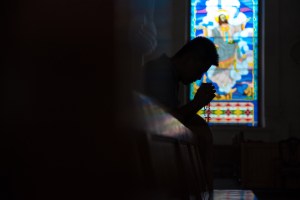 We are aware that prayer is a fundamental part of Jesus’ life. He prays on a regular basis, and especially when He is preparing to embrace decisive events, like Baptism on the Jordan [Luke 3:21], the election of the twelve apostles [Luke 6:12], transfiguration [Luke 9:28], and the Passion [Matt 26:36–44]. However, we seldom hear what Jesus says in His prayers. In the Synoptic Gospels [Matthew, Mark, and Luke], we are fortunate enough to hear Jesus’ compact and emotional prayer in the Garden of Gethsemane before He enters into His Passion. However, John the evangelist makes sure that we are going to discover what Jesus prays, and it is substantially longer than we ever heard before.
John devotes the entire chapter of His Gospel for this prayer [John 17:1-26]. As expected, He prays to the Father with extraordinary affection and confidence. Yet, what makes it noteworthy is that Jesus does not say only about Himself and His mission, but also prays for His disciples. Jesus is acting as the priest who is interceding on behalf of His disciples. That is why we call this section the high priest’s prayer of Jesus Christ.
From Jesus’ prayer, we unearth some powerful lessons:
Firstly, if prayer is essential in the life of Jesus, it is because Jesus understands that prayer is His line of communication to the Father. Jesus knows well that communication is the key to every flourishing relationship. Perhaps, we fail to see this truth, and that is why we feel prayer is burdensome. We are not eager to attend the mass because we simply understand it as an obligation. We relegate personal prayer to the sideline as we make other things as our priority. Sadly, we immediately blame God if our plans do not work according to our whim, or we even threaten God to grant our wishes. Thus, changing perspective about prayer is crucial and even life-transforming.
Secondly, if prayer is communication, then it should always be a dialogue. Often when we start growing in prayer, we think that we need to always say something to the Lord. I remember one seminarian asked me, “Father, what else should I say if I am running out of words in my prayers?” I told him, “Perhaps, it is time to listen to God.” The next expected question is, “How do I listen to God?” Surely there is no one-size-fits-all answer to this, but I like what St. Jerome says, “You pray: You speak to the bridegroom. You read [scriptures]: He speaks to you.” Yet, we need to remember that dialogue of words is not the end of the communication. The end is the unity of the persons in dialogue. Jesus says, “I am in my Father, and you are in me, and I am in you [John 14:20].”
Lastly, our prayer involves the third person. This is the direct consequence of Jesus’ priestly prayer. Prayer is a dialogue, but just like other dialogue, it may speak about other persons. This is when we pray to God for others. Because Jesus leaves us an example in His priestly prayer, it is all the more imperative for us to care for others through prayers. In time we cannot reach other people who need our help; prayers remain the best way to love them. Indeed the saints in heaven continue to care for us despite not able to physically appear to us through their prayers.
Prayer unites us with God in love and prayer also unites us with people we love in God.
Valentinus Bayuhadi Ruseno, OP
 Doa adalah bagian mendasar dari kehidupan Yesus. Dia berdoa secara teratur, dan terutama ketika Dia bersiap untuk merangkul peristiwa-peristiwa yang menentukan, seperti Pembaptisan di Sungai Yordan [Lukas 3:21], pemilihan kedua belas rasul [Lukas 6:12], transfigurasi [Lukas 9:28], dan jalan salib-Nya [Mat 26:36-44]. Namun, kita jarang mendengar apa yang Yesus katakan dalam doa-doanya. Dalam Injil Sinoptik [Matius, Markus dan Lukas] kita cukup beruntung mendengar doa Yesus yang pendek dan emosional di Taman Getsemani sebelum Dia memasuki sengsara-Nya. Namun, penginjil Yohanes memastikan bahwa kita akan menemukan apa yang Yesus doakan dan hal ini jauh lebih panjang daripada yang pernah kita dengar sebelumnya.
 In Jesus’ time, they were several Jewish religious groups and one of them is the Pharisees. These are the people who love the Lord and devoutly observe the Law of Moses and the traditions of the elders even in their daily lives. Thus, Jewish people regard them as righteous because they are faithful to the Law, and pious because they pray often. Many Pharisees turn to be the caretakers of the local synagogues and zealously teach the Law during Sabbath days. No wonders, the Jewish people offer the Pharisees the best places in the worship places and the parties. The leaders are called the Rabbis or teachers.
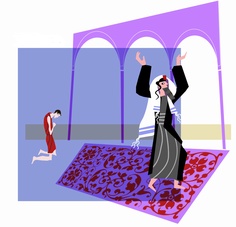 Pada zaman Yesus, ada beberapa kelompok di dalam agama Yahudi dan salah satunya adalah orang-orang Farisi. Inilah orang-orang yang mencintai Tuhan dan dengan taat mematuhi Hukum Musa dan tradisi para penatua bahkan dalam kehidupan sehari-hari mereka. Jadi, orang Yahudi menganggap mereka sebagai orang benar karena mereka setia kepada Hukum, dan saleh karena mereka sering berdoa. Banyak orang Farisi menjadi pengurus sinagoga dan dengan tekun mengajarkan Hukum saat hari-hari Sabat. Tidak heran, orang-orang Yahudi memberikan kepada orang-orang Farisi tempat-tempat terbaik di tempat-tempat ibadah dan pesta-pesta, dan memanggil beberapa dari mereka sebagai Rabi atau guru.
 Few of us have a direct encounter with a sheep, let alone shepherding sheep. When Jesus says, “My sheep hear my voice.” I thought it was a kind exaggeration. After all the sheep is not that intelligent compared to the Golden Retriever or Labrador who would listen to their owners. However, one time, I watched a video on YouTube about a group of tourists who visited the vast hill in the countryside of Judea where the flock was grazing. They were asked to call the attention of the sheep. One by one, the tourists shouted to the top of their lungs, but they got not even the slightest response. Yet, when the true shepherd came forward and called them out, all the scattered sheep immediately rushed toward the shepherd! It was an eye-opener. Jesus was right. The sheep literally hear the voice of His shepherd.
 Ketika Yesus berkata, “Domba-domba-Ku mendengarkan suara-Ku.” Saya pikir itu agak berlebihan. Kita tahu domba-domba adalah hewan yang tidak secerdas anjing Golden Retriever atau Labrador yang bisa mendengarkan instruksi dari pemiliknya. Namun, suatu kali, saya menonton video di YouTube tentang sekelompok wisatawan yang mengunjungi bukit luas di pedesaan Yudea di mana kawanan domba sedang merumput. Mereka diminta untuk menarik perhatian domba. Satu demi satu, para wisatawan berteriak dengan lantang, tetapi mereka tidak mendapat tanggapan sedikit pun. Namun, ketika sang gembala maju dan memanggil mereka, semua domba yang tercerai-berai segera bergegas menuju gembala itu dan mengerumuni dia! Sungguh menakjubkan! Yesus sungguh benar. Domba-domba sungguh mendengar suara gembala-Nya.
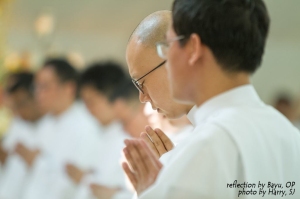
 I made my religious vow more than eight years ago with 12 other Dominican brothers. One of the most touching moments within this rite of the religious profession was when Fr. Provincial asked us, “What do you seek?” and we all prostrated, kiss the ground, and declared, “God’s mercy and yours!” After a brief moment, Fr. Provincial asked us to stand, and we began professing our vows before him. As I recall this defining moment in my life, I am pondering in my heart, “Why it has to be mercy?” Why do we not choose other Christian virtues? Why not fortitude, one of the cardinal virtues in the Christian tradition? Why not love, the greatest of all virtues?
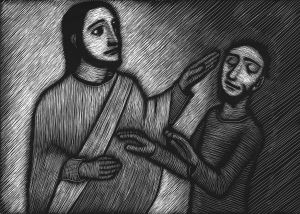 Saya mengucapkan kaul lebih dari delapan tahun yang lalu bersama dengan 12 frater lainnya. Salah satu momen paling menyentuh dalam ritual profesi religius ini adalah ketika Romo Provinsial bertanya kepada kami, “Apa yang kamu cari?” Dan kami semua bersujud dan berbaring di lantai, sambil berseru, “Belas kasih Tuhan dan juga komunitas!” Setelah beberapa saat, Pastor Provinsi meminta kami untuk berdiri, dan kami mulai mengucapkan kaul kami di hadapannya. Saat saya mengingat momen yang penting ini, saya merenungkan dalam hati saya, “Mengapa harus meminta belas kasih?” Mengapa kita tidak memilih keutamaan lainnya? Mengapa tidak keadilan, yang adalah salah satu keutamaan penting dalam tradisi Kristiani? Mengapa tidak cinta kasih, yang adalah keutamaan terbesar dari semua keutamaan?
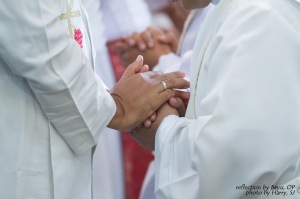 While I was reflecting on this Sunday’s Gospel, I was able to discover some news about our Church. Good News! The Catholic Church in the Philippines is preparing herself for the 500 years of the arrival of Christianity in this archipelago. The first baptism and Eucharist were taking place in 1521 as the Spanish missionaries began their evangelization mission. As part of this grand preparation, the Bishops of the Philippines have decided to celebrate this year as the year of the clergy and the consecrated persons. The major theme of this year is the renewed servant-leaders for the new evangelization. In view of this, many programs and activities are organized to help both the ordained ministers and the religious brothers and sisters to deepen their commitment to God and their service to the people.
 Ketika saya merenungkan Injil hari Minggu ini, saya membaca beberapa berita tentang Gereja. Ada Kabar baik. Gereja Katolik di Filipina mempersiapkan diri untuk perayaan 500 tahun kedatangan iman Kristiani di negara ini. Baptisan dan Ekaristi pertama terjadi pada tahun 1521 sewaktu para misionaris Spanyol memulai misi evangelisasi mereka. Sebagai bagian dari persiapan besar ini, para Uskup Filipina memutuskan untuk merayakan tahun ini sebagai tahun para klerus [daikon, imam, dan uskup] dan rohaniwan. Dengan demikian, banyak program dan kegiatan diselenggarakan di berbagai keuskupan di Filipina untuk membantu para klerus dan biarawan untuk memperdalam komitmen mereka pada Allah dan pelayanan mereka kepada umat dan bangsa.
 In Medio Ecclesiae