

Third Sunday of Lent [March 4, 2018] John 2:13-25
“Take these out of here, and stop making my Father’s house a marketplace.” (Jn. 2:16}
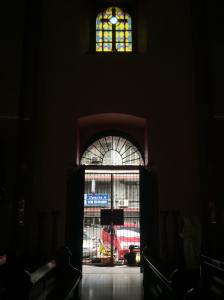
The presence of the animal vendors and money-changers in the Temple of Jerusalem comes out of practical necessity. When Jews from all over Palestine come to Jerusalem, especially during the important days like Passover, they will fulfill their religious obligation to offer their sacrifices in the Temple. Since it is impractical to bring a sacrificial animal like oxen, lambs, or turtledoves from their hometowns, the Jews prefer an easier solution by buying them in Jerusalem. It does not only save those Jewish pilgrims the hassle, but it gives the assurance also that the animals will be unblemished as the Law of Moses has prescribed. Therefore, many vendors have the authorization from the Temple elders that their animals are unblemished and ready for sacrifice. The Jews are also required to support the upkeep the Temple and the priests through so-called “Temple tax.” Yet, they are not allowed to pay the Temple tax with the Roman money because it bears the image of Caesar as a god, a blasphemy. Thus, they need to change their money with more acceptable currency. Here the role of money-changers comes in. It is a kind of win-win solution for the pilgrims, the vendors, and the Temple authorities. We could imagine that with so many people visiting the Temple, the business must be buzzing and thriving.
When Jesus comes and drives them all out of the Temple, surely it angers not only the vendors and the money-changers but also the Jewish authority and even ordinary Jewish pilgrims. The disappearance of this vendors and money-changers may mean that some people lose their earnings, some people find their profit disappear, and most people are irked by the inconveniences it causes. Jesus tells the reason behind his action, “the Jews making His Father’s house a marketplace.” The very core of the Temple of Jerusalem is the encounter between God and his chosen people, between God the Father and His children, but with so many activities, trading, and noise, this essence of the Temple is lost. The Temple means usual business. The priests certify the sacrificial animals for the vendors, the vendors sell them to the pilgrims, and the pilgrims give the animals to the priests for the slaughter. Everyone goes home happy! Jesus’ action is to break this vicious cycle of “normalcy” that makes people’ worship shallow. Jesus criticizes the structure that exploits the Temple for mere profit and superficial fulfillment of religious obligation, and for making God’s house into the marketplace.
In this season of Lent, we ask ourselves, if Jesus comes to our church, diocese, parish, congregation, religious organization, and even our family, what will Jesus do? Will He drive us out like He drives out the vendors from the Temple? Or, will He make His home among you? Financial resources are important in helping our Church grow but do we not make the Church an income-generating institution? While the leadership structure is essential in the Church and our smaller groups, do we serve others, or exploit people? Do we find peace and joy in our communities, or are they full of intrigues, gossips, unhealthy competitions? Do encounter God in our Church, or simply find ourselves? We thank the Lord if we discover God, our Father, in our Church and community, but if we do not, we better call on Jesus to drive us away from His Father’s house.
Br. Valentinus Bayuhadi Ruseno, OP


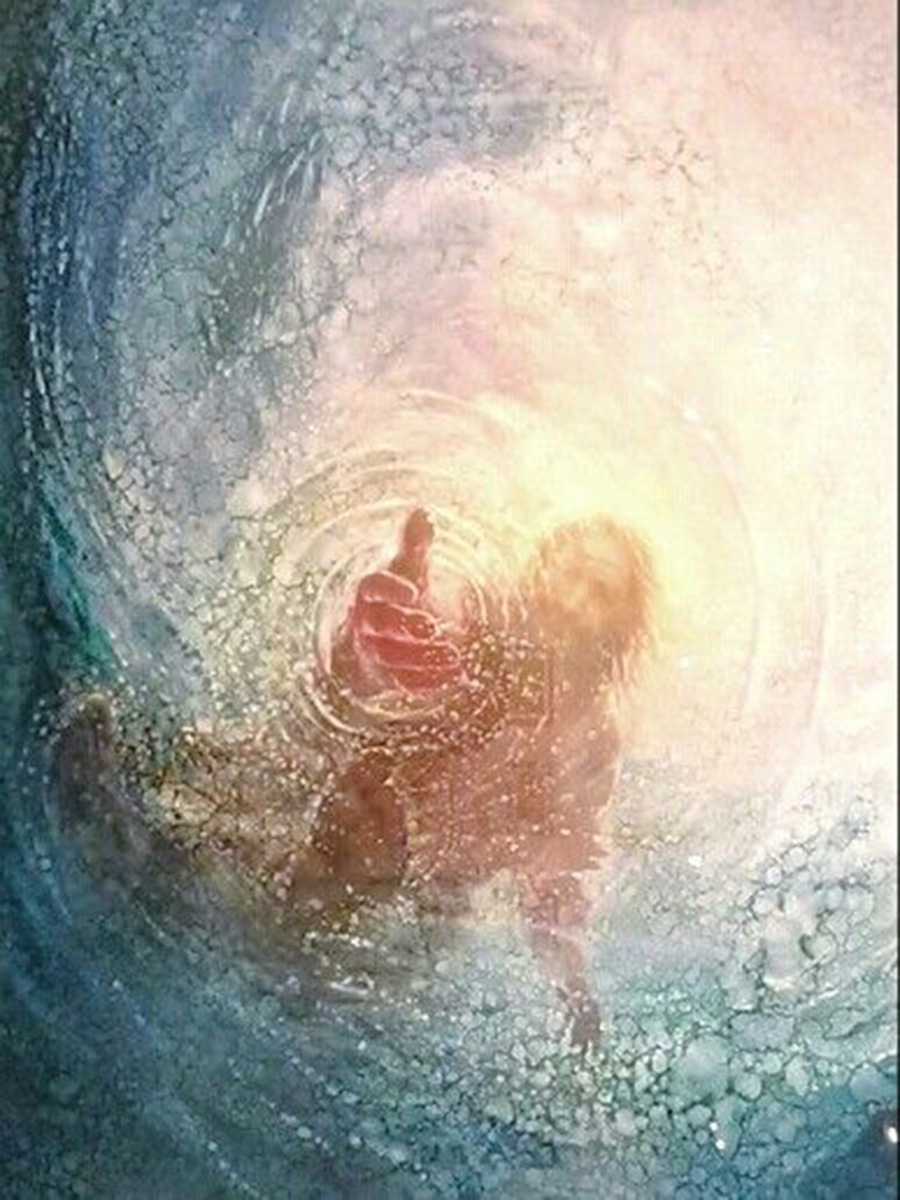
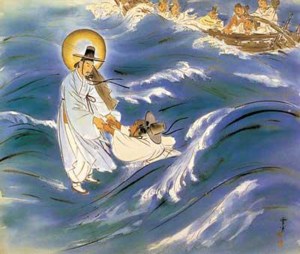 Ocean is a gift to humanity. For many of us, ocean means a great variety of seafood, a place to spend our vacation. When we imagine a vast sea with beautiful beach, we are ready to enjoy swimming, snorkeling or diving. However, for millions of fishermen and seafarers, sea simply means life as they depend their lives and their families on the generosity of the sea, the resources it offers, and the works it generates. Unfortunately, the sea is not always merciful. The sea is home to powerful storms and with its giant waves that can even engulf the biggest of ships. With the effects of global warming, massive sea pollution and destructive ways of fishing, it is getting hard to get a good catch. Novelist Ernest Hemingway in his book “The Old Man and the Sea” narrates a life of fisherman who after risking his life to catch a giant fish, brings home nothing but a fishbone as his catch was consumed by other fishes. Majority of fishermen who continue struggling with lingering debt and difficulty to get fuel for their boats, become poorer by the day. These make fishermen and seafarers a perilous profession.
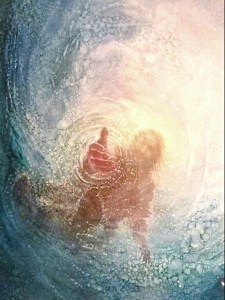 Laut adalah anugerah bagi umat manusia. Bagi banyak dari kita, laut berarti berbagai macam seafood, dan tempat untuk menikmati liburan. Bila kita membayangkan lautan luas dengan pantai yang indah, kita siap untuk berenang, snorkeling atau menyelam. Namun, ini jauh berbeda bagi jutaan nelayan dan pelaut. Laut berarti kehidupan karena mereka menggantungkan hidup mereka dan keluarga mereka pada laut, baik sumber daya yang dimiliki dan perkerjaan yang dihasilkan. Sayangnya, laut tidak selalu berarti kehidupan. Laut adalah tempat bagi badai-badai dahsyat dan gelombang-gelombang raksasa yang bahkan bisa menelan kapal-kapal terbesar yang pernah dibangun manusia. Dengan efek pemanasan global, polusi laut yang masif dan cara-cara penangkapan ikan yang merusak alam, sekarang semakin sulit bagi nelayan sederhana untuk mendapatkan tangkapan yang baik. Penulis Ernest Hemingway dalam bukunya “The Old Man and the Sea” menceritakan tentang kehidupan nelayan tua yang setelah mempertaruhkan nyawanya untuk menangkap ikan raksasa, tidak membawa pulang apapun kecuali tulang ikan karena tangkapannya dihabisi oleh ikan-ikan lain. Mayoritas para nelayan terus berjuang dengan hutang dan sulitnya mendapatkan bahan bakar untuk perahu mereka. Merekapun menjadi semakin miskin dari hari ke hari. Hal ini membuat nelayan dan pelaut adalah profesi yang berbahaya.
 Jesus is not the gatekeeper, but Jesus is the gate Himself. A gate or a door gives a passage or access to a sheepfold, a house, a building or a room. It both separates and connects the insiders and the outsiders. In fact, the gate is as essential as the house itself. What is the building without a door or an entry point? It is either a construction error or it is not a sheepfold or a house at all. The gate is not only an accessory to the house, but it also defines the house itself. Is it an accessible house, locked house or not a house at all?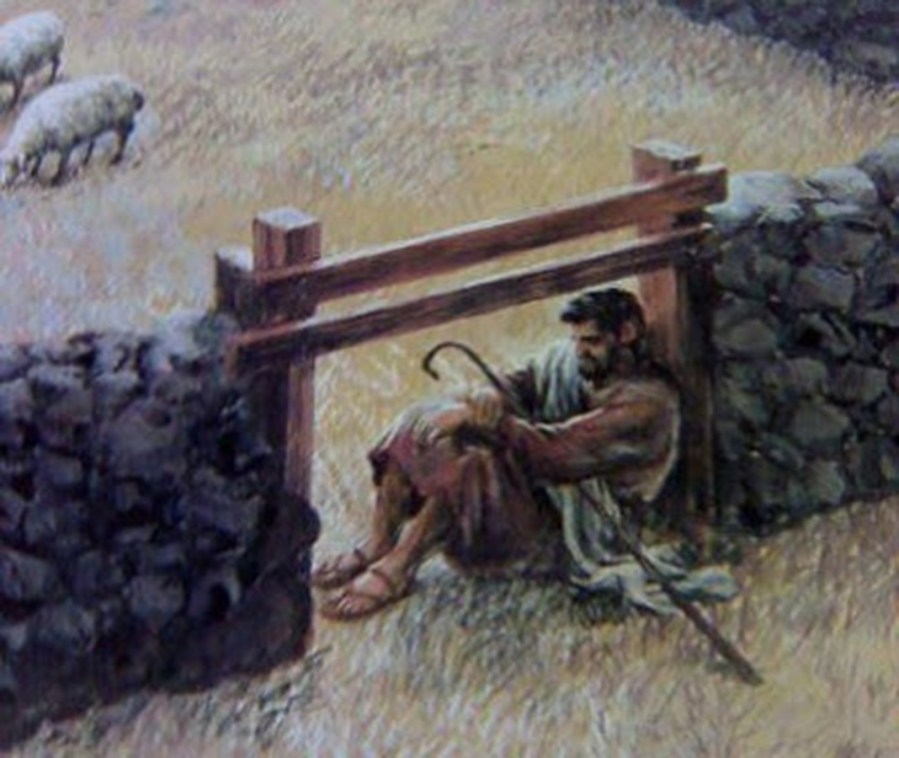
 Yesus bukanlah sekedar penjaga pintu gerbang, tetapi Yesus adalah sang pintu gerbang. Pintu gerbang atau pintu memberi jalan atau akses ke kandang domba, rumah, bangunan atau ruangan. Pintu memisahkan sekaligus menghubungkan orang dalam dan orang luar. Pintu sama pentingnya dengan rumah itu sendiri. Apa jadinya jika bangunan tanpa pintu masuk? Ini adalah kesalahan konstruksi atau bukan sebuah gedung sama sekali. Pintu bukan hanya aksesori dari sebuah rumah, tapi adalah definisi sebuah rumah. Melalui pintunya, kita bisa menilai apakah rumah ini yang mudah diakses, rumah terkunci atau bukan rumah sama sekali?
 Many theologians and ordinary Christians alike are baffled by these words of Jesus on the cross. If Jesus is God, how is it possible for Him to be separated from God? Why does the most compassionate God abandon His beloved Son? It simply does not make any sense. The Catechism of the Catholic Church tries to explain that it is a consequence of sin. Not that Jesus had committed any sin, but He endured the sin of the world on the cross. The greatest effect of sin is separation from God. Thus, carrying the heaviest burden of sin, Jesus could not but feel the chilling effect of alienation from His own Father.
 Banyak teolog maupun umat awam kesulitan untuk memahami kata-kata Yesus di kayu salib ini. Jika Yesus adalah Tuhan, bagaimana mungkin Dia bisa terpisahkan dari Allah? Lalu, mengapa Allah yang penuh kasih bisa-bisanya meninggalkan Putra-Nya? Ini tidak masuk akal. Katekismus Gereja Katolik mencoba menjelaskan bahwa ini adalah konsekuensi dari dosa. Bukan karena Yesus telah melakukan dosa, tetapi Dia menanggung dosa dunia di kayu salib. Efek terbesar dari dosa adalah terpisahnya kita dari Allah. Dengan demikian, membawa beban terberat dari dosa, Yesus tidak bisa tidak merasakan efek mengerikan keterasingan dari Bapa-Nya sendiri.
 In Medio Ecclesiae