


Second Sunday of Advent. December 4, 2016. Matthew 3:1-12
“In those days John the Baptist appeared, preaching in the desert of Judea and saying, ‘Repent, for the kingdom of heaven is at hand!”
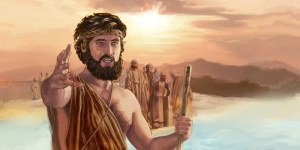 Why did many people come to John the Baptist and listen to him? I believe that the Jewish people hungered for the truth. It might be an inconvenient and hurtful truth, but they longed to hear it. They were tired of listening to their leaders, like the Pharisees and the Sadducees, who were not honest but were living in hypocrisy. They were exhausted by numerous religious obligations but did not find any inspiration and a good example from their leaders. John came and preached to them the truth with simplicity and integrity, and the Israelites knew that they had to hear him.
Despite the various advancements in our lives, our society is experiencing also the same hunger for truth. We spend years in schools and we learn a different kind of knowledge and various skills needed to survive the demands of our society, but we fail to discover the truth in our midst. After the presidential election in the US, many experts lamented how social media, especially the internet, has opened the floodgate of lies, hoaxes, and fake, perverted news. In Indonesia, especially Jakarta, the situation is not much different. The election of Jakarta’s governor as well as the case of a Basuki Tjahaja Purnama, an out-going governor involved in blasphemy row, have thrown the nation into deeper fragmentations. In the Philippines, various issues from the war on drug that kills thousands, to former president Ferdinand Marcos’ burial, have divided the nation. Various groups have disseminated myriads of news and reports to support their cause and destroy other opposing groups. People have become more and more confused and distracted, not knowing what the truth is.
In this chaos of overloaded information, Hossein Derakhshan, a researcher from MIT, has predicted that our society will become deeply fragmented, driven by emotions, and radicalized by a lack of contact and challenge from the outside. In short, we will make our decisions based on feelings instead of truth. This will create even more confusion despite instant pleasures here and there. All these will lead eventually to despair and profound unhappiness. Yet, deep inside we long for the truth because we are created for truth and have an innate capacity to seek for the truth.
In the midst of this deluge of information, we are called to be John the Baptist, the preacher of truth. Yet, before we proclaim the truth and go against the tide of news, we have to be rooted in prayer and study. John was spending his time in the desert, and in this deserted place, he could train his mind and heart to discern the truth. Some days ago, I delivered a talk on the death penalty in the Bible. Some fundamentalist Bible interpreters can easily lift some verses and justify the capital punishment. This is an easy and instant answer, but it is simplistic. I need to spend hours in research and study just to understand the truth that in the Scriptures, God does not wish the death of sinners in the first place.
Advent becomes a proper time for us to follow the footsteps of St. John the Baptist. We are called to train ourselves to listen to the truth, and preach it with confidence.
Br. Valentinus Bayuhadi Ruseno, OP

 Mengapa banyak orang datang menemui Yohanes Pembaptis dan mendengarkan dia? Saya percaya bahwa orang-orang Yahudi ini lapar akan kebenaran. Mungkin kebenaran ini tidak nyaman dan menyakitkan untuk didengar, tetapi mereka ingin dan perlu mendengarkannya. Mereka bosan mendengarkan pemimpin mereka, seperti orang-orang Farisi dan Saduki, yang tidak jujur dan hidup dalam kemunafikan. Mereka kelelahan oleh banyak kewajiban agama, namun tidak menemukan inspirasi dan contoh yang baik dari pemimpin mereka. Yohanes datang dan mewartakan kebenaran dengan kesederhanaan dan integritas, dan orang Israel tahu bahwa mereka harus mendengarnya.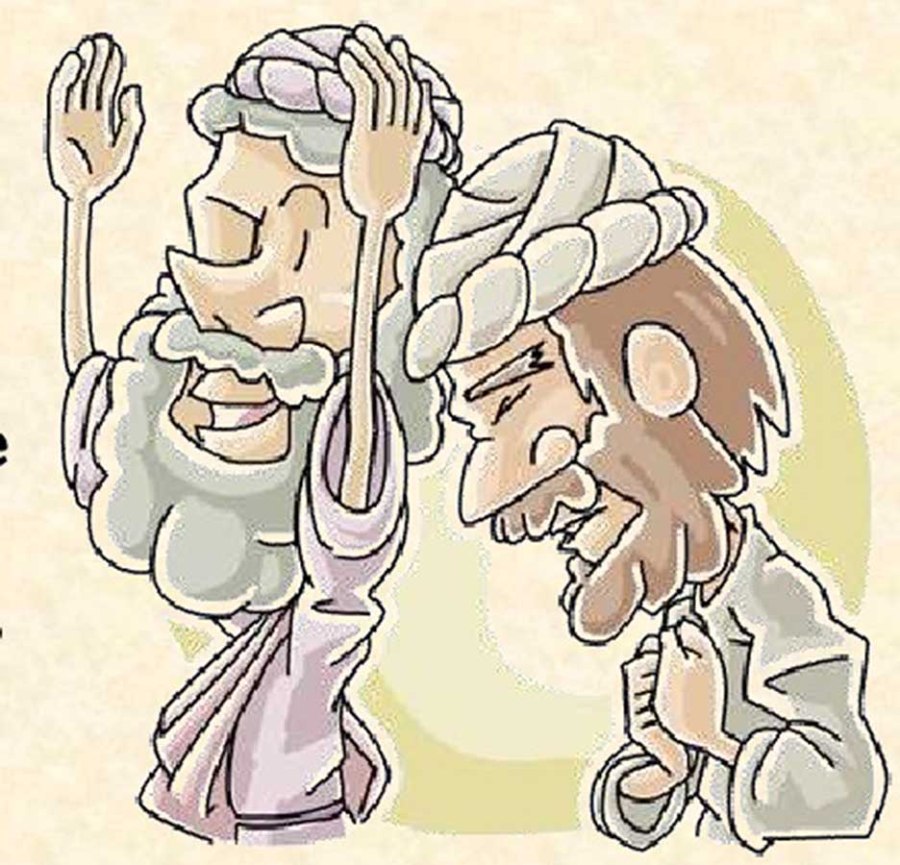
 Last Sunday, Jesus reminded us to pray without getting weary. But, in today’s Gospel, Jesus tells us that there is something more than perseverance in prayer. It has something to do with the way we pray. Not only quantity of prayer, but also the quality of prayer. Yet, how do we know that we have a quality prayer?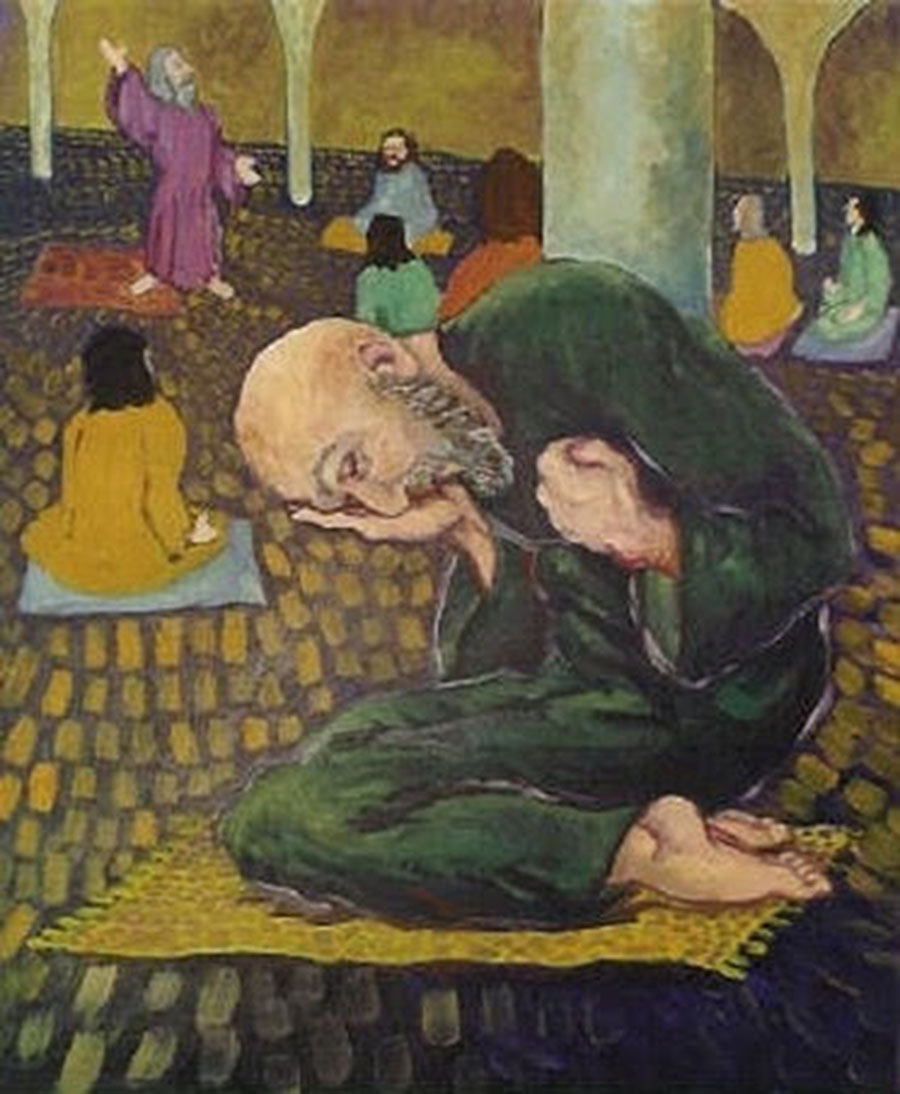

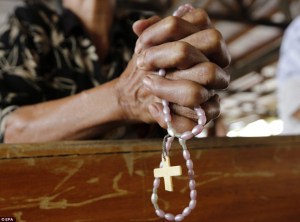 October is the month of the rosary. Allow me to reflect on this ancient yet ever new form of prayer. Why October? It all started when Pope Pius V, a Dominican, dedicated October 7 as the feast of Mary Our Lady of the Rosary after the battle of Lepanto. In this naval battle of October 7, 1571, the smaller Christian army fought the much larger and powerful Ottoman Turks’ forces that planned to invade Europe at the Gulf of Lepanto in Greece. While the battle was being waged, the Holy Pontiff and all Christians prayed the rosary asking the intercession of Our Lady. After hours of confrontation, the enemy’s fleet was roundly defeated.
 Oktober adalah bulan rosario. Izinkan saya untuk menulis tentang doa yang sebenarnya kuno tetapi selalu baru. Mengapa Oktober adalah bulan rosario? Semuanya berawal ketika Paus Pius V, seorang Dominikan, mendedikasikan 7 Oktober sebagai pesta Maria Ratu Rosario setelah pertempuran Lepanto. Pada 7 Oktober, 1571, di Teluk Lepanto di Yunani, tentara Eropa berjuang melawan armada laut Ottoman Turki yang jauh lebih besar dan kuat, yang merencanakan untuk menyerang Eropa. Sementara pertempuran sedang berlangsung, sang Paus dan semua umat berdoa rosario meminta perantaraan Bunda Maria. Setelah berjam-jam konfrontasi, armada musuh pun dikalahkan.
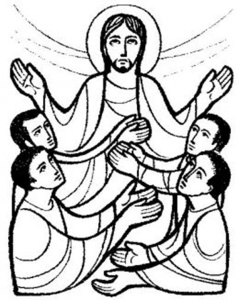 When we begin to pray, we acknowledge the presence of God. Not only that, we also recognize that we are dependent on Him. No wonder that the most basic and common prayer is a prayer of petition. We pray to ask favor from God. We beg for good health, success in career, passing examination, protection from dangers, and more. Several times, I wrote that God is not a spiritual ATM and that our prayer is an ATM card. After ‘inserting our prayer’ and ‘inputting a correct amount of request’, God will produce what we wish. But, I have realized that every morning, when I pray before the Blessed Sacrament and the image of our Lady of La Naval de Manila, my prayer is a prayer of petition. I ask God for so many things, for good breakfast, for easy quiz, sometimes for suspension of classes. Certainly, I also pray for people I love and people I promised to pray for.
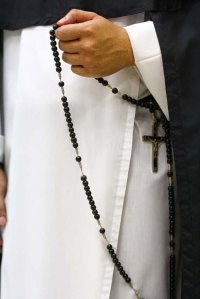 Ketika kita mulai berdoa, kita mengakui bahwa kita bergantung pada-Nya. Tidak heran jika salah satu bentuk doa yang paling mendasar dan umum adalah doa permohonan. Kita berdoa untuk meminta sesuatu dari Allah. Kita mohon untuk kesehatan, kesembuhan, sukses dalam karir, lulus ujian, perlindungan dari bahaya, dan banyak lagi. Saya pernah menulis bahwa Tuhan bukanlah ATM spiritual dan doa kita adalah kartu ATM. Setelah memasukan ‘kartu ATM doa’ dan mengetikan ‘password Amin’, Allah akan serta-merta menghasilkan apa yang kita inginkan. Tapi, saya menyadari bahwa setiap pagi, ketika saya berdoa di hadapan Sakramen Mahakudus dan bunda Maria La Naval, doa-doa saya adalah doa permohonan. Saya meminta Tuhan banyak hal, seperti sarapan yang enak, kemudahan dalam ujian, kadang-kadang berharap bisa dapat cuti lebih awal dan panjang. Tentu saja, saya berdoa juga bagi orang-orang yang saya kasihi dan mereka yang telah saya janjikan untuk didoakan.
 For St. Luke, Jesus is a man of prayer. Luke fondly wrote in his Gospel that Jesus would pray before the decisive events in His life and mission. Jesus prayed the whole night before he chose His disciples (Luk 6:12). One of the reasons why Jesus cleansed the Temple of Jerusalem was that He was well aware of the main function of the holy Temple: House of Prayer (Luk 19:46). He reminded his disciples to pray especially in facing trials and tribulations (Luk 21:36). Before He was embracing His passion and death, He prayed at the garden (Luk 22:44). Finally, enduring a brutal torture, He saved His last breath even to pray for those who have crucified Him (Luk 23:34).
 Bagi St. Lukas, Yesus adalah seorang doa. Lukas menulis dalam Injilnya bahwa Yesus berdoa sebelum menghadapi peristiwa-peristiwa penting di dalam hidup dan misi-Nya. Yesus berdoa sepanjang malam sebelum ia memilih murid-murid-Nya (Luk 6:12). Salah satu alasan mengapa Yesus membersihkan Bait Allah Yerusalem dari berbagai malapraktik adalah bahwa Dia sangat menyadari fungsi utama dari Bait Allah ini: Rumah Doa (Luk 19:46). Dia mengingatkan para murid-Nya untuk berdoa terutama saat menghadapi cobaan dan penderitaan (Luk 21:36). Sebelum Ia menghadapi sengsara dan wafat-Nya, Dia berdoa di taman (Luk 22:44). Akhirnya, saat Ia berada di kayu salib, Dia menyimpan nafas terakhirnya bahkan untuk berdoa bagi mereka yang telah menyalibkan-Nya (Luk 23:34).
 In Medio Ecclesiae