
Be Not Afraid

12th Sunday in Ordinary Time [A]

June 21, 2020

Matthew 10:26-33
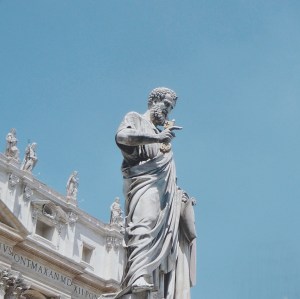
peter image 2Jesus never promises that the disciple will have easy and prosperous lives. Jesus demands the opposite. After being chosen, the twelve disciples are sent to preach that the Kingdom is at hand, and yet they will not go like any royal emissaries with their military escort. No! They will travel as simple men going on foot and carrying minimal provision. They will rely on the generosity of their hosts, and the worst part is that they are going to face rejection.

Naturally, humans as they are, they are growing fear. Yet, Jesus tells them that this mission is just “on the job training,” because they are going to undergo something even deadlier in the future. True enough, after the Pentecost, they will preach that Jesus is Lord, and they are facing severe rejection, terrible persecution, and even gruesome death. As Jesus teaches them, “the disciples are no greater than their master.” If Jesus, their master, is rejected, insulted, and condemned to death, the disciples will share the same path. Peter is crucified upside down, James, brother of John, is beheaded, and James son of Alpheus, is stoned to death.

Jesus understands their human and natural fear, but Jesus tells them that they shall not fear. Why? The answer of Jesus is simple. Why should we fear dying if we will perish anyway? The choices are whether we die as a witness to Christ or die running from Christ?

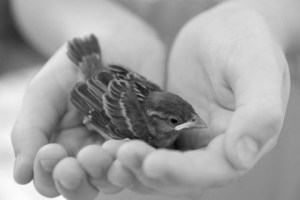
Furthermore, Jesus reveals the real reason why we should not be afraid: we have God, who is a loving and caring Father. Jesus gives a lucid yet simple explanation: how God treats a little sparrow. Sparrow is a kind of vertebrates that is practically worthless in the eyes of merchants, but for God, this little bird is His creatures, and when He created something, He has a good plan for it, and He sees to it that this plan will unfold providentially. In the word of Christian Philosopher Peter Kreeft, even God loves mosquitos. If God cares and loves the sparrow, would He not care and love for us? Again, Jesus points out a lovely truth: God knows better than we know ourselves, even He counts our hairs!

When a sparrow falls and dies, it is part of God’s perfect plan, and so when the disciples are experiencing rejections, trials, and even death, it is also part of God’s providence. Yes, often, our sufferings can be absurd. Why do we have to lose someone we love? Why do we suffer from incurable sickness? We do not understand, but even these terrible things in life are also parts of God’s providence.

We may not see it now, but perhaps we may see it at a later time, or perhaps, we never discover the reasons because of our too narrow minds. Yet, in God’s eyes, it is totally making sense. The gruesome death of martyrs, for example, is unthinkable. Still, Tertullian, a Christian apologist in 3rd century, saw it in a deeper perspective and wrote, “We spring up in greater numbers the more we are mown down by you: the blood of the Christians is the seed of Christianity.”

Jesus does not call us to enjoy a prosperous life but to be His witnesses. Though things may turn against us, Jesus tells us not to fear and worry because, in the end, all will work according to His beautiful plan because He loves us.

Valentinus Bayuhadi Ruseno, OP
Jangan Takut

Minggu ke-12 dalam Masa Biasa [A]

21 Juni 2020

Matius 10: 26-33

little sparrowYesus tidak pernah berjanji bahwa murid-murid-Nya akan memiliki kehidupan yang mudah dan makmur. Yesus menuntut yang sebaliknya. Setelah dipilih, kedua belas murid diutus untuk mewartakan bahwa Kerajaan Allah sudah dekat, namun mereka tidak akan pergi seperti utusan kerajaan duniawi dengan pengawalan voorijder. Tidak! Mereka akan pergi sebagai orang sederhana yang berjalan kaki dan membawa persediaan ala kadarnya. Mereka akan mengandalkan kemurahan hati tuan rumah mereka, dan bagian terburuknya adalah mereka akan menghadapi penolakan.

Secara alami, mereka akan merasa takut. Namun, Yesus mengatakan kepada mereka bahwa misi ini hanya semacam “magang” karena mereka akan menjalani sesuatu yang bahkan lebih sulit di masa depan. Sungguh terjadi, setelah Pentekosta, mereka akan mewartakan bahwa Yesus adalah Tuhan, dan mereka menghadapi penolakan yang keras, penganiayaan yang mengerikan, dan bahkan kematian yang keji. Seperti yang Yesus ajarkan kepada mereka, “para murid tidak lebih besar dari gurunya.” Jika Yesus, guru mereka, ditolak, dihina, dan dihukum mati, para murid akan mengikuti jalan yang sama. Petrus disalibkan terbalik, Yakobus, saudara Yohanes, dipenggal kepalanya, dan Yakobus anak Alfeus, dilempari batu sampai mati.

Yesus memahami ketakutan manusiawi mereka, tetapi Yesus mengatakan kepada mereka bahwa mereka jangan takut. Mengapa? Jawaban Yesus sederhana. Mengapa kita harus takut mati jika kita toh akan mati juga akhirnya? Pilihannya adalah apakah kita mati sebagai saksi Kristus atau mati lari dari Kristus?

Lebih jauh, Yesus mengungkapkan alasan sebenarnya mengapa kita tidak perlu takut: kita memiliki Allah, yang adalah Bapa yang pengasih dan peduli. Yesus memberikan penjelasan yang cerdas namun sederhana: bagaimana Tuhan memperlakukan seekor burung pipit yang kecil. Pipit adalah jenis burung  yang tidak berharga di mata kita, tetapi bagi Tuhan, burung kecil ini adalah ciptaan-Nya, dan ketika Dia menciptakan sesuatu, Dia memiliki rencana yang baik untuknya, dan Dia memastikan bahwa rencana ini akan mencapai kepenuhannya. Dalam kata Filsuf Katolik Peter Kreeft, Tuhan pun mengasihi nyamuk. Jika Tuhan peduli dan mencintai burung pipit, akankah Dia tidak peduli dan mengasihi kita? Sekali lagi, Yesus menunjukkan kebenaran yang indah: Tuhan lebih mengenal daripada kita mengenal diri kita sendiri, bahkan Ia menghitung rambut kita!

Ketika seekor burung gereja jatuh dan mati, itu tidak lepas dari rencana Allah yang sempurna, dan ketika para murid mengalami penolakan, pencobaan, dan bahkan kematian, itu juga merupakan bagian dari penyelenggaraan Allah. Ya, seringkali, penderitaan kita tidak bisa mengerti. Mengapa kita harus kehilangan seseorang yang kita cintai? Mengapa kita menderita penyakit yang tidak dapat disembuhkan? Kita tidak mengerti, tetapi bahkan hal-hal mengerikan dalam kehidupan ini juga merupakan bagian dari penyelenggaraan Allah.

Kita mungkin tidak melihatnya sekarang, tetapi mungkin kita melihatnya di lain waktu, atau mungkin, kita tidak pernah menemukan alasannya karena pikiran kita terlalu sempit. Namun, di mata Tuhan, hal-hal terlihat sebagai sebuah lukisan yang sempurna, walaupun ada warna-warna gelap di dalamnya. Kematian para martir yang mengerikan, misalnya, tidak masuk akal. Tetapi, Tertullianus, seorang apologis Katolik pada abad ke-3, melihatnya dalam perspektif yang lebih dalam dan menulis, “Semakin kamu menghancurkan kami, kami pertumbuh semakin banyak: darah para martir adalah benih Gereja.”

Yesus tidak memanggil kita untuk menikmati kehidupan yang sukses tetapi untuk menjadi saksi-Nya. Meskipun segala sesuatu dapat berbalik melawan kita, Yesus menyatakan bahwa kita tidak perlu takut dan khawatir karena, pada akhirnya, semua akan bekerja sesuai dengan rencana-Nya yang indah karena Dia mengasihi kita.

Valentinus Bayuhadi Ruseno, OP

Hearing His Voice

Fourth Sunday of Easter [May 12, 2019] Jn 10:27-30

“My sheep hear my voice; I know them, and they follow me. (Jn. 10:27)”

jesus shepherdFew of us have a direct encounter with a sheep, let alone shepherding sheep. When Jesus says, “My sheep hear my voice.” I thought it was a kind exaggeration. After all the sheep is not that intelligent compared to the Golden Retriever or Labrador who would listen to their owners. However, one time, I watched a video on YouTube about a group of tourists who visited the vast hill in the countryside of Judea where the flock was grazing. They were asked to call the attention of the sheep. One by one, the tourists shouted to the top of their lungs, but they got not even the slightest response. Yet, when the true shepherd came forward and called them out, all the scattered sheep immediately rushed toward the shepherd! It was an eye-opener. Jesus was right. The sheep literally hear the voice of His shepherd.

The sheep in Judea are raised both for wool and for sacrifice. Especially those intended for wool production, the shepherd shall live together with his flock for years. No wonder if he knows well each sheep, its characters, and even its unique physical features. He will call them by name like ‘small-feet’ or ‘large-ears.’

Modern men and women, especially the Millennials, are heavily visual creatures. Thanks to smartphones, TV, and computers, our span of attention becomes shorter and shorter. One scientist even says that our span of attention is one second shorter than of the goldfish! The teachers or speakers must use all the visual aids to catch the attention of young listeners. PowerPoint presentation is a minimum requirement nowadays, and the teachers need to move all their body’s parts, to crack a joke, to sing, to dance, even to summersault! Simply listening to a plain talk is tedious, and to read a bare and long text like this reflection is boring. This is also one of the reasons why young people are leaving the Church because they experience the Church, especially her preachers, as boring and dry. After five minutes listening to the preacher, we begin to be restless, checking our watch, scratching our heads, and dozing off!

However, hearing remains fundamental because hearing is the key to following Jesus. We call ourselves, Christians, the follower of Christ, and how can we follow Christ if we do not recognize His voice? While the sense of sight attracts us, sense of hearing remains signs of intimacy and love. Like a sheep that identifies the shepherd’s voice because the shepherd takes care of it, so we recognize the voice of someone we love. I have been hearing the voice of my mother since I was inside her womb, and even when I close my eyes, I can still acknowledge her voice. I can even identify whether she is happy, sad, or angry when she calls my name.

One time, a young man asked me, “Brother, how do we know God’s will?” I replied, “Do you hear His voice?” He immediately said, “I pray, but I never heard a voice.” I said in reply, “Ah, how are you going to hear His voice if you talk all the time? And how are you going to know His voice, if you seldom give your time with Him?” To follow Jesus means that we are able to hear Jesus, and to recognize His voice presupposes we have a loving and strong relationship with Him

Deacon Valentinus Bayuhadi Ruseno, OP

Mendengar Suara-Nya

Minggu Paskah keempat [12 Mei 2019] Yoh 10: 27-30

“Domba-domba-Ku mendengarkan suara-Ku dan Aku mengenal mereka dan mereka mengikut Aku, (Yoh 10:27)”

jesus shepherd 2Ketika Yesus berkata, “Domba-domba-Ku mendengarkan suara-Ku.” Saya pikir itu agak berlebihan. Kita tahu domba-domba adalah hewan yang tidak secerdas anjing Golden Retriever atau Labrador yang bisa mendengarkan instruksi dari pemiliknya. Namun, suatu kali, saya menonton video di YouTube tentang sekelompok wisatawan yang mengunjungi bukit luas di pedesaan Yudea di mana kawanan domba sedang merumput. Mereka diminta untuk menarik perhatian domba. Satu demi satu, para wisatawan berteriak dengan lantang, tetapi mereka tidak mendapat tanggapan sedikit pun. Namun, ketika sang gembala maju dan memanggil mereka, semua domba yang tercerai-berai segera bergegas menuju gembala itu dan mengerumuni dia! Sungguh menakjubkan! Yesus sungguh benar. Domba-domba sungguh mendengar suara gembala-Nya.

Domba-domba di Yudea dibesarkan untuk wol dan sebagai hewan korban. Khususnya untuk jenis domba-domba yang diperuntukkan bagi produksi wol, mereka akan hidup bersama-sama dengan sang gembala selama bertahun-tahun. Tidak heran jika sang gembala mengenal dengan baik setiap domba, karakternya, dan bahkan fitur fisiknya yang unik. Dia akan memanggil mereka dengan nama seperti ‘si kaki kecil’ atau ‘si telinga besar.’ Dan kawanan domba pun mengenal suara sang gembala.

Berbeda dengan domba, pria dan wanita modern, terutama kaum Millennial, adalah makhluk yang sangat visual. Berkat smartphone, TV, dan komputer, rentang perhatian kita menjadi lebih pendek setiap harinya. Seorang ilmuwan bahkan mengatakan bahwa rentang perhatian kita satu detik lebih pendek daripada ikan mas! Para guru atau pembicara harus menggunakan semua alat bantu visual untuk menarik perhatian pendengar muda. Presentasi PowerPoint adalah persyaratan minimum saat ini, dan para guru perlu menggerakkan semua bagian tubuh mereka, membuat lelucon, bernyanyi, menari, bahkan jungkir balik! Hanya mendengarkan pembicaraan biasa itu membosankan, dan membaca teks yang panjang dan panjang seperti refleksi ini boring. Ini juga salah satu alasan mengapa kaum muda meninggalkan Gereja karena mereka mengalami Gereja, terutama para pengkhotbahnya, membosankan dan kering. Setelah lima menit mendengarkan homili, kita mulai gelisah, memeriksa jam tangan, mengaruk-garuk kepala, dan akhirnya tertidur!

Namun, indera pendengaran tetap mendasar karena pendengaran adalah kunci untuk mengikuti Yesus. Kita menyebut diri kita sendiri, Kristiani, artinya pengikut Kristus, dan bagaimana kita dapat mengikuti Kristus jika kita tidak mengenali suara-Nya? Sementara indera penglihatan menarik kita, indera pendengaran tetap menjadi tanda keintiman dan kasih. Seperti seekor domba yang mengidentifikasi suara gembala karena gembala menjaganya, kitapun mengenali suara seseorang yang kita cintai. Saya telah mendengar suara ibu saya sejak saya di dalam rahimnya, dan bahkan ketika saya menutup mata, saya masih bisa mengenali suaranya dari jauh. Saya bahkan dapat mengidentifikasi apakah dia bahagia, sedih, atau marah ketika dia memanggil nama saya.

Suatu kali, seorang pemuda bertanya kepada saya, “Frater, bagaimana kita tahu kehendak Tuhan?” Saya menjawab, “Apakah kamu mendengar suara-Nya?” Dia segera berkata, “Saya banyak berdoa, tetapi saya tidak pernah mendengar suara.” Saya berkata dalam jawab, “Ah, bagaimana kamu akan mendengar suara-Nya jika kamu yang berbicara sepanjang waktu? Dan bagaimana kamu akan mengetahui suara-Nya, jika kamu jarang memberikan waktumu bersama-Nya?” Mengikuti Yesus berarti bahwa kita dapat mendengar Yesus, dan untuk mengenali suara-Nya, kita perlu memiliki hubungan yang penuh kasih dan kuat dengan-Nya.

 Diakon Valentinus Bayuhadi Ruseno, OP

Grace Abounds All the More

Conversion of St. Paul, the Apostle [January 25, 2019] Mark 16:15-18

st. paul conversion 2Today we are celebrating the feast of the conversion of St. Paul, the Apostle. St. Paul is one of the greatest names in our Church. Many churches are named after him, like one of the major Basilica in Rome, St. Paul outside the Wall. Not only churches but also many Christians are named after him, including our brothers in the house of formation, Bro. John Paul Sontillano, Bro. Paulus Gabriel Rambang Ngawan, and our former formator, Fr. Pablo Tiong.

Paul is an apostle and yet, he was not part of the 12 apostles. It is through a special revelation, he was called by Jesus and sent to preach the Gospel to all nations, thus, he was called also as the apostle to the nations or of the Gentiles. Indeed, he was doing his job very well, as he preached zealously, traveled tirelessly, and founded many local churches in Asia and Europe, like in Corinth, Thessaloniki, and Galatia. Thirteen of his letters addressed to these communities or to his co-workers like Timothy and Titus, have become part of the New Testament, considered inspired, and thus, the Word of God. And from his letters, the Church has shaped her teachings, doctrines, and orthodoxy, like the primacy of love in Christian living in 1 Cor 13, that love is patient, love is kind, love never fails. Or, in 1 Cor 11, we discover Paul condemns those who failed to celebrate the Eucharist worthily, rooted in the doctrine of the Real Presence of Jesus Christ in the Eucharist. Paul was so inspiring that he inspires St. Luke, the evangelist to devote half of his Acts of the Apostles, to the story and journey of St. Paul.

However, this is only half of the story. Before Paul, there was Saul. Saul was zealous Pharisee who hated Jesus and His followers so much. He went door to door just to arrest Christian, put them in jail, and persecuted them. Young Saul also consented to the murder of the first martyr, Stephen. The Acts of Apostles 9:1 described him as someone who breathes threats and murders. Saul was a dark character with much violence and anger.

However, the Good News of salvation for Saul: no matter dark, violent and broken Saul was, God, is more powerful than all these ugly things. God’s grace, mercy, and love can transform the persecutor of Christ into the vessel of grace. That is why we are celebrating the conversion of St. Paul, not only about St. Paul but the conversion. It is not about Paul’s greatness, achievement, and holiness, but it is God.

Like Paul, we all have our own darkness and brokenness, some may come from broken family, some having a broken family, some have traumatic experiences, some losing people we love in a painful way, some are victims of abuses, some struggling with sickness, with anger, with depression, with poverty or other problems. We are still wrestling with our sinful attitudes and tendencies. Yet, the Good News Paul received is also the same Good News we receive. All of these ugly things have not the last word on us. Our God is stronger than all of this ugliness of life.

As St. Paul himself says, “When sin abounds, grace abounds all the more!” (Rom 5:20)

St. Paul, the apostle, pray for us.

Deacon Valentinus Bayuhadi Ruseno, OP

Preaching Faith

Nineteenth Sunday in Ordinary Time [August 12, 2018] John 6:41-51

Amen, amen, I say to you, whoever believes has eternal life. I am the bread of life.  (Jn 6:47-48)

I am currently having my pastoral clinical education in one of the hospitals in the Metro Manila. Aside from visiting the patients and attending to their spiritual needs, we also have processing sessions guided by our supervisor.  During one of the sessions, our supervisor asked me, “Where is the ultimate source of your preaching?” As a member of the Order of Preachers, I was caught off guard. My initial reaction was to say our deeply revered motto, “Contemplare, at contemplata aliis tradere (to contemplate, and to share the fruits of one’s contemplation).” He pressed further and asked what is behind this contemplation. I began scrambling for answers. “Is it study? Community? Or prayer? He said that those were right answers, but there is something more basic. I admitted I am clueless. While he was smiling, he said “It is faith.”

His answer is very simple and yet makes a lot of sense. We pray because we have faith in God. We go to the Church because we have faith in the merciful God who calls us to be His chosen people. As for myself, I entered the Dominican Order because I have faith that generous God invites me to this kind of life. We preach because we trust in the loving God and we want to share this God with others.

I have spent years studying philosophy and theology at one of the top universities in the Philippines, but when I meet the patients with so much pain and problems, I realize that all my achievements, knowledge and pride are coming to naught. How am I going to help patients having troubles to settle hospital bills with astronomical amount?  How am I going to help persons in their dying moments? How am I going to help patients who are angry with God or disappointed with their lives? However, as a chaplain, I need to be there for them, and the best preaching is in fact, the most basic one. It is not preaching in the forms of theological discourse, philosophical discussion, and a long sermon or advice. To preach here is to sharing my faith and to receive their faith. I am there to be with them, to listen to their stories and struggles, to share a little humor and laughter, and to pray together with them. To pray for them is the rare moments that I pray with all my faith because I know that only my faith I can offer to them.

In our Gospel today, we read that some Jews are murmuring because they have no faith in Jesus. Yet, Jesus does not only call them to simply trust in Him, but also to literally eat Him because He is the Bread of Life. The faith in the Eucharist is indeed a tipping point. It is either the craziest of the crazy or the greatest faith that can move even a mountain. As Christians who believe in the Eucharist and receive Jesus in every Mass, we are tremendously privilege and challenged to have and express this faith. However, when we fail to appreciate this meaning and beauty of this faith, and only receive the Bread of Life in a routinely and mechanical fashion, we may lose altogether this faith.

As people who go to Church every Sunday and receive the Eucharist on a regular basis, do we truly believe in Jesus the Bread of Life? Does our faith empower us to see God in the midst of our daily struggles and challenges? Do we have faith that we can share when it matters most?

Br. Valentinus Bayuhadi Ruseno, OP

Mewartakan Iman

Minggu ke-19 dalam Masa Biasa [12 Agustus 2018] Yohanes 6: 41-51

Aku berkata kepadamu: Sesungguhnya barangsiapa percaya, ia mempunyai hidup yang kekal. 48 Akulah roti hidup. (Yoh 6: 47-48)

faith1Saat ini saya sedang menjalani pelayanan pastoral di salah satu rumah sakit di Metro Manila. Selain mengunjungi pasien dan melayani kebutuhan rohani mereka, kami juga mengikuti sesi pengolahan yang dipandu oleh seorang pengawas. Dalam salah satu sesi, pengawas kami bertanya kepada saya, “Di mana sumber utama pewartaanmu?” Sebagai anggota Ordo Pengkhotbah, saya terperangah. Reaksi awal saya adalah mengucapkan motto kami, “Contemplare, di contemplata aliis tradere (untuk berkontemplasi dan membagikan buah dari kontemplasi).”
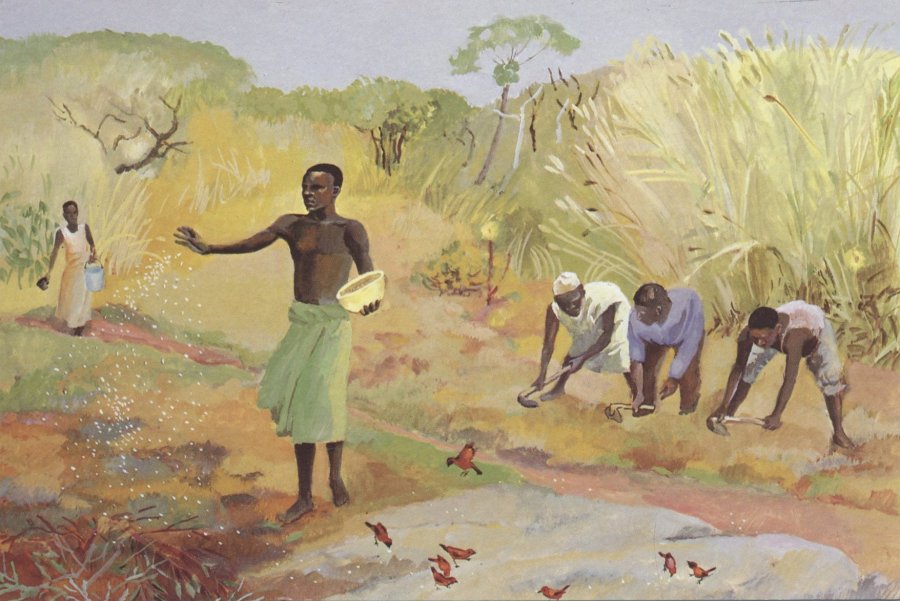
Dia menekan lebih jauh dan bertanya apa yang ada di balik kontemplasi itu. Saya mulai bingung mencari jawaban. “Apakah ini studi? Hidup komunistas? Atau doa? Dia mengatakan bahwa semua jawaban saya adalah benar, tetapi ada sesuatu yang lebih mendasar. Saya akui saya tidak tahu. Dia pun tersenyum dan dia mengatakan, ini adalah iman.

Jawabannya sangat sederhana namun sangat masuk akal. Kita berdoa karena kita memiliki iman kepada Tuhan. Kita pergi ke Gereja karena kita memiliki iman kepada Allah yang penuh belas kasih yang memanggil kita untuk menjadi umat pilihan-Nya. Sedangkan, saya sendiri memasuki Ordo Dominikan karena saya memiliki iman bahwa Allah yang murah hati memanggil saya untuk hidup membiara. Kita mewartakan karena kita memiliki iman pada Tuhan yang pengasih dan kita ingin berbagi Tuhan dengan sesama.

Saya telah menghabiskan bertahun-tahun belajar filsafat dan teologi di salah satu universitas ternama di Filipina, tetapi ketika saya bertemu pasien dengan penyakit dan masalah yang sanget berat, saya menyadari bahwa semua pencapaian, pengetahuan, dan kebanggaan saya itu sia-sia. Bagaimana saya akan membantu pasien untuk membayar tagihan rumah sakit dengan jumlah yang sangat besar? Bagaimana saya akan membantu pasien-pasien di saat-saat terakhir mereka? Bagaimana saya akan membantu pasien yang marah pada Tuhan atau kecewa dengan hidup mereka? Namun, saya harus ada di sana untuk mereka menjadi pewartaan yang terbaik dan paling mendasar. Ini bukan pewartaan dalam bentuk diskursus teologis, diskusi filosofis, dan khotbah atau nasihat yang panjang. Untuk mewartakan di sini adalah untuk membagikan iman saya dan untuk menerima iman mereka. Saya ada di sana untuk bersama mereka, untuk mendengarkan kisah dan pergulatan mereka, untuk berbagi sedikit canda dan tawa serta berdoa bersama dengan mereka. Berdoa untuk mereka adalah saat-saat langka, di mana saya berdoa dengan semua iman saya sebab saya tahu bahwa hanya iman ini yang dapat saya berikan kepada mereka.

Dalam Injil kita hari ini, kita membaca bahwa beberapa orang Yahudi bersungut-sungut karena mereka tidak memiliki iman kepada Yesus. Namun, Yesus tidak hanya memanggil mereka untuk hanya percaya kepada-Nya, tetapi juga untuk benar-benar memakan-Nya karena Dia adalah Roti Kehidupan. Iman dalam Ekaristi sungguh menjadi penentu. Hanya dua kemungkinan: sebuah kegilaan atau iman terbesar. Sebagai umat Kristiani yang percaya pada Ekaristi dan menerima Yesus di setiap misa, kita menerima rahmat dan ditantang luar biasa untuk memiliki dan menyatakan iman ini. Namun, ketika kita gagal untuk menghargai arti dan keindahan dari iman ini dan hanya menerima Roti Hidup secara rutin, kita akan kehilangan iman ini.

Sebagai orang yang pergi ke Gereja setiap Minggu dan menerima Ekaristi secara teratur, apakah kita benar-benar percaya kepada Yesus, Sang Roti Hidup? Apakah iman kita mampu memberdayakan kita untuk melihat Tuhan di tengah-tengah perjuangan dan tantangan hidup kita sehari-hari? Apakah kita memiliki iman yang dapat kita bagikan di saat yang paling penting?

Frater Valentinus Bayuhadi Ruseno, OP

The Sower

15th Sunday in Ordinary Time. July 16, 2017 [Matthew 13:1-23]

 “Hear then the parable of the sower. (Mat 13:18)”

parable sower 2Looking carefully into the parable, we find something strange. The agrarian land in Palestine was not as fertile and arable like many other countries like Indonesia and Philippines. It was expected that some seeds would fall into stony grounds, or be outgrown by the thorny plans. Yet, the Israelite farmers knew very well that seeds were their lifeline and wasting three-quarter of their seeds was just unthinkable. To add to this oddity, Jesus assured that this waste of seeds would be compensated with super abundant result of thirty to hundredfold harvest.  A seasoned farmer recognized that an ordinary wheat seed planted in the Palestinian soil would yield just enough for the family. Thus, many of Jesus’ listeners would wonder, “What is he talking about? He is just a carpenter, and now he is talking to us from a boat about agriculture?” Even His disciples were puzzled and approached Him for clarification.
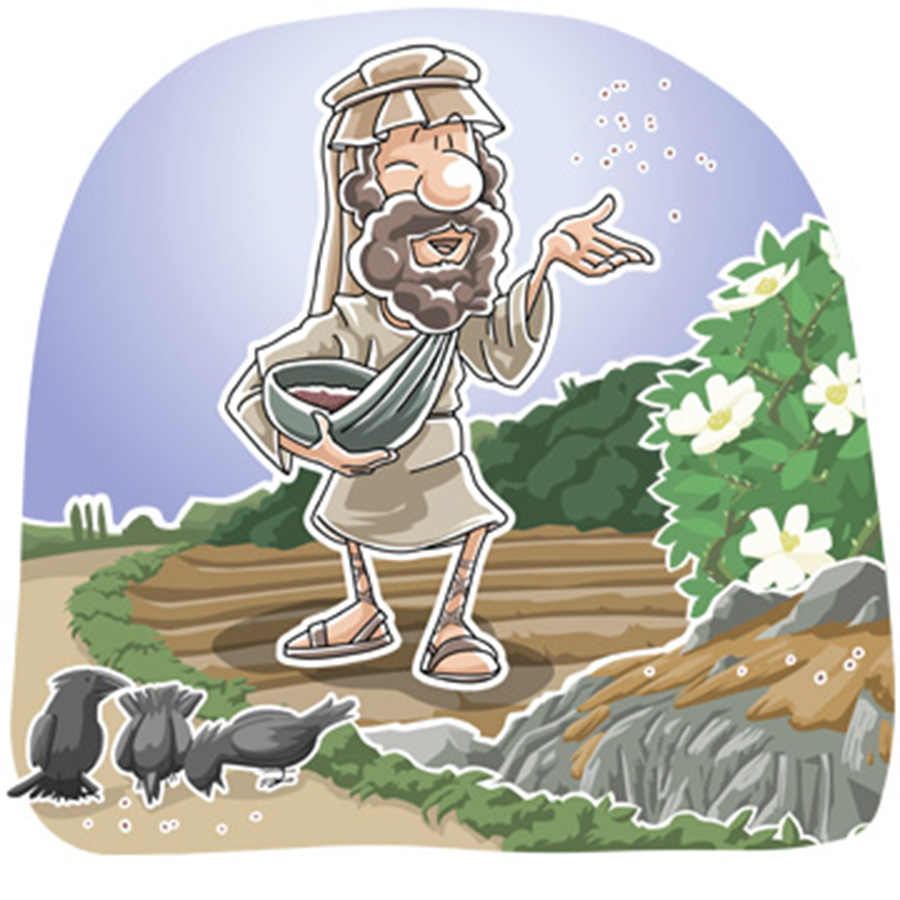
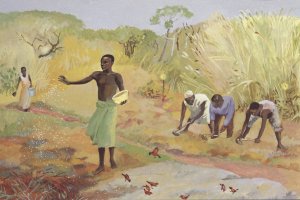

Jesus rarely explained His parables, yet this time, Jesus went to considerable length to reveal the meaning behind His parable. The seed was the metaphor of the Word of God, the sower stood for the preacher or the worker of the Word, and the land symbolized the different recipients. From then on, both the disciples and us, begin to understand the dynamism of preaching. The preaching of the Word has to be done generously and even abundantly for practically all people, even for those who would reject it. The generosity of sowing the Word flows from God who is the Father of all and wants all to come to Him.

Yet, Jesus did not only explain the parable, He gave also the title “Parable of the Sower”. Thus, immediately our attention is called to the sower. Who is this sower? It is all of us. We are called to become the preachers or the co-workers of the Word. Thus we are to spread the Word to all kinds of grounds or people, including those we do not like us, or those who hate us. A parish priest has to keep preaching and serving all his parishioners, not only those who support him, but also those who criticize and reject him. A religious sister who takes care of orphans shall care for all, not only those children who are cute and obedient. A government leader shall work for the betterment of all people in the society, regardless of whether they voted for him or not. The modern-day spouses who often focus more on careers need to be generous in building up the Church and the society through their offspring; parents need to love and educate all their children, regardless of whether the child is their favorite one or not.

The mission of preaching the Word of God is tough because it reflects the generosity and mercy of God. Jesus Himself had to endure this difficulty as His preaching and ministry got misunderstood, rejected, and He himself got persecuted and executed, yet He continued to preach because it was His Father’s will to draw all His children closer to Himself. We are called to be God’s co-workers in sowing God’s word, in contributing in our little yet unique way in the preaching ministry of the Church. Doubtless, to be a sower of the Word is a tough one, yet it is our way of participating in the abundant harvest of God.

Br. Valentinus Bayuhadi Ruseno, OP


Penabur

Minggu Biasa ke-15. 16 Juli 2017 [Matius 13: 1-23]

“Karena itu, dengarlah arti perumpamaan penabur itu (Mat 13:18).”

The Sower - Luke 8:4-15
The Sower

Membaca dengan cermat perumpamaan hari ini, kita menemukan sesuatu yang tidak lazim. Tanah di Palestina tidaklah sesubur negara-negara lain seperti Indonesia dan Filipina, dan oleh karena ini, saat penaburan benih, beberapa akan jatuh ke tanah berbatu, atau semak berduri. Namun, para petani Israel tahu betul bahwa pada benih inilah tergantung hidup mereka, dan menghabiskan tiga perempat benih mereka pada tanah yang tidak subur sama saja dengan bunuh diri. Lebih mencengangkan lagi adalah Yesus meyakinkan bahwa walaupun menaburkan seperempat benih, hasil panen akan mencapai tiga puluh hingga seratus kali lipat. Seorang petani berpengalaman tentu tahu bahwa benih gandum biasa yang ditanam di tanah Palestina akan hanya menghasilkan cukup untuk keluarga dan musim tanam berikutnya, tetapi sampai berkelimpahan tidaklah wajar. Dengan demikian, banyak pendengar Yesus bertanya-tanya, “Apa yang dia bicarakan? Sulit dimengerti oleh nalar sehat.” Bahkan murid-murid-Nya pun bingung dan mendekati Dia untuk mencari klarifikasi.

Yesus jarang menjelaskan perumpamaan-perumpamaan-Nya, namun kali ini, Yesus melakukan hal yang berbeda, dan Diapun mengungkapkan makna di balik perumpamaan-Nya tersebut. Benih adalah metafora bagi Firman Tuhan, penabur adalah pewarta atau pekerja Firman, dan tanah melambangkan penerima Firman yang berbeda-beda. Dari sini, kita mulai memahami dinamika pewartaan. Pemberitaan Firman harus dilakukan dengan murah hati dan bahkan melimpah bagi semua orang, bahkan bagi mereka yang akan menolaknya. Kemurahan hati dari pewartaan Firman ini mengalir dari Allah sendiri yang adalah Bapa dari semua dan menginginkan semua untuk datang kepada-Nya.

Namun, Yesus tidak hanya menjelaskan perumpamaannya, Dia bahkan memberikan judul “Perumpamaan Penabur”. Jadi, Yesus dengan segera memusatkan perhatian kita kepada sang penabur. Siapakah penabur ini? Jawabanya adalah kita semua. Kita dipanggil untuk menjadi pewarta dan rekan kerja Allah dalam pewartaan Firman. Dengan demikian kita harus menebarkan Firman kepada semua orang, termasuk mereka yang tidak menyukai kita, dan mereka yang membenci kita. Seorang pastor paroki harus terus berkhotbah, merayakan sakramen dan melayani semua umat parokinya, tidak hanya mereka yang mendukungnya, tetapi juga orang-orang yang mengkritik dan menolaknya. Seorang suster yang merawat anak yatim harus merawat semua, tidak hanya anak-anak yang imut dan taat. Seorang pejabat pemerintahan harus bekerja untuk kemajuan semua orang di masyarakat, terlepas dari apakah mereka memilihnya atau tidak. Pasangan suami-istri yang sering lebih fokus pada karier harus bermurah hati dalam membangun Gereja dan masyarakat dengan menjadi orangtua, dan orangtua perlu mencintai dan mendidik semua anak mereka, terlepas dari siapakah yang menjadi anak kesayangan mereka.

Misi pewartaan Firman Tuhan itu sulit karena ini mencerminkan kemurahan hati dan belas kasih Allah yang tanpa batas. Yesus sendiri harus menanggung kesulitan ini karena pewartaan dan pelayanan-Nya disalahpahami dan ditolak, dan Dia sendiri dianiaya dan dihukum mati, namun Dia terus mewartakan karena Dia mengerti kehendak Bapa-Nya untuk membawa semua anak-anak-Nya lebih dekat kepada diri-Nya. Kita dipanggil untuk menjadi rekan kerja Allah dalam menabur Firman-Nya dan memberikan kontribusi kecil namun unik kita dalam pelayanan pewartaan Gereja. Tak diragukan lagi, menjadi penabur Firman adalah hal yang sulit, namun ini adalah cara kita untuk berpartisipasi dalam mewujudkan panen berlimpah Tuhan.

Frater Valentinus Bayuhadi Ruseno, OP

Life of a Preacher

Twelve Sunday in Ordinary Time. June 25, 2017 [Mathew 10:26-33]

“What I say to you in the darkness, speak in the light; what you hear whispered, proclaim on the housetops (Mat 10:27).”

sent to preachSt. Francis of Assisi once said, “Preach the Gospel all time. When necessary, use words.” He correctly points out that preaching is not only the job of the priests in the pulpit, or lay preachers in the prayer meetings. Preaching the Gospel is the mission of all of us.  The preaching can happen in the family, as we show our children the meaning of true love, fidelity and respect. Preaching can take place in our workplaces as we uphold honesty, hard work, and dedication. Preaching may manifest in our daily life as we do justice, service to the needy, and kindness to our neighbors.

However, to preach Jesus Christ is not always smooth sailing. I myself have been in the ministry of preaching for some years, and at times, I have to face tough moments. When, I preach with a content and style that are outside of the box, some good and honest people come and rightly question the orthodoxy of my preaching. Yet, when I preach with predicted insight and usual delivery, young people will come and tell me it is boring. There are times that nobody’s listening to my preaching or reading my reflection. Sometimes, I feel tired, frustrated and bored. The same feelings may also befell us as we do our preaching in the family, workplace, the parish, or the society. It is frustrating when we are honest, but the rest are not. It is tiring when we know that we are the only one working hard. It is hurting to be backstabbed after all our service to others.

Yet, our life as a preacher is a lot better and safer than my brothers and sisters in other places. Our Dominican sisters of St. Catharine of Siena in Iraq chose to stay despite the ongoing war and turmoil that hit the country, and serve the refugees without any discrimination. In 2003, when US-led coalition invaded Iraq, they kept running the hospital in Baghdad amidst heavy fighting and looting in the capital. In 2014, when IS took the city of Mosul, the sisters were walking together with the refugees, and at forefront in helping and managing several refuge centers. For some others to preach Christ means violence and death. Last May, Fr. Miguel Angel Machorro was in critical condition after he was stabbed in the neck just right after saying the mass in Mexico City’s Cathedral. Fr. Teresito Suganob who was working among the Muslims in Marawi City, Philippines, was abducted when the group of extremists occupied the city. Nobody knows yet what happened to him.

What makes them preach the Gospel despite constant dangers to their lives? I believe that it is because they love the Lord dearly. This love, as Roman poet Virgil wrote, conquers all. Their love drives out the fear of death, empowers them in trials, and encourages them in face of frustrations and failures. In the words of St. Paul, “What will separate us from the love of Christ? Will anguish, or distress, or persecution, or famine, or nakedness, or peril, or the sword… No, in all these things we conquer overwhelmingly through him who loved us (Rom 8:35-37).”  True preaching, then is fuelled by true love of God and not seeking after our own glory. Without this love, we will back out when our preaching seems to fail, or we will feel proud when our ministry meets success. Do we have this love for Jesus? Are our preaching motivated by this love? Are we allowed to be overwhelmed by God’s love for us?

Br. Valentinus Bayuhadi Ruseno, OP