

Easter Sunday [April 19, 2019] John 20:1-9

Mary Magdalene is a female disciple that loves her Teacher deeply, and being a woman, there is something that she teaches us. Luke describes her in his Gospel as a woman “from whom seven demons have come out” [see Luk 8:2]. It must be a terrible experience to be tormented by seven demons, and when Jesus heals her, she expresses her deep gratitude by following Jesus. As one of Jesus’ disciples, she is proven to be the most faithful to her Teacher. When many followers of Jesus are running away to save their lives, and even Peter, the leading figure in the group, denies Jesus, Mary follows Jesus in His way of the Cross to the end. She received the insult Jesus receives, she bears the humiliation Jesus bears, she carries the cross Jesus carries. In fact, she is standing beside the cross together with the mother of Jesus and John the beloved.
However, Mary’s love is even bigger than death. She is the first person who visits the tomb early in the morning. We recall that after Jesus died on the cross, his body was hastily brought to the tomb by Nicodemus and Joseph Arimathea because the Sabbath was drawing near. During Sabbath, Jews are not allowed to bury the dead. Mary knows that Jesus’ body was not taken care of properly, and she wants to make sure that Jesus deserves the proper burial. She comes to the tomb to express her love for the last time for the Teacher by anointing the body of Jesus. Yet, she only sees the empty tomb. Fear seizes her. She may think that some bad guys stole, inflicted further damages and desecrated the body. Instinctively, she runs towards the men of authority after Jesus Himself, Peter and John.
After checking the tomb, Peter fails to understand, and he goes back to the house. She also does not understand and weeps for the loss of her love, but unlike Peter, Mary stays at the tomb. In utter confusion and meaninglessness, Mary does not abandon Jesus. Indeed, the Savior does not disappoint and gives Mary Magdalene a singular privilege to witness the resurrected Jesus. Her great love and fidelity lead her to the joy of Resurrection. She becomes the first preacher of Resurrection.
In the Gospel, often female disciples are depicted as a model of love and perseverance. God created man and woman as equal in dignity, but they differ in characters. Indeed, men like Peter, are the figures of authority, but women excel in what often is lacking in male disciples. I have visited many places in Indonesia and the Philippines, and I give talks and reflections, but one thing in common from these places, is that women often outnumber the men. I am newly assigned in Redemptor Mundi Parish, Surabaya, Indonesia, and a simple gaze will prove that more women are attending our daily morning masses.
Mary Magdalene, a woman disciple, shows to us that it is possible to love and to be faithful when things got tough and rough, when life throws us its trash, and when confusion and meaningless seem to reign. Mary is those women who unceasingly pray for the priests despite so many failures they have made Mary are those mothers who make daily sacrifices for their children despite being unappreciated. Mary is those religious sisters who serve the poor committedly despite many setbacks and trails. We must thank many Mary Magdalene around us. They show us that there love truly conquers death and that there is a resurrection in even the senseless empty tomb.
Happy Easter!
Deacon Valentinus Bayuhadi Ruseno, OP
 Maria Magdalena adalah seorang murid perempuan yang sangat mencintai gurunya, dan sebagai seorang wanita, ada sesuatu yang dia ajarkan kepada kita. Lukas mengatakan dalam Injilnya bahwa Maria adalah sebagai seorang wanita “yang darinya tujuh setan keluar” [lihat Luk 8:2]. Pastinya merupakan pengalaman yang mengerikan untuk disiksa oleh tujuh setan, dan ketika Yesus menyembuhkannya, ia mengungkapkan rasa terima kasihnya yang mendalam dengan mengikuti Yesus. Sebagai salah satu murid Yesus, ia terbukti paling setia kepada gurunya. Ketika banyak pengikut Yesus melarikan diri untuk menyelamatkan hidup mereka, dan bahkan Petrus, tokoh utama dalam kelompok itu, menyangkal Yesus, Maria mengikuti Yesus dalam jalan Salib-Nya sampai akhir. Dia menerima penghinaan yang Yesus terima, dia menanggung malu yang Yesus tanggung. Bahkan, dia berdiri di samping salib bersama dengan ibu Yesus dan Yohanes yang terkasih.



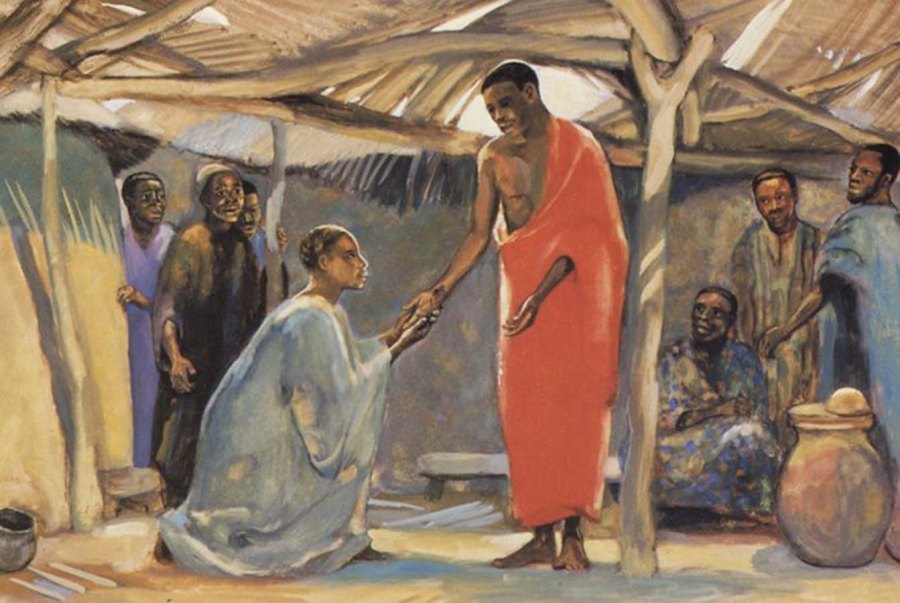
 Thomas was looking for a proof that Jesus truly rose from the dead. Not only seeing Him in person, he required another sign: touching the crucifixion marks that Jesus bore. He was one of the Twelve, the inner cycle of Jesus’ disciples, and being one, he had the privilege to walk with Jesus, dine with Him, and witness His mighty deeds. At a first glance, he would easily recognize Jesus, his Master, but still, he demanded the marks of the nails. Why did Thomas insist on searching the wounds?


 Jika kita membaca narasi Kebangkitan di keempat Injil, kita akan menemukan bahwa setiap Penginjil memiliki cerita unik tersendiri. Namun, walaupun berbeda, ada beberapa hal-hal serupa di dalam narasi Kebangkitan, seperti kubur yang kosong, kehadiran para wanita, hadirnya malaikat diikuti oleh Yesus yang bangkit, dan para wanita mewartakan Kabar Baik bagi murid-murid lainnya. Mari kita fokus pada satu fitur yang biasanya luput dari perhatian kita. Saksi pertama dari kebangkitan bukanlah seorang laki-laki, tapi para perempuan. Pertanyaanya sekarang: Di mana para murid laki-laki? Di mana para pria yang berjanji untuk mengorbankan nyawa mereka demi Yesus? Jawabannya: Mereka bersembunyi, lari dan ketakutan.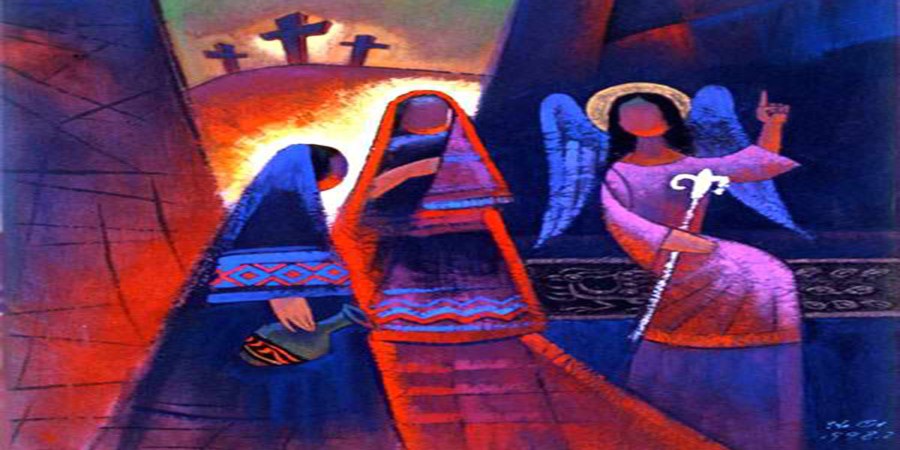
 What do you see inside the empty tomb? Seeing the empty tomb, Mary Magdalene was at lost, terrified and confused. Where is Jesus? Is He moved to the other tomb? Is someone stealing His Body? Peter, the leader of the apostles, did not understand the empty tomb and went home puzzled. All things were so depressing. Jesus was betrayed, denied, tortured, crucified and now he is missing!
 In Medio Ecclesiae