

29th Sunday in Ordinary Time [B]
October 20, 2024
Heb 4:14-16
The letter to the Hebrews calls Jesus our high priest. As Catholics, we are not foreign to the word ‘priest’ since they are our liturgy or worship leaders. Yet, the author of the letter to the Hebrews does not call Jesus just as another priest but as the high priest. Why does the author of this letter address Jesus as this title? What makes a high priest different from other priests? What is it for us?
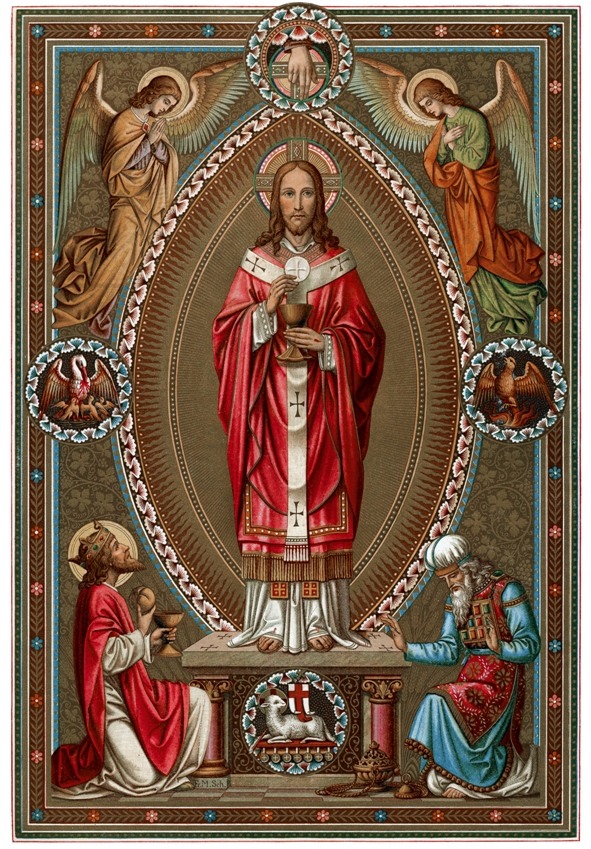
Firstly, we need to clarify the word’ priest.’ While it is true that a priest is appointed to oversee worship, he has one specific responsibility that only he can execute. In the Bible and many ancient civilizations, the most essential part of ritual worship is the sacrifice. Commonly, the sacrifice consists of offering something precious to God. In ancient agrarian societies, animals like lambs and crop yields like wheat grains may serve as sacrificial offerings. In the case of animal sacrifice, the ritual begins with the people handing the animal to the priest, and then the priest will slaughter the animal by separating the blood and the body. After this, the priest brings the animal to the altar to be burned as a symbol that God has accepted the sacrifice. In this sense, a priest serves as a mediator between God and the people.
The leader among the priests is called ‘high priest.’ The Hebrew word for high priest is כֹּהֵן גָּדוֹל, kohen gadol, literally means “great priest.” In Greek, the high priest is ἀρχιερεύς, archiereus, and it can be translated as “the first priest.” Obviously, the high priest has to lead the other priests and manage the entire worship system. Yet, his fundamental function is to be the primary mediator between God and the people. Thus, only he can officiate the most solemn worship. In the Bible, only the high priest can offer the holy sacrifice on the day of atonement (Yom Kippur) and enter the holy of holies to atone for the nation’s sins (see Lev 16).
With this biblical background, we can better understand why the author of the letter to the Hebrews calls Jesus our high priest. Jesus is the supreme mediator between God the Father and us. Moreover, Jesus is far more perfect than other high priests because He is divine. Yet, Jesus is also fully human, experiencing all sufferings and various human problems and weaknesses. Because of this, He knows precisely our struggles and failures. But, most of all, our high priest also becomes the perfect sacrifice to Father as He offers Himself on the cross. Then, when we approach Jesus in humility, we can be hopeful that Jesus will accept us because He knows us, and finally, He will bring us to the Father and may receive mercy.
Questions for reflection:
How do we look at our priests in our parish/church? Do we recognize them as people who bring us closer to God? Do we know that the Eucharist is a sacrifice of Jesus Christ and, thus, our true worship of God? What sacrifice do we bring to the Eucharist? What makes us unable to approach Jesus? Shame, fear, anger, disappointment, resentment, inadequacy?
 Traditionally, the Gospel of John is divided into two major divisions: the Book of Sign [chapter 1-12] and the Book of Glory [Chapter 13-21]. The book of Sign focuses on the public ministry of Jesus and presents the seven signs of Jesus. In John’s Gospel, Sign is a technical term for a miracle. Jesus’ signs begin with changing water into wine in Cana and reaching its culmination in raising Lazarus from the dead. Meanwhile, the book of Glory tells us how Jesus is glorified. The second part starts with Jesus and his disciples in the Upperroom and culminates in His Passion, death, and resurrection.
 njil Yohanes biasanya dibagi menjadi dua divisi utama: Buku Tanda-Tanda [bab 1-12] dan Buku Kemuliaan [Bab 13-21]. Buku Tanda-Tanda berfokus pada pelayanan publik Yesus dan juga tujuh ‘tanda’ Yesus. Dalam Injil Yohanes, ‘Tanda’ adalah istilah teknis untuk mukjizat. Tanda-tanda Yesus ini dimulai dengan mengubah air menjadi anggur di Kana dan mencapai puncaknya dengan membangkitkan Lazarus dari kematian. Sedangkan Buku Kemuliaan menjelaskan kepada kita bagaimana Yesus ‘dimuliakan’. Buku kedua dimulai dengan Yesus dan murid-murid-Nya di Ruang Atas dan berpuncak pada sengsara, wafat, dan kebangkitan-Nya.
 Today’s Gospel presents us with one of the most cryptic sayings of Jesus, “Just as Moses lifted up the serpent in the desert, so must the Son of Man be lifted up, so that everyone who believes in him may have eternal life.” To unpack this, we cannot but go back to the Old Testament, especially the Book of Numbers.
 Mountain is a special place in the Bible. It is a place where God meets His people. In the Old Testament, there are many instances where mountains become a pivotal point of salvation history. After the great flood that cleansed the world, the Ark of Noah landed on Mount Ararat, and there, Noah offered sacrifice to God [see Gen 8:4]. Abraham was asked by God to offer his son Isaac on Mount Moriah. Just right before the sacrifice, the angel of God prevented Abraham and God recognized Abraham’s faith [see Gen 22]. When Moses was tending the flock of his father-in-law, Moses saw a burning bush yet was not consumed, and there, on the mount of Horeb, God called Moses to save Israelites from the Egyptians [see Exo 3]. After the liberation from Egypt, Moses and the Israelites the Law and established a covenant with God on the mount of Sinai [see Exo 24:18].
 Yohanes Pembaptis menyebut Yesus sebagai ‘Anak Domba Allah.’ Jika kita menghadiri perayaan Ekaristi, kita akan selalu mendengar ungkapan ini. Tepat sebelum komuni, imam akan memegang roti dan anggur yang telah dikonsekrir, dan memperlihatkan kepada kita semua, lalu berkata, “Lihatlah Anak Domba Allah, Lihatlah Dia yang menghapus dosa dunia. Berbahagialah kita yang diundang ke perjamuan-Nya!”
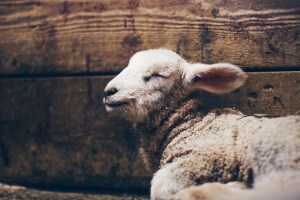 John the Baptist identified Jesus as the ‘Lamb of God.’ If we are attending the celebration of the Eucharist, we cannot miss hearing this phrase. Just before the communion, the priest will hold the consecrated bread and wine, and present them to the faithful, then saying, “Behold the Lamb of God, Behold Him who takes away the sin of the world. Happy are those invited to the supper of the Lamb!”
 Baptism of the Lord is one of the defining moments in the life of Jesus. The synoptic gospels [Matthew, Mark, and Luke] writes this event, though with their own perspective and emphasis. We are in the liturgical year B, and thus, we are listening from the Gospel of Mark. Mark’s version is noticeably the shortest, but it does not mean it does not deliver a powerful message. The Baptism of Jesus in the River Jordan is a turning point in Jesus’ life. After this Jesus will be in the desert for 40 days, tempted by the devil, but he will prevail. Then, from this, Jesus will begin His public ministry and unreservedly move toward Jerusalem, to Cross, Death, and Resurrection.
 From the previous two Sundays, we learn that Jesus lays down the cost of following Him, how to become His disciples. And they are extremely tough. One has to follow Jesus wherever He goes. One must love Jesus above anyone else. One must be ready to suffer persecutions and hardships, carry his cross, and give up his life for Jesus. It is Jesus or nothing at all. However, following Jesus is not all about hardship and sacrifice. Today we hear that to walking with Him, we receive certain “perks” that others cannot even dare to offer.
 In Medio Ecclesiae