
Kuk Yesus

Minggu ke-14 dalam Waktu Biasa [A]

5 Juli 2020

Matius 11: 25-30

jesus carry crossDari dua hari Minggu sebelumnya, Yesus menunjukkan apa yang harus kita serahkan untuk menjadi murid-Nya. Dan hal-hal yang harus kita lepaskan demi Yesus sanggatlah sulit. Kita harus mengikuti Yesus ke mana pun Dia pergi. Kita harus mengasihi Yesus lebih dari yang lain bahkan orang tua kita. Kita harus siap untuk menderita, menanggung  kesulitan, memikul salib, dan menyerahkan hidup bagi Yesus. Pilihannya adalah Yesus atau tidak sama sekali. Namun, mengikuti Yesus tidak semua tentang kesulitan dan pengorbanan. Hari ini kita mendengarkan bahwa menjadi murid-Nya, kita menerima “hal-hal baik” yang hanya Yesus bisa berikan.

Injil Hari Ini adalah salah satu favorit pribadi saya. Di sini, Yesus menunjukkan sisi yang lain. Hari Minggu terakhir, kita menyaksikan Yesus, yang teguh dan teguh dalam mengikuti kehendak Bapa, dan Dia menuntut hal yang sama dari para murid-Nya. Sekarang, Dia menunjukkan diri-Nya sebagai orang yang lembut dan rendah hati. Dia bahkan berjanji untuk memberi kelegaan atau istirahat kepada mereka yang datang kepada-Nya. Namun, ada satu hal menarik dari apa yang Yesus katakan: bahwa untuk beristirahat, kita perlu memikul kuk Yesus. Kuk adalah alat yang diletakkan di atas bahu untuk membawa beban. Bagi Yesus, istirahat bukanlah membuang kuk. Kita perlu memikul kuk kita, tanggung jawab kita sehari-hari, dan misi dalam hidup. Namun, meski membawa kuk, justru kita akan mendapatkan kelegaan. Bagaimana mungkin?

Kita ingat bahwa Yesus adalah putra seorang tukang kayu dan dia sendiri seorang tukang kayu. Dia tahu betul bahwa kuk yang tidak pas di bahu hanya akan menambah beban dan membuat sakit. Namun, kuk yang dirancang sempurna dan pas dengan bahu akan terasa mudah dan bahkan nyaman diangkat. Ini adalah kuk Yesus, kuk yang cocok untuk kita masing-masing, karena Dia adalah tukang kayu yang baik.

Poin kedua adalah bahwa ada semacam kuk yang bisa dipikul oleh dua binatang secara bersamaan, atau kita sebut “kuk ganda.” Saya percaya bahwa ini adalah jenis kuk yang ditawarkan Yesus kepada kita. Mengapa kuk ganda? Karena kita tidak pernah sendirian membawa kuk ini, dan Yesus akan membawa kuk bersama kita. Dan ketika kita merasa lelah, itulah saatnya Dia mengambil alih dan kita menemukan istirahat dan kelegaan.

Dalam Injil Matius, Yesus memerintahkan murid-murid-Nya untuk membawa dua hal di pundak mereka. Yang pertama adalah memikul salib [Mat 10:38], dan yang kedua adalah kuk [Mat 11:29]. Yesus tampaknya membuat hubungan nyata antara keduanya: kuk-Nya adalah salib kita. Jika ini benar, maka implikasinya sangat besar. Salib harian kita sebenarnya tidak seberat yang kita duga karena sangat cocok untuk kita dan bahkan, Yesus membawanya bersama kita. Saya percaya bahwa dalam banyak momen dalam hidup kita, Yesuslah yang membawa salib kita. Pada awalnya, Yesus terdengar sangat tegas dengan tuntutan-Nya yang hampir mustahil, terutama untuk memikul salib kita, tetapi melihat Injil kita lebih dalam, kita menyadari bahwa tidak hanya salib kita ini pas buat kita, Yesus juga yang memikul salib kita. Itulah alasan kenapa memanggul salib-Nya, kita menemukan istirahat dan penghiburan sejati.

Jika kita menemukan diri kita masih terbebani dan kelelahan dengan hidup kita, kita bisa bertanya: Apakah kita memikul salib Yesus atau salib yang lain? Apakah kita membawa kuk sendirian dan hanya mengandalkan kekuatan kita? Apakah kita memikul beban yang tidak perlu yang seharusnya diturunkan sejak lama?

Valentinus Bayuhadi Ruseno, OP

Jesus or Nothing

13th Sunday in Ordinary Time

June 28, 2020

Matthew 10:37-42

Processed with VSCO with p5 preset

In many cultures like Indonesia, Filipino, and Chinese, to honor our parents is of prime importance. In Indonesia, to highlight the value, a folklore “Malin Kudang” was taught even in elementary. In essence, Malin not only failed to respect his parents, but also deliberately ignored them. Thus, his mother cursed him into a stone. it is just unforgivable to disrespect someone who gave your life and raise you to life.

Respecting the parents is also one of the highest values for the Jewish people. What is remarkable is that they are not honoring their parents because it is something natural to do, but because it is a divine commandment. Going back to the Decalogue, to honor our mothers and fathers is, in fact, the fourth commandment, highest among the commandments regulating the human community. Even the Hebrew word used is “kabad”, which can mean “to honor” but may mean also to glorify. Thus, God instructed the Israelites and Christians as well not simply honor but to glorify our parents.

However, today’s Gospel tells us that Jesus demands even something unthinkable, that if we love our parents more than Jesus, we are not worthy of Him. Peter, Andrew, and John and the rest of the disciples have left their stable jobs and the comfort of their home to follow Jesus, but Jesus even lays down a more radical requirement. To follow Him is not just physically be present with Him, but the disciples have to give their total love for Jesus above everyone else. Who is this Jesus who requires His followers the love beyond our parents?

The answer is not that complicated. Jesus deserves all the love and loyalty we have simply because He is God. In Book of Deuteronomy [6:4-5], Moses instructed Israelites how to love and honor God, “Hear, O Israel! The Lord is our God, the Lord alone! Therefore, you shall love the Lord, your God, with your whole heart, and with your whole being, and with your whole strength.”

And how did Jesus know that His disciples love Him more than anybody else, and not merely lips service? As proof of their love, Jesus asks them to show this: “take up your cross and follow me!” In Jesus’ time, the cross is a most gruesome torture and execution method and is designed to prolong the agony. In essence, Jesus tells His disciples if they really love Him above all else, they need to be ready to endure prolonged suffering and even die a horrible death for Him. When we face Jesus, the choice is: all for Jesus or none at all.

Does it mean we shall stop loving our parents and children? Does it mean we no longer do good works for others and just stay in prayers for as long as we can? Not at all. Loving God above other things places us in the right perspective and orients us to the right destination. Now we may love others including our family for the love of God. It means that when we love them, we bring them closer to God. Now we may do our works and service for God, not for the sake of gaining personal benefits. When we work hard and we are blessed with success, the first thing we remember is to give praise to the Lord. And, if we encounter roadblocks in our lives or if we need to endure suffering, we are not losing hope because this is also an opportunity to love God even more.

Valentinus Bayuhadi Ruseno, OP

Yesus atau Tidak Sama Sekali

Minggu ke-13 dalam Masa Biasa

28 Juni 2020

Matius 10: 37-42

simon cyreneDalam banyak budaya seperti di Indonesia, Filipina dan Cina, menghormati orang tua kita adalah hal yang sangat penting. Di Indonesia, untuk mendidik nilai ini, cerita rakyat “Malin Kudang” diajarkan bahkan di sekolah dasar. Intinya, Malin tidak hanya gagal menghormati orang tuanya, tetapi juga sengaja mengabaikan ibunya yang sudah tua. Karena itu, dia dikutuk menjadi batu. Adalah sesuatu yang tidak termaafkan untuk tidak menghormati seseorang yang telah memberikan hidup kita dan mendidik kita untuk  hidup.

Menghargai orang tua juga merupakan salah satu nilai tertinggi bagi bangsa Yahudi. Yang luar biasa adalah bahwa mereka tidak menghormati orang tua mereka karena itu adalah sesuatu yang wajar untuk dilakukan, tetapi karena itu adalah perintah Ilahi. Kembali ke Sepuluh Perintah Allah, untuk menghormati ibu dan ayah kita sebenarnya adalah perintah keempat, tertinggi di antara perintah-perintah yang mengatur komunitas manusia. Bahkan kata Ibrani yang digunakan adalah “kabad”, yang dapat berarti “untuk menghormati” tetapi bisa juga berarti “memuliakan”. Karena itu, Tuhan memerintahkan baik orang Israel dan maupun umat Kristiani untuk tidak hanya menghormati tetapi juga untuk memuliakan orang tua kita.

Namun, Injil hari ini mengatakan bahwa Yesus menuntut bahkan sesuatu yang tidak terpikirkan, bahwa jika kita mengasihi orang tua kita lebih daripada Yesus, kita tidak layak bagi-Nya. Petrus, Andreas, dan Yohanes serta murid-murid lainnya telah meninggalkan pekerjaan mereka yang stabil dan kenyamanan rumah mereka untuk mengikuti Yesus, tetapi Yesus bahkan menetapkan persyaratan yang lebih radikal. Untuk mengikuti-Nya tidak hanya secara fisik hadir bersama-Nya, tetapi para murid harus memberikan kasih total mereka kepada Yesus di atas semua orang. Siapakah Yesus ini sehingga Dia patut menerima kasih para pengikut-Nya lebih dari orang tua kita?

Jawabannya tidak terlalu rumit. Yesus pantas mendapatkan semua cinta dan kesetiaan yang kita miliki hanya karena Dia adalah Allah. Dalam Kitab Ulangan [6:4-5], Musa menginstruksikan orang Israel cara untuk mengasihi dan menghormati Allah, “Dengarlah, hai orang Israel: TUHAN itu Allah kita, TUHAN itu esa! Kasihilah TUHAN, Allahmu, dengan segenap hatimu dan dengan segenap jiwamu dan dengan segenap kekuatanmu.” Hanya Allah yang layak menerima segalanya dari kita.

Dan bagaimana Yesus tahu bahwa murid-murid-Nya mengasihi Dia lebih dari yang lain, dan bukan hanya sekedar kata-kata saja? Sebagai bukti kasih mereka, Yesus meminta mereka untuk menunjukkan ini: “Pikullah salibmu dan ikuti aku!” Pada zaman Yesus, salib adalah metode penyiksaan dan eksekusi yang paling mengerikan, dan dirancang untuk memperpanjang penderitaan. Intinya, Yesus memberi tahu para murid-Nya jika mereka benar-benar mencintai-Nya di atas segalanya, mereka harus siap untuk menanggung penderitaan yang berkepanjangan dan bahkan mati bagi-Nya. Ketika kita menghadapi Yesus, pilihannya adalah: semua untuk Yesus atau tidak sama sekali.

Apakah itu berarti kita akan berhenti mencintai orang tua dan anak-anak kita? Apakah itu berarti kita tidak lagi melakukan pekerjaan baik untuk orang lain dan hanya berdoa selama yang kita bisa? Tentu saja tidak. Mengasihi Tuhan di atas hal-hal lain menempatkan kita dalam perspektif yang benar dan mengarahkan kita ke tujuan yang benar. Sekarang kita dapat mengasihi orang lain termasuk keluarga kita sebagai bentuk kasih kita  bagi Tuhan. Ini berarti bahwa ketika kita mencintai mereka, kita membawa mereka lebih dekat kepada Tuhan. Sekarang kita dapat melakukan pekerjaan dan pelayanan kita untuk Tuhan, bukan demi mendapatkan keuntungan pribadi. Ketika kita bekerja keras dan kita diberkati dengan kesuksesan, hal pertama yang kita ingat adalah untuk memuji Tuhan. Dan, jika kita menghadapi hambatan dalam hidup kita atau jika kita perlu menanggung penderitaan, kita tidak kehilangan harapan karena ini juga merupakan kesempatan untuk lebih mengasihi sesama dan Tuhan lebih dalam.

Valentinus Bayuhadi Ruseno, OP

Tubuh Kristus dan Tubuh Kita

Hari Raya Tubuh dan Darah Kristus [Corpus Christi] – A

14 Juni 2020

Yohanes 6: 51-58

monstranHari Raya Tubuh dan Darah Yesus Kristus berawal dari inisiatif St. Juliana dari Liege, yang meminta uskupnya dan sahabat-sahabatnya untuk menghormati  secara khusus sakramen Ekaristi, dan kehadiran nyata Yesus Kristus dalam Sakramen Mahakudus. Berdirinya Ekaristi sendiri terjadi dalam Perjamuan Terakhir Tuhan, dan setiap Kamis Putih, Gereja merayakan peristiwa ini. Namun, karena Kamis Putih adalah bagian yang tidak terpisahkan dari Trihari suci Paskah, perhatian diberikan pada persiapan bagi umat beriman untuk memasuki misteri Sengsara dan Kebangkitan Tuhan kita. Karena berakar di Kamis Putih, Hari Raya Corpus Christi dirayakan pada hari Kamis setelah hari Minggu Tritunggal. Namun, di beberapa negara seperti Indonesia, perayaan dipindahkan ke hari Minggu berikutnya untuk mengakomodasi partisipasi yang lebih besar dari umat beriman.

 Dalam Injil, Yesus menegaskan bahwa tubuh-Nya adalah makanan yang nyata, dan setiap orang yang ingin memiliki hidup yang kekal perlu menyantap tubuh-Nya. Kita mungkin bertanya-tanya: mengapa dalam kebijaksanaan-Nya, Yesus memutuskan untuk memberikan tubuh-Nya sebagai makanan rohani kita? Mengapa Yesus tidak langsung menanamkan rahmat langsung ke jiwa kita? Jawabannya mungkin sangat sederhana. Hal ini dipilih Tuhan karena tubuh kita ini adalah nyata dan baik. Jika kita kembali ke kisah penciptaan di Buku Kejadian, Tuhan menciptakan pria dan wanita dalam kodrat manusia, termasuk tubuh kita, sebagai sesuatu yang sangat baik. Meskipun tubuh kita berasal dari tanah, tubuh kita telah dirancang dengan luar biasa untuk menerima roti ilahi, kehidupan rohani. Tubuh kita pada dasarnya baik, dan begitu baik sehingga tubuh kita bisa menerima rahmat. Dalam perkataan St Agustinus, “Capax Dei” (memiliki kemampuan untuk mengenal dan menerima Tuhan).

Sejak awal berdirinya, Gereja telah memerangi sebuah ajaran sesat yang disebut Gnostisisme. Intinya, gnostisisme mengajarkan ada dualisme dalam ciptaan, bahwa dunia spiritual itu baik dan dunia material, termasuk tubuh kita, adalah jahat. Jadi, setiap aspek ragawi dari kemanusiaan kita harus dibuang dan dihancurkan. Gereja dengan keras menentang ini karena Allah telah menciptakan dunia secara totalitas sebagai yang baik dan indah. Pertempuran berlanjut pada masa St. Dominikus de Guzman, pendiri Ordo Pengkhotbah, yang berhadapan melawan kelompok Albigensia [adaptasi gnostisisme pada abad pertengahan). Syukurlah, kaum Albigentia tidak ada lagi, tetapi sayangnya, gnostisisme terus hidup.

Sebagai umat Kristiani, kita bersama Gereja terus memerangi gnostisisme modern. Jenis gnostisisme sangat sederhana dan tanpa disadari kita pun telah menjadi korban dari virus mematikan ini. Setiapkali kita memperlakukan tubuh kita hanya alat untuk mencapai kesuksesan dan popularitas, ketika kita menyalahgunakan tubuh kita untuk merasakan kenikmatan instan, ketika kita menjual tubuh kita sebagai keuntungan ekonomi belaka, kita tanpa sadar jatuh ke dalam perangkap ini ajaran sesat ini.

Pesta Corpus Christi membawa kita kebenaran yang lebih besar dari tubuh kita. Dengan menjadi manusia dan akhirnya memberikan tubuh-Nya, Yesus mengajarkan kepada kita bahwa tubuh tidak hanya mampu menerima rahmat, tetapi juga mampu menjadi rahmat dan kasih bagi sesama. Dalam Perjamuan Terakhir, Yesus telah memberikan tubuh-Nya sebagai ekspresi kasih tertinggi. Namun, untuk dibagikan, tubuh-Nya harus dihancurkan, namun meski hancur, tubuh mulia ini dipersembahkan dalam ucapan syukur.

 Pada masa pandemi ini, kita tidak dapat menghadiri Misa Kudus, dan kita sangat merindukan Tubuh Kristus. Namun, kabar baiknya adalah bahwa inilah saatnya bagi kita untuk menjadi Tubuh Kristus bagi sesama kita yang membutuhkan. Hanya dengan membagikan tubuh kita dalam kasih, kita memenuhi tujuan kita sebagai makhluk ragawi yang diciptakan menurut citra-Nya.

Valentinus Bayuhadi Ruseno, OP

Christ’s Body and Our Body

Solemnity of Body and Blood of Christ [Corpus Christi] – A

June 14, 2020

John 6:51-58

eucharist 3The solemnity of the Body and Blood of Jesus Christ takes its origin from the initiative of St. Juliana of Liege, who asked his bishop and his friends to honor, in a special way, the institution of the Eucharist, and the real presence of Jesus Christ in the Blessed Sacrament. The institution of the Eucharist itself took place in the Last Supper of the Lord, and every Holy Thursday, the Church celebrates this event. However, since Holy Thursday is an inseparable part of the Easter Triduum, the attention is given to the mystery of the Passion and Resurrection of our Lord. Because of its rootedness in Holy Thursday, the solemnity of Corpus Christi is celebrated on Thursday after the Trinity Sunday. Yet, in several countries, the celebration is moved to the next Sunday to accommodate the greater participation of the faithful.

 In the Gospel, Jesus insists that His body is real food, and everyone who wants to have eternal life shall consume His body. We may wonder: why does in His infinite wisdom, Jesus decide to give His body as food for our spiritual nourishment? Why not infuse the grace directly to our souls? The answer may surprisingly simple. It is because our body is real and good. God created man and woman in their fulness human nature, including their bodies, as something very good. Though our body comes from the ground, it has been marvelously designed to receive the bread of God, the spiritual life. Our bodies are fundamentally good, and so good that our bodies are inclined to grace. In the word of St. Augustine, “Capax Dei” (capable of knowing and receiving God).

Since the earliest time, the Church has battling perennial heresy called Gnosticism. In essence, gnosticism teaches there is dualism in our creation, and that the spiritual realm is good and the material world, including our body, is evil. Thus, any material aspect of our humanity has to be disposed of. The Church vehemently opposed this because God has created our material world as good and beautiful. The battle continues in time of St. Dominic de Guzman, the founder of Order of Preachers, who fought the Albigensians [the middle age adaptation of gnosticism). Gratefully, the Albigentians were no more, but unfortunately, the gnosticism lives on.

As Christians, we carry the battle of the Church against the modern-day gnosticism. The kind gnosticism is surprisingly simple without any need to learn a complex system of belief. When we consider our body a mere instrument to achieve success, when we abuse our bodies to feel instant pleasures, when we treat our bodies as mere economic gain, when we say that my body is my right, we unconsciously fall into the trap of this heresy.

But wait, there’s more! The feast of Corpus Christi brings us even greater truth of our body. By becoming man and finally giving His body, Jesus teaches us that body is not only capable of receiving grace, but it is also capable of becoming grace and love for others. In the Last Supper, Jesus has given as a supreme expression that is to offer His own body in love. And yet, to be shared, it has to be broken, and yet despite broken, it is offered in thanksgiving.

 In this time of the pandemic, we are not able to attend the Holy Mass, and we miss a lot the Body of Christ. Yet, the good news is that it is our time also for us to become the Body of Christ for our neighbors in need. Only through sharing our body in love, we fulfill our purpose as bodily creatures created in His image.

Valentinus Bayuhadi Ruseno, OP

God’s Loving Touch

Fifth Sunday of Lent [A]

March 29, 2020

John 11:1-45

Daniel Bonnell, "Jesus Wept." Oil on canvas, 34 x 46 in. Tags: LazarusAmong the five human senses, the sense of touch is the most basic and foundation to other senses. The sense of sight needs to be in touch with the light spectrum. The sense of taste requires to be in contact with the chemical in the food. The sense of hearing must receive air vibration or sound waves. This sense makes us a human being, a bodily being. No wonder that many traumatic experiences [even mental problems] are rooted in the lack (or excess) of touch.
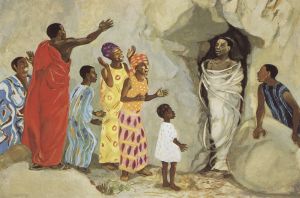
God, our creator, understands our fundamental need of touch. Thus, to fulfill our deepest desire, He made a radical choice and became a man like all of us. Because Jesus is true God and true man, the disciples were able to see, hear, touch and feel Him. Yet, He gave a more radical gesture as He offered Himself as food to eat and drink to eat, “for my flesh is true food and my blood is true drink [Jn 6:55].” While the pagan deities were feasting on the human blood and sacrifice, our God does the opposite. He gave up His life so that we may live and feel His love.

Following the example of our Savior, the Church is filled with tangible means and bodily gestures as a sign and symbols of the divine presence. No wonder our churches are equipped with beautiful crucifixes, adorned with flowers, and mystified by the burning candle and incense. A sacrament is no other than the visible sign of the invisible grace, and sacraments really intend to connect to our bodies, like blessed water and oil that touch our forehead, the bread that we consume, and words of forgiveness that we need to hear. Amazingly, the Church is called the body of Christ, and our call is to unite as one people of God around this table of Eucharist.

However, the terrible thing befalls our Church. The pandemic caused by the Covid-19 is basically reversing the movement of our faith. We are facing a reality that touching can mean illness, the gathering may bring disaster, and worship may mean death. For the good of the flock, our leaders are forced to close the churches. We now feel the pain of separation from the Body of Christ.

Perhaps, we are like Lazarus who are experiencing spiritual suffering and death. Perhaps, we are like Martha who is asking the Lord, “why are you not coming sooner?” Perhaps, we are like Mary who cannot do anything but mourns and is reduced into silence.

The Gospel of John tells us that Jesus loves Lazarus, Martha and Mary as His close friends. Yet, Jesus did not rescue Lazarus when he got gravely ill, and even Jesus visited them after Lazarus died four days. Jesus allowed terrible things to take place in the life of Lazarus, Martha, and Mary, not because He wanted to punish them, or He does not care, but because He loves them.

In His love, God allows us to endure the sense of losing God, and experience suffering and even death. God knows too well that through suffering, we may love even deeper, we grow in faith, and re-discover God, alive and even closer. After all, there is no true resurrection, unless we enter the darkness of the tomb.

My deepest gratitude and prayer for our medical personal who give their all in to fight the disease and save lives.

Valentinus Bayuhadi Ruseno, OP

Sentuhan Kasih Allah

Minggu Kelima Masa Prapaskah [A]

29 Maret 2020

Yohanes 11: 1-45

lazarus africanDi antara lima indra manusia, indra peraba [sentuhan] adalah yang paling dasar dan fondasi bagi indra yang lainnya. Indra penglihatan perlu bersentuhan dengan spektrum cahaya. Indra perasa perlu bersentuhan dengan bahan kimia dalam makanan. Indra pendengaran harus menerima getaran suara di udara. Sentuhan menjadikan kita manusia, makhluk yang bertubuh. Tidak mengheran jika banyak pengalaman traumatis [bahkan masalah mental] berakar pada sentuhan yang kurang diterima atau tidak seharusnya diterima.

Tuhan, pencipta kita, memahami kebutuhan mendasar kita akan sentuhan. Dengan demikian, untuk memenuhi hasrat terdalam kita, Dia membuat pilihan radikal, dan menjadi manusia seperti kita semua. Karena Yesus adalah sungguh Allah dan sungguh manusia, para murid dapat melihat, mendengar, menyentuh dan merasakan Dia. Namun, Dia memberi sesuatu yang lebih radikal ketika Dia mempersembahkan diri-Nya sebagai makanan dan diminum, “karena dagingku adalah makanan yang benar dan darahku adalah minuman yang benar [Yohanes 6:55].” Sementara para dewa berhala menikmati darah manusia dari menjadi korban, Tuhan kita melakukan yang sebaliknya. Dia menyerahkan hidup-Nya sehingga kita dapat hidup dan merasakan kasih-Nya.

Mengikuti contoh Juruselamat kita, Gereja dipenuhi dengan sarana jasmani sebagai tanda dan simbol kehadiran ilahi. Tidak heran gereja-gereja kita dilengkapi dengan salib yang indah, dihiasi dengan bunga, dan diagungkan dengan lilin dan dupa. Sakramen tidak lain adalah tanda yang terlihat dari rahmat yang tak terlihat, dan sakramen benar-benar bermaksud untuk menyentuh tubuh kita, seperti air dan minyak suci yang menyentuh dahi kita, hosti yang kita santap, dan kata-kata pengampunan yang perlu kita dengar. Bahkan, Gereja sendiri disebut sebagai tubuh Kristus, dan panggilan kita adalah untuk bersatu sebagai satu umat Allah di sekitar meja Ekaristi ini.

Namun, hal yang mengerikan menimpa Gereja kita. Pandemi yang disebabkan oleh Covid-19 pada dasarnya membalikkan gerakan dasar iman kita. Kita menghadapi kenyataan bahwa menyentuh dapat berarti penyakit, berkumpul dapat membawa bencana, dan ibadah dapat berarti kematian. Demi kebaikan umat, para pemimpin kita dipaksa untuk menutup gereja. Kita sekarang merasakan sakitnya perpisahan dari Tubuh Kristus.

Mungkin, kita seperti Lazarus yang mengalami penderitaan dan kematian rohani. Mungkin, kita seperti Marta yang bertanya kepada Tuhan, “seandainya Engkau datang, hal ini tidak perlu terjadi?” Mungkin, kita seperti Maria yang tidak bisa berbuat apa-apa selain berduka dan berdiam.

Yesus tidak menyelamatkan Lazarus ketika dia sakit parah, dan bahkan Yesus mengunjungi mereka setelah Lazarus meninggal empat hari. Kenapa Yesus membiarkan hal-hal buruk terjadi dalam kehidupan Lazarus, Marta dan Maria? Apakah Yesus ingin menghukum mereka atau tidak peduli dengan mereka? Injil Yohanes menyatakan bahwa Yesus mengasihi Lazarus, Marta dan Maria sebagai sahabat dekat-Nya. Yesus mengizinkan hal buruk terjadi terhadap sahabat-sahabat-Nya justru karena Dia mengasihi mereka.

Dalam kasih-Nya, Allah mengijinkan kita untuk merakan Tuhan yang jauh, dan mengalami penderitaan dan bahkan kematian. Tuhan tahu betul bahwa melalui penderitaan, kita dapat mencintai lebih dalam, kita tumbuh dalam iman, dan menemukan kembali Tuhan, yang lebih hidup dan bahkan lebih dekat. Kita perlu mengingat bahwa tidak ada kebangkitan sejati, kecuali kita berani memasuki kegelapan makam.

Terima kasih dan doa terdalam saya untuk pribadi medis kami yang telah memberikan segalanya untuk memerangi penyakit dan menyelamatkan nyawa.

Valentinus Bayuhadi Ruseno, OP

True Glory

Second Sunday of Lent [A]

March 8, 2020

Matthew 17:1-9

transfiguration 2The Church has selected the story of Transfiguration as the reading of the second Sunday of Lent.  We may ask how this kind of powerful story may fit into the entire season of Lent. The key is that the Transfiguration is fundamentally linked to the Cross of Jesus. In Luke’s version of the transfiguration, Jesus was talking to Moses and Elijah about His “exodus.” This reminds the ancient Israelites who exited Egypt, walked through the desert, and entered the Promised Land. Yet, the real end of the exodus is the city of Jerusalem, and eventually the holy Temple where God dwelled among His people. Just like the ancient Israelites, Jesus’ exodus has to end in Jerusalem.

The glorious moment of transfiguration is not intended to last long. Jesus has to go down and walk again toward Jerusalem. However, the disciples got it wrong when Peter offered to put a tent and to stay in the wonderful moment for good. Jesus reminded them that they need to go down. The disciples cannot stay there, and they must continue their journey.

There are moments in our lives that we believe that we have seen and reached the glory of God. We feel so blessed when we pray before the Blessed Sacrament. We experience peace during our retreat and meditation. We are inspired after we listen to the insightful preaching. We are re-energized by songs and praises. These things are good, but they are never intended to be the end of the journey. We must go down together with Jesus, and to carry our daily crosses. Jesus understands that there is no real love without suffering, no true glory without pain, and no salvation without the cross.

I am currently in the Holy Land, and I was walking in the same way Lord Jesus has set His feet. I was truly blessed that God allowed me to be on this Promised Land just months after my ordination. The joy is overwhelming. Israel is truly a land flowing with milk and honey, a truly beautiful land. I am studying the Bible for years, but only now that I truly see and touch these biblical places. My faith becomes truly alive. The more I walk through the land and places, the more I want to stay and learn. I have seen the glory of the Lord, and I want to pitch my tent. However, I cannot wait too long, and I need to go back because my mission is not [yet] at this Promised Land.

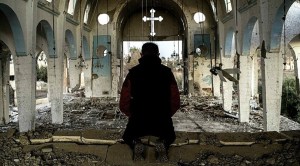
Last March 4, 2020, the house for the elderly and disabled run by the Missionaries of Charity in Aden, Yemen, was attacked by the terrorists. Four sisters were killed during the ambush. Their works for the elderly in one of the poorest countries is in itself a heroic act, but their true glory lies when they gave their lives totally for God and the people they loved. Every morning, the sisters always prayed together in the community, and this prayer [attributed to St. Ignatius of Loyola] have inspired them through the last moment of their lives:

“Lord, teach me to be generous. Teach me to serve you as you deserve; to give and not to count the cost, to fight and not to heed the wounds, to toil and not to seek for rest, to labor and to ask for reward, save that of knowing that I do Your holy will.”

Valentinus Bayuhadi Ruseno, OP

Kemuliaan Sejati

Minggu Kedua Prapaskah [A]

8 Maret 2020

Matius 17: 1-9

transfiguration 3Gereja telah memilih kisah Transfigurasi sebagai Injil Minggu Prapaskah kedua. Kita mungkin bertanya bagaimana kisah kemuliaan semacam ini dapat masuk ke dalam seluruh konteks Prapaskah. Kuncinya adalah bahwa Transfigurasi secara mendasar terkait dengan Salib Yesus. Dalam versi transfigurasi dari Lukas, Yesus berbicara kepada Musa dan Elia tentang “eksodus” -nya. Ini mengingatkan kita akan bangsa Israel kuno yang keluar dari Mesir, berjalan melewati padang pasir, dan memasuki Tanah Perjanjian. Namun, akhir eksodus yang sebenarnya adalah kota Yerusalem, dan akhirnya Bait suci tempat Allah tinggal di antara umat-Nya. Sama seperti bangsa Israel kuno, eksodus Yesus harus berakhir di Yerusalem.
Momen mulia transfigurasi tidak dimaksudkan untuk bertahan lama. Yesus harus turun dan berjalan lagi menuju Yerusalem. Namun, para murid salah kaprah ketika Petrus menawarkan untuk memasang tenda dan tetap tinggal di gunung itu. Yesus mengingatkan mereka bahwa mereka harus turun. Para murid tidak dapat tinggal di sana, dan mereka harus melanjutkan perjalanan mereka bersama Yesus di Yerusalem.

Ada saat-saat dalam hidup kita bahwa kita percaya bahwa kita telah melihat dan mencapai kemuliaan Allah. Kita merasa sangat diberkati ketika kita berdoa di hadapan Sakramen Mahakudus. Kita mengalami kedamaian selama retret dan meditasi kita. Kita terinspirasi setelah kita mendengarkan khotbah yang penuh semangat. Kita diberi energi kembali oleh lagu dan pujian. Hal-hal ini baik, tetapi mereka tidak pernah dimaksudkan untuk menjadi akhir dari perjalanan. Kita harus turun bersama dengan Yesus, dan memikul salib kita sehari-hari. Yesus mengerti bahwa tidak ada kasih sejati tanpa penderitaan, tidak ada kemuliaan sejati tanpa rasa sakit, dan tidak ada keselamatan tanpa salib.

Saat ini saya berada di Tanah Suci, dan saya berjalan di tempat yang sama seperti Tuhan Yesus telah menginjakkan kaki-Nya. Saya benar-benar diberkati bahwa Allah memberi kesempatan untuk berada di Tanah Perjanjian ini hanya beberapa bulan setelah tahbisan saya. Sebuah sukacita luar biasa. Israel benar-benar tanah yang penuh dengan susu dan madu, tanah yang benar-benar indah. Saya belajar Alkitab selama bertahun-tahun, tetapi baru sekarang, saya benar-benar melihat dan menyentuh tempat-tempat alkitabiah ini. Iman saya menjadi benar-benar hidup. Semakin saya berjalan, semakin saya ingin tinggal dan belajar. Saya telah melihat kemuliaan Tuhan, dan saya ingin mendirikan kemah saya. Namun, saya tidak bisa tinggal terlalu lama, dan saya harus kembali karena misi saya bukan [belum] di Tanah Perjanjian ini.

4 Maret 2020 lalu, rumah bagi orang tua dan orang cacat dijalankan oleh Misionaris Cinta Kasih di Aden, Yaman, diserang oleh para teroris. Empat suster terbunuh dalam serangan itu. Pekerjaan mereka untuk merawat orang tua di salah satu negara termiskin itu sendiri adalah tindakan heroik, tetapi kemuliaan sejati mereka terletak ketika mereka memberikan hidup mereka sepenuhnya bagi Tuhan dan orang-orang yang mereka cintai. Setiap pagi, para suster selalu berdoa bersama di komunitas, dan doa ini [dipercaya berasal dari St Ignatius dari Loyola] telah menginspirasi mereka melalui saat-saat terakhir kehidupan mereka:

“Tuhan, ajari aku untuk bermurah hati. Ajari aku untuk melayani-Mu sepantasnya; untuk memberi dan tidak menghitung imbalan, untuk berjuang dan tidak mengindahkan luka, bekerja keras dan tidak mencari istirahat, untuk bekerja dan tidak meminta imbalan, kecuali mengetahui bahwa aku melakukan kehendak suci-Mu. ”

Valentinus Bayuhadi Ruseno, OP

Love at the Heart

Seventh Sunday in Ordinary Time [A]

February 23, 2020

Matthew 5:38-48

praying n persecutionAt the heart of Jesus’ teaching in the Mount is the formation of the heart. However, the heart in the Bible is not limited to our affective side or emotions. It also stands for the center of intellectual capacity and freedom. The heart is the seat of life itself, and thus, represents who the man or woman is.

Last week, Jesus told us to purify our hearts from evil thoughts and wicked desires [Mat 5:17-37]. It is not enough not to do violence to others, but it is necessary to cleanse our hearts from anger and vengeance. It is not sufficient not to commit adultery, but we are required to remove from our hearts the lustful desires. Forming the hearts is more fundamental rather than simply and blindly following the written laws and regulations. The formation of the heart is about building up good habits, and virtuous character. A virtuous person is avoiding evil, not because of fear of the external laws, but strong motivation from within.

However, in today’s Gospel, Jesus demands even something higher. The purifying of the heart is just the first step, and we need to go to another and more difficult step: to love. It is precisely tougher because love is not merely about removing impure desires in our hearts or preventing us from doing evil, but it is about actively doing good. Moreover, this love [agape] is only real and meaningful if we are doing good, not in the conditions that are favorable to us, but rather in the face of evil and sufferings.

Since its foundation around two millennia ago, Christians remain the most persecuted people. Opendoorusa.org reported that numbers of persecutions and violence against Christians are on the rise. In 2019, more than 260 million Christians [one out of nine Christians in the world] are living in the places where they experience a high level of persecution. Almost 3 thousand Christians were killed because of their faith. More than 9 thousand churches and Christian buildings like schools were attacked. In Nigeria, priests and seminarians were abducted and tortured. Some were lucky to return alive, but many were found lifeless. In China, the government made national crackdown against Christians and shut down the churches. In Indonesia, things are better for the Christians because our rights are enshrined in the constitutions. Yet, in the grassroots, we continue to feel discriminated against and fear of being targeted by the extremists and terrorists.

Our destiny as Christians are not better than our brothers and sisters who belonged to the early Church. However, as our brothers and sisters in the past, our mission remains the same: to love our enemies, to respond evil with utter generosity, and be ready to fight for justice with gentleness. Christians are accused as weak people, but this is plain wrong. The world that is built by violence and bitterness is self-destruct, and unless we dare to be true followers of Christ, we cannot stop the downward mobility towards total ruin. We thank our predecessors who refused to be controlled by violent anger despite so much evil they had to endure. The world is a much better place with whose hearts are pure. St. Tertullian believed that the blood of martyrs is the seed of Christianity, and we believe also that the love of Christians are the seed of a better world.

Valentinus Bayuhadi Ruseno, OP