
Persyaratan Kasih

Minggu Paskah keenam [26 Mei 2019] Yohanes 14: 23-29

“Jika seorang mengasihi Aku, ia akan menuruti firman-Ku… (Yoh. 14:23)”

old-people-handsBentuk dasar dari kasih adalah ketaatan, dan tindakan sederhana dari kasih adalah mematuhi Hukum. Kita tidak bisa mengatakan, “Aku mencintaimu,” tetapi kita tidak melakukan apa yang seharusnya kita lakukan sebagai seorang kekasih. Hal ini sama saja dengan sebuah kebohongan yang buruk. Seorang pria bertanya kepada seorang imam apakah boleh mengatakan “I love you” kepada pacarnya, selama masa Prapaskah, terutama selama hari-hari puasa dan pantang. Imam itu segera menjawab bahwa itu adalah pelanggaran terhadap Hukum Tuhan. Jawabannya mengejutkan pemuda itu, dan dia bertanya mengapa. Pastor itu menjawab, “Itu pelanggaran karena pasti kamu bohong kepada pacarmu!”

Ketika kita mengatakan bahwa kita mencintai seseorang, tetapi kita gagal melakukan apa yang seharusnya dilakukan, kita hanya menyakiti diri sendiri dan orang yang kita cintai. Ketika seorang anak mencintai ibunya, dia akan mengikuti perintah yang datang dari ibunya meskipun dia tidak mengerti mengapa. Tetapi, kadang-kadang, seorang anak menjadi keras kepala dan menolak permintaan ibunya untuk berhenti bermain di luar karena sudah waktunya untuk belajar. Ini menyakitkan sang orang tua yang telah bekerja keras untuk membiayai pendidikan dan merindukan masa depan putra mereka yang lebih baik. Dalam jangka panjang, itu juga menyakiti anak dan masa depannya.

Sama dengan kasih kita kepada Tuhan, kita perlu melakukan setidaknya hal yang dasar yakni mematuhi Hukum-Nya. Dari Perjanjian Lama, kita memiliki sepuluh perintah Allah. Kita tidak bisa mengatakan bahwa kita mengasihi Tuhan, tetapi kita juga menaruh iman kita pada “dewa dan berhala” lainnya. Kita hanya mengakui Allah yang benar, tetapi kita juga percaya pada Horoskop, Feng Shui, dan takhayul. Kita pergi ke Gereja setiap hari Minggu, tetapi di rumah-rumah kita, kita mengumpulkan semua jenis patung binatang untuk keberuntungan. Kita percaya pada Tuhan yang adil, tetapi kita mencuri uang atau barang-barang dari pemerintah atau perusahaan.

Dalam Perjanjian Baru, kita memiliki Perintah Baru: saling mengasihi seperti Yesus telah mengasihi kita. Sayangnya, apa yang kita katakan berbeda dari apa yang kita lakukan. Kita menghadiri pertemuan doa dan berteriak dengan suara lantang bahwa kita mencintai Yesus, tetapi kita masih tidak dapat mengampuni musuh-musuh kita dan masih berharap bahwa mereka celaka. Kita berdoa rosario secara teratur, tetapi kita bahkan tidak peduli dengan ibu kita yang sudah lanjut usia di rumah. Kita mengutuk pembunuhan bayi-bayi di negara lain, tetapi kita dengan mudah marah dan menjadikan istri kita sebagai objek pelampiasan amarah kita.

Ketika kita mengatakan bahwa kita mengasihi Tuhan, tetapi kita tidak mematuhi perintah-Nya, itu menyakiti hati Tuhan. Mungkin, ini lebih menyakitkan daripada orang yang tidak pernah mengatakan cinta sama sekali kepada Tuhan. Kita dapat belajar dari saudara dan saudari kita yang hidup ketika Gereja masih sangat muda. Mereka hidup di Kekaisaran Romawi, dan dengan hanya mengakui bahwa mereka adalah umat Kristiani, ini berarti hukuman mati. Sebenarnya, mereka adalah warga negara Roma yang baik dan taat hukum, kecuali satu hal: mereka menolak untuk menyembah sang Kaisar. Pemerintah Romawi percaya bahwa faktor pemersatu kekaisaran yang luas dan beragam adalah pemujaan kaisar sebagai perwujudan dari semangat Romawi. Setiap warga negara Romawi diwajibkan untuk mempersembahkan dupa dan menyatakan, “Salam, Kaisar adalah Tuhan.” Kemudian, mereka dapat menyembah dewa-dewa mereka yang lain. Umat Kristiani menolak untuk melakukan ini karena mereka sangat mengasihi Yesus sebagai Tuhan mereka, dan sebagai bukti kasih mereka, mereka siap untuk mengorbankan hidup mereka sendiri.

Sama halnya dengan kita. Tuhan sangat mengasihi kita bahwa setiap kali kita tidak mematuhi Hukum-Nya, kita menyakiti Tuhan. Jika kita tidak dapat melakukan persyaratan dasar cinta kasih, kata-kata kita kosong dan cinta kita tidak ada artinya.

Diakon Valentinus Bayuhadi Ruseno, OP

New Commandment: Agape

5th Sunday of Easter [May 19, 2019] John 13:31-33a, 34-35

childrenAt the Last Supper, after Jesus washed the feet of the disciples, He gives them a new commandment: “love one another as I have loved you”. If there is one single, most beautiful line in the Gospel of John or even in the entire Bible, this would be one of the strongest candidates. However, why does Jesus give us a new commandment?

To understand what Jesus does in the Last Supper, we need to go back to the Old Testament, particularly when the Lord God gave His commandments. After the Lord God delivered Israel from the slavery of Egypt, He made a covenant with them through the mediation of Moses. They shall be God’s people and the Lord shall be their God. This was the fundamental step in the life of Israel because God formed them as the People of God. This was an unprecedented privilege and grace, but with great privilege comes the great responsibility. God wanted them to live as the People of God and not as the other nations that surrounded them. Thus, the Lord gave them the Law that would separate them from other peoples who worshiped false gods, and the most fundamental among these laws are the Ten Commandments. If they stubbornly failed to observe the Law and lived as if like the Gentiles, they would be cut off from the People of God.

At the Last Supper, Jesus does the same as His Father in the desert. He forms His disciples, His family, His Church by giving them a New Law, the Law of Love. Only when the disciples keep the New Law, they will be different from the rest of nations, and they may call themselves as the followers of Jesus. At first, we may perceive that Jesus’ new law is easier done than the Ten Commandment. Yet, when we go deeper to the meaning of love understood by Jesus, it is actually the opposite. Jesus’ Law is much more difficult and tougher to do. Why?

In Greek of the New Testament, there are several words for love. “Eros” is the love between husband and wife. “Philia” is love among friends. None of these two Jesus used to describe His love. It is “agape”. While eros and philia are love based on emotion, agape is love rooted in free will. It is the love of action. That is why Jesus is able to teach us to love our enemies. Jesus does not say we should like our enemies because it is naturally impossible, but we can still do good to our enemies despite the hatred and anger.

But, this agape is not just any agape, it is agape of Jesus. For Him, there is no greater love than one who lays down his life for his friends. Agape of Jesus is sacrificial. It is Jesus’ cross as well as His glory. Only when we love to the point of sacrifice, we may say that we have kept Jesus’ commandment.

Muelmar “Toto” Magallanes was a young Filipino who worked as a construction worker. In 2009, monstrous tropical storm Ondoy battered Metro Manila and caused an instant flood in many areas. When his area was flooded, Toto first brought to safety his family. Yet, he did not stop there. He decided to rescue others who were still trapped by the mighty water. Braving the strong current, he saved more than 30 people. He was already exhausted when he realized a mother and her baby were still in danger. He made his last rescue attempt and brought the mother and her baby to the higher ground. Yet, losing his strength, he was swept by the current. He was lifeless the following day. “He gave his life for my baby,” Menchie Penalosa, the child’s mother, told Agence France-Presse. “I will never forget his sacrifice.”

This is the new commandment of Jesus and only by keeping His Commandment, we can become His authentic disciples.

Deacon Valentinus Bayuhadi Ruseno, OP

Perintah Baru: Agape

Minggu Paskah ke-5 [19 Mei 2019] Yohanes 13: 31-33a, 34-35

love new commandmentPada Perjamuan Terakhir, setelah Yesus membasuh kaki para murid, Dia memberi mereka perintah baru: “Kasihanilah satu sama lain seperti Aku telah mengasihi kamu”. Namun, mengapa Yesus perlu memberi kita perintah baru?

Untuk memahami apa yang Yesus lakukan dalam Perjamuan Terakhir, kita perlu kembali ke Perjanjian Lama, khususnya ketika Tuhan Allah memberikan Hukum-Nya. Setelah Tuhan Allah membebaskan Israel dari perbudakan Mesir, Dia membuat perjanjian dengan mereka melalui perantaraan Musa. Mereka akan menjadi umat Tuhan dan Tuhan Allah akan menjadi Tuhan mereka. Ini adalah langkah mendasar dalam kehidupan Israel karena Allah membentuk mereka sebagai Umat-Nya. Ini adalah hak istimewa dan rahmat yang belum pernah terjadi sebelumnya, tetapi dengan hak istimewa yang besar ini diikuti oleh tanggung jawab besar. Tuhan ingin mereka hidup sebagai Umat Allah dan bukan sebagai bangsa lain yang mengelilingi mereka. Jadi, Tuhan memberi mereka Hukum yang akan memisahkan mereka dari orang-orang lain yang menyembah dewa-dewa palsu, dan yang paling mendasar di antara hukum-hukum ini adalah Sepuluh Perintah Allah. Jika mereka dengan keras kepala gagal mematuhi Hukum Allah dan hidup seolah-olah seperti bangsa-bangsa lain, mereka akan disingkirkan dari Umat Allah.

Pada Perjamuan Terakhir, Yesus melakukan hal yang sama seperti Bapa-Nya di padang gurun. Dia membentuk murid-murid-Nya, keluarga-Nya, Gereja-Nya dengan memberi mereka Hukum Baru, Hukum Kasih. Hanya ketika para murid mematuhi Hukum Baru, mereka akan berbeda dari bangsa-bangsa lain, dan mereka dapat menyebut diri mereka sebagai pengikut Yesus. Pada awalnya, kita dapat merasakan bahwa hukum baru Yesus lebih mudah dilakukan daripada Sepuluh Perintah Allah. Namun, ketika kita masuk lebih dalam ke makna kasih yang dipahami oleh Yesus, kita mulai menyadari bahwa Hukum Yesus jauh lebih sulit untuk dilakukan. Mengapa?

Dalam bahasa Yunani Perjanjian Baru, ada beberapa kata untuk kasih. “Eros” adalah kasih antara suami dan istri. “Philia” adalah kasih di antara teman-teman. Tidak satu pun dari kedua kata ini yang digunakan untuk menggambarkan kasih-Nya. Itu adalah “agape”. Sementara eros dan philia adalah cinta berdasarkan perasaan, agape adalah cinta yang berakar pada kehendak bebas. Itu adalah kasih tindakan. Itulah sebabnya Yesus dapat mengajar kita untuk mengasihi musuh kita. Yesus tidak mengatakan kita harus menyukai musuh kita karena itu secara alami tidak mungkin, tetapi kita masih bisa berbuat baik kepada musuh kita meskipun ada kebencian dan kemarahan.

Tetapi agape ini bukan sembarang agape. Bagi-Nya, tidak ada kasih/agape yang lebih besar daripada seseorang yang memberikan nyawanya untuk sahabat-sahabatnya. Agape Yesus adalah pengorbanan. Itu adalah salib Yesus dan juga kemuliaan-Nya. Hanya ketika kita mengasihi sampai pada titik pengorbanan, kita dapat mengatakan bahwa kita telah mematuhi perintah Yesus.

Muelmar “Toto” Magallanes adalah seorang pemuda Filipina yang bekerja sebagai pekerja konstruksi. Pada 2009, badai tropis Ondoy yang dahsyat menghantam Metro Manila dan menyebabkan banjir di banyak daerah. Ketika daerahnya dilanda banjir, Toto pertama-tama membawa keluarganya ke tempat aman. Namun, dia tidak berhenti di situ. Dia memutuskan untuk menyelamatkan orang lain yang masih terjebak. Menantang arus kuat, dia menyelamatkan lebih dari 30 orang. Dia sudah kelelahan ketika menyadari seorang ibu dan bayinya masih dalam bahaya. Dia melakukan upaya penyelamatan terakhirnya dan membawa ibu dan bayinya ke tempat yang lebih tinggi. Namun, kehilangan kekuatannya, ia tersapu oleh arus. Dia ditemukan tak bernyawa pada hari berikutnya. “Dia memberikan hidupnya untuk bayiku,” Menchie Penalosa, ibu yang bayinya diselamatkan, mengatakan kepada Agence France-Presse. “Aku tidak akan pernah melupakan pengorbanannya.”

Ini adalah perintah baru Yesus dan hanya dengan mematuhi Perintah-Nya, kita dapat menjadi murid-murid-Nya yang otentik.

Diakon Valentinus Bayuhadi Ruseno, OP

Merciful like the Father

7th Sunday in Ordinary Time [February 24, 2019] Luke 6:27-38

Last week, we listened to the core teaching of Jesus Christ, the Beatitudes. This is the set of conditions that leads a person to blessedness or true happiness. This Sunday, we discover the practical steps on how to achieve this genuine joy. Last week, we learned that Jesus’ Beatitudes is the reversal of worldly order of happiness. For the world, to become greedy rich, violently powerful, and sexually potent are the conditions for happiness. Jesus reverses the order and says that those who are generous, gentle, merciful, and chaste are the ones who are truly happy.

As the Beatitudes are the reversal of worldly order, so also Jesus’ practical teachings on how to achieve these Beatitudes. The world tells us to seek revenge, a tooth for a tooth, an eye for an eye, but Jesus teaches us to forgive, to bless those who curse us, and to pray for those who mistreat us. The world tells us to give something and expect something in return. It is business and investment. But, Jesus instructs us to give in the generosity of heart, without counting the cost, without expecting something in return. The world tells us to love people who love us back and to hate people who hate us, but Jesus preaches that we shall love our enemies and do good to who hate us.

Jesus’ instructions are easier said than done, and in fact, they go against the natural tendencies we have. We may forgive people who do petty and unintentional mistakes, like someone who steps on our foot. However, how are we going to love someone who bullies us, lowers our self-esteem, and causes us depression? How are we going to forgive someone betrays our trust, steals from us, and makes use of us for their personal interest? How are we going to accept someone who sexually and physically abuses us? How are we going to do good to someone who murdered a member of our family? How are we going to forgive someone who never asks our forgiveness?

Human as we are, it is nearly impossible to follow Jesus’ teachings. Yet, it is not totally impossible because we are not animals who blindly follow instincts, but we are created in the image of God who is mercy. Jesus does not teach us the impossible because He knows who we truly are, the children of God. If God can be merciful to the wicked and the ungrateful, if He showers rain for the good and the bad, if He provides for the saints and sinners, we have the potential to imitate Him.

Last Sunday, January 24, in the middle of the Eucharist celebration, two bombs exploded inside and outside the Cathedral of Our Lady of Mount Carmel, July, Philippines. They killed more than 20 mass-goers and injured a hundred more people. Every victim has a story, and every soul has a family. Daisy Delos Reyes, Rommy Reyes and his wife Leah are several regular mass-goers who actively served in the Church. Their bodies were blown apart and deformed. It was so painful, and the people close to them cannot but be in a rage. However, hatred will not solve anything and vengeance never bring true peace. Our brothers and sisters in Jolo were shattered, but they rise from the ashes and rebuild their Church and faith.

Quoting Ed Sheeran, an English singer and songwriter, in his song “Photograph”

“Loving can hurt, loving can hurt sometimes

But it’s the only thing that I know

When it gets hard, you know it can get hard sometimes

It is the only thing that makes us feel alive”

Deacon Valentinus Bayuhadi Ruseno, OP

Berbelas Kasih seperti Bapa

Minggu ke-7 dalam Masa Biasa [24 Februari 2019] Lukas 6: 27-38

Hendaklah kamu berbelas kasih, sama seperti Bapamu adalah berbelas kasih (Lk. 6:36)

father and child 2Minggu lalu, kita mendengarkan ajaran Yesus Kristus tentang Sabda Bahagia. Ini adalah serangkaian kondisi yang menuntun seseorang menuju hidup berkat atau kebahagiaan sejati. Minggu ini, kita menemukan langkah-langkah praktis tentang cara mencapai kebahagiaan sejati ini. Minggu lalu, kita belajar bahwa Sabda Bahagia Yesus adalah kebalikan dari tatanan kebahagiaan duniawi. Bagi dunia, menjadi tamak akan kekayaan, berpengaruh, terkenal, dan kuat secara seksual adalah syarat untuk kebahagiaan. Yesus membalik tatanan ini dan mengatakan bahwa mereka yang murah hati, berbelas kasih dan murni hatinya adalah mereka yang benar-benar bahagia.
Karena Sabda Bahagia adalah kebalikan dari tatanan duniawi, demikian juga ajaran praktis Yesus tentang bagaimana mencapai Sabda Bahagia ini. Dunia memberi tahu kita untuk membalas dendam, gigi ganti gigi, mata ganti mata, tetapi Yesus mengajarkan kita untuk mengampuni, memberkati orang-orang yang mengutuk kita, dan berdoa bagi mereka yang menganiaya kita. Dunia memberi tahu kita untuk memberikan sesuatu dengan mengharapkan balasannya. Ini bisnis dan investasi. Tetapi, Yesus memerintahkan kita untuk memberi dalam kemurahan hati, tanpa menghitung biayanya, tanpa mengharapkan imbalan. Dunia memberitahu kita untuk mencintai orang yang mencintai kita dan membenci orang yang membenci kita, tetapi Yesus mengajarkan bahwa kita mengasihi musuh kita dan berbuat baik kepada siapa yang membenci kita.

Instruksi Yesus sangat sulit karena pada kenyataannya, itu bertentangan dengan kecenderungan alami yang kita miliki. Kita mungkin memaafkan orang yang melakukan kesalahan kecil dan tidak disengaja, seperti seseorang yang menginjak kaki kita. Namun, bagaimana kita akan mangasihi seseorang yang menindas kita, menurunkan harga diri kita, dan menyebabkan depresi? Bagaimana kita akan memaafkan seseorang yang mengkhianati kepercayaan kita, mencuri dari kita, dan memanfaatkan kita untuk kepentingan pribadi mereka? Bagaimana kita akan menerima seseorang yang melakukan pelecehan seksual dan fisik terhadap kita? Bagaimana kita bisa berbuat baik kepada seseorang yang membunuh anggota keluarga kita? Bagaimana kita akan memaafkan seseorang yang tidak pernah meminta pengampunan kita?

Manusia seperti kita, hampir mustahil untuk mengikuti ajaran Yesus. Namun, itu tidak sepenuhnya mustahil karena kita bukan binatang yang secara membabi buta mengikuti naluri, tetapi kita diciptakan menurut citra Allah yang berbelas kasihan. Yesus tidak mengajarkan kita hal yang mustahil karena Dia tahu siapa kita sebenarnya, anak-anak Allah. Jika Allah bisa berbelas kasih kepada yang jahat dan yang tidak tahu berterima kasih, jika Ia menurunkan hujan untuk yang baik dan yang buruk, jika Ia menyediakan bagi orang kudus dan orang berdosa, kita juga bisa menjadi seperti Dia.

Beberapa Minggu lalu, 24 Januari, di tengah perayaan Ekaristi, dua bom meledak di dalam dan di luar Katedral Our Lady of Mount Carmel, Jolo, Filipina. Aksi ini menewaskan lebih dari 20 jemaat dan melukai seratus orang lebih. Setiap korban memiliki cerita, dan setiap jiwa memiliki keluarga. Daisy Delos Reyes, dan juga Rommy Reyes dan istrinya Leah adalah beberapa orang yang secara rutin menghadiri misa dan aktif melayani di Gereja. Tubuh mereka hancur berantakan dan tak dikenali. Itu sangat menyakitkan, dan orang-orang yang dekat dengan mereka tidak bisa tidak marah. Namun, kebencian tidak akan menyelesaikan apa pun dan pembalasan dendam tidak pernah membawa kedamaian sejati. Saudara dan saudari kita di Jolo hancur, tetapi mereka bangkit dari reruntuhan dan membangun kembali Gereja dan iman mereka. Memang, itu tidak mudah, tetapi itu karena Bapak kita adalah Allah yang berbelas kasih.

Diakon Valentinus Bayuhadi Ruseno, OP

Deacon

Reflection on the 31st Sunday in Ordinary Time [November 4, 2018]

Mark 12:28-31

“You shall love the Lord your God… The second is this: ‘You shall love your neighbor as yourself.’ There is no other commandment greater than these.” (Mk. 12:30-31)

Seven Deacons (Monochrome)I am currently preparing for my ordination to the diaconate. It is a transitional stage before I become a priest of Jesus Christ. Despite the fact of being transitional, a deacon in itself is an important state in the life of the Church. Bishop Virgilio David, DD of Kalookan reminded the 15 newly-ordained Jesuit deacons in his homily last October that we shall not see a deacon as a mere stepping step toward higher states, like priests and bishops. It is the very core in the layers of concentric circles that make up the ordained ministries of the Church. The diaconate is not a lower rank but the core, without which both the offices of presbyters and bishops collapse. It is the foundation on which we build leadership in the Church. Yet, why do the deacons have to be placed at the core, and become the foundation?
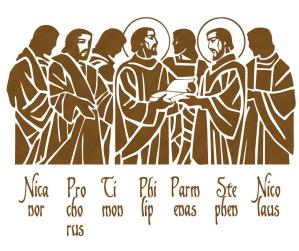
Pope Benedict in his apostolic letter “Omnium in Mentem” clarified further the basic identity of a deacon. He wrote, “deacons are empowered to serve the People of God in the ministries of the liturgy, the word, and charity.” The deacons are the heart of both the ordained and non-ordained ministers of the Church because they perform and remind the most basic duties of every Church’s servants: to serve and love God and His people. The very word deacon is coming from the Greek word, “ diakoneo ” meaning to serve, and therefore, a deacon is someone who serves, a servant. Yet, it is not any service. If we go back to the first chapter of the Gospel of Mark, the first person who serves Jesus, the God-man, is Peter’s mother-in-law (Mar 1:31). She serves Jesus because He has restored her to health. It is not a service done out of fear, but gratitude and love. Thus, to serve and to love are at the very essence of being deacon.

In today’s Gospel, Jesus faces the scribe who asks Him on the first of all the commandments. In the Law of Moses, aside from the famous Ten Commandments, they have hundreds of more commandments. Jesus answers, “You shall love the Lord, your God, with all your heart, with all your soul, and with all your mind.” Jesus quotes part of the Shema or the basic Jewish Creed that every devout Jews would recite every day (see Deu 6:4-5). Yet, Jesus does not stop there. He completes the first and the greatest law with another one, “You shall love your neighbor as yourself.” It also comes from the Old Testament (see Lev 19:18). To the delight of the scribe, Jesus’ answer is an orthodox one, but there is something novel as well.

The connection between first and second turns to be a watershed. For Jesus, true love for God has to be manifested in love for others, and genuine love for others has to be oriented toward God. Thus, it is unthinkable for Jesus to order His disciples to kill for the love of God. Or, Jesus will not be pleased if His followers are busy with performing rituals, but blind to the injustices that plague their communities.

With these Jesus’ first commandments in mind, we can now see why the role of the deacons is fundamental in the Church. The deacons are those who are called and empowered to fulfill Jesus’ commandment of love. The deacons are to serve and love God and His people, both in the context of Christian worship and real life. While it is true that deacons are one of the ordained ministers in the Church, every Christian is also called to become a “deacon” in our lives, to serve God and His people out of love.  Without the heart of a deacon, who is the very core of Church’s ministry, every Christian, whether they are lay or cleric, will lose their identity and fail to accomplish the most fundamental law of Christ.

Br. Valentinus Bayuhadi Ruseno, OP

Diakon

Renungan pada Hari Minggu ke-31 dalam Masa Biasa [4 November 2018] Markus 12: 28-31

“Kamu harus mengasihi Tuhan, Tuhanmu… Yang kedua adalah ini: ‘Kamu harus mencintai sesamamu seperti dirimu sendiri.’ Tidak ada perintah lain yang lebih besar dari ini. “(Mrk. 12: 30-31)

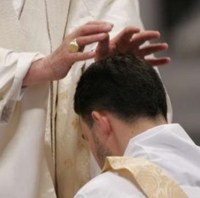
ordination 4Hari-hari ini, saya sedang mempersiapkan tahbisan diakonat saya. Diakon sendiri adalah tahap transisi sebelum saya menjadi seorang imam. Terlepas dari kenyataan bahwa diakonat adalah masa transisi, seorang Diakon itu sendiri adalah masa hidup yang penting dalam kehidupan Gereja. Uskup Virgilio David, DD dari Kalookan, Metro Manila, mengingatkan 15 diakon Yesuit yang baru saja ditahbiskan Oktober lalu bahwa kita jangan melihat Diakon hanya sebagai langkah pertama menuju tingkat yang lebih tinggi, seperti imam dan uskup. Diakon adalah inti dalam lapisan lingkaran konsentris yang membentuk pelayanan tertahbis di Gereja. Diakon menjadi inti dari lingkaran pelayanan ini dan tanpa inti ini, para imam dan uskup akan runtuh. Ini adalah fondasi tempat kita membangun kepemimpinan di Gereja. Namun, mengapa Diakon harus ditempatkan sebagai inti dan menjadi fondasi?

Paus Benediktus XVI dalam surat apostoliknya “Omnium in Mentem” memperjelas lebih lanjut identitas dasar seorang Diakon. Dia menulis, “Diakon diberdayakan untuk melayani umat Allah dalam pelayanan liturgi, sabda, dan kasih.” Para diakon adalah hati dari semua pelayan Gereja baik yang ditahbiskan maupun yang tidak ditahbiskan karena diakon melakukan dan mengingatkan kita akan tugas paling dasar dari setiap pelayan Gereja: untuk melayani dan mengasihi Allah dan umat-Nya. Kata Diakon berasal dari kata Yunani, “diakoneo” yang berarti melayani, dan karena itu, Diakon adalah seorang pelayan. Jika kita kembali ke bab pertama Injil Markus, orang pertama yang melayani Yesus, Sang Allah yang menjadi manusia, adalah ibu mertua Petrus (Mar 1:31). Dia melayani Yesus karena dia telah dipulihkan dari sakit. Ini bukan pelayanan yang dilakukan karena takut atau kebutuhan egois semata, tetapi atas syukur dan cinta kasih. Jadi, melayani dan mengasihi berada pada inti kehidupan seorang Diakon.

Dalam Injil hari ini, Yesus bertemu dengan seorang ahli Hukum Taurat yang bertanya tentang hukum yang paling utama. Dalam Hukum Taurat Musa, selain dari Sepuluh Perintah Allah, bangsa Yahudi memiliki ratusan lebih peraturan. Yesus menjawab, “Kasihilah Tuhan, Allahmu, dengan segenap hatimu dan dengan segenap jiwamu dan dengan segenap akal budimu.” Yesus mengutip bagian dari Shema atau Kredo dasar Yahudi yang setiap orang Yahudi daraskan setiap hari (lihat Deu 6: 4-5). Namun, Yesus tidak berhenti sampai di situ saja. Dia melengkapi hukum pertama dan terbesar dengan hukum kedua, “Kasihilah sesamamu manusia seperti dirimu sendiri.” Ini juga berasal dari Perjanjian Lama (lihat Im 19:18). Sesungguhnya, jawaban Yesus pada dasarnya adalah ajaran yang ortodoks bagi orang Yahudi yang mendengar. Namun ada juga sesuatu yang baru.

Hubungan antara hukum pertama dan kedua menjadi kunci ajaran Yesus. Bagi Yesus, cinta kasih sejati kepada Tuhan harus diwujudnyatakan dalam cinta kasih kepada sesama, dan cinta sejati kepada sesama harus berorientasi kepada Tuhan. Jadi, sungguh tidak terpikirkan jika Yesus memerintahkan murid-murid-Nya untuk membunuh demi cinta akan Allah. Atau, Yesus tidak akan senang jika para pengikutnya hanya sibuk melakukan peribadatan, namun buta dengan ketidakadilan yang terjadi di dalam komunitas mereka.

Dengan mengingat hukum cinta kasih Yesus ini, kita sekarang dapat melihat mengapa peran diakon merupakan hal mendasar dalam Gereja. Diakon adalah mereka yang dipanggil dan diberdayakan untuk memenuhi hukum kasih Yesus. Diakon melayani dan mengasihi Allah dan umat-Nya, baik dalam konteks ibadah dan kehidupan sehari-hari. Meskipun benar bahwa diakon adalah salah satu pelayan yang ditahbiskan di Gereja, setiap pengikut Kristus juga dipanggil untuk menjadi “Diakon,” untuk melayani Allah dan umat-Nya berdasarkan cinta kasih. Tanpa hati seorang Diakon, yang merupakan inti dari pelayanan Gereja, setiap orang Kristiani, baik awam ataupun klerus, akan kehilangan identitas dan gagal untuk memenuhi hukum Kristus paling mendasar, hukum cinta kasih.

Frater Valentinus Bayuhadi Ruseno, OP

True Power

29th Sunday in the Ordinary Time [October 21, 2018] Mark 10:35-45

Whoever wishes to be first among you will be the slave of all. (Mk. 10:44)

washing feet“Power tends to corrupt, and absolute power corrupts absolutely.” This familiar adage comes from an English noble, Lord Acton in his letter to Bishop Mandell Creighton in 1887. Lord Acton observed that people who possessed absolute control over other persons were inclined to abuse their power and exploit their subjects. This happens throughout human history. Jesus and His disciples themselves witnessed these corrupt powerful leaders during their time and eventually, became victims of this corruption.

We recall how Herod the Great commissioned his army to slaughter all the babies under two years old in Bethlehem. He was having a paranoia that a baby born in this town of David would overthrow him from power someday. Herod Antipas, a son of Herod the Great, ordered the beheading of John the Baptist. This was done just to pacify the anger of his whimsical yet anti-critic wife. A Jewish historian, Josephus, narrated how Pilate, the Roman procurator, ruled Judea with iron and bloody hand. He commanded the crucifixion more than two thousand Jews during his brief stint in Jerusalem. With absolute power in their hands, human lives become so cheap. The only thing that matters is how they remain in power.

Ironically, despite witnessing those horrible events, James and John, as well as the rest of the disciples remain obsessed with power. James and John wish that they sit at the right and left hands of Jesus when His kingdom comes. The throne is the symbol of power. We are familiar with box-office hit “Game of Thrones.” This TV series is about people who are struggling to sit on the Iron Throne of the Seven Kingdom. And just any game, the different characters use various strategies, including deceit and deceptions to capture this throne. Friends and foes are the ones and the same. Enemies turn to be friends, and allies kill each other. If they cannot be on that throne, at least, they can be next to that seat of power.

Why do we want power so much?  It is because, with power, we are in control. When we are in charge, we have this sense of independence and pride. When autonomy is within our grasp, we cannot but feel good about ourselves. The opposite is also true. When we lose control, we feel terrible. Powerlessness is just awful. Thus, the more power we have, the better we feel. However, this is a mere illusion. No matter how powerful we are, we cannot control everything. The mere fact that we are not able to control the desire to possess power is proof how powerless we are.

Knowing well the irony of power, Jesus gives us a solution: be the servant and slave of all. A slave is a person who is under control of somebody else. In a normal situation, to be slaves are dreadful. Yet, when we have power, our decision to be slaves for others can be liberating. Jesus understands that power is not to be acquired, but to be shared. Power is to empower and not to be hoarded. Yet, it is not the same with yielding to fate, powerlessness, and desperation. Pretty the opposite, to serve and empowering others, we need to exercise our power actively. Think of Mother Teresa of Calcutta. She was just a little religious sister who did nothing but dedicated her life for the poor, the abandoned and the dying. She was far from the image of a strong and powerful leader. Yet, because she became the slave of all, she was considered to be one of the most influential and admired persons in the twentieth century. Echoing the words of Her Lord, “God has not called me to be successful. He has called me to be faithful.”

Br. Valentinus Bayuhadi Ruseno, OP

Kekuatan Sejati

Minggu ke-29 di Masa Biasa [21 Oktober 2018] Markus 10: 35-45

Barangsiapa ingin menjadi yang terkemuka di antara kamu, hendaklah ia menjadi hamba untuk semuanya. (Mk. 10:44)

washing feet 2“Power tends to corrupt, and absolute power corrupts absolutely.” Pepatah ini berasal dari bangsawan Inggris, Lord Acton dalam suratnya kepada Uskup Mandell Creighton pada 1887. Lord Acton mengamati bahwa orang-orang yang memiliki kekuasaan mutlak atas orang lain cenderung menyalahgunakan kekuasaan mereka dan mengeksploitasi bawahan mereka. Ini terjadi sepanjang sejarah manusia. Yesus dan murid-murid-Nya sendiri menyaksikan para pemimpin korup ini pada zaman mereka dan akhirnya, menjadi korban kekuasaan yang korup tersebut.
Kita ingat bagaimana Herodes menugaskan pasukannya untuk membantai semua bayi di bawah dua tahun di Betlehem. Dia mengalami paranoia bahwa satu bayi yang lahir di kota Daud ini akan menggulingkannya dari kekuasaan suatu hari nanti. Herodes Antipas, putra Herodes, memerintahkan pemenggalan kepala Yohanes Pembaptis. Ini dilakukan hanya untuk menenangkan kemarahan istrinya yang juga haus kekuasaan. Sejarawan Yahudi, Josephus, menceritakan bagaimana Pilatus, wali negara Romawi, memerintah Yudea dengan tangan besi. Dia memerintahkan penyaliban lebih dari dua ribu orang Yahudi selama masa pemerintahannya di Yerusalem. Dengan kekuatan absolut di tangan mereka, hidup manusia menjadi begitu murah. Satu-satunya hal yang penting adalah bagaimana mereka tetap berkuasa.

Ironisnya, meski menyaksikan peristiwa-peristiwa mengerikan itu, Yakobus dan Yohanes, serta para murid lainnya tetap terobsesi dengan kekuasaan. Yakobus dan Yohanes berharap agar mereka duduk di tangan kanan dan kiri Yesus ketika kerajaan-Nya datang. Tahta adalah simbol kekuasaan. Kita akrab dengan hit box-office “Game of Thrones.” Serial TV ini adalah tentang orang-orang yang berjuang untuk duduk di Tahta Besi Tujuh Kerajaan. Berbagai karakter menggunakan berbagai strategi, termasuk tipu daya untuk memenangkan tahta ini. Teman dan musuh tidak bisa dibedakan. Musuh berubah menjadi teman, dan sekutu saling membunuh. Jika mereka tidak dapat berada di tahta itu, setidaknya, mereka dapat berada di sebelah kursi kekuasaan itu.

Mengapa kita sangat menginginkan kekuasaan dan kekuatan? Karena, dengan hal ini, kita memegang kendali. Ketika kita memampu mengendalikan banyak hal, kita memiliki rasa kebebasan dan kemandirian ini. Ketika otonomi ada di dalam genggaman kita, kita pun merasa senang dengan diri kita sendiri. Namun, ketika kita kehilangan kendali, kita merasa tidak nyaman. Ketidakberdayaan tidaklah menyenangkan. Dengan demikian, semakin banyak kekuatan yang kita miliki, semakin baik perasaan kita. Namun, ini hanyalah ilusi belaka. Tidak peduli seberapa kuatnya dan berkuasanya kita, kita tidak bisa mengendalikan semua hal. Fakta bahwa kita tidak dapat mengendalikan hasrat untuk memiliki kekuatan adalah bukti betapa tidak berdayanya diri kita.

Mengetahui dengan baik ironi kekuasaan, Yesus memberi kita solusi: jadilah hamba untuk semuanya. Seorang hamba adalah orang yang di bawah kendali orang lain. Dalam situasi normal, menjadi hamba itu tidak mengenakan. Namun, ketika kita memiliki kekuasaan, keputusan kita untuk menjadi hamba bagi orang lain dapat membebaskan diri kita. Yesus memahami bahwa kuasa bukan untuk diperebutkan, tetapi untuk dibagikan. Kekuatan adalah untuk memberdayakan dan bukan ditimbun. Namun, hal ini tidak sama dengan sekedar menyerah diri pada nasib, ketidakberdayaan, dan keputusasaan. Cukup sebaliknya, untuk melayani dan memberdayakan orang lain, kita perlu menggunakan kekuatan kita secara aktif. Lihatlah Bunda Teresa dari Calcutta. Dia hanyalah seorang suster yang berbadan kecil yang tidak melakukan apa pun selain mengabdikan hidupnya untuk orang miskin dan sakit. Dia jauh dari citra seorang pemimpin yang kuat, kaya dan berkuasa. Namun, karena ia menjadi hamba bagi semua, ia dinobatkan sebagai salah satu orang yang paling berpengaruh dan dikagumi di abad ke-20. Diapun berpesan pada kita semua, “Tuhan belum memanggil saya untuk menjadi sukses. Dia telah memanggil saya untuk setia.”

Frater Valentinus Bayuhadi Ruseno, OP

True Greatness

Reflection on the 25th Sunday in Ordinary Time [September 23, 2018] Mark 9:30-37

“Whoever wants to be first must be last of all and servant of all.” (Mk. 9:35)

ordination 1While I was reflecting on this Sunday’s Gospel, I was able to discover some news about our Church. Good News! The Catholic Church in the Philippines is preparing herself for the 500 years of the arrival of Christianity in this archipelago. The first baptism and Eucharist were taking place in 1521 as the Spanish missionaries began their evangelization mission. As part of this grand preparation, the Bishops of the Philippines have decided to celebrate this year as the year of the clergy and the consecrated persons. The major theme of this year is the renewed servant-leaders for the new evangelization. In view of this, many programs and activities are organized to help both the ordained ministers and the religious brothers and sisters to deepen their commitment to God and their service to the people.

Not so good news. It is also true, however, that today the Church is also facing a deep crisis. In many countries and places, the clergy, as well as the religious persons, are caught in scandals and shameful things. One among the worst is the sexual abuses involving the minors done by priests and even bishops, and the massive cover-up staged to tolerate this structural evil. Yet, this is not the only thing that plagues the Church. Some ordained ministers are dishonest and having double-standard lives. Some are secretly enriching themselves. Others may not commit any scandal, but are lacking in compassion and enthusiasm in serving the people of God. Many stories are circulating of priests refusing to hear confession or anointing the dying because they like to prioritize their scheduled hobbies or religious persons who are grumpy and easily irritated with others. These attitudes simply drive people away from the Church. The rest of us perhaps are just nothing but mediocre clergy or religious. This reminds me of Pope Francis who points that holiness as opposed to ‘bland and mediocre existence.’

Our Gospel narrates Jesus who in private teaches the disciples, who will be the first and models of Church’s leaders. The Gospel itself can be divided into two parts. The first part speaks of Jesus foretelling his impending suffering and death in Jerusalem. Here, reacting to Jesus’ words, the disciples drop silence. Perhaps, the memory of Jesus scolding Peter and calling him “Satan” is still fresh in the mind of the disciples and nobody wants to repeat the same embarrassment. The second part of the Gospel tells us of the topic of greatness. This time, the disciples have a different reaction. Not only do they initiate the discussion, but they are also passionately arguing among themselves. We can imagine Peter boasting himself as the leader among the apostles, or John telling everyone that he is the closest to Jesus, or Matthew being proud of his richness. After all, these are our first Pope and first bishops. Yet, when Jesus asks them, they once again fall silent.

The apostles seem to forget that Jesus’ disciples have to carry their cross and follow Jesus to Jerusalem. Jesus, however, understands that human desire for excellence is a gift from God. Jesus does not forbid His apostles to have dreams and strive for greatness, but He makes a radical twist. He directs this powerful energy from achieving one selfish interests into serving others. Thus, Jesus’ unforgettable line: “Whoever wants to be first must be last of all and servant of all.” (Mk. 9:35) Indeed, they need to excel, but not any worldly measures, but in serving and empowering others. In his exhortation, Gaudete et Exsultate, Pope Francis calls this “the Logic of the Cross.” True happiness is a paradox. If the clergy, the religious and all of us want to be genuinely happy, then it is not so much on the wealth and success we have gained, but from our service and sacrifice for others.

We continue to pray for our priests and bishops, as well as our religious brother and sisters. We pray not only that they may avoid scandals, but they may be holy. As Pope Benedict XVI puts it, “holiness is nothing other than charity lived to the full.”

Br. Valentinus Bayuhadi Ruseno, OP