

21st Sunday in Ordinary Time
August 23, 2020
Matthew 16:13-20
 Today’s Gospel speaks volume about the new identity and roles of St. Simon Peter as the leader of the college of the apostles, and thus, the leader of the Church. He is the chosen foundation rock upon which Jesus built His Church. He is the prime minister who holds the keys of the kingdom of God. He is the chief priest who is responsible for the Temple of God. He is the chief Rabbi whose teachings binds the entire faithful. These are the bigger-than-life privileges and one may wonder, “Among the disciples, why was he chosen? Did Jesus know that he would deny Him three times?”
Jesus’ choice is a huge mystery, yet in the final analysis, nobody is worthy to be the first pope. If we scan the Bible and try to see many vocation stories of the great leaders of Israel, we are going to see the same pattern: most of them are not worthy and great sinner. Abraham was a coward who hid behind his wife. Moses was involved in killing an Egyptian. David was committing adultery and plotting a murder of Uriah. God seems to have a penchant to choose unworthy sinner!
Yet, that is only half of the story. These great leaders possess their remarkable quality in relation to God’s mercy and love. Despite their weakness, they never lose hope in God’s grace working in them. When they fall, they learn to rise once again and allow God sustains them. This particular quality also that Simon has.
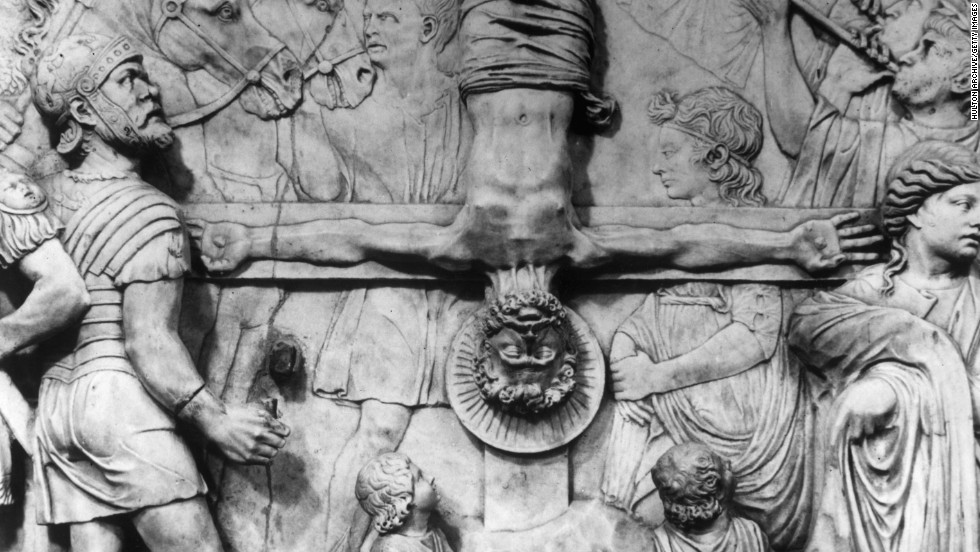
Through his life, Peter was struggling to love Jesus and to become a leader for Christ’s Church. He made few step on water, but doubted and distracted, he began to sink. He made divinely inspired statement on Jesus divinity, but right after, he prevented Jesus to accomplish His mission on the cross. Thus, Jesus called him “Satan!” He promised Jesus that he would lay down his life for Jesus, but less than twenty-four hour, he denied Jesus with curse, and ran away! Yet, despite so grave a sin, he repented, but does not despair. Compare to Judas who lost hope and killed himself in the process, Peter knew too well that there is nothing impossible for God. Indeed, the risen Christ restored his place as the leader and the shepherd of His flocks, after asking Simon’s confession of love thrice. Yet, that was not the end of the story. A tradition says that during the persecution of emperor Niro, Peter was trying to escape Rome. In his way out of the city, Peter encountered Jesus going to the opposite direction. He then asked Jesus, “Quo vadis, Domine? [where are you going, Lord?]” Jesus responded, “I am going to Rome, to be crucified again!” Hearing this, Peter ran back to Rome. True enough, he was arrested and crucified upside down.
The choice of Peter is a mystery, but also good news. We are like Simon Peter, we are chosen to be God’s people, chosen into particular role and mission, but deep in our hearts, we are not worthy and full of weaknesses. Why did God choose me to be His priest? Why did God want me to raise children for the kingdom? Why did God elect me to become His ministers? We are not sure the exact reason, but like Peter, we are also called to trust His providence, and never lose hope in midst of trials and failures, and to love even more.
Valentinus Bayuhadi Ruseno, OP
 Injil hari ini berbicara banyak tentang identitas baru dan peran St. Simon Petrus sebagai pemimpin para rasul, dan dengan demikian, pemimpin Gereja. Dia adalah batu fondasi pilihan yang di atasnya Yesus membangun Gereja-Nya. Dia adalah perdana menteri yang memegang kunci kerajaan Tuhan. Dia adalah imam kepala yang bertanggung jawab atas Bait Allah yang baru. Dia adalah Rabi kepala yang ajarannya mengikat seluruh umat beriman. Ini adalah hak istimewa yang luar biasa dan orang mungkin bertanya-tanya, “Di antara para murid, mengapa dia yang dipilih? Apakah Yesus tahu bahwa dia akan menyangkal-Nya tiga kali? “
 After the arrest of John the Baptist, Jesus begins His public ministry. Jesus left Nazareth, His hometown, and moved to a more crowded and bigger town, Capernaum. Crudely speaking, Jesus did urbanization. This strategic move of Jesus was to support His mission. With a dense population and with better access to neighboring towns, Jesus could minister to more people in a more efficient way.
 Setelah penangkapan Yohanes Pembaptis, Yesus memulai pelayanan publik-Nya. Yesus meninggalkan Nazaret, kampung halamannya, dan pindah ke kota yang lebih ramai dan lebih besar, Kapernaum. Sebenarnya, Yesus melakukan urbanisasi. Langkah strategis Yesus ini tentu saja untuk mendukung misi-Nya. Dengan populasi yang padat dan dengan akses yang lebih baik ke kota-kota lain, Yesus dapat melayani lebih banyak orang dengan cara yang lebih efisien.
 In ancient Israel, the masters of the house were often leaving their homes for business trips or attending social gatherings like weddings. They would entrust their houses and their possessions to chief servants. And this was the world without a cellular phone, internet, and GPS. Thus, the servants have no idea of the ETA (estimated time of arrival) of their masters. It could be 8 PM, midnight or even early in the morning. The best attitude of a servant in this scenario is to be always vigilant and prepared for the arrival of his master.
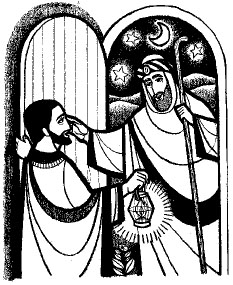 Di Israel kuno, tuan rumah sering meninggalkan rumah mereka untuk perjalanan bisnis atau menghadiri pertemuan sosial seperti pernikahan. Mereka akan mempercayakan rumah dan harta benda mereka kepada seorang hamba yang adalah hamba utama. Dan kita perlu ingat bahwa ini adalah dunia tanpa telepon seluler, internet dan GPS. Dengan demikian, para pelayan tidak tahu dengan pasti waktu kedatangan dari tuan mereka. Bisa jadi jam 8 malam, tengah malam atau bahkan dini hari. Sikap terbaik seorang pelayan dalam skenario ini adalah untuk selalu waspada dan siap menghadapi kedatangan tuannya.
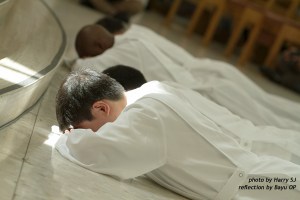
 Melakukan sesuatu untuk melayani Tuhan tentu baik dan terpuji. Dan karya-karya ini sangat banyak dan beragam. Tindakan-tindakan ini dapat secara langsung melayani Dia di Gereja, terutama dalam liturgi. Kita dapat berpartisipasi dalam ibadat sebagai anggota paduan suara, lektor, putra altar, asisten imam, atau bahkan sebagai imam yang mempersembahkan Ekaristi itu sendiri. Namun, kita juga dapat melayani Dia melalui sesama ketika kita terlibat dalam inisiatif amal untuk membantu orang miskin, untuk memperjuangkan keadilan dan perdamaian dan integritas ciptaan. Kita memiliki banyak cara, tetapi tujuannya adalah satu dan itu adalah untuk memuliakan Dia.
 In Jesus’ time, the scribes are the well-educated Jewish men who are expert in the Law of Moses. Some of them come from the wealthy families, and others hail from the priestly clan. Being able to teach and interpret the Law, they receive the respect and honor from the ancient Jewish society. Thus, ordinary Jews will greet them and prepare them the seats of honor in the synagogues and the banquets. Surely, there is no problem with receiving greetings and sitting as honor guests. Jesus Himself is often greeted as “Teacher” or “Rabbi”, and He attends the banquets as guest of honor (see Mar 14:3). The problem comes when some of the scribes possesses “narcissistic desire” and intentionally look for these privileges.
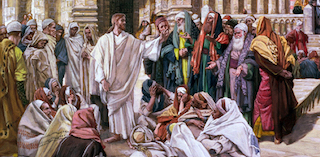 Pada masa Yesus hidup, para ahli Taurat adalah orang Yahudi terdidik dan menjadi ahli dalam Hukum Musa. Beberapa dari mereka berasal dari keluarga kaya, dan yang lain dibesarkan dari klan imam. Mampu mengajar dan menafsirkan Hukum, mereka menerima respek dan kehormatan dari masyarakat Yahudi. Dengan demikian, orang-orang Yahudi kebanyakan akan menyapa dengan hormat para ahli Taurat ini dan mempersiapkan bagi mereka kursi kehormatan di sinagoga dan perjamuan. Tentunya, tidak ada masalah dengan menerima salam dan duduk sebagai tamu kehormatan. Yesus sendiri sering disambut sebagai “Guru” atau “Rabi”, dan Dia menghadiri perjamuan sebagai tamu kehormatan (lihat Mar 14:3). Masalah muncul ketika beberapa ahli Taurat memiliki “hasrat narsistik”, menjadi gila hormat dan dengan sengaja mencari yang kehormatan dan semua hak-hak istimewa.
 In Medio Ecclesiae