

Reflection on the 31st Sunday in Ordinary Time [November 4, 2018]
Mark 12:28-31
“You shall love the Lord your God… The second is this: ‘You shall love your neighbor as yourself.’ There is no other commandment greater than these.” (Mk. 12:30-31)
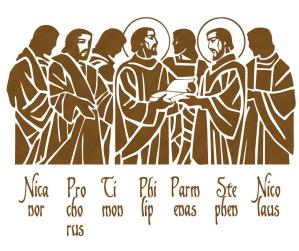 I am currently preparing for my ordination to the diaconate. It is a transitional stage before I become a priest of Jesus Christ. Despite the fact of being transitional, a deacon in itself is an important state in the life of the Church. Bishop Virgilio David, DD of Kalookan reminded the 15 newly-ordained Jesuit deacons in his homily last October that we shall not see a deacon as a mere stepping step toward higher states, like priests and bishops. It is the very core in the layers of concentric circles that make up the ordained ministries of the Church. The diaconate is not a lower rank but the core, without which both the offices of presbyters and bishops collapse. It is the foundation on which we build leadership in the Church. Yet, why do the deacons have to be placed at the core, and become the foundation?
Pope Benedict in his apostolic letter “Omnium in Mentem” clarified further the basic identity of a deacon. He wrote, “deacons are empowered to serve the People of God in the ministries of the liturgy, the word, and charity.” The deacons are the heart of both the ordained and non-ordained ministers of the Church because they perform and remind the most basic duties of every Church’s servants: to serve and love God and His people. The very word deacon is coming from the Greek word, “ diakoneo ” meaning to serve, and therefore, a deacon is someone who serves, a servant. Yet, it is not any service. If we go back to the first chapter of the Gospel of Mark, the first person who serves Jesus, the God-man, is Peter’s mother-in-law (Mar 1:31). She serves Jesus because He has restored her to health. It is not a service done out of fear, but gratitude and love. Thus, to serve and to love are at the very essence of being deacon.
In today’s Gospel, Jesus faces the scribe who asks Him on the first of all the commandments. In the Law of Moses, aside from the famous Ten Commandments, they have hundreds of more commandments. Jesus answers, “You shall love the Lord, your God, with all your heart, with all your soul, and with all your mind.” Jesus quotes part of the Shema or the basic Jewish Creed that every devout Jews would recite every day (see Deu 6:4-5). Yet, Jesus does not stop there. He completes the first and the greatest law with another one, “You shall love your neighbor as yourself.” It also comes from the Old Testament (see Lev 19:18). To the delight of the scribe, Jesus’ answer is an orthodox one, but there is something novel as well.
The connection between first and second turns to be a watershed. For Jesus, true love for God has to be manifested in love for others, and genuine love for others has to be oriented toward God. Thus, it is unthinkable for Jesus to order His disciples to kill for the love of God. Or, Jesus will not be pleased if His followers are busy with performing rituals, but blind to the injustices that plague their communities.
With these Jesus’ first commandments in mind, we can now see why the role of the deacons is fundamental in the Church. The deacons are those who are called and empowered to fulfill Jesus’ commandment of love. The deacons are to serve and love God and His people, both in the context of Christian worship and real life. While it is true that deacons are one of the ordained ministers in the Church, every Christian is also called to become a “deacon” in our lives, to serve God and His people out of love. Without the heart of a deacon, who is the very core of Church’s ministry, every Christian, whether they are lay or cleric, will lose their identity and fail to accomplish the most fundamental law of Christ.
Br. Valentinus Bayuhadi Ruseno, OP
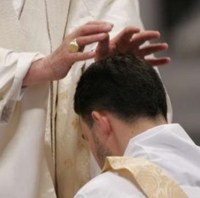 Hari-hari ini, saya sedang mempersiapkan tahbisan diakonat saya. Diakon sendiri adalah tahap transisi sebelum saya menjadi seorang imam. Terlepas dari kenyataan bahwa diakonat adalah masa transisi, seorang Diakon itu sendiri adalah masa hidup yang penting dalam kehidupan Gereja. Uskup Virgilio David, DD dari Kalookan, Metro Manila, mengingatkan 15 diakon Yesuit yang baru saja ditahbiskan Oktober lalu bahwa kita jangan melihat Diakon hanya sebagai langkah pertama menuju tingkat yang lebih tinggi, seperti imam dan uskup. Diakon adalah inti dalam lapisan lingkaran konsentris yang membentuk pelayanan tertahbis di Gereja. Diakon menjadi inti dari lingkaran pelayanan ini dan tanpa inti ini, para imam dan uskup akan runtuh. Ini adalah fondasi tempat kita membangun kepemimpinan di Gereja. Namun, mengapa Diakon harus ditempatkan sebagai inti dan menjadi fondasi?
 “Power tends to corrupt, and absolute power corrupts absolutely.” This familiar adage comes from an English noble, Lord Acton in his letter to Bishop Mandell Creighton in 1887. Lord Acton observed that people who possessed absolute control over other persons were inclined to abuse their power and exploit their subjects. This happens throughout human history. Jesus and His disciples themselves witnessed these corrupt powerful leaders during their time and eventually, became victims of this corruption.
 “Power tends to corrupt, and absolute power corrupts absolutely.” Pepatah ini berasal dari bangsawan Inggris, Lord Acton dalam suratnya kepada Uskup Mandell Creighton pada 1887. Lord Acton mengamati bahwa orang-orang yang memiliki kekuasaan mutlak atas orang lain cenderung menyalahgunakan kekuasaan mereka dan mengeksploitasi bawahan mereka. Ini terjadi sepanjang sejarah manusia. Yesus dan murid-murid-Nya sendiri menyaksikan para pemimpin korup ini pada zaman mereka dan akhirnya, menjadi korban kekuasaan yang korup tersebut.


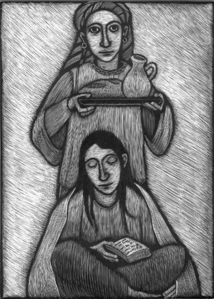 Few weeks ago, I participated in a seminar-workshop on personality recognition and development. The activity was organized by the ministry of Lectors of Santo Domingo Parish and facilitated by seasoned speaker Sr. Leticia Garcia, DC. As I expected, the test result told me that I was dominantly introvert, meaning I was silent and more reserved guy. I found strength in solitude. I shared this treats with many of the participants. Yet, not few were actually our opposite. They were extrovert, meaning they were people-oriented and action-driven. They were recharged in interaction with others. Sr. Garcia made a point that the difference must not bring us into animosity. When properly developed, our personalities shall complete each other and contribute in the service of God.
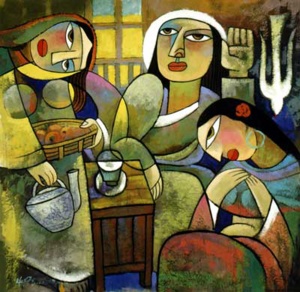 uti seminar dan lokakarya tentang pengenalan dan pengembangan kepribadian di Manila, Filipina. Seperti yang saya duga, hasil tes menyatakan bahwa saya secara dominan adalah introvert, yang berarti saya kepribadian yang tenang dan pendiam. Saya menemukan kekuatan dalam keheningan. Saya tidak sendirian karena banyak juga peserta adalah introvert. Namun, tidak sedikit yang memiliki kepribadian yang berlawanan dengan kami. Mereka adalah ekstrovert, yang berarti mereka menyukai banyak aktivitas dan senang berinteraksi dengan orang lain. Sang pembicara mengingatkan bahwa perbedaan tidak boleh membawa kita ke permusuhan. Jika dikembangkan dengan baik, kepribadian kita yang unik akan saling melengkapi dan berkontribusi dalam pelayanan di Gereja dan kemuliaan Tuhan.
 In Medio Ecclesiae