

Christmas Vigil – December 24, 2019 – Luke 2:1-14
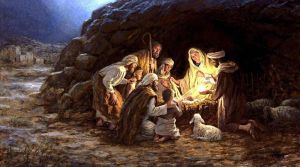 Today is Christmas, the day of Jesus was born in Bethlehem, and it is a traditional practice that in every Church or Christian family, there is a nativity scene. Usually, the baby Jesus was born in a kind of stable or shed, and He was placed on the wooden manger (a place where animals eat). Surely, Mary and Joseph are intently watching on the Baby, while other animals like sheep and cows become the silent witnesses of this most beautiful moment in human history. The scene will not be complete without the shepherds and the angel.
The nativity scene is indeed beautiful and always remains us of the simplicity of Christmas that we often miss.
However, if we go back to the time of Joseph and Mary, to first-century Palestine, we will discover a slightly different yet have a deeper meaning. Most probably, Joseph and Mary were not resting in a wooden stable, but inside a stone cave since this is a common feature in hill country Judea. Inside the stone cave is warm and sometimes spacious, and the shepherds use them as a safe and warm shelter for their sheep at night. The mangers provided for sheep were not made of wood, but stone. Sometimes, we see Baby Jesus half-naked on the manger, but Luke describes that Jesus was wrapped in a swaddling cloth. It is normal practice that a new-born baby will be cleansed, and then be enclosed by the cloth to keep the baby warm, protected and comfortable.
We discover that Jesus was born in a stone cave, rested on a stone manger and swaddled in cloth. These three things point to an even greater reality in the life of Christ: His death and resurrection. After the crucifixion, his body was enclosed in cloth, put inside the cave tomb, and rested on the large stone. Yet, it is also the same stone tomb where Jesus rose from death. From the very beginning of Jesus’ life here on earth, His destiny has been foretold: by His death and resurrection, He will save us.
However, there is something even more remarkable. Jesus was placed on a manger, and a manger is none other than a place for animal’s feed. From the beginning, Jesus is already presented to us as a food that will satisfy those who come to Him. Then, what “kind of food” is He? It is not a coincidence that Jesus was born in Bethlehem. The word Bethlehem comes from two Hebrew words: “Beth” meaning “house” and “Lehem” meaning “bread”; thus, Bethlehem is a house of bread. Jesus is given to us as bread, and indeed, Jesus calls Himself as the bread of life [Jn 6:35]. It is interesting also to ask why the shepherds were the first persons invited to see Jesus. One of the possible answers is that the shepherds are the first men who are aware of the birth of a lamb. The shepherds recognized that this holy Baby is a new-born lamb. Indeed, later, Jesus would be called as the Lamb of God [John 1:29]. In ancient Israel, lambs were also the main sacrificial animal in the Temple. Baby Jesus came to feed us, and He came as the bread of life and sacrifice that saves us.
While it is good to spend Christmas with vacation or festive celebration, the best way to celebrate Christmas is none other than to celebrate the Eucharist, to mediate the simplicity and humility of God who came to us as little baby, and to ponder His infinite love that He offered Himself to feed us. This is the beauty of Christmas, that God has chosen to love us to the end.
Valentinus Bayuhadi Ruseno, OP
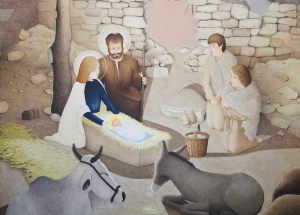 Hari ini adalah Natal, hari Yesus lahir di Bethlehem. Biasanya di setiap Gereja atau keluarga Kristiani, ada sebuah kadang atau gua yang menjadi tempat kelahiran Yesus. Di sini, Bayi Yesus ditempatkan di sebuah palungan kayu (tempat makanan binatang). Tentunya, ada patung Maria dan Yusuf yang dengan penuh perhatian mengawasi sang Bayi, sementara binatang-binatang lain seperti domba dan sapi menjadi saksi bisu dari momen terindah ini dalam sejarah manusia ini. Tentunya, kandang ini tidak akan lengkap tanpa gembala dan malaikat. Tempat kelahiran Yesus ini memang indah dan selalu mengingatkan kita akan kesederhanaan Natal yang sering kita lupakan di tengah hiruk pikuk perayaan Natal dan Tahun Baru.
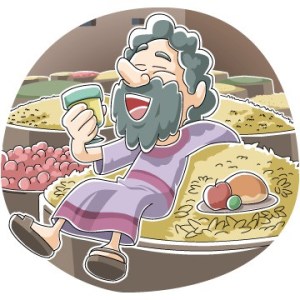 We were all born without bringing anything with us, and for sure, when we die, we will bring nothing with us. Job once said, “Naked I came forth from my mother’s womb, and naked shall I go back there. The LORD gave, and the LORD has taken away; blessed be the name of the LORD!” (Job 1:21). However, as we grow up and old, we begin to acquire things and possessions. Some are given, but some we earn it. As we are accumulating, we start attaching ourselves to these material belongings. Some of us are obsessed with collecting bags, shoes, and clothes, some others with more expensive things like electronic devices and cars. We believe these are ours, and we can own them until the Kingdom comes.
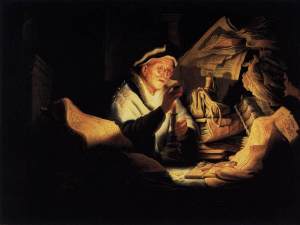 Kita semua dilahirkan tanpa membawa apa-apa, dan sama ketika kita mati, kita tidak akan membawa apa pun. Ayub pernah berkata, “Dengan telanjang aku keluar dari kandungan ibuku, dengan telanjang juga aku akan kembali ke dalamnya. TUHAN yang memberi, TUHAN yang mengambil, terpujilah nama TUHAN!” (Ayub 1:21). Namun, seiring bertambahnya usia, kita mulai memperoleh banyak hal dan harta benda. Ketika kita mulai mengakumulasi, kita mulai terikat pada barang-barang materi ini. Beberapa dari kita terobsesi dalam mengumpulkan tas, sepatu, dan baju, beberapa lainnya dengan barang-barang yang lebih mahal seperti perangkat elektronik, mobil dan bahkan mobil. Kita mulai percaya ini adalah milik kita, dan kita dapat memilikinya bahkan sampai kita masuk surga.
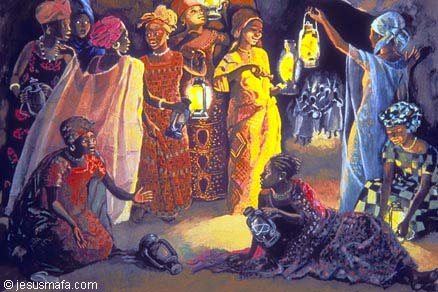 Pada zaman Yesus, seorang perempuan yang belum menikah harus tinggal dengan ayah dan keluarganya. Hanya saat dia menikah, dia akan pindah ke rumah suaminya. Peralihan dari keluarga asalnya ke keluarga barunya ini dilambangkan oleh perarakan pernikahan yang melibatkan hampir semua orang di desa. Pengantin laki-laki akan menjemput sang istri dari rumah ayahnya, dan bersama-sama mereka diarak kembali ke rumah pengantin laki-laki di mana biasanya perayaan pernikahan diadakan. Untuk alasan praktis, perarakan berlangsung setelah matahari terbenam, dan dengan demikian, pria dan wanita yang terlibat dalam perarakan harus membawa obor atau pelita mereka.
 This Sunday, the Church is celebrating the feast of Transfiguration. The word ‘transfiguration’ comes from Matthew who writes Jesus transfigures before the three disciples, Peter, James and John, his face shines like the sun and his clothes become white as light (17:2). The word “transfigure” is the direct transliteration of the Latin Vulgate Bible “transfigurare”. It is a combination of two words “trans” meaning to across, and “figura” meaning figure. Thus, transfiguration literally means the change of figure. It is a fitting word to describe what happens to Jesus.
 Minggu ini, Gereja merayakan Pesta Yesus yang menampakkan kemulian-Nya yang juga dikenal sebagai Transfigurasi. Kata “transfigurasi” adalah transliterasi dari kata Latin “transfigurare” yang digunakan oleh Alkitab Latin Vulgata. Ini adalah kombinasi dua kata “trans” yang berarti melintasi, dan “figura” yang berarti bentuk atau figur. Dengan demikian, transfigurasi secara harfiah berarti bahwa perubahan bentuk atau figur. Ini adalah kata yang tepat untuk menggambarkan apa yang terjadi pada Yesus di Gunung tinggi.
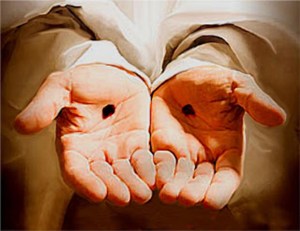 Are we ready to sell everything we have and follow Jesus? Are we prepared to give up our dreams and ambitions for the Kingdom? Are we willing to place our hearts, our treasures where no moth can destroy and no thief can steal?
 Apakah kita siap untuk menjual semua yang kita miliki dan mengikuti Yesus? Apakah kita siap untuk menyerah mimpi dan cita-cita kita untuk Kerajaan Allah? Apakah kita bersedia untuk menaruh hati kita pada harta yang tidak akan dirusak ngengat dan tidak akan dicuri?
 In Medio Ecclesiae