
The Serpent, the Manna and the Eucharist

Fourth Sunday of Lent [B]
March 14, 2021
John 3:14-21
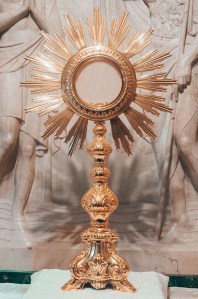
Today’s Gospel presents us with one of the most cryptic sayings of Jesus, “Just as Moses lifted up the serpent in the desert, so must the Son of Man be lifted up, so that everyone who believes in him may have eternal life.” To unpack this, we cannot but go back to the Old Testament, especially the Book of Numbers.

In the book of Numbers chapter 21, we will discover Israelites’ story in the desert who complained about God’s given food. They even called Manna from God as the wretched or even worthless food. Indeed, this ungrateful act brought upon themselves a terrible punishment. The seraph serpents assaulted and killed many Israelites. Aware that they were perishing, the Israelites begged for mercy. God instructed Moses to make a bronze serpent and mount it on a pole for people to see. Those who had been bitten saw the bronze serpent and recovered. With this story as a background, Jesus presented Himself like the bronze serpent. He would be lifted on the cross so that those who see Him and believe will receive eternal life.

Yet, there are more! We notice that the reason behind this punishment is that the Israelites failed to appreciate the bread from heaven and even called it worthless. Indeed, that was an act of ingratitude, but it was also an act of the desecration to the heavenly bread itself. No wonder that the punishment was so severe. Interestingly, Jesus pointed out that the Manna in the desert is a type of Eucharistic bread that He would give [see John 6:48-50]. Thus, the incident in Number 21 teaches us a hard lesson about what will happen if we dishonor not only any God’s gift but also the most precious gift, the Body of Christ in the Eucharist.

The one responsible for the death of the Israelites was the seraph serpents. This serpent was not an ordinary snake like cobra or python. The word ‘seraph’ or the ‘burning one’ reminds us of the seraphim, one of the higher echelons of angelic beings. Aside from that, the image of a serpent that attacked humanity brought us to Satan’s first assault against Adam and Eve. The attack against the Israelites in the desert was not merely a natural phenomenon but supernatural. The devil himself wreaked havoc on the people of Israel.

If we connect the dots, we will see the relation between the Manna, the serpent, and the bronze serpent. When the Israelites desecrated the Manna, the seraph serpents broke loose and began their onslaught. The Manna was not only nourishing the Israelites but also protecting them from spiritual harm. If Manna in the desert is a type of the Eucharist, the serpent is the devil, and the bronze serpent is Jesus crucified, we can move one step further. Every time we desecrate the Eucharist, we do not only insult God but also open the gate of hell and let diabolic power overpower us and our societies. This desecration can only be remedied by true repentance and the cross of Jesus.

If we see ourselves, our families, and our communities are falling apart and becoming an easy target of the devil, the root is that we fail to honor the Eucharist. Like the Manna that protected the Israelites against the serpents and nourished them along their journey, the eucharist is our bulwark against the onslaught of the devil, and it is our spiritual food that nourishes and strengthens us in this earthly journey.

Valentinus Bayuhadi Ruseno, OP

photocredit: Maria Ostwalt

Ular, Manna dan Ekaristi

Minggu Keempat Prapaskah [B]

14 Maret 2021

Yohanes 3: 14-21

Injil hari ini memberi kita salah satu perkataan Yesus yang paling sulit dimengerti, “sama seperti Musa meninggikan ular di padang gurun,  demikian juga Anak Manusia harus ditinggikan,  supaya setiap orang yang percaya kepada-Nya beroleh hidup yang kekal.” Untuk memahami perkataan ini, kita perlu kembali ke Perjanjian Lama, terutama Kitab Bilangan.

Dalam kitab Bilangan bab 21, kita akan menemukan kisah bani Israel di padang gurun yang mengeluh tentang Manna yang diberikan Tuhan. Mereka bahkan menyebut Manna dari Tuhan tersebut sebagai makanan tidak ada gunanya atau bahkan tidak berharga. Tentunya, tindakan mereka ini membawa hukuman yang mengerikan. Ular tedung menyerang dan membunuh banyak orang Israel. Sadar bahwa mereka akan binasa, orang Israel memohon belas kasihan. Tuhan memerintahkan Musa untuk membuat ular perunggu dan memasangnya di tiang untuk dilihat orang. Mereka yang telah digigit dan melihat ular perunggu itupun pulih. Dengan latar belakang cerita ini, Yesus menampilkan diri-Nya seperti ular perunggu. Dia akan ditinggikan di kayu salib sehingga mereka yang melihat Dia dan percaya akan menerima hidup yang kekal.

Namun, ada hal yang menarik yang kita tidak boleh lewatkan! Jika kita memperhatikan, alasan dari mengapa orang Israel kena hukuman adalah bahwa orang Israel gagal menghargai roti dari surga dan bahkan menyebutnya tidak berharga. Tentunya, ini adalah tindakan tidak tahu berterima kasih, tetapi lebih dalam, ini merupakan tindakan penodaan terhadap roti surgawi itu sendiri. Inilah mengapa hukumannya sangat berat. Yang menarik adalah Yesus menunjukkan bahwa manna di gurun adalah tanda dari roti Ekaristi yang akan Dia berikan [lihat Yoh 6: 48-50]. Jadi, kejadian di Bilangan 21 mengajarkan kita pelajaran pahit apa yang akan terjadi jika kita tidak menghargai anugerah Tuhan, dan terutama anugerah yang paling berharga yakni, Tubuh Kristus dalam Ekaristi.

Yang bertanggung jawab atas kematian orang Israel adalah ular tedung.  Jika kita perhatikan, kata ibrani yang digunakan adalah ‘saraph.’ Kata ‘saraph’ atau ‘yang terbakar’ mengingatkan kita pada seraphim, salah satu malaikat di surga. Selain itu, cerita tentang ular yang menyerang umat manusia mengingatkan kita pada serangan pertama Setan terhadap Adam dan Hawa. Ular ini bukanlah ular biasa seperti ular cobra atau ular sanca. Serangan terhadap bangsa Israel di padang gurun bukan hanya fenomena alami, melainkan supranatural. Iblis sendiri yang datang membawa malapetaka bagi orang-orang Israel.

Jika sekarang kita menghubungkan hal-hal ini, kita akan melihat hubungan antara manna, ular ‘saraph’ dan ular perunggu. Ketika orang Israel menodai manna, ular seraph terlepas dan memulai serangan mereka. Manna tidak hanya memberi makan orang Israel, tetapi juga melindungi mereka dari bahaya rohani. Sekarang, jika manna di gurun adalah tanda dari Ekaristi, ular adalah iblis, dan ular perunggu adalah Yesus yang disalibkan, kita bisa melangkah lebih jauh. Setiap kali kita menodai Ekaristi, kita tidak hanya menghina Tuhan, tetapi juga membuka gerbang neraka dan membiarkan kekuatan jahat menguasai kita dan komunitas kita. Penodaan ini hanya dapat diperbaiki dengan pertobatan sejati dan salib Yesus.

Jika kita melihat diri kita sendiri, keluarga kita dan komunitas kita berantakan dan menjadi sasaran empuk iblis, akarnya adalah kita gagal menghormati Ekaristi. Seperti Manna yang melindungi orang Israel dari ular, dan memberi makan mereka sepanjang perjalanan mereka, ekaristi adalah benteng pertahanan kita melawan serangan setan, dan makanan rohani kita yang memelihara dan memperkuat kita dalam perjalanan duniawi ini menuju tanah air surgawi.


Valentinus Bayuhadi Ruseno, OP

Jesus, the New Temple of God

3rd Sunday of Lent

March 7, 2021

John 2:13-25

We, modern readers, often misunderstand today’s Gospel. This particular Jesus’ story becomes a basis for some to refuse the church building and parish vicinities for non-religious activities, however good its intention is. I personally agree that the inside of the Church’s building is a place set aside for worship and prayer. This is the sacred ground for people to encounter God and experience heaven.

However, today’s Gospel is more complicated than it seems. We tend to assume that Jesus cleansed the Temple from the animal vendors and money traders because Jesus saw them as not originally part of the Temple, but suddenly they were not mushrooming in the Temple’s area. Yet, if we go back to the time of Jesus, animal vendors and coin traders were part of the Temple’s system. The pilgrims from different parts of Palestine and the world streamed to the Temple every day, and though bringing their animal sacrifice was possible, it was not practical. The animals certainly would add inconvenient burdens, and they might get some brushes or injuries along the way. With the wounds or damages, the animals were no longer fit for the sacrifice. Thus, to offer a solution to these weary pilgrims, vendors in Jerusalem were ready to help by providing a healthy and worthy animal sacrifice.

Money changers are also tied to the Temple. To support the upkeep of the Temple, pilgrims were to donate some money, yet the Temple did not accept the Roman coins. Temple’s authority perceived the coins were a sign of foreign oppression. They are also considered blasphemous because the coin recognized Caesar as divine. Meanwhile, the Jews were not allowed to mint their coins. As a solution, they were accepting coins from the neighboring city of Tyre. Here comes the role of the coin traders. Without animal sellers and money exchange service, the Temple of Jerusalem would not perform as it should be. We can imagine how difficult it is to produce our own wine and bread for the celebration of the Eucharist.

Ordinarily, the animal vendors and coin traders were located near but outside the Temple. Yet, the problem began when the Temple’s authorities allowed these sellers to be inside the temple area, especially around the court of the gentiles. Jesus was doing what is right. However, farthest from the inner sanctuary, the court of the gentiles is still an integral part of the Temple and remains a place of prayer, especially for those non-Jewish people who believed in the God of Israel.

Jesus wanted to protect the house of God as a house of prayer and worship and desired that the Gentiles have a place in this house of prayer. While unfortunately, the Temple of Jerusalem was destroyed in 70 AD by the Roman empire, Jesus’ vision lives on. His desire to unite the nations in prayer and worship of the true God is realized and achieved perfection in His body, the new Temple of God.

Where do we find now the Body [and Blood] of Christ? It is in the Eucharist. In the Eucharist, people from different nations and languages gather to offer worthy worship to the true God. Every time we celebrate the Eucharist, we become the living testimony of this Jesus’ vision of worship for all nations. We can worship the true God because Jesus prepares the place for us.


Valentinus Bayuhadi Ruseno, OP

Yesus, Bait Allah yang Baru

Minggu Prapaskah ke-3

7 Maret 2021

Yohanes 2: 13-25

Sebagai pembaca modern, kita sering gagal paham akan Injil hari ini. Kisah Yesus yang satu ini sering menjadi dasar bagi sebagian dari kita untuk menolak penggunaan bangunan gereja untuk kegiatan non-keagamaan, apalagi untuk keperluan untuk mencari untung. Saya pribadi setuju bahwa bagian dalam gedung Gereja merupakan tempat yang dikhususkan untuk peribadatan dan doa. Ini adalah daerah suci bagi umat untuk bertemu dengan Tuhan dan mengalami surga.

Namun, Injil hari ini lebih kompleks dari apa yang sering kita pahami. Kita cenderung berasumsi bahwa Yesus membersihkan Bait Suci dari para pedagang hewan dan penukar uang karena Yesus melihat mereka sebelumnya bukan bagian dari Bait Allah, tetapi tiba-tiba mereka menjamur di area Bait Suci. Namun, jika kita kembali ke zaman Yesus, pedagang hewan dan penukar koin adalah bagian dari sistem penyembahan dari Bait Suci. Para peziarah dari berbagai belahan Palestina dan dunia berdatangan ke Bait Allah setiap hari, dan meskipun membawa hewan kurban mereka sendiri itu bisa dilakukan, hal ini tidaklah praktis. Hewan-hewan ini akan menambah beban perjalanan dan hewan-hewan ini mungkin mendapatkan cacat atau cedera di sepanjang jalan. Dengan luka atau kerusakan tersebut, hewan-hewan tersebut tidak layak lagi untuk dipersembahkan. Karenanya, sebuah solusi bagi para peziarah yang lelah ini hadir: para pedagang di Yerusalem siap membantu dengan menyediakan hewan kurban yang sehat dan layak.

Penukar uang juga terikat ke Bait Allah. Untuk mendukung pemeliharaan Bait Allah, para peziarah harus menyumbangkan sejumlah uang, namun Bait Allah tidak menerima koin Romawi. Otoritas Bait Allah menganggap koin itu sebagai tanda penindasan asing. Koin Romawi juga dianggap menghujat karena koin itu mengakui Kaisar sebagai dewa. Sementara itu, orang Yahudi tidak diperbolehkan mencetak koin mereka. Sebagai solusinya, mereka menerima koin dari kota tetangga, Tirus. Di sinilah peran para penukar koin. Tanpa penjual hewan dan layanan penukaran uang, Bait Allah Yerusalem tidak akan berfungsi sebagaimana mestinya. Sama halnya seperti jika kita perlu memproduksi anggur dan roti sendiri untuk perayaan Ekaristi.

Biasanya, pedagang hewan dan pedagang koin berada di dekat tetapi di luar Bait Allah. Namun, masalah bermula ketika otoritas Bait Allah mengizinkan para penjual ini berada di dalam area Bait Allah, terutama di sekitar pelataran bangsa-bangsa [yang diperuntukkan bagi bangsa non-Yahudi]. Pelataran bangsa-bangsa, meskipun terjauh dari tempat yang paling suci, masih merupakan bagian integral dari bait suci dan tetap menjadi tempat berdoa, terutama bagi orang-orang non-Yahudi yang percaya kepada Tuhan Israel.

Yesus tidak hanya ingin melindungi rumah Tuhan sebagai rumah doa dan penyembahan, tetapi Dia juga ingin agar orang-orang bukan Yahudi mendapat tempat di rumah doa ini. Sayangnya, Bait Allah Yerusalem dihancurkan pada 70 M oleh kekaisaran Romawi. Namun, bukan berarti visi Yesus tetap sirna. Keinginan-Nya untuk mempersatukan bangsa-bangsa dalam doa dan penyembahan kepada Tuhan yang benar terwujud dan mencapai kesempurnaan dalam tubuh-Nya, yakni Bait Allah yang baru.

Di manakah kita sekarang menemukan Tubuh [dan Darah] Kristus? Tentunya, ada dalam Ekaristi. Dalam Ekaristi, orang-orang dari berbagai bangsa dan bahasa berkumpul untuk mempersembahkan ibadat yang layak kepada Tuhan yang benar. Setiap kali kita merayakan Ekaristi, kita menjadi saksi hidup dari visi penyembahan Yesus untuk semua bangsa. Kita bisa menyembah Tuhan yang benar karena Yesus menyiapkan tempat untuk kita.


Valentinus Bayuhadi Ruseno, OP

Yesus, Anak Domba Allah kita

Minggu Kedua Masa Biasa [B]

17 Januari 2021

Yohanes 1: 35-42

Yohanes Pembaptis menyebut Yesus sebagai ‘Anak Domba Allah.’ Jika kita menghadiri perayaan Ekaristi, kita akan selalu mendengar ungkapan ini. Tepat sebelum komuni, imam akan memegang roti dan anggur yang telah dikonsekrir, dan memperlihatkan kepada kita semua, lalu berkata, “Lihatlah Anak Domba Allah, Lihatlah Dia yang menghapus dosa dunia. Berbahagialah kita yang diundang ke perjamuan-Nya!”
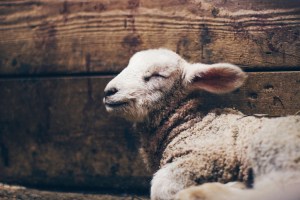
Saya seorang Katolik sejak kecil dan saya tidak dapat mengingat lagi kapan saya mendengar Anak Domba Allah ini untuk pertama kalinya. Namun, saya tidak pernah bertanya mengapa Yesus dipanggil seperti itu. Mungkin, itu hanyalah salah satu gelar Yesus. Namun, Saya secara bertahap mempelajari kebenaran yang indah ini saat saya masuk seminari dan mendalami pembelajaran teologi dan Kitab Suci.

Jika kita menempatkan diri kita pada posisi para murid yang hidup di Palestina abad pertama, kita akan melihat betapa dalamnya gelar ini. Ketika para murid mendengar ‘Anak Domba Allah yang menghapus dosa dunia,’ mereka dengan mudah mengerti apa yang dimaksud oleh Yohanes Pembaptis.

Pertama, domba adalah hewan korban utama di Bait Allah Yerusalem. Setiap hari anak domba disembelih dan dipersembahkan kepada Tuhan. Khususnya pada hari raya Paskah, ribuan ekor domba dibawa ke Bait Allah dan dikorbankan. Meskipun pengorbanan anak domba bukan satu-satunya cara untuk menyembah Tuhan yang benar, ini berfungsi sebagai cara beribadah yang utama. Dengan menyebut Yesus sebagai Anak Domba Allah, kita mengakui bahwa penyembahan yang benar dan utama kepada Allah terjadi di dalam Yesus.

Kedua, salah satu hari raya Yahudi terpenting adalah hari raya Paskah. Ini merayakan kebebasan dari perbudakan bani Israel dari Mesir. Salah satu ciri utama dari perayaan ini adalah anak domba yang dikorbankan. Kitab Keluaran memberikan rincian bagaimana Paskah pertama harus diperingati. Anak domba berumur satu tahun yang tidak bercacat harus disembelih. Darahnya ditempatkan di tiang pintu rumah orang Israel dan tubuhnya yang dipanggang akan dimakan [lihat Keluaran 12]. Untuk menerima Yesus sebagai Anak Domba Allah, kita menyadari bahwa kita diselamatkan oleh pengorbanan dan darah Yesus, dan kita juga perlu makan tubuh-Nya.

Ketiga, satu nubuat yang menghubungkan seorang manusia dengan seekor domba berasal dari Yesaya. Nabi besar ini berbicara tentang sosok misterius ‘hamba Tuhan yang menderita.’ Hamba Allah ini akan menebus Israel, tetapi Dia harus menanggung penderitaan dan kematian yang hebat, meskipun tidak bersalah. Sang Nabi menulis, “Dia dianiaya, tetapi dia membiarkan diri ditindas dan tidak membuka mulutnya seperti anak domba yang dibawa ke pembantaian… [Yes 53: 7]. ” Dengan menerima Yesus sebagai Anak Domba Allah, kita menerima Yesus sebagai Penebus kita yang menderita dan wafat bagi kita.

Sekarang, kita telah mengenali Yesus sebagai Anak Domba Allah, kita perlu melakukan apa yang dilakukan para murid pertama: mereka ‘tinggal’ bersama Dia. Para murid tidak hanya mengenal dan menerima Yesus, tetapi mereka mengikuti dan tinggal bersama-Nya. Tidaklah cukup bagi kita untuk melihat Yesus sebagai Anak Domba, tetapi kita diundang untuk tinggal bersama-Nya, untuk menjadi murid-Nya yang sejati.


Valentinus Bayuhadi Ruseno, OP

photocredit: Daniel Sandvik

Jesus, Our Lamb of God

2nd Sunday of Ordinary Time [B]

January 17, 2021

John 1:35-42

John the Baptist identified Jesus as the ‘Lamb of God.’ If we are attending the celebration of the Eucharist, we cannot miss hearing this phrase. Just before the communion, the priest will hold the consecrated bread and wine, and present them to the faithful, then saying, “Behold the Lamb of God, Behold Him who takes away the sin of the world. Happy are those invited to the supper of the Lamb!”

I am a cradle Catholic, and I could no longer remember when I heard this Lamb of God for the first time. Yet, I never bother asking why Jesus is called such because it does not make much sense. Perhaps, it is just another fancy title of Jesus. I gradually learn this beautiful truth as I go deeper into my theology study and scriptures.

If we put ourselves in the shoes of the disciples who were living in the first century Palestine, we will see a lot more going on. When the disciples heard ‘the Lamb of God who takes away the sin of the world,” they quickly understood. It was undoubtedly mind-blowing, but they were expecting to hear that.

Firstly, a lamb was a primarily sacrificial animal in the Jerusalem temple. Every day lambs were slaughtered and offered to God. Especially during the feast day of Passover, thousands of lambs were brought to the Temple and sacrificed. It was a massive display of devotion to behold. Though the lamb’s sacrifice is not the only way to worship the true God, it serves as the ordinary way of worship. By calling Jesus the Lamb of God, we acknowledge that God’s true worship takes place in Jesus.

Secondly, one of the most important Jewish feasts is Passover. It celebrates the freedom from the slavery of God. One of the central features of this celebration is the sacrificed lamb. The Book Exodus gives the details of how the Passover has to be commemorated. An unblemished one-year-old lamb has to be slaughtered. Its blood was placed on the Jewish household doorpost, and its roasted body shall be eaten [see Exo 12]. To accept Jesus as the Lamb of God, we recognize that the sacrifice and blood of Jesus save us, and we need to eat also His body.

Thirdly, one prophesy that connects a person, and a lamb is from Isaiah. The great prophet spoke about the mysterious figure of ‘suffering servant of God.’ This man shall redeem Israel, but He has to endure great suffering and death, despite being innocent.  The prophet wrote, “He was oppressed, and he was afflicted, yet he did not open his mouth; like a lamb that is led to the slaughter… [Isa 53:7].” By receiving Jesus as the Lamb of God, we accept Jesus as our Redeemer who has to suffer and die for us.

Now, we have recognized Jesus as the Lamb of God; we need to do like the first disciples did: they remained with Him. The disciples did not merely know and accept Jesus, but they followed and stayed with Him. It is not enough for us to see Jesus as the Lamb, but we are invited to remain with Him, to become His true disciples.

Valentinus Bayuhadi Ruseno, OP

photo credit: Daniel Sandvik

Yoke of Jesus

14th Sunday in Ordinary Time [A]

July 5, 2020

Matthew 11:25-30

finding cross 2From the previous two Sundays, we learn that Jesus lays down the cost of following Him, how to become His disciples. And they are extremely tough. One has to follow Jesus wherever He goes. One must love Jesus above anyone else. One must be ready to suffer persecutions and hardships, carry his cross, and give up his life for Jesus. It is Jesus or nothing at all. However, following Jesus is not all about hardship and sacrifice. Today we hear that to walking with Him, we receive certain “perks” that others cannot even dare to offer.
Today’s Gospel is one of my personal favorites. Here, Jesus is presenting His other side. Last Sundays, we witness Jesus, who is firm and resolve in following the Father’s will, and He demands the same thing from His disciples. Now, He is showing Himself as one who is gentle and humble. He even promises to give rest to those who come to Him. Yet, there is an interestingly powerful point that Jesus makes: that in order to have rest, we need to carry the yoke of Jesus. A yoke is a device placed on the shoulders to carry weight. For Jesus, rest is not throwing away the yoke. We need to carry our yoke, our daily responsibilities, and mission in life. Yet, despite carrying the yoke, it will be easy. How is that possible?

We remember that Jesus is a carpenter’s son and Himself a carpenter. He knows well that a yoke that does not fit the shoulder will only add more burden and hurt. Yet, the yoke that is designed perfectly to fit the shoulder, will feel easy and even comfortable. This is the yoke of Jesus, a yoke that fits each of us.

The second point is that there is a kind of yoke that can be shouldered by two animals or persons, “a double yoke.” I do believe that this is a kind of yoke that Jesus offers to us. Why double yoke? Because Jesus will bring together yoke with us. He shoulders the yoke with us. And when we feel exhausted, that’s the time He takes over and we find rest.

But, wait, there is more! In the Gospel of Matthew, twice Jesus instructs His disciples to carry something in their shoulders. The first one is to carry the cross [Mat 10:38, and the second thing is the yoke [Mat 11:29]. Jesus seems to make a real connection between the two: His yoke is our cross. If this is true, then the implication is massive. Our daily cross is actually easy because it perfectly fits us and even, Jesus is carrying it with us. I do believe most of the time, it is Jesus who carries our crosses. At first, Jesus sounds exceedingly tough with His nearly impossible demands, especially to carry our cross, but looking our Gospel deeper, we realize that most the time, it is Jesus who shoulders our crosses. That is the reason only His cross, we find the true rest and consolation.

If we find ourselves still burdened and exhausted with our lives, we may ask: Are we carrying the cross of Jesus? Are we bringing the yoke alone and relying solely on our strength? Are we shouldering unnecessary burdens that should be unloaded a long time ago?

Valentinus Bayuhadi Ruseno, OP

Image of the Trinity

Solemnity of the Most Holy Trinity [A]

June 7, 2020

John 3:16-18

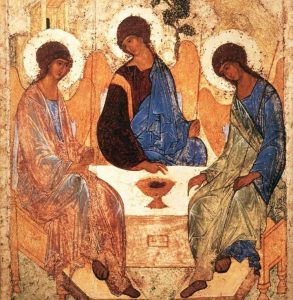
Trinity 2We are re-entering the ordinary season of the Church, and one of the greatest feasts within the ordinary time is the solemnity of the Most Holy Trinity. The Church has placed the celebration of the great feast on Sunday after the Pentecost. The reason may not be that obvious, but if we look at the bigger picture, it is nothing but a natural procession of truth. In Easter, we are celebrating the resurrection of Jesus that cements the divinity of Christ. On the Pentecost, we witness the divinity of the Holy Spirit being affirmed [see last Sunday’s reflection]. Now, we are rejoicing for the Three divine persons in God.

The Trinity Sunday is admittedly the most dreaded by many preachers because many are still at a loss of how to show the beauty of this most profound truth, and others are afraid to explain the Trinity because they may spread erroneous concepts. After all, we are facing the source and summit of all mysteries, the mystery of all mysteries. However, it is not the right excuse not to bring forth the beauty of the Holy Trinity. The preachers have to roll up their sleeves and spend more time in researching and preparing our homilies.

In my reflection, I would like to bring you to the Old Testament. In the Old Testament, the reality of the Trinity is hidden in most parts, and yet the sacred truth comes up in the surprisingly key moments. Let us read Gen 1:1-3, “In the beginning when God created the heavens and the earth, the earth was a formless void and darkness covered the face of the deep, while a wind from God swept over the face of the waters. Then God said, “Let there be light,”; and there was light.” The early Christians like St. Irenaeus of Lyon, immediately saw this as Trinity working as one, God, the Spirit, and the Word. The good news is that the creation is the masterpiece of the Holy Trinity, and to a certain degree, it reflects the perfection of the Trinity.

And wait, something more! In Gen 1:26, when God created the man and the woman, God said, “let us create the man and woman in our image and likeness.” This passage is a bit strange because why God, who is one, suddenly self-refer in plural? The Jewish tradition would interpret that God is addressing His heavenly council, the angels, but again, the Christian tradition instinctively saw them as the three divine persons. The good news is that if we are created in the image of God, and if our God is the Trinity, then we are created in the image of Trinity.

This explains a lot of things. Indeed, we cannot fully comprehend the mystery, but we surprisingly are very close to this mystery. Trinity is both our origin and destiny. As the image of Trinity, we cannot discover real joy by hoarding things to ourselves. We cannot be selfish and truly delighted at the same time. Like the Father and the Son love each other in the Holy Spirit, we are called to give ourselves to others in life.

Why does the Catholic Church fearlessly defend the sacredness of marriage? Because through marriage, the man and woman may give themselves totally to each other in love. Their love is so strong that love can give birth to life. When this new life [children] come to their lives, their love can grow even exponentially. In loving and giving ourselves, we may find the fullness of our identity, the image of Trinity. Indeed, it is tough, but the good news is that we are designed to give love and life. Holy Trinity is our origin, and Holy Trinity is our destiny.

Valentinus Bayuhadi Ruseno, OP

Citra Trinitas

Hari Raya Tritunggal Mahakudus

7 Juni 2020

Yohanes 3: 16-18

trinity 3Kita memasuki kembali masa biasa Gereja, dan salah satu perayaan terbesar dalam masa biasa adalah kesungguhan Tritunggal Mahakudus. Gereja telah menempatkan perayaan besar ini pada hari Minggu setelah Pentekosta. Alasannya mungkin tidak begitu jelas bagi kita, tetapi jika kita melihat gambaran yang lebih besar, itu sebenarnya adalah prosesi kebenaran yang wajar. Di Paskah, kita merayakan kebangkitan Yesus yang mengukuhkan keilahian Kristus, dan pada hari Pentekosta, kita menyaksikan keilahian Roh Kudus ditegaskan [lihat refleksi hari Minggu lalu]. Sekarang, kami bersukacita karena Tiga pribadi Ilahi di dalam Tuhan.
Tritunggal Minggu diakui sebagai yang paling ditakuti oleh banyak pastor atau romo karena banyak yang masih bingung bagaimana menunjukkan kebenaran yang paling dalam ini dan yang lain takut untuk menjelaskan Tritunggal karena bisa-bisa menyebarkan konsep yang keliru. Lagipula, kita berhadapan dengan sumber dan puncak semua misteri iman. Namun, itu bukan alasan yang tepat untuk tidak menampilkan keindahan Tritunggal yang mahakudus. Para imam harus bekerja keras dan menghabiskan lebih banyak waktu dalam belajar dan mempersiapkan homili.

Dalam renungan ini, saya ingin membawa kita semua kembali ke Perjanjian Lama. Dalam Perjanjian Lama, realitas Tritunggal tersembunyi di sebagian besar ayat, namun kebenaran suci ini tampak di saat-saat fundamental. Mari kita baca Kejadian 1: 1-3, “Pada mulanya Allah menciptakan langit dan bumi. Bumi belum berbentuk  dan kosong gelap gulita menutupi samudera raya, dan Roh Allah melayang-layang di atas permukaan air. Berfirmanlah Allah: “Jadilah terang” Lalu terang itu jadi” Umat Kristiani perdana seperti St. Irenaeus dari Lyon, segera melihat ini sebagai Trinitas yang bekerja sebagai satu, Allah, Roh dan Firman. Kabar baiknya adalah bahwa dunia dan segala ciptaan adalah mahakarya dari Tritunggal Mahakudus, dan sampat tingkat tertentu, ciptaan itu mencerminkan kesempurnaan Tritunggal.

Selain itu, dalam Kejadian 1:26, ketika Tuhan menciptakan pria dan wanita, Tuhan berkata, “Baiklah Kita menjadikan manusia menurut gambar dan rupa Kita…” Perikop ini sedikit aneh karena Allah yang satu tiba-tiba menyebut diri sendiri dalam bentuk jamak. Tradisi Yahudi menafsirkan hal ini bahwa Allah berbicara kepada dewan surgawi-Nya, para malaikat, tetapi sekali lagi, tradisi Kristiani melihat ini sebagai tiga pribadi Ilahi. Kabar baiknya adalah bahwa jika kita diciptakan menurut citra Allah, dan jika Allah kita adalah Tritunggal, maka kita adalah citra Tritunggal.

Memang benar bahwa kita tidak dapat sepenuhnya memahami misteri Ilahi, tetapi kita sebenarnya tidak jauh dari misteri ini. Bahkan, kita diundang untuk seperti Trinitas. Sebagai citra Trinitas, kita tidak dapat menemukan sukacita sejati dengan menimbun hal-hal duniawi seperti kekayaan, ketenaran untuk diri kita sendiri. Seperti Bapa dan Putra saling mengasihi dalam Roh Kudus, kita dipanggil untuk memberikan diri kita kepada sesama dalam kasih.

Ini mengapa Gereja Katolik terus menjaga kesakralan pernikahan. Karena melalui pernikahan, pria dan wanita dapat memberikan diri mereka sepenuhnya satu sama lain. Cinta kasih mereka begitu kuat sehingga cinta kasih ini bahkan bisa melahirkan kehidupan baru. Dan saat kehidupan baru ini [anak] datang di tengah hidup sang pria dan wanita, kasih mereka dapat semakin tumbuh bahkan secara eksponensial. Dan dalam pernikahan dan keluarga, kita menemukan identitas kita sebagai citra Trinitas, dan saat kita menemukan hal ini, kita menemukan makna terdalam hidup kita.

Memang mengasihi sangat sulit, tetapi kabar baiknya adalah kita dirancang untuk memberikan kasih dan kehidupan. Tritunggal Mahakudus adalah asal usul kita, dan Tritunggal Mahakudus adalah tujuan kita.

Valentinus Bayuhadi Ruseno, OP

Our Catholic Faith

27th Sunday in Ordinary Time [C] – October 6, 2019 – Luke 17:5-10

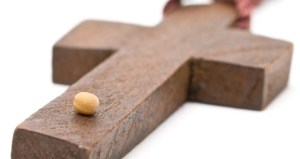
mustard seed n crossIf there is one most powerful force in the universe, it will be faith. Jesus teaches us that even faith as small as a mustard seed can do the impossible. Jesus preaches that with this little faith, we can command a sycamore tree be uprooted and be planted in the sea. One of the smallest things on earth can move the most significant reality in the world. The sycamore tree has both deep, strong and widespread roots. It is just impossible to uproot it when it has grown mature. Yet, Jesus surprises further even by saying that we can replant this on the bed of the ocean. That makes it doubly impossible. Jesus is pushing his teaching on faith beyond natural human reasoning!

The question is whether Jesus is merely exaggerating the power of faith, or He is unveiling the deepest of truth of faith. To answer this question, we need to know first what is faith? Surely there are several definitions of faith. In the broadest sense, it is a belief in the divine, something that is much more powerful than us, something beyond us. In many religious traditions, this transcendence is a person that is called God. This faith makes us different those who claim themselves as atheists. In narrower sense, it refers to a belief in a particular set of teachings about the divine. In this sense, the Catholic faith is different from the Protestant Lutheran faith.

St. Thomas Aquinas reminds us that faith is basically an ascent of the intellect. This is precisely what faith is mighty. It does not rely on earthly possession, nor our biological nature, nor our emotions. If we base our faith on moods, every time, we feel unhappy or depressed, and we may lose our faith. Mother Teresa of Calcutta once wrote in her diary that she did not feel the presence of God in her life for almost ten years. If she had depended on her emotion, she would have lost her faith. If we place our faith in our bodily wellbeing, the moment we get sick, or our body weakens, we may lose faith. Padre Pio of Pietrelcina received the gift of stigmata and had to endure the excruciating pain of the crucifixion for more than 50 years. Had he relied on his body, he would have lost his faith long time ago.

It is the ascent of the intellect that makes faith unbelievably powerful. When I was ordained to both to the diaconate and to the priesthood, especially during the most essential part of the ceremony, the laying of bishop’s hands on my head, I confess that I did not feel anything but a little pressure on my head. Does it mean my ordination invalid? Fortunately, the validity of my ordination is not based on my feelings! It is the faith, my faith, my bishop’s faith, the faith of the people, the faith of the Church. It is the faith that allows the unseen, unfelt grace of God to transform my soul into a soul of Jesus, the priest.

Our Catholic faith is indeed the mustard seed that moves a mountain. It is the faith that make our ears to hear the Word of God in the ordinary pages of the Scriptures. It is the faith that opens our minds to see the Body of Christ in a small tiny bread. It is the faith that encourages us to be humble before God and confess our sins before a priest. It is the faith that empowers many Christians to persevere in persecutions and to readily give their blood for Jesus. It is the faith that enables us to sacrifice our lives for others and to love the end.

Valentinus Bayuhadi Ruseno, OP