


Second Sunday of Lent (Year A). March 12, 2017 [Matthew 17:1-9]
“They were coming down from the mountain… (Mat 17:9)”
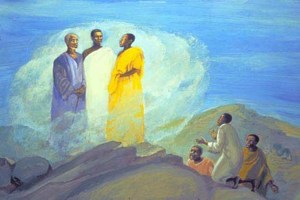 In the Bible, the mountain is the place where God meets His people. On Mount Horeb, Moses saw the burning bush and received his calling to lead Israel out of Egypt’s slavery (see Exo 3). On Mount Sinai, after the liberation of the Hebrews, Moses met the Lord and received the Law in the Mount Sinai (see Exo 19). Again on Mount Horeb, Elijah discovered the gentle presence of God (1 Kings 19:11-15).
Psalmists also considered the mountain as the Lord’s dwelling place (like Psa 3:5; 24:3). In fact, one of the titles of the Lord is El Shaddai, and one of its probable meaning is: the Lord, the strong mountain (Gen 17:1).
In today’s Gospel, Jesus led the three disciples up to the high mountain. There, he was transfigured. His face was shining like a sun and his cloth turned to be white as light. Then two great figures of Old Testament, Moses and Elijah appeared and conversed with Jesus. Finally, the bright cloud covered them and a voice was heard, “This is my beloved Son, with whom I am well pleased; listen to him.” The disciples were so terrified and overwhelmed. Turning back to the ordinary form, Jesus touched them and assured them, “Rise and do not be afraid.” Then they went down from the mountain and continued their journey to Jerusalem.
The Old Testament motif takes place once again in the New Testament, but looking closely, there are several striking differences. Firstly, people climb the Mountain to see God, but when the disciples were there, they saw Jesus transfigured instead. The episode becomes an early sign of Jesus’ divinity in the New Testament. Secondly, Moses and Elijah were representing the best of Old Testament: the Law and the Prophet. Yet, Moses and Elijah were also the very characters that encountered God on the mountain. They reappeared in the transfiguration because they wanted to tell us that Jesus was the God they had encountered in the mountains. Thirdly, Jesus did not stay forever on the mountain, but He went down and continued His life among His disciples and other Israelites. This is a life-changing revelation: our God does not stay and sit nicely on the high mountain, but He goes down and is staying with us, in our ordinariness of life.
Sometimes we are expecting to encounter the glorious God only on the high mountain. For some feel God in the charismatic worship meetings. Others encounter God in the great retreats and long recollections. Nothing’s wrong with these noble devotions and religious practices. Yet, the danger is that we begin to dichotomize the religious life that is limited to the church or rituals and our daily lives outside the church. We must not forget the point of transfiguration that our God is also dwelling among us. Jesus is with us in our family and our efforts in raising our children. The Lord is present in our workplaces as we toil for our daily bread. He embraces us in the moment of trials and pains. He is never far, and we are never alone. And He is our God.
Br. Valentinus Bayuhadi Ruseno, OP

 Dalam Alkitab, gunung adalah tempat di mana Allah bertemu umat-Nya. Musa melihat semak duri yang menyala dan menerima panggilannya untuk memimpin Israel keluar dari perbudakan Mesir di Gunung Horeb (lihat Kel 3). Setelah pembebasan, Musa bertemu dengan Tuhan dan menerima Hukum Taurat di Gunung Sinai (lihat Kel 19). Elia menemukan kehadiran Allah yang lembut di Gunung Horeb (1 Raja 19:11-15). Pemazmur juga melihat gunung sebagai tempat Tuhan bersemayam (seperti Mzm 3:5; 24:3). Bahkan, salah satu gelar Tuhan adalah El Shaddai, yang mungkin berarti Tuhan adalah gunung yang kuat (Kej 17:1).
 The word ‘Pharisee’ has a rather negative connotation for us. In the Gospels, they are the bad guys. They often argued with Jesus and Jesus challenged their way of life. Even some planned to get rid of Jesus (see Mat 12:14). In our time, the term ‘Pharisaic’ simply means hypocrite.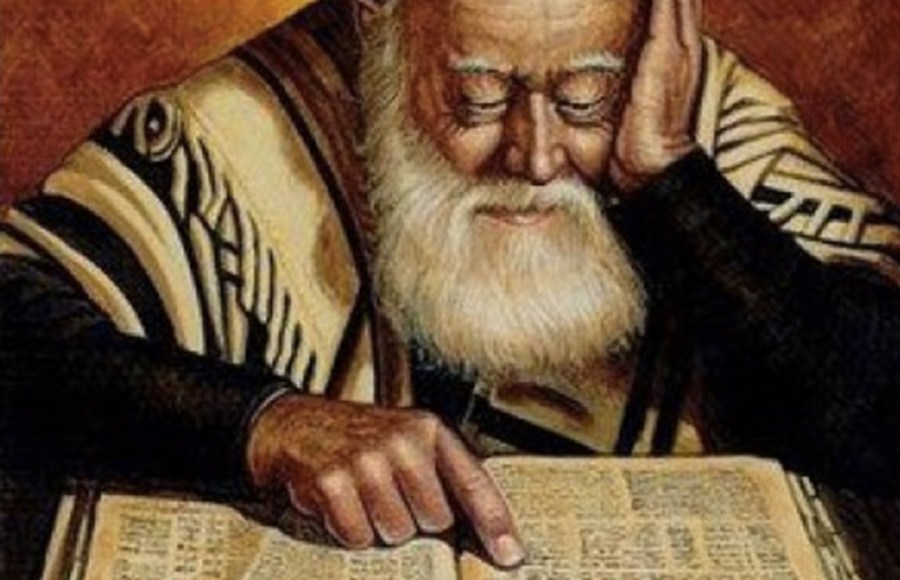
 Kata ‘Farisi’ memiliki konotasi negatif bagi kita. Dalam Injil, mereka adalah lawan-lawan Yesus. Mereka sering berdebat dengan Yesus dan Yesus mengkritik cara hidup mereka. Bahkan beberapa merencanakan untuk menyingkirkan Yesus (lihat Mat 12:14). Pada zaman sekarang, istilah ‘Farisi’ sering kali diasosiasikan dengan kemunafikan.


 The truth is born out of a conversation. Genuine conversation is coming from our ability to listen. And listening to one another is not easy because it presupposes great humility. The turning point of St. Dominic de Guzman, the founder of the Order of Preachers, was inside the pub. He had an overnight conversation with the innkeeper, an Albigensian whose religion denied the goodness of creation. This long yet open dialogue did not only bring the innkeeper back to the Catholic faith, but also led Dominic to discover his mission in life. This encounter revealed the truth both for the innkeeper and Dominic.

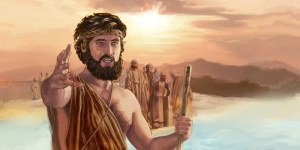 Why did many people come to John the Baptist and listen to him? I believe that the Jewish people hungered for the truth. It might be an inconvenient and hurtful truth, but they longed to hear it. They were tired of listening to their leaders, like the Pharisees and the Sadducees, who were not honest but were living in hypocrisy. They were exhausted by numerous religious obligations but did not find any inspiration and a good example from their leaders. John came and preached to them the truth with simplicity and integrity, and the Israelites knew that they had to hear him.
 Mengapa banyak orang datang menemui Yohanes Pembaptis dan mendengarkan dia? Saya percaya bahwa orang-orang Yahudi ini lapar akan kebenaran. Mungkin kebenaran ini tidak nyaman dan menyakitkan untuk didengar, tetapi mereka ingin dan perlu mendengarkannya. Mereka bosan mendengarkan pemimpin mereka, seperti orang-orang Farisi dan Saduki, yang tidak jujur dan hidup dalam kemunafikan. Mereka kelelahan oleh banyak kewajiban agama, namun tidak menemukan inspirasi dan contoh yang baik dari pemimpin mereka. Yohanes datang dan mewartakan kebenaran dengan kesederhanaan dan integritas, dan orang Israel tahu bahwa mereka harus mendengarnya.
 In Medio Ecclesiae