

25th Sunday in Ordinary Time [C] – September 22, 2019 – Luke 16:1-13
 There is something strange in our Gospel today. Jesus is praising the cunning steward. Why does Jesus commend his shrewd action? To understand Jesus’ words, we need to comprehend first what really takes place with this servant and his master.
There is a steward who had been entrusted by his master to take care of his master’s house and possession, and yet, instead doing his job, he prefers to squander his master’s wealth and betrays his master’s trust. Angered master does what he is expected to do. He fires his useless servant. Yet, upon this impending judgment, the servant realizes that he is not able to dig, meaning he cannot labor in the farmland or at the construction sites. He is also ashamed to become a beggar. Then, he engineers a way out. He calls all his master’s debtors and cut into half all their debts by manipulating their letter of agreement. By doing this, he is doing a favor to them and making them as their friends. This is to secure way to survive after his expulsion. Surely this is manipulation and corruption, and yet he is praised for doing so. What’s going on?
Jesus gives us an example of how smart the children of this world manage their affairs. In the time of crisis, the wicked servant is able to discern well what is most important in his life, that is his survival. For a while, the servant is attached to the wealth of his master and spending them as if this money is his. But, when he realizes he is in the great trouble, he makes the right choice. He detaches himself from his addiction from wealth and make them as a means to achieve his survival. Jesus then compares the children of this world, and the children of light. If the children of this world can use and manipulate the material possession for their earthly motives, so the children of light shall use the same wealth to attain even a loftier goal.
This teaching of Jesus is important and massive implication. We are not only allowed, but even encouraged to use the material goods and wealth in order to reach heaven. Jesus even uses a stronger term: make friends for yourself with dishonest wealth! Surely, it does not mean we can buy heaven, or we can bribe God! We cannot never do those things. These material possession and money serve us as means to live decent lives, help each other and worship God.
The problem is that we, the children of light, are not friends with wealth. We either hate money or we love money. Firstly, some of us may have a perspective that money is evil, dangerous and leading to sin. Thus, when we hate money, we detest also those who have money. The hatred of money may lead to hatred of others, and we may fail to fulfill Christ’s commandment: to love one another. Secondly, many of us love money. We are attached to earthly wealth that we forget their true purpose. We make means into the end, and end into the means. We turn our family, friends, employees, religion, even God as tools to gain more and more money. It is a disheartening reality nowadays that some people create new religions and churches to enrich themselves. We are only to love God and to love each other for the love of God, but never money. We make friends with earthly wealth in order for us to gain heaven.
Valentinus Bayuhadi Ruseno, OP
 Ada sesuatu yang aneh dalam Injil kita hari ini. Yesus memuji pelayan yang curang itu. Mengapa Yesus memuji tindakan cerdiknya? Untuk memahami kata-kata Yesus, kita perlu memahami terlebih dahulu apa yang sebenarnya terjadi dengan hamba ini dan tuannya.
 We were all born without bringing anything with us, and for sure, when we die, we will bring nothing with us. Job once said, “Naked I came forth from my mother’s womb, and naked shall I go back there. The LORD gave, and the LORD has taken away; blessed be the name of the LORD!” (Job 1:21). However, as we grow up and old, we begin to acquire things and possessions. Some are given, but some we earn it. As we are accumulating, we start attaching ourselves to these material belongings. Some of us are obsessed with collecting bags, shoes, and clothes, some others with more expensive things like electronic devices and cars. We believe these are ours, and we can own them until the Kingdom comes.
 Kita semua dilahirkan tanpa membawa apa-apa, dan sama ketika kita mati, kita tidak akan membawa apa pun. Ayub pernah berkata, “Dengan telanjang aku keluar dari kandungan ibuku, dengan telanjang juga aku akan kembali ke dalamnya. TUHAN yang memberi, TUHAN yang mengambil, terpujilah nama TUHAN!” (Ayub 1:21). Namun, seiring bertambahnya usia, kita mulai memperoleh banyak hal dan harta benda. Ketika kita mulai mengakumulasi, kita mulai terikat pada barang-barang materi ini. Beberapa dari kita terobsesi dalam mengumpulkan tas, sepatu, dan baju, beberapa lainnya dengan barang-barang yang lebih mahal seperti perangkat elektronik, mobil dan bahkan mobil. Kita mulai percaya ini adalah milik kita, dan kita dapat memilikinya bahkan sampai kita masuk surga.
 Talent is one of the few biblical words that has become part of our modern language. Talent connotes a God-given ability or a natural unique skill, and yet it has not fully developed. Thus, we are called to use and harness our talents in order to achieve our full potentials and contribute to the progress of society. In fact, talents have become well-sought commodity in our society. Companies only hire the talented employees. Schools are marketed as venues of talents development. Our TV channels and social media outlets are filled by shows where we perform, compete and prove that we possess the best talent in singing, dancing, and the like. How our world is now obsessed with talents!
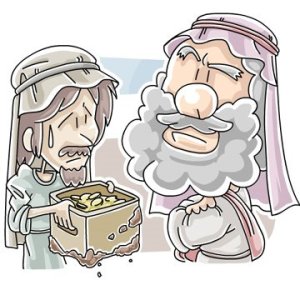 Talenta adalah satu dari sedikit kata-kata dari Kitab Suci yang telah menjadi bagian dari bahasa kita sehari-hari. Talenta sering diartikan sebagai bakat yang diberikan Tuhan atau keterampilan yang unik seperti memiliki suara yang indah, kemampuan memecahkan persoalan matematika yang rumit, atau kemampuan berolahraga, namun belum sepenuhnya dikembangkan. Dengan demikian, kita dipanggil untuk menggunakan dan memanfaatkan talenta kita untuk mencapai potensi maksimal kita dan memberikan kontribusi pada kemajuan masyarakat.
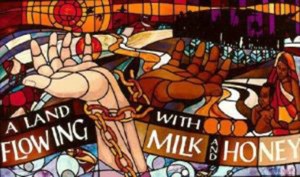 Mammon in Aramaic, the native language of Jesus, means riches, money or even properties. And nobody can serve both the true God and Mammon. In original Greek, Mathhew chose a stronger word than “to serve” Mammon, but it is to ‘become slave’ of Mammon. A slave is someone who no longer possesses freedom of his or her own; the lives are dependent on their master’s whim. Interesting to note is that the Mammon is not even a living being, and yet, people are freely laying their freedom to be its slave. It is irrational and in fact, unthinkable, but the reality narrates countless stories of people being possessed by riches and do inhuman things.
 Mamon dalam bahasa Aram, bahasa asli Yesus, berarti kekayaan, uang atau bahkan properti. Dan tidak ada yang dapat melayani Allah yang benar dan Mamon bersamaan. Dalam bahasa Yunani, Matius memilih kata yang lebih kuat dari “melayani” Mamon, tapi ia mengunakan untuk ‘menjadi budak’ Mamon. Seorang budak adalah seseorang yang tidak lagi memiliki kebebasan dan kehidupannya tergantung pada kemauan tuannya. Menarik untuk dicatat adalah bahwa Mamon itu bukan makhluk hidup, namun, banyak orang mau meletakkan kebebasan mereka untuk menjadi budaknya. Hal ini tidak rasional dan pada kenyataannya, tak terpikirkan, tetapi kenyataannya banyak orang yang memilih kekayaan dan melakukan hal-hal yang tidak manusiawi demi Mamon.
 In Medio Ecclesiae