

Easter Sunday [April 19, 2019] John 20:1-9

Mary Magdalene is a female disciple that loves her Teacher deeply, and being a woman, there is something that she teaches us. Luke describes her in his Gospel as a woman “from whom seven demons have come out” [see Luk 8:2]. It must be a terrible experience to be tormented by seven demons, and when Jesus heals her, she expresses her deep gratitude by following Jesus. As one of Jesus’ disciples, she is proven to be the most faithful to her Teacher. When many followers of Jesus are running away to save their lives, and even Peter, the leading figure in the group, denies Jesus, Mary follows Jesus in His way of the Cross to the end. She received the insult Jesus receives, she bears the humiliation Jesus bears, she carries the cross Jesus carries. In fact, she is standing beside the cross together with the mother of Jesus and John the beloved.
However, Mary’s love is even bigger than death. She is the first person who visits the tomb early in the morning. We recall that after Jesus died on the cross, his body was hastily brought to the tomb by Nicodemus and Joseph Arimathea because the Sabbath was drawing near. During Sabbath, Jews are not allowed to bury the dead. Mary knows that Jesus’ body was not taken care of properly, and she wants to make sure that Jesus deserves the proper burial. She comes to the tomb to express her love for the last time for the Teacher by anointing the body of Jesus. Yet, she only sees the empty tomb. Fear seizes her. She may think that some bad guys stole, inflicted further damages and desecrated the body. Instinctively, she runs towards the men of authority after Jesus Himself, Peter and John.
After checking the tomb, Peter fails to understand, and he goes back to the house. She also does not understand and weeps for the loss of her love, but unlike Peter, Mary stays at the tomb. In utter confusion and meaninglessness, Mary does not abandon Jesus. Indeed, the Savior does not disappoint and gives Mary Magdalene a singular privilege to witness the resurrected Jesus. Her great love and fidelity lead her to the joy of Resurrection. She becomes the first preacher of Resurrection.
In the Gospel, often female disciples are depicted as a model of love and perseverance. God created man and woman as equal in dignity, but they differ in characters. Indeed, men like Peter, are the figures of authority, but women excel in what often is lacking in male disciples. I have visited many places in Indonesia and the Philippines, and I give talks and reflections, but one thing in common from these places, is that women often outnumber the men. I am newly assigned in Redemptor Mundi Parish, Surabaya, Indonesia, and a simple gaze will prove that more women are attending our daily morning masses.
Mary Magdalene, a woman disciple, shows to us that it is possible to love and to be faithful when things got tough and rough, when life throws us its trash, and when confusion and meaningless seem to reign. Mary is those women who unceasingly pray for the priests despite so many failures they have made Mary are those mothers who make daily sacrifices for their children despite being unappreciated. Mary is those religious sisters who serve the poor committedly despite many setbacks and trails. We must thank many Mary Magdalene around us. They show us that there love truly conquers death and that there is a resurrection in even the senseless empty tomb.
Happy Easter!
Deacon Valentinus Bayuhadi Ruseno, OP
 Maria Magdalena adalah seorang murid perempuan yang sangat mencintai gurunya, dan sebagai seorang wanita, ada sesuatu yang dia ajarkan kepada kita. Lukas mengatakan dalam Injilnya bahwa Maria adalah sebagai seorang wanita “yang darinya tujuh setan keluar” [lihat Luk 8:2]. Pastinya merupakan pengalaman yang mengerikan untuk disiksa oleh tujuh setan, dan ketika Yesus menyembuhkannya, ia mengungkapkan rasa terima kasihnya yang mendalam dengan mengikuti Yesus. Sebagai salah satu murid Yesus, ia terbukti paling setia kepada gurunya. Ketika banyak pengikut Yesus melarikan diri untuk menyelamatkan hidup mereka, dan bahkan Petrus, tokoh utama dalam kelompok itu, menyangkal Yesus, Maria mengikuti Yesus dalam jalan Salib-Nya sampai akhir. Dia menerima penghinaan yang Yesus terima, dia menanggung malu yang Yesus tanggung. Bahkan, dia berdiri di samping salib bersama dengan ibu Yesus dan Yohanes yang terkasih.
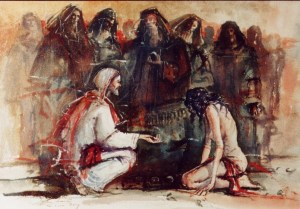 Adultery is a serious sin according to the Law of Moses. It is a violence against the Basic Law, the Ten Commandments. It is in fact, one of the few crimes that are punishable by death [Lev 20:10]. Why so cruel? It is a grave sin because adultery profanes the holiness of marriage and the gift of sexuality. In the Book of Genesis, God has willed that man and woman through marriage and their sexuality participate in God’s work of creation and caring of creation. Since marriage is a sacred calling, violation to this holy mission is an utmost insult to God who calls man and woman into marriage.
 Perzinahan adalah dosa serius menurut Hukum Musa. Ini adalah pelanggaran terhadap Sepuluh Perintah Allah. Pezinahan adalah satu dari sedikit dosa yang bisa dihukum mati [Im 20:10]. Kenapa begitu kejam? Ini adalah dosa besar karena perzinahan mencemarkan kekudusan pernikahan dan karunia seksualitas. Dalam Kitab Kejadian, Tuhan menghendaki pria dan wanita melalui pernikahan dan seksualitas mereka berpartisipasi dalam karya penciptaan. Karena pernikahan adalah panggilan suci, pelanggaran terhadap misi suci ini adalah salah satu penghinaan terbesar bagi Allah yang memanggil pria dan wanita ke dalam pernikahan.
 Today’s Gospel is truly beautiful. We have two protagonists. They are women, and they are both pregnant. Who are they? Mary and Elizabeth. Yet, why is the story beautiful? It is just natural for women to get pregnant. Unless we need to go closer to the stories and place ourselves in the shoes of Mary and Elisabeth, we can never see the true beauty of their story.
 Injil hari ini benar-benar indah. Kita memiliki dua protagonis. Mereka adalah wanita, dan mereka berdua sedang hamil. Siapa mereka? Maria dan Elizabeth. Namun, mengapa cerita mereka indah? Tentunya, wajar bagi wanita untuk hamil. Hanya dengan melihat lebih dekat kisah mereka berdua, kita baru bisa melihat keindahan sejati dari kisah mereka.
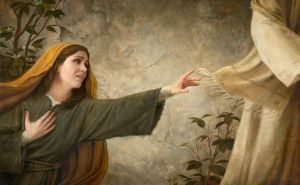 Today’s Gospel seems to be just another healing miracles of Jesus, but if we read it closely, the story of the healing of the woman with hemorrhage is extraordinary tale of faith. We are not sure what kind of hemorrhage she suffers, but the fact that she bears the sickness for 12 years, spends a lot for the medication, and does not get any better, means it is pretty serious, if not terminal. During this time, the physicians are extremely rare, and expectedly, the patients need to spend a lot of money. The woman may come from a wealthy family, but she is impoverished because her prolong sickness. The woman is losing her life and facing despair. I am currently assigned as an associate chaplain in one of the hospitals in Metro Manila, and my duty is to make pastoral visit to these patients. I encounter some patients who are suffering from certain health conditions that drain all their resources, and it seems the situation does not get any better. I realize the story of the woman with hemorrhage is not only her story happened in the far past, but it is also our stories here and now.
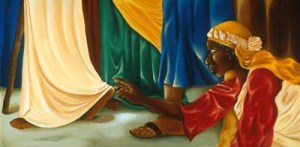 Injil hari ini tampaknya tidak berbeda dengan kisah-kisah mukjizat penyembuhan Yesus, tetapi jika kita membaca dengan seksama, kisah penyembuhan perempuan dengan pendarahan ini sebenarnya luar biasa. Kita tidak tahu dengan pasti pendarahan apa yang dideritanya, tetapi fakta bahwa ia menderita kondisi ini selama 12 tahun, menghabiskan banyak untuk pengobatan dan kondisinya semakin memburuk, ini berarti sangat serius. Pada zaman itu, tabib sangat jarang, dan berobat perlu mengeluarkan banyak uang. Perempuan ini mungkin berasal dari keluarga kaya, tetapi dia jatuh miskin karena kondisinya tersebut. Perempuan ini mulai kehilangan hidupnya dan menghadapi keputusasaan. Saya saat ini ditugaskan sebagai asisten imam di salah satu rumah sakit di Metro Manila, dan tugas saya adalah melakukan kunjungan pastoral ke pasien-pasien yang dirawat di rumah sakit tersebut. Tidak jarang saya menjumpai pasien yang menderita kondisi kesehatan yang menguras semua sumber daya mereka, dan tampaknya situasi mereka tidak menjadi lebih baik. Saya menyadari kisah perempuan dengan pendarahan ini bukan hanya kisahnya yang terjadi di masa lalu, tetapi juga kisah umat manusia di zaman ini.
 Luke has a poignant and unique way in narrating the story of the Annunciation. He deliberately places the story of Zachariah and of Mary side by side, and lets his readers see both stories in comparison. The first story speaks of a holy man who serves in the Temple. Zachariah is a symbol of the ideal Israelite who stands at the center of the holy ground. The second story speaks of an ordinary woman who lives in Nazareth, a small town far from the center. In a patriarchal society, Mary is a symbol of the poor and marginalized Israelite who is pushed to the peripheries. Angel Gabriel appears to both, and God does marvelous deeds for both. Yet, the Annunciation to Mary turns to be far more excellent. The Angel greets Mary with the title of honor, the highly favored one, while the angel does not even greet Zachariah. The Angel makes Zachariah mute because of his doubt, but he assures Mary when she is confused. The conception of John the Baptist is done through natural means, while the conception of Jesus in the womb of Mary takes place through the supernatural way. Zachariah and Elizabeth represent the outstanding God’s marvel in the Old Testament like when God opened the womb of Sarah, the wife of Abraham, and Hannah, the mother of Samuel, despite their old age and barrenness. Yet, what happens to Mary surpasses and outshines these Old Testament miracles.
 Lukas memiliki cara yang tajam dan unik dalam menulis kisah tentang Penerimaan Kabar Sukacita. Dia dengan sengaja menempatkan kisah Zakharia dan Maria secara berdampingan, dan membiarkan pembacanya melihat kedua cerita itu dalam perbandingan. Kisah pertama berbicara tentang seorang imam yang suci yang melayani di Bait Allah. Zakharia adalah simbol dari orang Israel ideal yang berdiri di pusat peribadatan bangsa Israel. Kisah kedua berbicara tentang seorang wanita sederhana yang tinggal di Nazaret, sebuah desa kecil yang jauh dari pusat pemerintahan dan keagamaan. Dalam masyarakat patriarki, Maria adalah simbol dari bangsa Israel yang miskin dan terpinggirkan dan terdorong ke pinggiran. Malaikat Gabriel menampakkan diri kepada keduanya, dan Tuhan melakukan perbuatan yang luar biasa bagi keduanya. Namun, Kabar Sukacita bagi Maria ternyata jauh lebih baik. Pertama, sang Malaikat menyapa Maria dengan gelar kehormatan, “Engkau yang dikaruniai”, sementara sang malaikat tidak menyapa Zakharia sama sekali. Kedua, sang malaikat membuat Zakharia bisu karena keraguannya, tapi dia meyakinkan Maria saat Maria bertanya-tanya. Ketiga, pembuahan Yohanes Pembaptis terjadi secara alamiah, sementara Yesus di dalam rahim Maria terjadi melalui cara yang supernatural. Zakharia dan Elizabeth mewakili karya besar Tuhan dalam Perjanjian Lama seperti ketika Tuhan membuka rahim Sarah, istri Abraham, dan Hannah, ibu Samuel, meskipun sudah tua dan mandul. Namun, apa yang terjadi pada Maria melampaui segala mukjizat Perjanjian Lama ini.
 In Medio Ecclesiae