

Fourth Sunday in Ordinary Time [B]
December 20, 2020
Luke 1:28-36
 Christmas is fast approaching, and the Church is inviting us to reflect on the story of the Annunciation. Allow me to once more focus on the Blessed Virgin’s Fiat. To appreciate her answer to God’s will and plan, we need to see at least two things. Firstly, it is her historical and social context. Secondly, it is the language analysis of her response.
Mary was a young girl. According to tradition, she was around 13 or 14 years old when she got married. For many of us, living in urban settings, Mary’s marriage was remarkably too early. But, this kind of practice was nothing but expected. Lives were hard, and many people died too young due to sickness, famine, calamity, or wars. To sustain a healthy number of populations, young girls were prepared for the duty of motherhood.
Mary was betrothed to Joseph from the family of David. In the Jewish community, betrothal is the first formal step in a Jewish marriage. The exchange of vows was done in this betrothal. Mary and Joseph were spouses in the eye of Jewish law and society, except for the intimate relationship. The couple had to wait around one year before the bride moved to the house prepared by the groom from the betrothal. Usually, there was a light procession from the bride’s original place to the new house, where the wedding ceremony and reception would occur.
Legally, Mary was Joseph’s wife, and if something wrong happened, it was judged to be adultery. The Law of Moses abhors adultery since it reflects Israel’s infidelity toward Yahweh, breaking the sacred covenant. Thus, for those who were unfaithful, severe punishment awaited them. In Deu 20:22, the Torah explicitly stated that if a betrothed woman commits adultery, she and the man shall be stoned to death. As a good Jew, Mary was aware of this terrible consequence when archangel Gabriel announced the glad tiding. If she gave her affirmation, she might face certain, untimely death. Nobody would believe her if she tried to defend her supernatural virginal conception. “She must be insane!” some would say. However, despite this imminent horrible future, Mary accepted her mission.
Now, why did she say her Fiat? I used to think that Mary’s fiat is about surrendering everything to God. She did not understand, but her faith enabled her to trust in God’s providence. In the face of ominous dangers, to have this kind of faith is extremely remarkable. However, as I read more about this Fiat, I discover that Mary’s Fiat is more than an act of self-surrender. The Greek word used by Mary is “genomai.” This word is rather special because it expresses not an act of submission but an act of longing. This tiny detail spells the great difference. Mary did not just submit to the will of God, but she longed to do it. She was not passively accepting her fate but rather proactively fulfilling God’s plan in her. There were no traces of fear, doubt, and worry. Her yes was driven by passion, hope, and eagerness. Despite bleak tomorrow, she knew that she was about to depart into an unimaginably amazing journey. For her, the Lord’s plan is always the best and the only way to reach our utmost potential.
Do we have what it takes to have Mary’s Fiat?
Valentinus Bayuhadi Ruseno, OP
photocredit: Phil hearing
 Natal semakin dekat dan Gereja mengundang kita sekali lagi untuk merenungkan kisah Kabar Sukacita. Izinkan saya untuk sekali lagi fokus pada “Fiat” atau jawaban Ya Perawan Maria [Fiat sendiri berasal dari bahasa Latin, artinya “terjadilah”]. Untuk mengerti lebih dalam jawaban Maria atas kehendak dan rencana Tuhan, kita perlu melihat setidaknya dua hal. Pertama, konteks sejarah dan sosialnya, dan kedua adalah analisis bahasa dari tanggapan Maria.
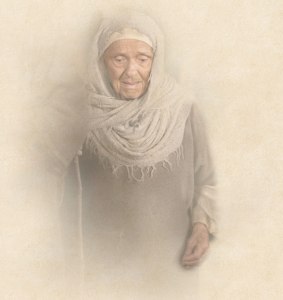 The widows are one of the most disfranchised groups in ancient Israel. In those times, women, in general, were considered to be less human. Every time a Jewish man in first-century Palestine woke up, he would pray and thank the Lord for he was not born as a Gentile, a slave or a woman. Often, women were treated as the properties of the patriarchs. While adult men were working outside the house, women were expected to stay behind to take care of the children and the household. Since many women were supported by their husbands, being a widow means loss of both financial foothold and honor. They were lucky if they had mature sons who would take care of them, but those widows without sons were the most pitiful.
 Para janda adalah salah satu kelompok yang paling terpinggirkan di Israel kuno. Pada masa itu, wanita pada umumnya dianggap sebagai manusia yang lebih rendah. Setiap kali seorang pria Yahudi di Palestina abad pertama bangun, dia akan berdoa dan bersyukur kepada Tuhan karena dia tidak dilahirkan sebagai orang bukan Yahudi, budak atau wanita. Seringkali, perempuan diperlakukan sebagai properti para kepala keluarga. Sementara para pria dewasa bekerja di luar rumah, para perempuan diharapkan tetap tinggal untuk menjaga anak-anak dan rumah. Karena banyak perempuan yang tergantung pada suami mereka, menjadi janda berarti kehilangan pijakan ekonomi dan kehormatan. Mereka beruntung jika mereka memiliki putra yang dewasa yang akan merawat mereka, dan ini membuat para janda tanpa putra adalah yang paling menyedihkan.
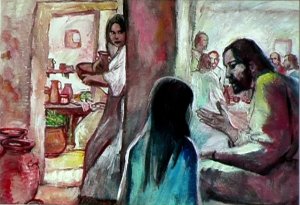 Melakukan sesuatu untuk melayani Tuhan tentu baik dan terpuji. Dan karya-karya ini sangat banyak dan beragam. Tindakan-tindakan ini dapat secara langsung melayani Dia di Gereja, terutama dalam liturgi. Kita dapat berpartisipasi dalam ibadat sebagai anggota paduan suara, lektor, putra altar, asisten imam, atau bahkan sebagai imam yang mempersembahkan Ekaristi itu sendiri. Namun, kita juga dapat melayani Dia melalui sesama ketika kita terlibat dalam inisiatif amal untuk membantu orang miskin, untuk memperjuangkan keadilan dan perdamaian dan integritas ciptaan. Kita memiliki banyak cara, tetapi tujuannya adalah satu dan itu adalah untuk memuliakan Dia.
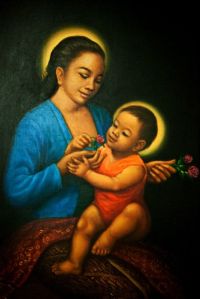 Some of us may wonder why the Church places the celebration of the solemnity of Mary, the Mother of God on January 1, or on the New Year. One may guess that the Church wants us to attend mass on the first day of the year, so as to start the year right. For those who wish to have a long holiday, it might be pretty a killjoy, but for some of us who wish to be blessed for the entire year, it is a nice thought. Yet, surely there is something deeper than that.
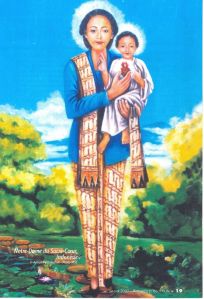 Kita mungkin bertanya-tanya mengapa Gereja menempatkan Hari Raya Maria, Bunda Allah pada tanggal 1 Januari, atau pada Tahun Baru. Orang mungkin berpikir bahwa Gereja ingin kita menghadiri misa pada hari pertama tahun baru ini. Bagi mereka yang ingin memiliki liburan panjang, ini mungkin tidak menyenangkan, tetapi bagi sebagian dari kita yang ingin diberkati sepanjang tahun, itu adalah ide yang bagus. Namun, pasti ada sesuatu yang lebih dalam mengapa tanggal 1 Januari.
 In Medio Ecclesiae