The Resurrection and the Dominican Spirituality

(Easter special)

 Easter Sunday. April 16, 2017 [John 20:1-10]

“On the first day of the week, Mary of Magdala came to the tomb early in the morning, while it was still dark, and saw the stone removed from the tomb (Joh 20:1).”
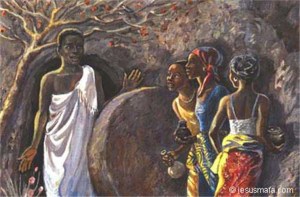
 

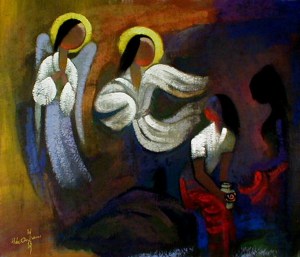
women at the tombIf we read the Resurrection narrative in the four Gospels, we will discover that each Evangelist has his own distinct story. Yet, there are some common features in the Resurrection episode: the empty tomb, the presence of women, the appearance of angel followed by the risen Christ, and the women announcing the Good News to the other disciples. Let us focus on one particular feature that we usually miss. The first witnesses of the resurrection were not men, but women. Where were the male disciples? Where were those men who promised to sacrifice their lives for Jesus? They were in hiding. They were afraid. They were scattered.

When Jesus was betrayed and arrested, the male disciples ran for their lives, but the women faithfully followed Jesus. They were there at the foot of the cross. They witnessed Jesus’ death. They brought Him to the tomb. They returned to the tomb to give him proper burial rites at the first day of the week. Because of their fidelity, they were honored to be the first witnesses of the Resurrection. Not only witnesses, they were the first preachers of Resurrection.

This particular feature is an essential part of the Dominican spirituality. One of the patrons of the Order of Preachers is St. Mary Magdalene, and she was chosen because we honor her as the apostle to the apostles, the preacher to the preachers. By making her our patroness, we acknowledge that the task of preaching is not exclusively limited to the members of the clergy, but to lay men and women as well. The first convent St. Dominic established was in Prouille, France, and this was a convent for religious women. For us, Preaching is a family effort, all brothers and sisters take part and contribute in the mission of naming grace.

While it remains true that only the Dominican priests can give the homily in the Mass, it does not mean that non-clerical brothers and sister can not preach. We, the brothers in formation in Manila, are involved in facilitating retreats and recollections, producing video catechesis in the social media, and are coming up with the “Joyful Friars”, a preaching band group. Our sisters are involved in the teaching ministry. Some of them, like Mary Catherine Hilkert and Helen Alford are in fact professors in great universities in the US and Europe. Our lay Dominicans serve as lay preachers or campus ministers. Yet most importantly, they preach to their children and educate them to be mature and committed Christians.

Further more, for the Dominicans, preaching is not limited to verbal communication, but also takes flesh in various forms, depending on the needs of the people. Fr. Mike Deeb, OP is currently a permanent delegate of the Order to the United States in Geneva. He challenges countries that neglect various issues of injustice like human trafficking, violence, human rights abuses, and many more. James MacMillan is a lay Dominican and a renowned composer from Scotland. He composed mass songs when Benedict XVI visited the UK in 2010. Sr. Katarina Pajchel, OP is both a religious sister and a physicist. She is involved in ATLAS project, a particle physics experiment at the Large Hadron Collider. These names are just few of many Dominicans who preach in their own right.

At the core of Dominican spirituality is the belief that each of us is called to witness to His Resurrection and to bring this Good News. Even better the news is that this spirituality is not only for the Dominicans. Every man and woman, clergy or lay, a Dominican or not, are called to this mission. We are to preach the Resurrection in our unique way. We are called to preach as a redeemed people, a family of God.

Blessed Easter!

Br. Valentinus Bayuhadi Ruseno, OP

Kebangkitan dan Spiritualitas Dominikan

(Edisi Khusus Paskah)

Minggu Paskah. 16 April 2017 [Yohanes 20:1-10}

Pada hari pertama minggu itu, pagi-pagi benar ketika hari masih gelap, pergilah Maria Magdalena ke kubur itu dan ia melihat bahwa batu telah diambil dari kubur (Joh 20:1).”

women at the tomb 2Jika kita membaca narasi Kebangkitan di keempat Injil, kita akan menemukan bahwa setiap Penginjil memiliki cerita unik tersendiri. Namun, walaupun berbeda, ada beberapa hal-hal serupa di dalam narasi Kebangkitan, seperti kubur yang kosong, kehadiran para wanita, hadirnya malaikat diikuti oleh Yesus yang bangkit, dan para wanita mewartakan Kabar Baik bagi murid-murid lainnya. Mari kita fokus pada satu fitur yang biasanya luput dari perhatian kita. Saksi pertama dari kebangkitan bukanlah seorang laki-laki, tapi para perempuan. Pertanyaanya sekarang: Di mana para murid laki-laki? Di mana para pria yang berjanji untuk mengorbankan nyawa mereka demi Yesus? Jawabannya: Mereka bersembunyi, lari dan ketakutan.
Saat Yesus dikhianati dan ditangkap, para murid laki-laki menyelamatkan diri, tetapi para murid perempuan setia mengikuti jalan salib Yesus. Mereka berada di sekitar Yesus yang tersalib. Mereka menyaksikan kematian-Nya. Mereka membawa-Nya ke kubur. Mereka kembali ke kubur untuk memberi-Nya ritus penguburan yang layak. Karena kesetiaan mereka, mereka menerima kehormatan menjadi saksi-saksi pertama kebangkitan-Nya. Tidak hanya saksi, mereka adalah para pewarta pertama kebangkitan-Nya.

Fitur ini menjadi bagian penting dari spiritualitas Dominikan. Salah satu orang kudus pelindung dari Ordo Pengkhotbah adalah St. Maria Magdalena, dan dia dipilih karena kita menghormatinya sebagai pewarta pertama kebangkitan Yesus, seorang rasul kepada para rasul, seorang pewarta kepada para pewarta. Dengan menjadikannya sebagai santa pelindung Ordo, kita mengakui bahwa tugas pewartaan tidak hanya terbatas pada kaum tertahbis, tapi ini adalah misi milik semua, baik pria maupun wanita, baik kaum tertahbis maupun orang awam. Biara pertama yang St. Dominikus didirikan berada di Prouille, Perancis, dan ini adalah sebuah biara bagi wanita. Bagi kita, pewartaan merupakan usaha keluarga. Semua saudara-saudari mengambil bagian dan berkontribusi dalam misi pewartaan yang adalah mengartikulasikan rahmat di antara kita.

Sementara hanya para imam Dominikan yang dapat memberikan homili dalam Misa, ini tidak berarti bahwa para bruder, suster, frater maupun awam tidak bisa mewartakan. Kami, para frater di formasi di Manila, aktif terlibat dalam memberi retret dan rekoleksi, memproduksi video katekese di media sosial, dan memiliki kelompok band untuk lagu-lagu rohani. Para susters kami adalah pengajar-pengajar unggul. Beberapa dari mereka Sr. Mary Catherine Hilkert, OP dan Sr. Helen Alford, OP adalah profesor di universitas-universitas besar di Amerika Serikat dan Eropa. Banyak juga Dominikan awam yang menjadi pewarta awam, aktif di pelayanan katekesis Gereja dan kampus ministri. Namun yang paling penting, mereka menjadi pewarta kepada anak-anak mereka dan mendidik mereka untuk menjadi seorang Katolik yang dewasa dan berkomitmen.

Namun, bagi Dominikan, pewartaan tidak terbatas dalam pelayanan Firman, tetapi juga mengambil berbagai bentuk, tergantung pada kebutuhan umat Allah. Rm. Mike Deeb, OP adalah delegasi permanen Ordo bagi PBB di Genewa. Dengan posisinya, dia mengingatkan perwakilan negara-negara yang teruskan mengabaikan berbagai isu keadilan seperti perdagangan manusia, kekerasan, pelanggaran hak asasi manusia, dan banyak lagi. James MacMillan adalah seorang Dominikan awam dan komposer terkenal dari Skotlandia. Dia mengarang lagu-lagu misa ketika Paus Benediktus XVI mengunjungi Inggris pada tahun 2010. Sr. Katarina Pajchel, OP adalah seorang suster dan juga fisikawan. Dia terlibat dalam projek ATLAS, percobaan fisika partikel di Large Hadron Collider. Ini hanya beberapa nama Dominikan yang menjadi pewarta dengan cara unik mereka sendiri, tentunya masih banyak lagi.

Inti dari spiritualitas Dominikan adalah keyakinan bahwa kita masing-masing dipanggil untuk menyaksikan Kebangkitan-Nya dan untuk membawa Kabar Baik ini ke semua orang. Kabar yang lebih baiknya adalah anda tidak perlu menjadi anggota keluarga Dominikan untuk menjadi pewarta kebangkitan. Kita semua, baik kaum tertahbis maupun awam, baik lelaki maupun perempuan, Dominikan ataupun bukan memiliki misi yang sama, dan bersama-sama kita mewujudkan misi ini sebagai satu keluarga Allah.

Selamat Paskah!


Frater Valetinus Bayuhadi Ruseno, OP

Jesus and the Samaritan Woman

Third Sunday of Lent. John 4:5-42 [March 19, 2017]

“Many of the Samaritans of that town began to believe in him because of the word of the woman (Jn 4:39)”

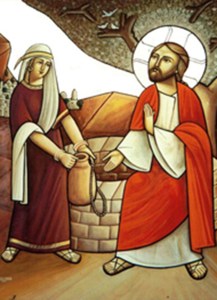
samaritan-woman-at-the-wellMany of us will see Jesus’ conversation with the Samaritan woman as something ordinary, a chat between a man and a woman. But, if we go back to the time of Jesus, we will discover it as unthinkable. This Samaritan woman embodied what the Jews hated most. Firstly, despite their common ancestry, the Samaritans and the Jews were excommunicating each other. Despite worshipping the same God, they condemned one another as religious heretics and they proclaimed their own religion as the true one. No wonder, sometimes, the encounter between the two turned violent and the Romans had to quell the riots.

Secondly, this Samaritan is a woman. The ancient Jewish society, just like many ancient cultures, placed women as second class citizens. They were treated as objects, either owned by the patriarch or the husband. They could be easily divorced by their husbands if they could not bear a child. Despite some outstanding and exceptional women due to their noble birth and wealth, women generally were discriminated from the public and religious sphere. Many could neither study the Torah nor have a voice of their own. No wonder, many Jews praised the Lord because they were born not as a woman!

However, in today’s Gospel, Jesus talked to a Samaritan woman. Not only talking, He asked for water. Not only did he asked for water, He revealed Himself for the first time as the Living Water as well as the Messiah. The conversation transformed her.  While many Jews refused to believe in Jesus, the Samaritan woman believed. Not only did she become a believer, she turned to be a preacher of faith. She spread the Good News to her townsfolk and they came to Jesus because of her. The Gospel of John narrates to us that even a Samaritan and a woman can be chosen by Jesus to be His preacher. The effects of her preaching were unprecedented. The Samaritans began to make peace with other Jews, the disciples who also believe in Jesus.

We are living in a better world. Women can enjoy the same rights that men enjoy almost in all aspects. Indonesia, a country with the largest Muslim population in the world, used to have a woman president. In the Philippines, many major positions are occupied by women, like Chief Justice, Senators, and even military general. Yet, still many women are subject to various forms of exploitation: human trafficking, prostitution, domestic violence, and abuses. Following Jesus means standing up against injustice against women.

The Gospel also points out to us that women are capable of preaching the faith. Surely, women cannot preach in the pulpit, but many of them are responsible for faith growth in many Christ-centered communities. I still remember how my mother taught me the basic prayers and the rosary. She also encouraged me as an altar server to love the Eucharist. In Indonesia, it is a practice in many parishes for priests to receive their daily meals from the people, and many women are doing their best to provide for the priests. Some religious sisters and lay women have contributed to my philosophical and theological formation, and they were great professors. Over and above these, many women have generously supported the Church and her Evangelization mission, through their resources, time, effort and prayer. From the depth of our hearts, we thank them.

Br. Valentinus Bayuhadi Ruseno, OP

Yesus dan Perempuan Samaria

Minggu Prapaskah Ketiga. Yohanes 4: 5-42 [19 Maret 2017]

 “Dan banyak orang Samaria dari kota itu telah menjadi percaya kepada-Nya karena perkataan perempuan itu (Yoh 4:39)”

 Banyak dari kita akan melihat percakapan antara Yesus dengan perempuan Samaria sebagai sesuatu yang biasa, percakapan antara seorang pria dan seorang wanita. Tapi, jika kita kembali ke zaman Yesus, kita akan menemukan hal ini sebagai hal yang tak terbayangkan. Perempuan Samaria ini menjadi symbol dari apa yang orang-orang Yahudi paling benci. Pertama, walaupun berasal dari nenek moyang yang sama, orang-orang Samaria dan Yahudi saling mengucilkan satu sama lain. Meskipun menyembah Tuhan yang sama, mereka mengutuk satu sama lain sebagai bidah dan mereka mengklaim bahwa agama mereka sendirilah sebagai yang benar. Tidak heran, kadang-kadang, pertemuan antara keduanya berubah menjadi kekerasan dan tentara Romawi harus turun tangan untuk menghentikan kerusuhan ini.

Kedua, orang Samaria ini adalah seorang wanita. Masyarakat Yahudi tempo dulu, seperti banyak kebudayaan kuno, menempatkan perempuan sebagai warga kelas dua. Mereka diperlakukan sebagai objek, baik yang dimiliki oleh bapak keluarga atau suami. Mereka bisa dengan mudah diceraikan oleh suami mereka jika mereka tidak bisa memiliki anak. Meskipun ada beberapa pengecualian, wanita umumnya didiskriminasi dari ruang publik dan agama. Banyak perempuan tidak mempelajari Taurat atau memiliki suara mereka sendiri untuk menentukan masa depan mereka. Tak heran, banyak orang Yahudi tempo dulu memuji Tuhan karena mereka dilahirkan bukan sebagai seorang wanita!

Namun, dalam Injil hari ini, Yesus berbicara dengan seorang perempuan Samaria. Tidak hanya berbicara, Dia meminta air. Tidak hanya dia meminta air, Ia menyatakan diri-Nya untuk pertama kalinya sebagai Air Kehidupan serta Mesias. Percakapan ini mengubah sang perempuan. Sementara banyak orang Yahudi menolak untuk percaya kepada Yesus, wanita Samaria percaya. Tidak hanya percaya, ia berubah menjadi seorang pewarta iman. Dia menyebarkan Kabar Baik kepada warga di desanya dan mereka datang kepada Yesus karena dia. Injil Yohanes menceritakan kepada kita bahwa bahkan seorang Samaria dan seorang wanita dapat dipilih oleh Yesus untuk menjadi pewarta iman-Nya. Buah dari pewartaanya pun luar biasa. Orang Samaria mulai berdamai dengan orang-orang Yahudi, secara khusus para murid yang juga percaya pada Yesus.

Kita hidup di dunia yang lebih baik. Perempuan dapat menikmati hak yang sama seperti laki-laki hampir dalam semua aspek kehidupan. Indonesia, negara dengan penduduk Muslim terbesar di dunia, pernah memiliki seorang presiden perempuan. Di Filipina, banyak posisi utama diduduki oleh perempuan, seperti Ketua MA, Senator, dan bahkan jenderal militer. Namun, masih banyak wanita yang tunduk pada berbagai bentuk eksploitasi: perdagangan manusia, prostitusi, kekerasan dalam rumah tangga, dan kejahatan seksual. Mengikut Yesus berarti kita berdiri melawan ketidakadilan terhadap perempuan.

Injil juga menunjukkan kepada kita bahwa perempuan mampu memberitakan iman. Tentunya, perempuan tidak bisa berkhotbah di mimbar, tapi banyak dari mereka yang bertanggung jawab dalam pertumbuhan iman di banyak komunitas. Saya masih ingat bagaimana ibu saya mengajarkan saya doa-doa dasar dan rosario. Dia juga mendorong saya aktif di Gereja dan mencintai Ekaristi. Di Indonesia, di banyak paroki, para imam menerima ‘rantangan’ dari umat, dan banyak wanita yang terlibat dalam menyediakan makanan bagi para imam ini. Beberapa suster dan awam perempuan telah memberikan kontribusi bagi formasi filosofis dan teologis saya, dan mereka ada para guru yang handal. Akhirnya, banyak perempuan telah bermurah hati untuk mendukung Gereja dan misi Evangelisasi, melalui sumber daya mereka, waktu, tenaga dan doa. Dari kedalaman hati kita, kita berterima kasih kepada para perempuan ini.

Frater Valentinus Bayuhadi Ruseno, OP

Introvert or Extrovert?

16th Sunday in Ordinary Time. July 17, 2016 [Luke 10:38-42]

 “There is need of only one thing. Mary has chosen the better part and it will not be taken from her (Luk 10:42).”

Martha and MaryFew weeks ago, I participated in a seminar-workshop on personality recognition and development. The activity was organized by the ministry of Lectors of Santo Domingo Parish and facilitated by seasoned speaker Sr. Leticia Garcia, DC. As I expected, the test result told me that I was dominantly introvert, meaning I was silent and more reserved guy. I found strength in solitude. I shared this treats with many of the participants. Yet, not few were actually our opposite. They were extrovert, meaning they were people-oriented and action-driven. They were recharged in interaction with others. Sr. Garcia made a point that the difference must not bring us into animosity. When properly developed, our personalities shall complete each other and contribute in the service of God.
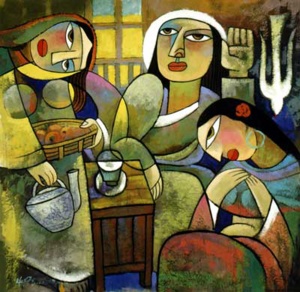
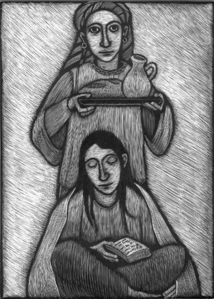
Reading today’s Gospel, we encounter two lovely protagonists, Martha and Mary. Doubtless, Martha was dominantly extrovert. She did all the chores. She was very mobile and action-driven. In fact, she did all talk. Mary, meanwhile, was predominantly introvert. She did nothing but listened to Jesus. She was not even moving at the foot of Jesus. No single word was uttered from her mouth.

In the story, when Martha complained to Jesus about her sister’s inactivity, Jesus defended Mary. It seems that Jesus was favoring Mary over Martha. Does it mean that Jesus preferred introvert people than extrovert one? Not really. Looking deeper into the life of Jesus, we may justifiably say that Jesus himself was predominantly extrovert. He was action-oriented, He did a lot of things: healing, exorcising, feeding, doing miracles, and teaching. He involved in people’s lives. He attended many parties, and even accused as a glutton and a drunkard, a friend of tax collectors and sinners (Mat 11:19)!

So, why is it that Jesus said to Martha, There is need of only one thing. Mary has chosen the better part (Luk 10:42)?” I believe Jesus was not playing favoritism. Rather, Jesus intended to remind Martha that she has missed the point of serving. Not that being extrovert and energetic were wrong, but she began to compare herself with her sister. Worse, she imposed her way as the best option to serve the Lord. As she was immersed in herself, Martha was losing Jesus.

Mary chose a better part because she allowed Martha to be Martha, and to serve Jesus through her unique personalities. She did not complain when Martha did something different from her, because her focus was on Jesus not herself. Mary refused the temptation to make herself as the center of activities and life, create a little god out of herself. Thus, not only she allowed Martha to be Martha, she allowed Jesus to be God. This is the best part.

Every one of us, with our different unique personalities and talents, are called to become Jesus’s disciple, and to contribute in building His Church. The Church needs both the introvert and the extrovert. In fact, when we are working together, we may contribute even significantly larger than our individual contribution. Some of my brothers in the community are truly outgoing and enjoy to do missions and preaching in many places. I admit I have to exert extra effort to go out seminary, and a lot easier for me to spend hours reading and writing. We then work together as I provide them with preaching modules and my friends do the actual preaching.

The danger is when we only think that our ways are the only way and begin to complain about those who are different from us. We no longer think of Christ, but ourselves, and make ourselves as little gods. We pray that we may choose the better part as we work together to serve God and in our works and lives, God is truly glorified.

Br. Valentinus Bayuhadi Ruseno, OP

Introvert atau Ekstrovert?

Minggu Biasa ke-16. [17 Juli 2016] Lukas 10: 38-42

 Hanya satu saja yang perlu: Maria telah memilih bagian yang terbaik, yang tidak akan diambil dari padanya (Luk 10:42).”

Beberapa minggu yang lalu, saya mengikMartha and Mary by He Qiuti seminar dan lokakarya tentang pengenalan dan pengembangan kepribadian di Manila, Filipina. Seperti yang saya duga, hasil tes menyatakan bahwa saya secara dominan adalah introvert, yang berarti saya kepribadian yang tenang dan pendiam. Saya menemukan kekuatan dalam keheningan. Saya tidak sendirian karena banyak juga peserta adalah introvert. Namun, tidak sedikit yang memiliki kepribadian yang berlawanan dengan kami. Mereka adalah ekstrovert, yang berarti mereka menyukai banyak aktivitas dan senang berinteraksi dengan orang lain. Sang pembicara mengingatkan bahwa perbedaan tidak boleh membawa kita ke permusuhan. Jika dikembangkan dengan baik, kepribadian kita yang unik akan saling melengkapi dan berkontribusi dalam pelayanan di Gereja dan kemuliaan Tuhan.
Membaca Injil hari ini, kita menemukan dua protagonis, Marta dan Maria. Tak diragukan lagi, Marta secara dominin adalah ekstrovert. Dia melakukan semua pekerjaan. Dia sangat aktif. Bahkan, dia tidak segan-segan terlibat pembicaraan dengan Yesus. Sementara Maria adalah tipikal introvert. Dia bisa tenang, diam dan hanya mendengarkan Yesus. Dia bahkan tidak bergerak di kaki Yesus. Tidak ada satupun kata yang terucap dari mulutnya.

Dalam cerita, ketika Marta mengeluh kepada Yesus karena saudaranya yang diam saja, Yesus membela Maria. Apakah ini berarti bahwa Yesus lebih meyukai pribadi introvert daripada ekstrovert? Saya rasa tidak. Jika kita melihat kehidupan Yesus, kita dapat mengatakan bahwa Yesus secara dominan adalah ekstrovert. Ia melakukan banyak hal: penyembuhan, mengusir roh jahat, memberi makan, melakukan mujizat, dan mengajar. Dia terlibat dalam kehidupan banyak orang. Dia menghadiri banyak pesta dan perayaan, dan bahkan dituduh sebagai pelahap dan peminum, sahabat pemungut cukai dan orang-orang berdosa (lit. Mat 11:19)!

Jadi, mengapa Yesus berkata kepada Marta, Tetapi hanya satu saja yang perlu: Maria telah memilih bagian yang terbaik (Luk 10:42)?” Saya percaya Yesus tidak pilih kasih. Sebaliknya, Yesus  bermaksud mengingatkan Marta bahwa ia telah kehilangan tujuan utama dari pelayanannya. Yesus tidak alergi dengan Marta yang adalah ekstrovert, tapi Marta membandingkan dirinya dengan saudaranya. Lebih buruk lagi, ia memaksakan caranya sebagai cara terbaik terbaik untuk melayani Tuhan. Saat ia terhanyut di dalam dirinya sendiri, Marta kehilangan Yesus.

Maria memilih bagian yang lebih baik karena ia tidak memaksakan kehendaknya dan membiarkan Marta menjadi Marta. Dia tidak mengeluh ketika Marta melakukan sesuatu yang berbeda darinya, karena ia fokus pada Yesus. Maria menolak godaan untuk membuat dirinya sebagai pusat pelayanan dan kehidupannya, dan menjadikan dirinya sabagai tuhan kecil. Jadi, tidak hanya dia membolehkan Marta menjadi Marta, ia juga membolehkan Yesus menjadi Tuhan. Ini adalah bagian yang terbaik.

Kita semua, dengan kepribadian yang unik dan bakat yang berbeda, dipanggil untuk menjadi murid Yesus, dan untuk berkontribusi dalam membangun Gereja-Nya. Gereja membutuhkan baik introvert dan ekstrovert. Bahkan, ketika kita bekerja bersama-sama, kita dapat berkontribusi secara signifikan lebih besar dari kontribusi individu kita masing-masing. Beberapa frater-frater saya di komunitas menikmati bermisi dan berkhotbah di banyak tempat. Saya mengakui bahwa saya harus mengerahkan usaha ekstra untuk sekedar pergi keluar seminari, dan jauh lebih mudah bagi saya untuk menghabiskan berjam-jam membaca dan menulis. Kami kemudian bekerja sama. Saya menawarkan berbagai materi pewartaan dan frater-frater saya melakukan aksi pewartaan yang sebenarnya.

Bahayanya adalah ketika kita hanya berpikir bahwa cara kita adalah satu-satunya cara dan mulai mengeluh tentang orang-orang yang berbeda dari kita. Kita tidak lagi memikirkan Kristus, tetapi diri kita sendiri, dan membuat diri kita sebagai tuhan-tuhan kecil. Kita berdoa agar kita dapat memilih bagian yang lebih baik karena kita bekerja bersama-sama untuk melayani Tuhan, dan di dalam karya dan kehidupan kita, Tuhan benar-benar dimuliakan.

Frater Valentinus Bayuhadi Ruseno, OP

Jesus and the Women

11th Sunday in the Ordinary Time. June 12, 2016 [Luke 7:36—8:3]

 “So I tell you, her many sins have been forgiven; hence, she has shown great love (Luk 7:47).”

women disciplesLuke has a keen eye for the roles of woman in the life of Jesus and the Church. From the beginning of his Gospel to the end, he made sure that women have important role to play. Among the four Gospels, only Matthew and Luke wrote the infancy narrative. While Matthew had Joseph as the main character, Luke chose Mary as his protagonist. Thanks to Luke, we are able to mediate on the great stories of the Annunciation, the Visitation, and the Presentation. Due to Luke also, we may sing Mary’s Magnificat.
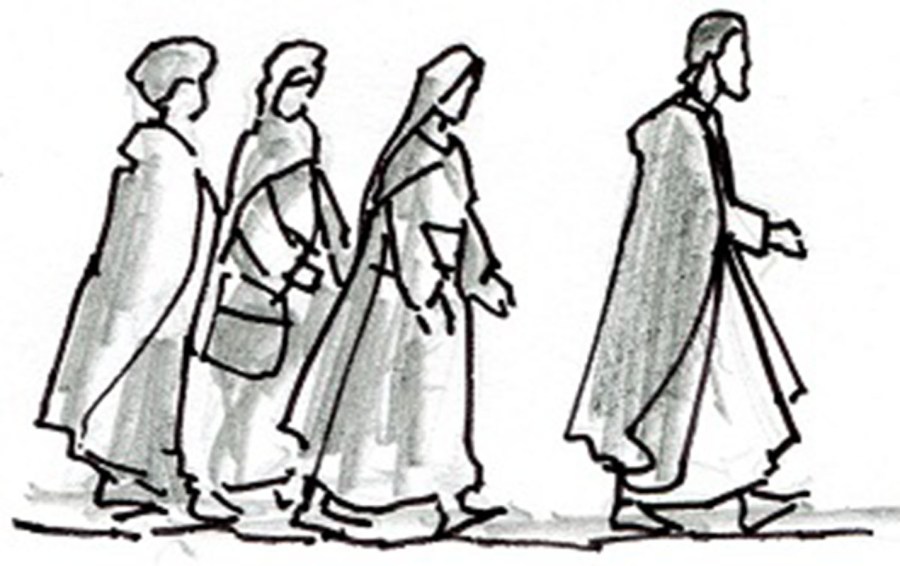
In today’s Gospel, Luke presented several women and their important contributions. The first is the unnamed yet repented woman. The woman stands as contrast to the male host, Simon the Pharisee. While Simon felt right and needed no repentance, the woman admitted her sins and asked Jesus’ forgiveness. Jesus presented the woman as good model for us, Christians. Often like Simon the Pharisee, we feel we are in no need of repentance because we are Church’s people. We go to the Church regularly and we are active in various ministries. We feel just right. But, we are forgetting the elementary truth that everyone is a sinner and in need of His mercy. St. Paul reminds us, “All have sinned and are deprived of the glory of God. 24 They are justified freely by his grace through the redemption in Christ Jesus, (Rom 3:23-24).”

When we remind ourselves that we are practically nothing without His love. Everything we are and have, are His gift, we cannot but be grateful. The woman showed a great love to Jesus, she receives forgiveness. We will love and serve the Lord because we are forgiven and loved. The repented woman remind us that humility and gratitude are the right dispositions to serve the Lord. it is not because we are good, capable, and talented.

After the story of the repented woman, Luke also mentioned several women: Mary of Magdalene, Joanna, Susanna and many others. All have something in common. They supported Jesus and His preaching ministry out of their own resources. Male disciples, like Peter, John and James have been always in the spotlight, but Luke gave us an idea that their ministry was practically impossible without the generous support of these woman. Our Church inherited an apostolic tradition. This means the apostles and their successors take the leadership helm. This means also our Catholic, Apostolic Church’s leadership is entrusted to men. Yet, we need to remember without the generosity of women, this Church will not operate well.

I myself have experienced this such generosity. I am part of the Lectors’ group of Sto. Domingo Parish in Metro Manila and many of its members are women. I am always amazed on how generous they are in their time and resources for the parish and ministry despite their problems and limitation. I am also member of the Dominican family, and our female counterpart has played indispensable role. Before he established the Order of Preachers, St. Dominic founded first the Dominican nuns in Prouille. One of the reasons is to spiritually support the rigorous preaching of the brothers. Up to this day, the Dominican sisters are in the forefront in supporting the brothers and the lay Dominicans. Certainly, my own mother has been generous in giving me to the Church. Without their generosity, I would have not been in my place now. Indeed, without women’s generosity, the Church would have not been in this place now.

Br. Valentinus Bayuhadi Ruseno, OP

Jesus and the Woman

Fifth Sunday of Lent. March 13, 2016 [John 8:1-11]

 “The woman replied, ‘No one, sir.’”

jesus and woman caught in adultery 3In time of Jesus, women were not standing at the same level with men. Crudely speaking, women were considered to be the property of men. Except for several outstanding female figures in the Bible like Deborah, the judge, and Judith, the warrior, the ancient Jewish women had to live under the patriarchal domination. The Bible is not loud at the stories of abused and battered women, but we can safely assume that the exploitations took place here and there.
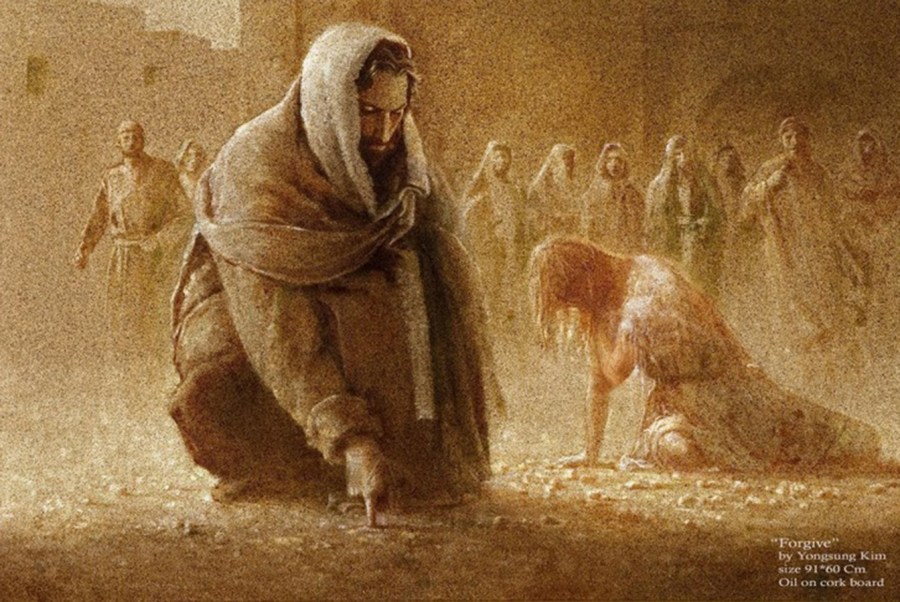
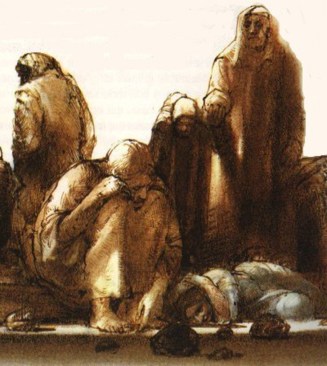
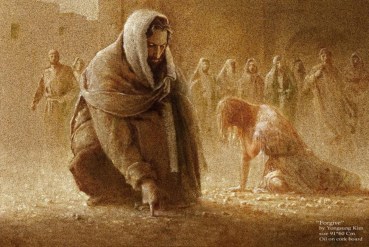
Our today’s Gospel is rarely seen as the story of woman being exploited by the some group of Jewish and religious male, but this was what really happening. The Book of Leviticus has regulated that both the male and female adulterers shall be put to death (Lev 20:10), but the Pharisees only forcefully brought the woman. Their goal was crystal-clear: to trap Jesus, and the rest were means to it, including if they had to use and stone the woman. Here lies the fundamental reason why women always turn to be victims of abuses and violence: the objectification and depersonalization of women. The adulterous woman lost her personhood and became a tool of the Pharisees in achieving their objective. I guess the same underlying motive influence men of different generations. Heartless men change women into their sex objects, cheap labors, or step stone to success.

Jesus got to stop this. Not only He need to save the woman victim, but he had to challenge the corrupt mentality of male abusive domination. He then wrote on the ground. Now, this has been subject of debate and discussion for centuries, and nobody really knew what Jesus wrote. My wild imagination would tell me that he wrote, “Guys, where is the adulterous man?” Jesus read their evil intention not only to Him about to the lady. They were planning for the death for both Jesus and the woman, and the Law says that the murderers and those who pre-meditated on murder shall be put to the death (Lev 21:14). Surely, killing is graver evil than adultery. When Jesus said, Let the one among you who is without sin be the first to throw a stone at her,” Jesus exposed their malicious motivation to kill Him and the woman. The scribes and the Pharisees also deserved death and they should throw the stone to themselves. Losing the battle, they left Jesus and the woman.

Yet, the story does not end there. Jesus had one more mission. After being objectified and depersonalized by her sin and the violent men, Jesus restored her dignity by giving back her voice. Jesus did not unveil her name, but Jesus allowed her to speak for her own. She answered Jesus, “No one, sir.” Indeed, no men shall make her a mere object and no one shall degrade her anymore. She is the beautiful daughter of God and she will remain to be so.

We are living two millennia after Jesus, yet a lot of women still fall victim to this objectification and depersonalization effort of the Evil one. As Jesus fought for the woman, we shall to fight for the women around us. If Jesus was able to expose the subtle form of woman’s exploitation, we shall too expose the various forms of abuses around us. If Jesus restored the dignity of the woman, we shall too respect the dignity of woman around us.

Br. Valentinus Bayuhadi Ruseno, OP

Yesus dan Sang Perempuan

Minggu Prapaskah Kelima. 13 Maret 2016 [Yohanes 8: 1-11]

Jawab sang perempuan, ‘Tidak ada, Tuhan.’”

jesus and woman caught in adultery 5Dalam masa Yesus, perempuan tidak memiliki posisi yang sama dengan lelaki. Mereka bahkan dianggap sebagai barang kepemilikan kaum adam. Kecuali beberapa tokoh perempuan dalam Alkitab seperti Deborah dan Judith, perempuan Yahudi masa lalu harus hidup di bawah dominasi patriarki. Alkitab juga tidak banyak menjabarkan kisah perempuan korban kekerasan dan pelecehan, tapi kita bisa berasumsi bahwa dengan mentalitas patriarki ini, kekerasan dan eksploitasi berlangsung di berbagai tempat.

Injil kita hari ini jarang dilihat sebagai kisah seorang perempuan yang dieksploitasi oleh beberapa kelompok laki-laki Yahudi yang adalah pemuka agama, tapi hal ini benar-benar terjadi. Kitab Imamat telah mengatur bahwa baik laki-laki dan perempuan yang berzinah harus dihukum mati (Im 20:10), tetapi orang-orang Farisi hanya membawa paksa sang perempuan. Tujuan mereka sangat jelas: untuk menjebak Yesus, dan selebihnya adalah sarana untuk mencapai tujuan ini, termasuk jika mereka harus menggunakan dan merajam sang perempuan. Di sinilah terletak alasan mendasar mengapa banyak perempuan selalu menjadi korban pelanggaran dan kekerasan: objektifikasi dan depersonalisasi perempuan. Perempuan yang berzina ini telah kehilangan kepribadian dan menjadi sekedar alat bagi orang-orang Farisi dalam mencapai tujuan mereka. Saya percaya motif ini jugalah yang memgaruhi kaum lelaki dari berbagai generasi. Para laki-laki yang tak berhati menjadikan perempuan sebagai objek kepuasan seksual, tenaga kerja yang murah, atau sebuah langkah menuju kesuksesan.

Yesus harus menghentikan hal ini. Tidak hanya Dia menyelamatkan sang perempuan yang adalah korban, tapi ia harus menantang mentalitas korup dan dominasi kasar kaum adam ini. Dia kemudian menulis di tanah. Apa yang Ia tulis telah menjadi subyek perdebatan dan diskusi selama berabad-abad, dan tak seorang pun benar-benar tahu apa yang Yesus tulis. Namun, dugaan saya adalah Yesus menulis, Di mana lelaki yang berzinah? Kok hanya sang perempuan? Yesus membaca niat jahat para Farisi yang tidak hanya ditujukan kepada-Nya tetapi juga kepada sang perempuan. Mereka merencanakan kematian bagi Yesus dan sang perempuan, dan Hukum Yahudi mengatakan bahwa pembunuh dan mereka yang merencanakan pembunuhan harus dihukum mati (Im 21:14). Tentunya, pembunuhan adalah perbuatan yang jauh lebih jahat dari perzinahan. Ketika Yesus berkata,Barangsiapa di antara kamu tidak berdosa, hendaklah ia yang pertama melemparkan batu kepada perempuan itu,” Yesus paham benar motivasi jahat mereka untuk membunuh-Nya dan sang perempuan. Ahli-ahli Taurat dan orang-orang Farisi juga patut dihukum mati dan mereka harusnya melempar batu kepada diri mereka sendiri. Kalah dalam pertempuran, mereka pun meninggalkan Yesus dan sang perempuan.

Namun, cerita tidak berakhir di sana. Yesus memiliki satu misi lagi. Setelah dijadikan sekedar objek dan kehilangan harga dirinya oleh dosa dan para lelaki kejam itu, Yesus memulihkan martabatnya dengan memberikan suara kembali kepadanya. Yesus tidak mengungkap nama sang perempuan, tapi Yesus memungkinkan dia untuk berbicara bagi dirinya sendiri. Dia menjawab Yesus, “Tidak ada, Tuhan.” Sungguh, tidak ada lagi laki-laki yang akan membuatnya sebagai obyek belaka dan tidak ada lagi yang akan menurunkan derajatnya. Dia adalah putri perempuan dari Allah dan dia akan tetap sebagai demikian.

Kita hidup dua ribu tahun setelah Yesus, namun banyak perempuan masih menjadi korban objektifikasi dan depersonalisasi. Seperti Yesus berjuang untuk sang perempuan, kita akan juga berjuang bagi para perempuan di sekitar kita. Jika Yesus mampu mengekspos eksploitasi perempuan pada zaman-Nya, kita akan juga mengekspos berbagai bentuk pelanggaran di sekitar kita. Jika Yesus memulihkan martabat sang perempuan, kita juga akan menghormati martabat para perempuan di sekitar kita.

Frater Valentinus Bayuhadi Ruseno, OP