
Mary Magdalene and Resurrection

Easter Sunday [April 19, 2019] John 20:1-9

mary magdalene n resurrection 2
He Qi_Easter morning

Mary Magdalene is a female disciple that loves her Teacher deeply, and being a woman, there is something that she teaches us. Luke describes her in his Gospel as a woman “from whom seven demons have come out” [see Luk 8:2]. It must be a terrible experience to be tormented by seven demons, and when Jesus heals her, she expresses her deep gratitude by following Jesus. As one of Jesus’ disciples, she is proven to be the most faithful to her Teacher. When many followers of Jesus are running away to save their lives, and even Peter, the leading figure in the group, denies Jesus, Mary follows Jesus in His way of the Cross to the end. She received the insult Jesus receives, she bears the humiliation Jesus bears, she carries the cross Jesus carries. In fact, she is standing beside the cross together with the mother of Jesus and John the beloved.

However, Mary’s love is even bigger than death. She is the first person who visits the tomb early in the morning. We recall that after Jesus died on the cross, his body was hastily brought to the tomb by Nicodemus and Joseph Arimathea because the Sabbath was drawing near. During Sabbath, Jews are not allowed to bury the dead. Mary knows that Jesus’ body was not taken care of properly, and she wants to make sure that Jesus deserves the proper burial. She comes to the tomb to express her love for the last time for the Teacher by anointing the body of Jesus. Yet, she only sees the empty tomb. Fear seizes her. She may think that some bad guys stole, inflicted further damages and desecrated the body. Instinctively, she runs towards the men of authority after Jesus Himself, Peter and John.

After checking the tomb, Peter fails to understand, and he goes back to the house. She also does not understand and weeps for the loss of her love, but unlike Peter, Mary stays at the tomb. In utter confusion and meaninglessness, Mary does not abandon Jesus. Indeed, the Savior does not disappoint and gives Mary Magdalene a singular privilege to witness the resurrected Jesus. Her great love and fidelity lead her to the joy of Resurrection. She becomes the first preacher of Resurrection.

In the Gospel, often female disciples are depicted as a model of love and perseverance. God created man and woman as equal in dignity, but they differ in characters. Indeed, men like Peter, are the figures of authority, but women excel in what often is lacking in male disciples. I have visited many places in Indonesia and the Philippines, and I give talks and reflections, but one thing in common from these places, is that women often outnumber the men. I am newly assigned in Redemptor Mundi Parish, Surabaya, Indonesia, and a simple gaze will prove that more women are attending our daily morning masses.

Mary Magdalene, a woman disciple, shows to us that it is possible to love and to be faithful when things got tough and rough, when life throws us its trash, and when confusion and meaningless seem to reign. Mary is those women who unceasingly pray for the priests despite so many failures they have made Mary are those mothers who make daily sacrifices for their children despite being unappreciated. Mary is those religious sisters who serve the poor committedly despite many setbacks and trails. We must thank many Mary Magdalene around us. They show us that there love truly conquers death and that there is a resurrection in even the senseless empty tomb.

Happy Easter!

Deacon Valentinus Bayuhadi Ruseno, OP

Maria Magdalena dan Kebangkitan

Minggu Paskah [21 April 2019] Yohanes 20: 1-9

mary magdalene at tombMaria Magdalena adalah seorang murid perempuan yang sangat mencintai gurunya, dan sebagai seorang wanita, ada sesuatu yang dia ajarkan kepada kita. Lukas mengatakan dalam Injilnya bahwa Maria adalah sebagai seorang wanita “yang darinya tujuh setan keluar” [lihat Luk 8:2]. Pastinya merupakan pengalaman yang mengerikan untuk disiksa oleh tujuh setan, dan ketika Yesus menyembuhkannya, ia mengungkapkan rasa terima kasihnya yang mendalam dengan mengikuti Yesus. Sebagai salah satu murid Yesus, ia terbukti paling setia kepada gurunya. Ketika banyak pengikut Yesus melarikan diri untuk menyelamatkan hidup mereka, dan bahkan Petrus, tokoh utama dalam kelompok itu, menyangkal Yesus, Maria mengikuti Yesus dalam jalan Salib-Nya sampai akhir. Dia menerima penghinaan yang Yesus terima, dia menanggung malu yang Yesus tanggung. Bahkan, dia berdiri di samping salib bersama dengan ibu Yesus dan Yohanes yang terkasih.

Namun, cinta Maria bahkan lebih besar daripada kematian. Dia adalah orang pertama yang mengunjungi makam Yesus pagi-pagi buta. Kita ingat bahwa setelah Yesus mati di kayu salib, tubuhnya dengan tergesa-gesa dibawa ke makam oleh Nikodemus dan Joseph Arimathea karena hari Sabat semakin dekat. Selama hari Sabat, orang Yahudi tidak diizinkan untuk menguburkan orang mati. Maria tahu bahwa tubuh Yesus tidak dirawat dengan baik, dan dia ingin memastikan bahwa Yesus mendapatkan penguburan yang layak. Dia datang ke makam untuk mengekspresikan cintanya yang terakhir kalinya bagi sang Guru. Namun, sesuatu yang mengejutkan terjadi. Maria hanya melihat makam kosong. Ketakutan luar biasa merasuki dirinya. Dia mungkin berpikir bahwa beberapa pria jahat mencuri dan menodai tubuh sang Guru. Secara naluriah, dia berlari kepada para pemimpin Gereja setelah Yesus sendiri, Petrus dan Yohanes.

Setelah memeriksa makam, Petrus gagal untuk mengerti apa yang terjadi, dan dia kembali ke rumah. Maria juga tidak mengerti dan menangisi kehilangan cintanya, tetapi ada perbedaan yang signifikan, tidak seperti Petrus, Maria tidak meninggalkan makam. Dalam kebingungan dan ketidakberartian, Maria tidak meninggalkan Yesus. Sungguh, Juruselamat tidak mengecewakan dan memberi Maria Magdalena hak istimewa untuk menyaksikan Yesus yang telah bangkit. Cinta dan kesetiaannya yang luar biasa menuntunnya ke sukacita Kebangkitan. Dia pun menjadi pewarta pertama akan Yesus yang bangkit.

Dalam Injil, seringkali murid perempuan digambarkan sebagai model cinta kasih, kesetiaan dan ketekunan. Tuhan menciptakan pria dan wanita setara dalam martabat, tetapi mereka berbeda dalam karakter. Memang, pria seperti Petrus, adalah figur otoritas, tetapi wanita unggul dalam apa yang sering kurang pada murid pria. Saya telah mengunjungi banyak tempat, komunitas dan gereja di Indonesia dan Filipina, dan satu hal yang sama dari tempat-tempat ini, adalah bahwa wanita sering kali lebih banyak jumlahnya dari kaum pria. Saya baru saja ditugaskan di Paroki Redemptor Mundi, Surabaya, Indonesia, dan pandangan sederhana akan membuktikan bahwa lebih banyak wanita menghadiri misa pagi harian kami.

Maria Magdalena, seorang murid perempuan, menunjukkan kepada kita bahwa adalah mungkin untuk mencintai dan setia ketika segala sesuatu menjadi sulit, ketika hidup melempari kita segala permasalahan, dan ketika kebingungan dan ketidakberartian tampaknya berkuasa. Maria Magdalena adalah wanita-wanita yang terus-menerus berdoa untuk para imam meskipun begitu banyak kegagalan yang mereka buat. Maria adalah para ibu yang berkorban setiap harinya untuk anak-anak mereka meskipun tidak dihargai. Maria adalah para suster religius yang melayani orang miskin dengan penuh komitmen meskipun ada banyak jalan terjal dan gosip tidak sedap yang harus dihadapi. Kita harus berterima kasih banyak kepada Maria Magdalena di sekitar kita. Mereka menunjukkan kepada kita bahwa di sana kasih benar-benar mengalahkan maut, dan bahwa ada kebangkitan bahkan di kubur kosong yang tidak masuk akal.

Diakon Valentinus Bayuhadi Ruseno, OP

Blessedness and Woes

Sixth Sunday in Ordinary Time [February 17, 2019] Luke 6:17.20-26

“But woe to you who are rich, for you have received your consolation. (Lk. 6:24)”

indiaispoorWe listen today the Beatitude, but unlike the famous Beatitude from the Gospel of Matthew, we have today from the Gospel of Luke. Unlike from Matthew who has eight sayings of blessedness, Luke has four blessedness and for four “woes”. The most striking difference is while Matthew seems to emphasize “the poor in spirit”, Luke wants us to understand poverty in a more literal sense.

We want to have a happy life, and we do not like to have a difficult and poor life. It is just basic in our human nature. If we study diligently, we expect that we have a good result in our education. If we work hard and labor honestly every day, we wish that we will be rewarded with success. If we live our lives with passion and dedication, we look forward to acquire a fulfilling life.

However, in today’s Gospel, we listen that Jesus is telling us that the blessed one are the poor, the hungry, the weeping, and the persecuted, and for those who are rich, filled, and laughing, “woe” is their lot. Is Jesus pro-poor and anti-rich? Does Jesus want us to suffer, famish, and become malnourished? Does Jesus like that we are justly rewarded for our hard work and labor? Is Jesus hyper melancholic man, who sulk in sadness, and does not know how to enjoy life?

These are tough yet valid questions, and to answer these, we need to go back to the time of Jesus and discover the context behind the saying of Jesus. In the first century A.D. Palestine, the majority of the people, including Jesus Himself, were poor, hungry and oppressed. They were poor not because they were lazy but because they were living under a terrible time to live. Palestine was colonized by the Romans, and it was a common practice to levy a heavy tax on ordinary Israelites. Only some nobilities, few landowners, a handful of rich businessmen and Israelites who were working for the Romans, like the tax collectors, were enjoying a better life. Ordinary Israelites did not only have to face the Romans, but they had to suffer from the abuses from their fellow yet greedy and opportunistic Israelites who wished nothing but enrich themselves. It was a terrible time to live.

The message of Beatitude was more making sense now. Jesus promises hope and consolation for those who are poor and suffering due to injustice, and He woes those who are rich through dishonest and oppressive means. Thus, we know now that by His Beatitudes and Woes, Jesus does not hate all the rich guys, but greed and injustice that poison people’s hearts both the rich and the poor. When we have a good life because of our hard work and honest effort, then we praise the Lord. It is a blessing! Yet, Jesus is also reminding us that in good time, we must not be greedy, but remain humble and even to have concern for our brothers and sisters who are poor, hungry, and weeping because of injustice.

Deacon Valentinus Bayuhadi Ruseno, OP

Penghiburan bagi yang Tertindas

Minggu ke-6 pada Masa Biasa [17 Februari 2019] Lukas 6:17-28

Tetapi celakalah kamu, hai kamu yang kaya, karena dalam kekayaanmu kamu telah memperoleh penghiburanmu. (Lk. 6:24)”

poor chilrenKita mendengarkan hari ini tentang Sabda Bahagia, tetapi tidak seperti Sabda Bahagia yang terkenal dari Injil Matius, kita sekarang mendengarkan dari Injil Lukas. Tidak seperti Matius yang memiliki delapan ucapan berkat, Lukas memiliki empat berkat dan empat “celaka”. Perbedaan yang paling mencolok adalah ketika Matius tampaknya menekankan “orang miskin di hadapan Allah atau miskin dalam roh”, Lukas menekankan kemiskinan dalam arti yang lebih harfiah.
Tentunya, kita ingin memiliki kehidupan yang bahagia, dan kita tidak ingin dengan kehidupan yang sulit dan miskin. Hal ini mendasar dalam karakter manusia. Jika kita rajin belajar, kita berharap bahwa kita memiliki hasil yang baik dalam pendidikan kita. Jika kita bekerja dengan keras dan jujur setiap hari, kita berharap bahwa kita akan mendapatkan kesuksesan. Jika kita menjalani hidup kita dengan hasrat dan dedikasi, kita berharap untuk memperoleh kehidupan yang memuaskan dan bermakna.

Namun, dalam Injil hari ini, kita mendengarkan bahwa Yesus bersabda bahwa yang diberkati adalah orang miskin, yang lapar, yang menangis, dan yang dianiaya, dan bagi mereka yang kaya, kenyang, dan tertawa, “celakalah” nasib mereka. Apakah Yesus seorang yang pro-miskin dan anti-kaya? Apakah Yesus ingin kita menderita, kelaparan, dan menjadi kurang gizi? Apakah Yesus tidak ingin kita dihargai secara adil atas kerja keras kita? Apakah Yesus seorang yang sangat melankolis, yang berlarut-larut dalam kesedihan, dan tidak tahu bagaimana menikmati hidup?

Ini adalah pertanyaan sulit namun valid, dan untuk menjawab ini, kita perlu kembali ke zaman Yesus dan menemukan konteks di balik perkataan Yesus. Pada abad pertama masehi, Palestina, mayoritas orang, termasuk Yesus sendiri, adalah miskin, lapar dan tertindas. Mereka miskin bukan karena mereka malas tetapi karena mereka hidup di dalam waktu yang sulit untuk hidup. Palestina dijajah oleh bangsa Romawi, dan merupakan praktik umum untuk memungut pajak yang besar pada orang-orang Israel. Hanya beberapa bangsawan, beberapa pemilik tanah, segelintir pengusaha kaya dan orang Israel yang bekerja untuk orang-orang Romawi, seperti para pemungut pajak, menikmati kehidupan yang lebih baik. Orang-orang Israel biasa tidak hanya harus menghadapi orang-orang Romawi, tetapi mereka juga harus menderita di tangan sesama orang Israel yang serakah dan oportunistik yang hanya memikirkan bagaimana mereka bisa memperkaya diri mereka sendiri. Itu adalah waktu yang sulit untuk hidup bagi orang-orang Israel yang sederhana.

Dengan mengetahui konteks, Sabda Bahagia di Injil Lukas jauh lebih masuk akal sekarang. Yesus menjanjikan harapan dan penghiburan bagi mereka yang miskin dan menderita karena ketidakadilan, dan Yesus mengecam mereka yang kaya melalui cara yang tidak jujur dan menindas. Dengan demikian, kita tahu sekarang bahwa dengan Sabda Bahagia dan Sabda Celaka-Nya, Yesus tidak membenci orang kaya, tetapi keserakahan dan ketidakadilan yang meracuni hati orang-orang baik yang kaya maupun yang miskin. Ketika kita memiliki kehidupan yang baik karena kerja keras dan usaha jujur kita, kita bersyukur kepada Tuhan. Ini adalah berkah! Namun, Yesus juga mengingatkan kita bahwa pada saat kita diberkati, kita jangan serakah, tetapi tetap rendah hati dan bahkan memiliki kepedulian terhadap saudara-saudari kita yang miskin, lapar, dan menangis karena ketidakadilan.

Diakon Valentinus Bayuhadi Ruseno, OP

Behind God’s Calling

Fifth Sunday of Ordinary Time [February 10, 2019] Luke 5:1-11

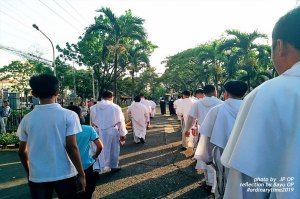
procession 2This Sunday, we listen to the vocation stories of great men in the Bible. From the first reading, we learn how Isaiah was called by God to be His prophet to Judah. In the Temple of Jerusalem, he saw the Lord God surrounded by His seraphim. Isaiah was terrified and said that he had unclean lips. An angel then placed a burning ember on his tongue to remove his wickedness. God, then said, “Whom shall I send?” Isaiah replied with confidence, “Here I am, send me!”
In the second reading, St. Paul wrote to the Church in Corinth and reminded them about the Gospel they had received. Paul assured them that he himself was the recipient of this Gospel no less from the risen Christ Himself. Though he used to be the zealous persecutor of Christians, Jesus called him. By the grace of God, Paul toiled day and night for the building up of the Church.

From today’s Gospel, we listen to the call of the first disciples: Simon, Andrew, James, and John. Luke the evangelist tells us about seasoned fishermen who failed to catch any fish, but Jesus, a carpenter, tells them to ‘go into the deep’. They hesitate, but they follow nonetheless. Lo and behold, they are able to catch a large amount of fish, to the point of destroying their nets. Eventually, Jesus calls them and makes them as fishers of men, and they follow Jesus.

Like Isaiah, Paul and the first Disciples, we are also called by God to follow Him. Some may receive a vocation to the priesthood, some others to religious life, others to build a family, and others may be single yet living a holy life. God also calls us in various ways. Like Isaiah or Paul, some receive extraordinary mystical experiences. But, many of us may be called in the most ordinary and unexpected ways. One day a young man asked whether he has a vocation to the priesthood, especially to the Dominican Order. I said to him, “Well, take the entrance exam first! If you pass you may have the vocation, if not, God may call you somewhere else.”

Sometimes, we ask the Lord a deeper question, “Why me Lord?” but often, we no longer bother to find the answer. Yet, it remains a valid question to be answered. Why did He choose Isaiah, Paul, and Peter? Why does Jesus choose you and me? The answer surprisingly is in the Bible.

When Moses made his farewell speech before the Israelites who were about to enter the Promised Land, he reminded them the reason why God chose Israel, “It was because the LORD loved you and because of his fidelity to the oath he had sworn to your ancestors (Deu 7:8).” God’s choice for Israel is because of His love and faithfulness. The same love and fidelity are the reason behind our calling. God just simply loves us and He draws us to Himself. It is not because we are good, smart and talented. It is not because we are worthy of the call. Isaiah was a man of unclean lips, Paul was a persecutor of the Church, and Peter had his own agenda. Yet, despite these imperfections, God keeps calling us and giving us what we need. How many times, when we betray Him and run away from His call, He remains patient with us and ready to accept us back. If it is not a love, what is it?

We have a God, and this God is love. This is why we are unworthy, yet called; unqualified, yet accepted; unlovable, yet loved.

Deacon Valentinus Bayuhadi Ruseno, OP

Panggilan Tuhan

Minggu Kelima dalam Masa Biasa [10 Februari 2019] Lukas 5: 1-11

touching 2Minggu ini, kita mendengarkan kisah panggilan tokoh-tokoh besar dalam Alkitab. Dari bacaan pertama, kita belajar bagaimana Yesaya dipanggil oleh Allah untuk menjadi nabi-Nya bagi Kerajaan Yehuda. Di Kuil Yerusalem, ia melihat Tuhan Allah dikelilingi oleh serafim-Nya. Yesaya sangat ketakutan dan berkata bahwa dia memiliki bibir yang najis. Seorang malaikat kemudian menaruh bara api di lidahnya untuk menghilangkan dosanya. Tuhan lalu berkata, “Siapa yang akan Kuutus?” Yesaya menjawab dengan percaya diri, “Ini aku, utuslah aku!”

Dalam bacaan kedua, St. Paulus menulis kepada Gereja di Korintus dan mengingatkan mereka tentang Injil yang telah mereka terima. Paulus meyakinkan mereka bahwa ia sendiri adalah penerima Injil keselamatan ini dari Kristus yang bangkit itu. Meskipun ia dulunya adalah penganiaya yang berkobar-kobar umat Kristiani, Yesus memanggilnya. Dengan rahmat Allah, Paulus bekerja keras siang dan malam untuk membangun Gereja yang pernah ia aniaya.

Dari Injil hari ini, kami mendengarkan panggilan para murid pertama: Simon, Andreas, Yakobus dan Yohanes. Lukas sang penginjil bercerita tentang para nelayan berpengalaman yang gagal menangkap ikan, tetapi Yesus, seorang tukang kayu, memberi tahu mereka untuk “pergi ke kedalaman”. Mereka ragu, tetapi mereka tetap mengikuti-Nya. Namun, ternyata mereka mampu menangkap sejumlah besar ikan, sampai hampir merusak jala mereka. Akhirnya, Yesus memanggil mereka dan menjadikan mereka sebagai penjala manusia, dan mereka mengikuti Yesus.

Seperti Yesaya, Paulus dan para Murid pertama, kita juga dipanggil oleh Tuhan untuk mengikuti-Nya. Beberapa mungkin menerima panggilan menjadi seorang imam, beberapa lainnya untuk kehidupan membiara, yang lain untuk membangun keluarga, dan yang lain mungkin seorang lajang namun menjalani kehidupan yang suci. Tuhan juga memanggil kita dengan berbagai cara. Seperti Yesaya atau Paulus, beberapa menerima pengalaman mistis yang luar biasa. Tetapi, banyak dari kita mungkin dipanggil dengan cara yang paling biasa dan tidak terduga. Suatu hari seorang remaja putra bertanya apakah dia memiliki panggilan sebagai seorang imam, terutama menjadi bagian Ordo Dominikan. Saya menjawab, “Cobalah ambil ujian masuk dulu! Jika kamu lulus kamu mungkin memiliki panggilan, jika tidak, Tuhan mungkin memanggil kamu di tempat lain.”

Sayangnya setelah kita dipanggil, kita jarang bertanya lebih jauh, “Mengapa saya Tuhan?” Namun, ini tetap menjadi pertanyaan yang mendasar untuk dijawab. Mengapa Dia memilih Yesaya, Paulus, dan Petrus? Mengapa Yesus memilih kamu dan aku, dengan cara-Nya yang unik? Jawabannya secara mengejutkan ada di Alkitab.

Ketika Musa menyampaikan pesan perpisahannya di hadapan orang Israel yang akan memasuki Tanah Perjanjian, ia mengingatkan mereka alasan mengapa Allah memilih Israel, “… karena TUHAN mengasihi kamu dan memegang sumpah-Nya yang telah diikrarkan-Nya kepada nenek moyangmu… (Ul 7:8). ” Pilihan Allah bagi Israel adalah karena kasih dan kesetiaan-Nya. Kasih dan kesetiaan yang sama adalah alasan di balik setiap panggilan kita. Kita dipanggil bukan karena kita baik, pintar dan berbakat; bukan karena kita layak menerima panggilan itu; bukan karena kita yang paling berkwalitas. Yesaya adalah orang yang tidak bersih bibirnya, Paulus adalah seorang penganiaya Gereja, dan Petrus akan menyangkal Yesus tiga kali. Namun, terlepas dari ketidaksempurnaan ini, Tuhan terus memanggil kita dan memberi apa yang kita butuhkan untuk mengikuti-Nya. Bahkan ketika kita mengkhianati Dia dan melarikan diri dari panggilan-Nya, Dia tetap sabar dan siap menerima kita kembali. Ini adalah kasih, ini adalah kesetiaan.

Kita memiliki Tuhan, dan Tuhan ini adalah cinta kasih. Inilah sebabnya kita yang tidak layak, namun tetap dipanggil; tidak memenuhi syarat, namun diterima; tidak patut menerima kasih, namun tetap dikasihi.

Diakon Valentinus Bayuhadi Ruseno, OP

Word of God Fulfilled

Third Sunday in Ordinary Time [January 27, 2019] Luke 1:1-4;14-21

deacon1The synagogue is the place of prayer for the Jews. On the center during the service in the synagogue is the reading of the Hebrew Bible (or what we call the Old Testament) and the explanation of those readings. In the Gospel, we learn that Jesus stands as the leader of the service. First, He stands and reads the Scriptures, and the chosen portion is from the Prophet Isaiah. Then, He sits down, assuming the position of teacher. The Jews in the synagogue are eager to listen to Jesus. However, there is something different in Jesus’ teaching from other Jewish Rabbis. Jesus neither simply expounds the reading from Isaiah, nor makes commentaries on the text. He neither simply discusses the meaning of the readings, nor explains the context of the text. He fulfills what is written in the Scriptures. He says, “Today this scripture passage is fulfilled in your hearing.” (Lk. 4:14)
What Jesus does gives us a fundamental attitude for every Christian: any Christian ministry, prayer and life have to be rooted in as well as the fulfillment of the Word of God. It is true that many of us are not priests, religious or catechists, but laypersons, like parents, professionals, and citizen of the country. Many aspects of our life are not directly dealing with the Bible, like working, eating, sleeping, etc. So, why do we need to allow the Word of God to permeate various aspects of our life?

We remember that in the Book of Genesis, God created the world through His Word. “God said, ‘Let there be light!’ and there was light.” And at the end of the creation story, with His Word, God blessed the world. Every existence in this world, including our life, finds its beginning, meaning, and fulfillment in God’s Word. The air we breathe, the light we see, the sound we hear bear witness to the Word of God. Thus, no matter who we are and what we do, the Word shall inspire, guide, and animate our daily lives. If we allow the Word to take charge, our lives turn to be the fulfillment of the Word of God.

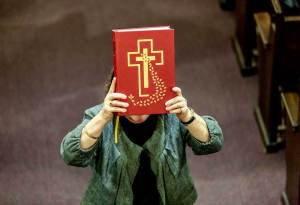
However, how can the Word of God influence our lives if we do not read or hear the Bible? One serious issue among the Catholics is that we seldom read the Bible, and when we attend the Mass, often we are not paying enough attention to the sacred readings. After the reading, we simply respond “Thanks be to God!” while in our hearts, we say, “whatever it means!” We have a Bible in our home, but often it remains hidden, dusty and untouched. This ignorance of the Scriptures does not only affect the lay people but even the clergy and the religious people. Pope Francis in his encyclical Evangelii Gaudium, has lamented of the priests who preach anything but the Word of God. Indeed, this is lamentable.

However, we are not hopeless. More and more lay people now are involved in Biblical apostolate in the parishes or dioceses. Bible Sharing, study and quiz now are something common among the Catholics. In my part, every time I give a talk, I make sure that the participants will bring the Bible and my discussion will be based on the Scriptures. And all of us can begin reading the Bible on our own. We can read five chapters every day, and within a year, we may complete the entire Bible.

Let the Word be the air we breathe, the light we see, the sound we hear, that in the end, we are able to say, “Today the Scripture is fulfilled in your hearing.”

Deacon Valentinus Bayuhadi Ruseno, OP

Firman Tuhan Yang Tergenapi

Minggu ketiga dalam Masa Biasa [27 Januari 2019] Lukas 1: 1-4; 14-21

lector1Sinagoga adalah tempat beribadah bagi orang Yahudi. Jantung dari peribadatan di sinagoga adalah pembacaan Alkitab Ibrani (yang kita sebut Perjanjian Lama) dan penjelasan bacaan-bacaan tersebut. Dalam Injil, kita belajar bahwa Yesus berdiri sebagai pewarta. Pertama, Dia berdiri dan membaca Kitab Suci, dan bagian yang dibaca adalah dari Nabi Yesaya. Kemudian, Dia duduk, yang adalah posisi guru. Orang-orang Yahudi di sinagoga ingin sekali mendengarkan Yesus. Namun, ada sesuatu yang berbeda dari Yesus dari para guru Yahudi lainnya. Yesus tidak hanya menguraikan bacaan dari Yesaya, atau membuat komentar pada teks. Dia tidak hanya membahas makna bacaan, atau menjelaskan konteks teks. Ia menggenapi apa yang tertulis dalam Alkitab. Ia berkata, “Pada hari ini genaplah nas ini sewaktu kamu mendengarnya.” (Luk. 4:14)

Apa yang Yesus lakukan memberi kita sebuah sikap mendasar bagi setiap murid-Nya: setiap pelayanan, doa, dan kehidupan Kristiani berakar pada Firman Allah dan juga menjadi penggenapan dari Firman Allah. Memang benar bahwa banyak dari kita bukan imam, suster atau katekis, tetapi orang awam, seperti kepala keluarga, ibu rumah tangga, para pekerja profesional, dan warga negara. Banyak aspek kehidupan kita yang tidak berhubungan langsung dengan Alkitab, seperti saat kita bekerja, membesarkan anak, dan berekreasi. Jadi, mengapa kita perlu menjadikan Firman Tuhan akar dan pengenapan berbagai aspek kehidupan kita?

Kita ingat bahwa dalam Kitab Kejadian, Allah menciptakan dunia melalui Firman-Nya. “Tuhan berkata, ‘Jadilah terang!’ Dan terang itu ada.” Dan di akhir kisah penciptaan, dengan Firman-Nya lah, Tuhan memberkati dunia ciptaan-Nya. Setiap keberadaan di dunia ini, termasuk kehidupan kita, menemukan permulaan, makna, dan penggenapannya dalam Firman Tuhan. Udara yang kita hirup, cahaya yang kita lihat, suara yang kita dengar memberikan kesaksian akan Firman Allah. Jadi, siapapun kita dan apa yang kita lakukan, Firman Allah akan mengilhami, membimbing, dan menginspirasi kehidupan kita sehari-hari. Jika kita mengizinkan Firman mengambil alih, hidup kita perlahan tapi pasti berubah menjadi penggenapan dari Firman Allah.

Namun, bagaimana Firman Allah dapat memengaruhi kehidupan kita jika kita tidak membaca atau mendengar Alkitab? Satu masalah serius di antara umat Katolik adalah bahwa kita jarang membaca Alkitab, dan ketika kita menghadiri Misa, sering kali kita tidak cukup memperhatikan bacaan-bacaan Kitab Suci. Setelah bacaan, kita hanya menjawab, “Syukur kepada Allah!” Tapi setelah Misa, kita lupa dengan bacaan yang kita dengar. Kita memiliki Alkitab di rumah, tetapi sering kali itu tersembunyi, berdebu, dan tidak tersentuh. Ketidaktahuan akan Kitab Suci ini tidak hanya memengaruhi umat awam, tetapi bahkan para imam dan kaum berjubah. Paus Fransiskus dalam ensikliknya Evangelii Gaudium, menyesali para imam yang dalam homilinya bercerita tentang segala hal kecuali Firman Tuhan.

Namun, kita tidak putus asa. Kabar gembira bagi kita adalah sekarang semakin banyak orang awam terlibat dalam kerasulan Kitab Suci di paroki atau keuskupan. Bible Sharing, Bible Study dan Bible Quiz sekarang adalah sesuatu yang umum di antara umat Katolik. Saya sendiri, setiap kali saya memberi ceramah, saya memastikan bahwa para peserta akan membawa Alkitab dan diskusi saya akan didasarkan pada Kitab Suci. Dan kita semua dapat mulai membaca Alkitab di rumah kita masing-masing. Kita dapat membaca lima bab setiap hari, dan dalam setahun, kita dapat menyelesaikan seluruh Alkitab.

Biarlah Firman menjadi udara yang kita hirup, cahaya yang kita lihat, suara yang kita dengar, dan pada akhirnya, kita dapat mengatakan, “Hari ini Kitab Suci dipenuhi dalam pendengaranmu.”

Diakon Valentinus Bayuhadi Ruseno, OP

Grace Abounds All the More

Conversion of St. Paul, the Apostle [January 25, 2019] Mark 16:15-18

st. paul conversion 2Today we are celebrating the feast of the conversion of St. Paul, the Apostle. St. Paul is one of the greatest names in our Church. Many churches are named after him, like one of the major Basilica in Rome, St. Paul outside the Wall. Not only churches but also many Christians are named after him, including our brothers in the house of formation, Bro. John Paul Sontillano, Bro. Paulus Gabriel Rambang Ngawan, and our former formator, Fr. Pablo Tiong.

Paul is an apostle and yet, he was not part of the 12 apostles. It is through a special revelation, he was called by Jesus and sent to preach the Gospel to all nations, thus, he was called also as the apostle to the nations or of the Gentiles. Indeed, he was doing his job very well, as he preached zealously, traveled tirelessly, and founded many local churches in Asia and Europe, like in Corinth, Thessaloniki, and Galatia. Thirteen of his letters addressed to these communities or to his co-workers like Timothy and Titus, have become part of the New Testament, considered inspired, and thus, the Word of God. And from his letters, the Church has shaped her teachings, doctrines, and orthodoxy, like the primacy of love in Christian living in 1 Cor 13, that love is patient, love is kind, love never fails. Or, in 1 Cor 11, we discover Paul condemns those who failed to celebrate the Eucharist worthily, rooted in the doctrine of the Real Presence of Jesus Christ in the Eucharist. Paul was so inspiring that he inspires St. Luke, the evangelist to devote half of his Acts of the Apostles, to the story and journey of St. Paul.

However, this is only half of the story. Before Paul, there was Saul. Saul was zealous Pharisee who hated Jesus and His followers so much. He went door to door just to arrest Christian, put them in jail, and persecuted them. Young Saul also consented to the murder of the first martyr, Stephen. The Acts of Apostles 9:1 described him as someone who breathes threats and murders. Saul was a dark character with much violence and anger.

However, the Good News of salvation for Saul: no matter dark, violent and broken Saul was, God, is more powerful than all these ugly things. God’s grace, mercy, and love can transform the persecutor of Christ into the vessel of grace. That is why we are celebrating the conversion of St. Paul, not only about St. Paul but the conversion. It is not about Paul’s greatness, achievement, and holiness, but it is God.

Like Paul, we all have our own darkness and brokenness, some may come from broken family, some having a broken family, some have traumatic experiences, some losing people we love in a painful way, some are victims of abuses, some struggling with sickness, with anger, with depression, with poverty or other problems. We are still wrestling with our sinful attitudes and tendencies. Yet, the Good News Paul received is also the same Good News we receive. All of these ugly things have not the last word on us. Our God is stronger than all of this ugliness of life.

As St. Paul himself says, “When sin abounds, grace abounds all the more!” (Rom 5:20)

St. Paul, the apostle, pray for us.

Deacon Valentinus Bayuhadi Ruseno, OP

The Tale of Two Mothers

Fourth Sunday of Advent [December 23, 2018] Luke 1: 46-56

“Blessed are you who believed that what was spoken to you by the Lord would be fulfilled.”  (Lk. 1:45)

5236277111_0c2ebf8133_bToday’s Gospel is truly beautiful. We have two protagonists. They are women, and they are both pregnant. Who are they? Mary and Elizabeth. Yet, why is the story beautiful? It is just natural for women to get pregnant. Unless we need to go closer to the stories and place ourselves in the shoes of Mary and Elisabeth, we can never see the true beauty of their story.

First, Mary, she is young, and at the same time, she is pregnant with no husband. St. Joseph is indeed the husband of Mary, but he is not the father of the baby. Perhaps, in our time, if a woman gets pregnant and yet without a husband, this is an unfortunate event, but life goes on for both the woman and child. however, if we go back to the time of Mary, way back two thousand years ago, that woman would be a great disgrace her family and community. She would be expelled from the community, and sometimes, they would be also stoned to death. Mary understands that when she accepts the will of God, to be the mother of Jesus, she faces death. Indeed, death is the future of Mary.

Second, Elizabeth. Elizabeth has a husband, so nobody will stone her, but her situation is also difficult. She is too old to get pregnant. Once I asked my medical doctor-friends, why is it risky to get pregnant if you are old? One said that as we grow old, so does our body and our muscles. With weaker muscles, a mother will have a difficult time during the process of giving birth, and this can be very dangerous to the baby and the mother.  I said further, why not caesarian? They said that it is also difficult if not deadly. As we grow old, our hearts weaken. If we place ourselves under the knife, with weaker hearts, there is a big possibility that we will not wake up. Like Mary, death may be the future of Elizabeth.

If Mary and Elizabeth know that it is dangerous and even deadly to be pregnant, why are they still following the will of the Lord?

The answer is at the very name of Elizabeth and her husband Zechariah. Zachariah is from the Hebrew word “Zakar”, meaning to remember. Meanwhile, Elizabeth is formed two Hebrew words, Eli and Sabbath, meaning God’s oath or promise. So if we combine the two names, Zachariah-Elizabeth, they mean “God remembers His promise” or “God fulfills His promise.”

Elizabeth knows it is deadly to have John in her womb, but she still follows the will of God, because she is aware the baby was a fulfillment of God’s promise. Mary from Nazareth, the north part of Israel, travels to Judea, the south of Israel, in haste. But, why in haste? Mary is excited, and she wishes to witness how God fulfills His promise to Elizabeth. The moment Mary sees Elizabeth; she knows that the baby inside her womb is also a fulfillment of God’s promise.

Every child, indeed every on us is the fulfillment of God’s promise. Mary and Elizabeth never see the babies in their wombs as mere inconveniences in their lives or unplanned garbage that can be disposed of. Yet, to accept these babies as gifts of God, Mary and Elizabeth have to be courageous because they are going to sacrifice a lot including their own lives. Elizabeth and Mary are brave women and mothers.

The questions are for us: Who among us is not coming from a woman’s womb? We are all here because of a mother. Indeed, not all mothers are perfect. Some of them are not rich, some are having attitude problems, some are not good examples. Yet, the mere fact we are here now, one woman in our life, against all odds, has decided to courageously accept us as a gift, as the fulfillment of God’s promise. To all mothers, thank you very much.

Deacon Valentinus Bayuhadi Ruseno, OP