
10th Sunday in Ordinary Time. June 5, 2016 [Luke 7:11-17]
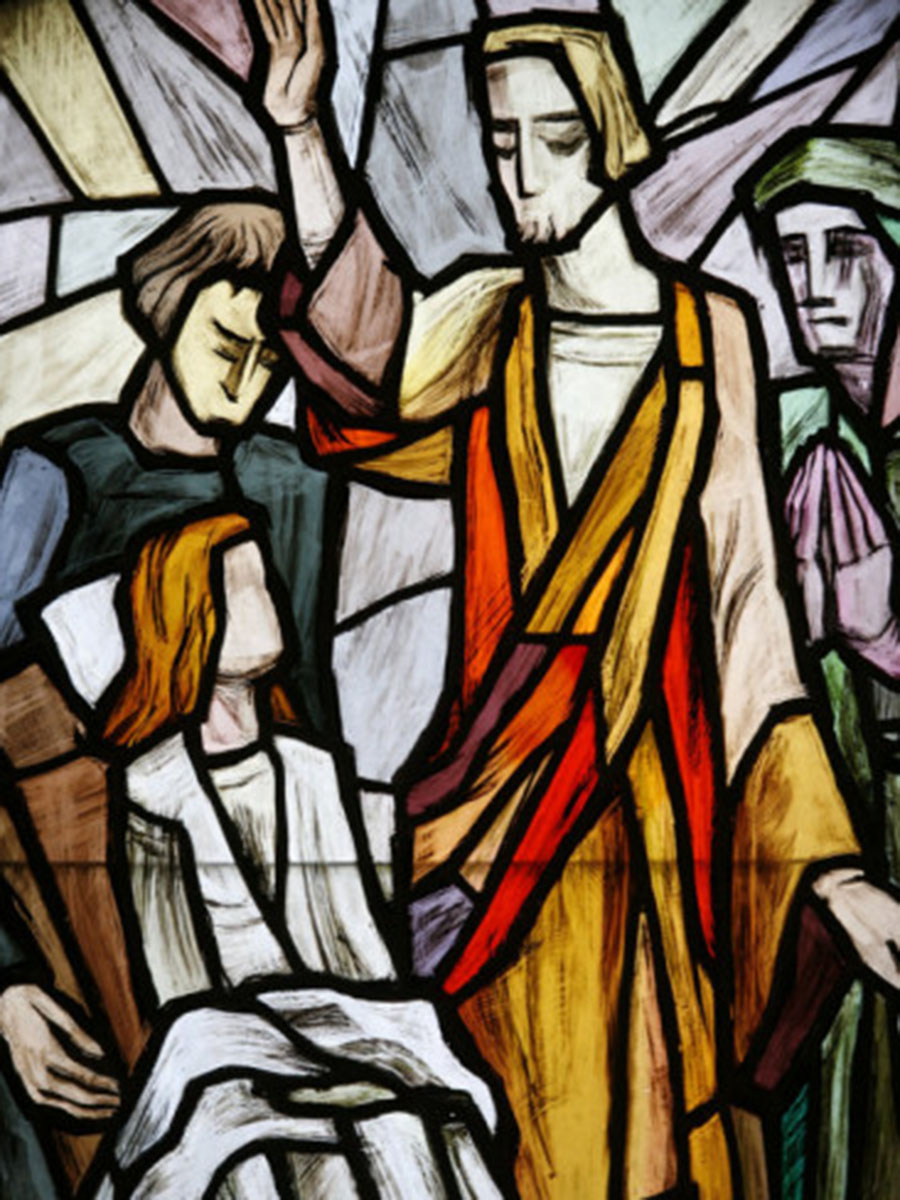
“He stepped forward and touched the coffin; at this the bearers halted, and he said, “Young man, I tell you, arise! (Luk 7:14)”
 The bible seems to contain a lot of death. Almost all the characters in the Bible tasted death. Some were lucky and enjoyed peaceful end, like Abraham, David and Joshua. Yet, a lot more endured tragic one. Abel was murdered by his own brother. Moses passed away just at the doorstep of the Promised Land. James the son of Zebedee was beheaded, and countless unnamed individuals who were victims of wars, diseases and calamities. In today’s Gospel, a young man died presumably due to illness and left his widowed mother alone. The Bible time was bad period to live.
We are living in a better world where life expectation is significantly higher than the time of Jesus. With modern medical technologies and well-trained and professional medical practitioners, we are enjoying the greater possibility to live longer. Had the young man of Nain lived today, he would not have died early. Yet despite all these advancements, death remains a most certain reality. As Benjamin Franklin said, “In this world nothing can be said to be certain, except death and taxes!” This may lead us to think that God is a kind an uncaring God that allows even His people to suffer and receive violent death.
Jesus then came into the rescue and moved by his compassion, He brought the young man to life. To raise people from the death is one of the greatest miracles of Jesus, and this not only recorded in Luke, but in all the four Gospels. This story of young man of Nain resembles the story of the daughter of the synagogue official in Matthew 9 and Mark 5, and the story of Lazarus, the brother of Mary and Martha in John 11. Yet, we understand that the miracle will not last long. The young man would finally die again. Jesus seemed to cheat death and gives false hope to the widow and the crowd who expected the ‘the great prophet’.
Jesus’ miracles are not a quick-fix to many problems we have, but basically pedagogical, meaning they were designed to teach us a core value. Jesus comes into the story precisely to correct the mindset of the people on God. While the sorrowful widow and the lethargic crowd marched toward certain graveyard, a symbol of despair, Jesus stopped them and pointed to a different direction. They cannot find God among the dead, since He is not the god of the dead, but of the living (Mrk 12:27). Undeniably, we are going to die, but live is not about dying, but about living, and living life to the fullest.
Yes, we die every day because of our sins, failures, and problems. Like the crowd, we march hopelessly toward our graveyard and despair. We are crushed by the weight of the financial issues. We are down by heavy workload. We are depressed by difficulties in the family. We forget to live fully as we focus our attention on death. But, we must not be hopeless, because our God is not the god of death, and His Son comes to bring us to life once again. “I came so that they might have life and have it more abundantly (John 10:10).”
Together with St. Paul, we shall boldly say, “We are afflicted in every way, but not constrained; perplexed, but not driven to despair; persecuted, but not abandoned; struck down, but not destroyed; always carrying about in the body the dying of Jesus, so that the life of Jesus may also be manifested in our body (2 Cor 4:8-10).”
Br. Valentinus Bayuhadi Ruseno, OP
 In Medio Ecclesiae