
Second Sunday in Ordinary Time. January 15, 2017 [John 1:29-34]
“Behold, the Lamb of God, who takes away the sin of the world (Jn 1:29).”
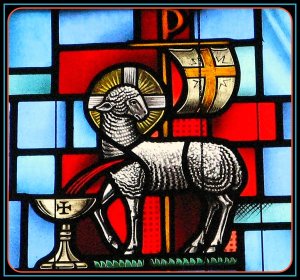
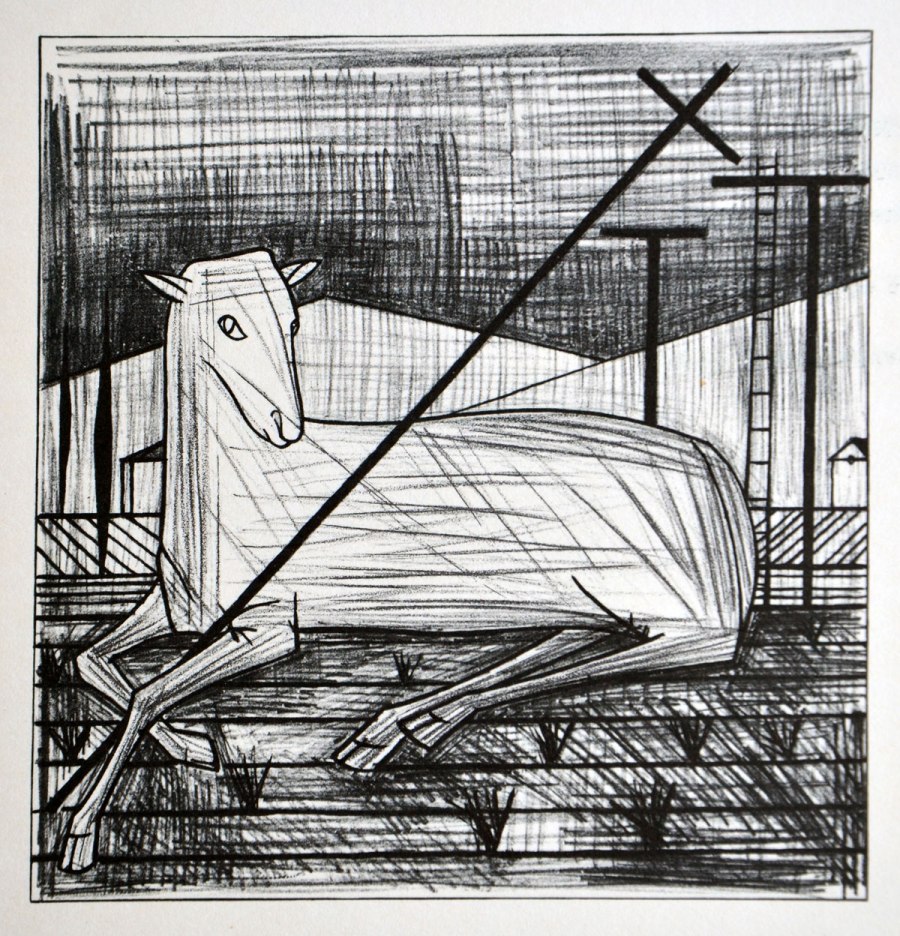
John the Baptist calls Jesus the Lamb of God who takes away the sin of the world. This very phrase eventually became part of the Eucharist and we faithfully recite or sing ‘the Lamb of God’ just before we receive holy communion. But, what does it mean? Why does it have to be a lamb? Not an orangutan, a giraffe or a komodo dragon? Why an animal, not a plant, a fruit or a mobile phone? To make it more intelligible, we have to go back to the Jewish ritual meal of Passover.
The first Passover meal took place before the Hebrews escaped their slavery in Egypt. Every family has to slaughter an unblemished lamb, put its blood on the doorpost and lintel, and roast the lamb before the entire family consumes it. The story goes that the angel of God came to take every firstborn of the Egyptians, but, he passes over the houses of the Hebrew families because of this blood of the Lamb (see Exo 12). This historic event then was institutionalized and became an annual celebration for the Jewish people, even up this day.
Now, John the Baptist announced a new revelation: Jesus is the Lamb, not only any ceremonial lamb, but of God. This Lamb of God has much superior mission than the first Passover lambs: to take away the sin of the world. This lamb would be sacrificed on the cross and His blood will be poured for our salvation. Like the lamb of Passover which is consumed by the Jews, so the Lamb of God would be partaken by the Christians in the Eucharist. Thus, it is proper for us to remember Jesus as the Lamb of God right before we take the Body of Christ in the Mass.
However, it is true as well that for many of us, a lamb has not much meaning. How many among us have a first-hand experience with this four-legged animal? I myself have no immediately encounter with this mammal, except when I eat it at a restaurant! Yet, we know what it means to sacrifice for the persons we love. A wife faithfully taking care of his aging and sickly husband. Parents giving all their effort, time and money so their children may get the best education and life. A woman abandoning her promising career, entering religious life and serving the poor and homeless. Sacrifice entails pain, it gives away the best of us, our time, life and future, and yet, all sacrifice might not be fully appreciated. But, we continue to sacrifice because we know that is for the best of our loved ones. If we are empowered to give ourselves as a sacrifice, we have become the little lambs of God. We sacrifice ourselves because Jesus has sacrificed Himself for us and made our own sacrifices meaningful and fruitful.
Every time, we participate in the Eucharist, we remember someone has loved us so much and sacrificed Himself for us, and we still receive the fruits up to this day. Now, we are also called to be the little lambs of God for others.
Br. Valentinus Bayuhadi Ruseno, OP
 In Medio Ecclesiae